Chapter One: The Room Before the Noise
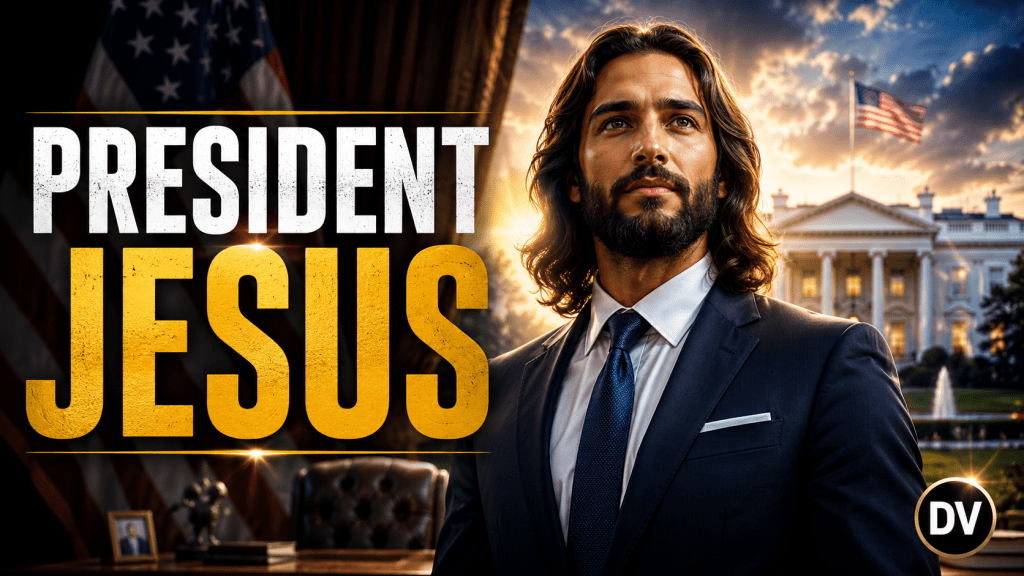
Jesus prayed before the microphones found Him.
He was alone in a small borrowed room beneath an old stone church several blocks from the federal district, where the walls held the faint smell of wax, rainwater, coffee, and generations of ordinary people who had come there when the country felt too heavy for their hands. No cameras waited in the hallway yet. No aides whispered outside the door. No one in that quiet basement room was speaking about strategy, polling, public hunger, constitutional questions, donor promises, security protocols, debate formats, ballot deadlines, or the strange and growing possibility that soon the whole nation would be arguing about Jesus elected President of the United States fictional story as if the words themselves were either hope, threat, blasphemy, or madness.
The church above Him had hosted funerals after floods, vigils after shootings, prayer meetings after court rulings, and soup suppers during the winter months when heat bills rose faster than wages. It had never hosted anything like this. Even the pastor who had unlocked the side door before sunrise had done it with trembling hands, as though he were not sure whether he was making room for obedience or opening the first page of a sorrow he could not name. On a table near the wall, someone had left a printed copy of a related story about Jesus entering public responsibility with mercy and truth, though no one had touched it since Jesus entered. Paper mattered very little when the living Word was on His knees.
He prayed with His face lowered and His hands open. Not clenched. Not lifted in performance. Open, as if every demand of the hour had already passed through them and been returned to the Father without ownership. Outside, the early city was beginning to wake. Delivery trucks groaned at curbs. Sirens rose and faded. A wet wind moved paper cups down the gutter. Somewhere above Him, in the sanctuary, a loose window tapped softly in its frame like someone knocking without courage enough to come in.
“Father,” He said, and the word carried no public ambition at all.
That was what Mara Vale noticed first.
She stood in the hallway beyond the cracked door, her phone in one hand and a folder pressed under her arm, listening because she had arrived too early and because she had forgotten how to enter a room without first knowing the angle. She had spent twenty-one years in public life doing what people called necessary work. She had built messages around men who could not bear their own records. She had taught candidates how to sound humble without becoming humble, how to answer questions without surrendering control, how to apologize without admitting the thing that would end them. She knew the scent of power the way a firefighter knew smoke. She knew when a room was pretending to be calm. She knew when someone wanted the office more than the oath.
But the Man praying inside wanted neither.
That made her more afraid than ambition would have.
Mara checked the hallway behind her, though no one was there. The basement lights hummed overhead. Rain tapped against the narrow windows high along the wall. She wore a dark gray suit, practical shoes, and the kind of expression that told people she had already made three decisions before they finished asking one question. Her hair was pinned back tighter than comfort allowed. A thin scar crossed the knuckle of her right hand, not from anything heroic, only from the night four years earlier when she had slammed a glass against a hotel sink after watching a man she helped elect deny a widow’s testimony on national television.
She had not told the truth that night.
That was not entirely accurate, and because she had spent her life mastering accuracy, the distinction bothered her even now. She had told no lie with her own mouth. She had drafted no false sentence. She had simply arranged the truthful pieces in a way that protected a powerful man from consequence and made a grieving woman look unstable. It had been clean work. Elegant work. The kind people in her profession praised privately and condemned publicly when someone else did it badly.
Two weeks after that, the woman stopped giving interviews. Six months later, the investigation closed without charges. One year later, Mara received an award for communications excellence from a civic leadership institute whose board included two of the man’s largest donors.
She threw the award away during a move and kept the guilt.
Now the guilt stood beside her in the basement hallway like an assistant who knew too much.
Inside the room, Jesus continued praying.
Mara had seen Him first at a hearing in Cedar Row, a manufacturing town in the interior of the country where a chemical spill had poisoned the river and the company responsible had buried testing data beneath layers of compliance language, consulting invoices, and political donations. The hearing was supposed to be another ritual of civic exhaustion. Citizens would speak for three minutes each. Officials would look concerned. Lawyers would say nothing in complicated ways. Journalists would take photographs of angry mothers and call it accountability. Then everyone would leave poorer in spirit than when they arrived.
Jesus had sat in the back row until an elderly custodian named Felix Arroyo tried to read a statement but could not hold the paper steady. The man’s hands shook too hard. His granddaughter had been sick for eleven months. His son had lost work for missing too many shifts to drive her to specialists. Felix had cleaned the plant offices for nineteen years and had once believed steady labor gave a man dignity, even if it did not give him savings.
When Felix stopped reading, the room became embarrassed by his pain.
Jesus rose and walked to him. He did not take the paper. He did not speak over him. He stood beside the old man until the shaking slowed. Then He turned toward the committee table and asked one question.
“Why did you make him carry alone what you knew belonged to all of you?”
No one answered. The question did not accuse in the usual way, which made it worse. It did not perform outrage. It did not flatter the cameras. It simply entered the room and found the hidden door everyone had been pretending not to see.
By evening, the clip was everywhere.
By morning, the country had divided itself around Him.
Some called Him dangerous because He refused to speak the language of institutional protection. Some called Him naïve because He believed truth did not need cruelty to be strong. Some wanted Him to denounce their enemies. Some wanted Him to bless their causes. Some wanted Him to endorse policies He had never mentioned. Some wanted Him arrested for disturbing public order. Some wanted Him crowned by noon.
Mara wanted none of it.
Then the letters began.
At first they came from pastors, nurses, veterans, teachers, firefighters, judges, farmers, exhausted parents, and people who had stopped voting because they could no longer tell the difference between leadership and theater. They did not ask Him to seize anything. They asked Him to serve. They asked if a nation could still be corrected without being crushed. They asked if mercy could stand in a room full of predators and not become prey. They asked if truth could survive institutions that rewarded the appearance of truth more than truth itself.
The letters came by the hundreds, then thousands, then more than anyone could reasonably answer. They arrived in mail sacks and encrypted inboxes, in crayon from children and careful handwriting from prisoners, in legal language from retired judges and simple lines from people ashamed of how much hope they felt.
Please do not let the loudest people own us forever.
Please show us what power looks like when it kneels.
Please help us remember that winning is not the same as righteousness.
Mara had agreed to help only after three separate people she respected asked her, and even then she made it clear she would advise for one private meeting and nothing more. She did not believe He should run. She did not believe anyone should ask Him to run. She did not believe the machinery of public life could receive Him without trying to use Him, brand Him, flatten Him, or destroy Him. She had watched good people enter that machinery and become managers of compromise by spring.
Truth, she had learned, could visit power.
It could not live there.
The door opened before she knocked.
Jesus looked at her from the threshold, and Mara felt the instant, unreasonable discomfort of being seen without being studied. He did not look surprised to find her there. He did not ask how long she had been listening. He did not make her feel rude for it. His eyes held neither suspicion nor flattery, and that unsettled her more than either would have.
“Mara,” He said.
She straightened. “Good morning.”
“It is.”
She looked past Him into the room. There was no desk, no lectern, no flag, no carefully arranged backdrop. Just a table, a few mismatched chairs, an old upright piano against one wall, and a cardboard box filled with donated winter gloves. If someone wanted to manufacture humility, they would have chosen a better room and worse lighting.
“You know there are already reporters outside the alley,” she said.
“I know.”
“And two networks have crews on the next block. Three that I saw. There are independent streamers too. One of them is telling people you’re about to announce a new kingdom from a basement.”
“That is not true.”
“No,” Mara said, looking at Him carefully. “But it is useful for them.”
Jesus stepped back slightly, inviting her in. She entered because refusing would have looked dramatic, and she disliked drama unless she was controlling it. The room was cold enough that she kept her coat on. Jesus wore a plain dark jacket over a white shirt, the cuffs slightly worn, the collar unremarkable. Nothing about Him suggested campaign architecture, yet the country had already begun building one around Him without permission.
On the table lay a stack of letters tied with string.
Mara noticed them immediately. “You read those?”
“Yes.”
“All of them?”
“As many as I am given.”
“That is not scalable.”
“No.”
She waited for Him to explain that He understood modern communications, staffing structures, correspondence teams, message discipline, public scheduling, or at least the basic mercy of delegation. He did not. He sat at the table and rested one hand near the letters.
Mara remained standing. “I’m going to say something plainly.”
“That would be good.”
“You should not do this.”
Jesus looked at her with quiet attention.
She set the folder on the table but did not open it. “Not because public service is beneath You. Not because the country isn’t broken enough to ask strange questions. And not because the people writing those letters are wrong to want something better. They are not wrong. They are tired. They have been lied to, sold to, frightened, divided, and trained to despise one another in profitable ways. They want someone clean to enter a dirty room and stay clean. I understand that. But the presidency is not a symbol. It is an office with force attached to it. Armies. agencies. appointments. classified briefings. compromises. negotiations with people who will use children, borders, debt, sickness, fear, and grief as bargaining chips. You will not be permitted to remain only what they hope You are.”
“I did not come to remain what people hope I am,” Jesus said.
Mara felt that answer move against something in her, but she kept going. “They will turn You into what they need. Your supporters will be the first to do it. They will put words in Your mouth and call it loyalty. Your opponents will call restraint weakness and mercy a threat. Every silence will become a statement. Every statement will become a weapon. If You refuse to hate the right people, the people who adore You today will accuse You of betraying them tomorrow.”
“Yes.”
“You say that like it’s a weather report.”
“It is a warning you are giving faithfully.”
That stopped her for half a breath. Most powerful people heard warning as disloyalty. They preferred encouragement dressed as analysis. She had made a living giving them that.
“I’m not trying to be faithful,” she said.
“No?”
“I’m trying to prevent a catastrophe.”
Jesus lowered His eyes briefly to the letters. “Whose catastrophe?”
Mara opened the folder with more force than necessary. “There are eligibility questions that will be litigated immediately, though the preliminary review is stronger than people assume in this alternate constitutional setting. There are ballot access deadlines in thirty-four jurisdictions within the next six weeks. There are state committees forming without authorization. There are donors trying to attach themselves to You before You have even answered. There are clergy preparing endorsements You did not ask for, activists planning demonstrations, foreign governments requesting quiet channels, and security professionals using words like credible and escalating.”
She pulled out several printed pages and placed them in front of Him.
“I have mapped the risk environment. I have also mapped the moral environment, which is worse.”
A faint tenderness touched His face, not amusement exactly, but something close enough to make her defensive.
“What?” she asked.
“You have named what many refuse to name.”
“I name things for a living.”
“Do you?”
The question was quiet. It did not strike like an attack. It entered like a lamp being carried into a room where she had hidden broken furniture beneath sheets.
Mara looked down at the folder. “I name enough.”
Jesus did not answer.
She hated that He did not answer. Silence was a tool in politics. You used it to force others to fill the space and reveal weakness. But His silence did not manipulate. It waited. That was worse, because it gave her time to hear herself.
Outside, faint noise rose from the alley. A car door closed. Someone shouted a question that did not make it through the basement walls clearly enough to be understood. Mara glanced toward the high windows.
“They are early,” she said.
“They are afraid of being late.”
“That’s not fear. That’s competition.”
“Sometimes competition is fear wearing better clothes.”
Mara almost smiled, then stopped herself. “You understand they will ask whether You want power.”
“Yes.”
“And what will You say?”
“The truth.”
“That is not an answer.”
“It is the only answer I have.”
She sat down across from Him because her legs suddenly felt tired. “The truth is not a communications strategy.”
“No,” Jesus said. “It is not.”
“Then You will lose control of the story before it begins.”
He looked at her again. “Is control why you came?”
She inhaled slowly. There were moments in public life when the right response was not the honest response but the useful one. Mara had survived by knowing the difference. Yet in that room, the useful response seemed thin enough to see through.
“I came because people asked me to,” she said.
“People have asked many things of you.”
Her jaw tightened. “That is not fair.”
“No,” He said gently. “It is mercy.”
She looked away first.
On the wall near the piano, someone had taped a child’s drawing from a church school class. The paper showed a lopsided table with many people around it, each one a different color, all with enormous hands. Above them, in uneven letters, the child had written: GOD SEES EVERYBODY. Mara stared at it until the words blurred slightly, then forced herself back into the room.
“I know what happens when conscience enters politics,” she said. “At first it speaks. Then it negotiates. Then it adapts. Then it survives by calling survival wisdom. And one day it looks back and realizes it has learned to protect the very thing it once entered to change.”
Jesus received the words without interruption.
Mara closed the folder. “That is what power does.”
“That is what fear does inside power.”
She gave a short laugh with no joy in it. “Fear keeps people from getting devoured.”
“Sometimes,” He said. “And sometimes it teaches them to feed others to the devourer first.”
The room became very still.
Mara knew He had not raised His voice. She knew no accusation had been placed in the air by force. Still, her throat tightened as if the sentence had found the exact place in her body where memory lived.
A hotel bathroom. A sink. A broken glass. A widow on television, her voice shaking while commentators discussed her credibility. Mara standing barefoot on marble tile, refreshing statements, counting damage, telling herself the public had no patience for complexity and that her job was to keep order. Not to decide guilt. Not to punish or forgive. Not to ruin a career because grief needed a villain. She had said that to herself so many times it became almost believable.
Almost.
Jesus looked at her hand, the scar across the knuckle, then back to her face. He said nothing about it.
That silence was not avoidance. It was restraint.
Mara gathered the pages again, needing movement. “Even if You did this lawfully, even if every requirement were satisfied, even if the courts refused to let panic rewrite the rules, the office itself would place You inside the machinery of coercive authority. You would inherit agencies that keep secrets for reasons both necessary and corrupt. You would receive intelligence that could tempt any leader into suspicion. You would command people with weapons. You would be asked to respond to violence with violence, deceit with secrecy, betrayal with pressure, humiliation with force.”
“Yes.”
“And You think humility can survive that?”
Jesus folded His hands on the table. “Humility is not ignorance of authority. It is obedience within it.”
Mara wanted to reject that as too simple, but it was not simple. It made the room heavier.
“You would have enemies,” she said.
“I have had enemies.”
“They would not merely insult You. They would test You. They would provoke You. Some would try to make You appear weak. Others would try to make You appear extreme. Some would praise You in order to own You. Others would attack people around You because they cannot reach You directly.”
At that, Jesus looked toward the door, and Mara understood He was thinking not of Himself but of everyone the coming storm might touch.
“You are right to count the cost,” He said.
“I am begging You to count it.”
“I have.”
The answer landed with such quiet finality that Mara’s fear sharpened into anger.
“Then why are we here?”
Jesus remained still. “Because a people may ask for help for the wrong reasons and still be loved. Because a nation may confuse salvation with office and still need truth spoken inside its confusion. Because public service can become ambition, but it need not. Because authority can become domination, but it need not. Because justice can become vengeance, but it need not. Because mercy can be mistaken for weakness and still remain mercy.”
Mara stood abruptly. “That sounds beautiful until someone dies because a decision had to be made faster than mercy could explain itself.”
Jesus rose too, not in opposition, but in presence. “Mercy is not delay, Mara. Mercy is the refusal to stop seeing the person while the decision is made.”
She turned toward the narrow window. Through the rain-blurred glass she could see the legs of people gathering outside at street level. Reporters. Security consultants. Curious citizens. Protesters, maybe. Hopeful people, maybe. It was always hard to tell at first. Crowds rarely knew what they were until someone gave them a chant.
“You know they will worship You for the wrong thing,” she said.
“Yes.”
“And hate You for refusing it.”
“Yes.”
“And You still might say yes.”
Jesus looked down at the letters again, then toward the ceiling, where the sanctuary stood empty above them.
“I will not seek power,” He said. “I will not grasp it, bargain for it, flatter for it, threaten for it, or bless what is false in order to receive it. If the lawful path closes, I will not force it open. If the Father does not send Me into this burden, I will remain where He has placed Me. But if obedience leads through public office, I will not call refusal humility merely because the burden is heavy.”
Mara felt the precision of that, and it frightened her because it left no room for the kind of noble avoidance she understood. She had seen people refuse responsibility and call it purity. She had seen others seize responsibility and call it sacrifice. Jesus seemed unwilling to accept either disguise.
A knock came at the door.
Pastor Jonah Bell stepped in before Mara could answer. He was in his late fifties, broad-shouldered, with tired eyes and a coffee stain on his clerical shirt. Mara had met him once, years earlier, after a building collapse killed nine people in his neighborhood and he spent three months shaming city officials into enforcing codes they had ignored. He had the weary look of a man who had buried too many people and still believed resurrection was not a metaphor.
“They’re filling the alley,” Jonah said. “Police are asking whether You plan to come out the side door or the front.”
Jesus looked at Mara.
She almost laughed again. “Do not look at me like that. If you go out the side door, it looks evasive. If you go out the front, it looks staged. If you say nothing, they’ll invent something. If you speak, they’ll cut it into pieces.”
“What would you advise?” Jesus asked.
Mara opened her mouth, then closed it.
The right answer was obvious. Control the frame. Keep it brief. No announcement. No theology. No office language. Acknowledge concern. Respect the process. Condemn unauthorized committees. Create distance from extremists. Signal seriousness without commitment. Above all, do not let the moment become mystical. Power hated a vacuum, and a crowd was a vacuum with faces.
But beneath the right answer was another one, quieter and less useful.
Tell the truth.
Mara looked at Him and felt, with sudden irritation, that He had not asked because He needed tactics. He had asked because she needed to know which answer still lived in her.
“Front,” she said at last. “No podium. No statement beyond what is true. Do not let anyone introduce You. Do not let them chant. If they chant, wait. If they keep chanting, leave.”
Pastor Jonah blinked. “Leave?”
“Yes,” Mara said. “If they cannot hear You without turning You into a banner, they are not ready to hear You.”
Jesus nodded once. “That is wise.”
Mara did not want His approval to matter.
It did.
They moved through the hallway together. Pastor Jonah went ahead, speaking quietly into his phone. Mara walked beside Jesus, aware of every scuff in the tile, every pipe along the ceiling, every muffled voice beyond the walls. Security volunteers waited near the stairwell, looking undertrained and overcommitted. One of them, a young man with a transparent earpiece that did not appear connected to anything useful, straightened when Jesus approached.
“Sir,” he said, then flushed, as if unsure whether that was the proper word.
Jesus stopped. “What is your name?”
“Caleb Dunn.”
“Caleb, do not place yourself in danger to protect an image of courage. Stay watchful. Stay calm. Listen to Mara and Pastor Jonah.”
The young man swallowed. “Yes, sir.”
Mara studied Jesus as they continued up the stairs. “You know he’ll remember that for the rest of his life.”
“Then let it be true.”
At the top of the stairs, the church foyer was dim and warm. Volunteers had pushed back tables from last night’s community meal. The smell of soup lingered faintly under lemon cleaner. Through the glass doors, the crowd appeared in fragments: umbrellas, camera lights, wet jackets, handmade signs, police raincoats, faces lifted toward the entrance.
Mara paused before the doors and checked her phone. Messages streamed across the screen.
WHERE IS HE?
Is this an announcement?
Do we deny presidential exploratory committee language?
Major donor from Westhaven wants direct contact.
Rumor: opposition group planning disruption.
Clip package already edited by Coastline News.
Need answer ASAP.
She locked the phone and slipped it into her pocket.
For one strange second, she wished she could stand in that foyer forever, before history turned into footage.
Jesus looked at her. “You do not have to manage what is about to happen.”
“That is exactly what I have to do.”
“No,” He said. “You have to tell the truth about what can be managed.”
The sentence irritated her because it was immediately useful.
Pastor Jonah opened the doors.
Noise rushed in, cold and wet.
Questions came at once, overlapping so violently they became a single animal sound. “Are you running?” “Do you claim authority?” “Who funds you?” “Do you reject violence?” “Are you forming a party?” “Do you believe the current government is illegitimate?” “Will you answer eligibility challenges?” “Are you a threat to democracy?” “Are you the only hope for America?” “Will you save us?”
That last question cut through the rest.
Will you save us?
Mara felt the crowd react to it. Some leaned forward. Some recoiled. A few cameras shifted to catch His face. This was the moment she had feared, the moment the country’s spiritual hunger would become political language and political hunger would disguise itself as faith.
Jesus stepped onto the top stair beneath the church awning. Rain fell behind the crowd in silver lines. He waited.
The shouting continued.
He waited longer.
One man near the curb began chanting His name. Two others joined. A woman told them to stop. Someone yelled that silence meant contempt. Another shouted that He owed the people an answer. The chant grew for a few seconds, then faltered when Jesus did not receive it.
Mara watched Him closely. No pleasure crossed His face. No embarrassment either. He looked at the people as if each one stood alone before Him, even packed shoulder to shoulder under umbrellas and cameras.
The chant died.
Only then did He speak.
“I will not be your idol,” Jesus said.
The crowd quieted so abruptly that the rain became audible.
“I will not be used to bless hatred. I will not be used to excuse fear. I will not be used to make ambition sound holy. I will not teach you to confuse victory with righteousness. If I am sent to serve in public office, I will serve under lawful authority, with clean hands, without flattery, without revenge, and without pretending that any office can heal what only repentance, mercy, truth, and God can heal.”
A reporter shouted, “Is that a yes?”
Jesus turned toward the voice. “It is not yet a yes.”
Another shouted, “Is it a no?”
“It is not yet a no.”
Someone near the front cried out, “Then what are we supposed to do?”
Jesus looked over the crowd, and Mara saw faces change beneath the discomfort of being answered as souls instead of demographics.
“Tell the truth where you stand,” He said. “Do justice without needing applause. Show mercy before it becomes useful. Repent before you demand repentance from your enemies. Stop asking power to do what obedience has required of you.”
Mara stiffened. That was too much. Too direct. Too easily weaponized. Too resistant to packaging. She could already imagine headlines dividing the sentence into marketable fragments.
Jesus did not seem concerned with her future difficulties.
A man in a navy coat pushed forward near the barricade. “My son died because leaders lied. Would You punish them?”
The crowd turned toward him. His face was raw with grief, his beard wet from the rain, his hands clenched around the railing. Mara saw three cameras swing toward him, and something in her recoiled. Grief was becoming content again.
Jesus descended one step.
“I would not protect them from justice,” He said.
The man’s chin trembled. “That’s not what I asked.”
“No,” Jesus said. “You asked if I would let your pain make vengeance look like justice.”
The man stared at Him.
Jesus’ voice softened, but did not weaken. “Your son’s life must not be hidden. Those who lied must be brought into the light. But if your grief becomes a throne, it will rule you cruelly and still not give him back.”
The man lowered his eyes. No one moved toward him. Then an older woman beside him placed a hand on his shoulder, and he did not shake it off.
Mara felt the moment pass through the crowd differently than outrage did. Outrage always rushed toward a target. This moved inward, where people were less defended and more afraid.
A reporter from the front lifted her microphone. Mara recognized her: Tessa Rowe, national correspondent, sharp, calm, famous for making evasive officials look smaller by letting them speak too long.
“Jesus,” Tessa called, “some critics say this entire movement is inherently coercive because of who people believe You are. They argue that any campaign involving You would place unbearable spiritual pressure on citizens, institutions, courts, and voters. How do You respond to those who fear that Your presence in electoral politics would make free citizenship impossible?”
Mara felt a reluctant respect. It was the right question, maybe the only question worth asking that morning.
Jesus looked directly at Tessa. “No one may be forced to follow Me and call it faith. No citizen may be coerced in conscience and call it freedom. No law should pretend worship can be manufactured by office. If I enter this process, I enter it as a servant under the law, not as a king demanding earthly throne. A vote is not worship. Public service is not salvation. The Father is not honored by compulsion.”
Tessa did not interrupt. Her expression had shifted slightly, not softened, exactly, but steadied.
“Then why consider it at all?” she asked.
“Because some rooms are sick from lies, and truth must not refuse to enter merely because the room is powerful.”
Mara closed her eyes for half a second.
There it was.
Not an announcement, not yet. But enough to ignite everything.
A shout rose from the far side of the crowd. “Fraud!” someone yelled. “Blasphemer!” Another voice answered with anger. Police shifted. A camera operator stumbled. Mara saw Caleb Dunn move too quickly from the doorway, trying to help where he had not been asked.
She caught his sleeve. “Stay.”
He looked at her, startled.
“Watch first,” she said. “Then move.”
He obeyed.
Jesus turned toward the disturbance but did not raise His hand for silence like a performer controlling a room. He simply waited again, and the waiting made the crowd aware of itself. The shouting man continued, red-faced and furious, accusing Him of manipulation, of sedition, of mocking heaven by entering government, of trying to rule souls through ballots. Others began yelling back.
Jesus stepped down another stair.
Mara’s pulse jumped. Security risk. Bad optics. Uncontrolled proximity. She moved toward Him, but He glanced back once, not sharply, and she stopped.
The shouting man stood near the edge of the barricade. He was younger than his voice sounded, perhaps thirty, rain dripping from the brim of his cap, eyes wild with the moral certainty of someone terrified beneath his anger.
“You want them to bow,” the man said. “That’s what this is.”
Jesus stood a few feet away, separated by the barricade and two uneasy officers.
“No,” He said. “I want them to rise from what has bent them.”
The man’s mouth tightened. For a moment he looked less like an enemy than a son who had learned distrust early and called it discernment because that hurt less.
“My father followed men who talked about God,” he said. “They took his savings. Took our house. Said it was faith.”
Jesus’ face changed with sorrow, not surprise.
“What is your father’s name?”
The man hesitated. “Graham.”
“Graham was wronged.”
The young man swallowed hard. The crowd, which a moment earlier had been ready to turn him into either villain or hero, now had to bear the inconvenience of his humanity.
Jesus continued. “And if I use holy words to take what does not belong to Me, you should oppose Me.”
Mara heard the sentence and felt the whole machinery of politics inside her scream against it. Never arm opponents. Never validate the premise. Never give hostile media a sentence that could be stripped of context and sharpened into a blade.
But the young man’s anger faltered.
Jesus said, “Do not surrender your conscience to any movement, even one that speaks My name. Test the fruit. Tell the truth. Refuse hatred. And do not let thieves have the final word on the Father.”
The young man looked away, breathing hard. No conversion scene followed. No tearful embrace. No instant healing of distrust. He remained angry. But something reckless had gone out of him, and in its place stood grief, exposed and shivering in the rain.
Mara realized she had been holding her breath.
Jesus turned back toward the crowd. “I have prayed. I will continue to pray. I will meet with those charged with lawful process, with those who carry concern, with those who have been harmed by power, and with those who fear what this may become. I will not hurry because the cameras are ready.”
He looked once toward Mara, then toward Pastor Jonah.
“That is all for now.”
Questions exploded again, but He had already turned. Mara moved quickly this time, guiding the small group back through the doors before anyone could press closer. Pastor Jonah shut them with difficulty. The sudden quiet inside the foyer felt almost violent.
Mara’s phone began vibrating without pause.
She did not check it.
Caleb Dunn exhaled. “Was that good?”
Mara leaned back against a folding table and looked at Jesus.
Good was the wrong category. It had been undisciplined by every professional standard and morally disciplined in a way no professional standard knew how to measure. It had created risk, refused idolatry, answered the hardest question, comforted no faction completely, and left every side without the clean weapon it wanted. It would be praised, misquoted, condemned, clipped, subtitled, prayed over, mocked, and monetized before lunch.
“It was true,” she said.
Jesus looked at her with a tenderness that made the simple admission feel larger than she intended.
“Yes,” He said.
Her phone buzzed again. This time she looked.
The first headline had already appeared.
HE WON’T SAY NO.
Another followed.
JESUS REFUSES TO DENY PRESIDENTIAL RUN.
Then another.
“VOTE IS NOT WORSHIP”: JESUS RESPONDS TO FEARS OF THEOCRACY.
And then one from a hostile channel, faster than the rest.
MESSIANIC POWER BID BEGINS IN CHURCH BASEMENT.
Mara showed Him the screen. “This is what I meant.”
Jesus read the headlines without visible injury.
“They have not changed what was said,” He replied.
“No, but they will change what people think was said.”
“Then those who heard must decide whether to love the truth more than the version that serves them.”
Mara shook her head. “That is not how the country works.”
Jesus did not argue. He only looked at her as if the sentence had revealed more sorrow than cynicism.
Pastor Jonah stood near the doors, rubbing his forehead. “What happens now?”
Mara looked at the rain-streaked glass, the moving shadows outside, the faces still pressed toward the church, and the cameras waiting for the next fragment. She thought of every campaign she had ever joined, every compromise she had renamed, every leader she had helped survive the truth. She thought of the widow on television. She thought of the young man in the rain whose father had been robbed by religious language. She thought of a nation begging an office to become an altar because it no longer knew where else to kneel.
Then she looked at Jesus.
“Now,” she said, “everyone tries to own what You just refused to sell.”
Jesus picked up the stack of letters from the table in the foyer where Pastor Jonah must have moved them earlier. He held them carefully, as if paper could be wounded by haste.
“And you?” He asked.
Mara felt the question settle over her with all the weight she had spent years avoiding.
She wanted to say she was leaving after this meeting. She wanted to say she had fulfilled her obligation. She wanted to say no sane person would stand close to what was coming. She wanted to say truth could not survive inside power, and she had the scars to prove it.
Instead, she looked down at her phone, where the world was already bending the morning into shapes it could use.
“I’ll stay through today,” she said.
It was a small answer. Careful. Limited. Full of escape routes.
Jesus received it as if it mattered.
“Then let today be true,” He said.
Chapter Two: The First Offer
By noon the church basement had become a place people were already misremembering.
In the early broadcasts it was called a command center, though the only table large enough for a map had a chipped corner and a coffee ring that no one could scrub away. By midafternoon, a commentator described it as a secret headquarters, though half the neighborhood had walked through it on winter nights for soup, blankets, and prayer. By evening, one channel played the same six seconds of Jesus saying, “I will not be your idol,” beneath a panel discussion about whether He had insulted the citizens who loved Him, while another ran the sentence as proof that He intended to rise above democratic accountability. The basement had become whatever the nation needed it to be, which was how Mara knew the storm had truly begun.
She stood in Pastor Jonah Bell’s office with three phones, two laptops, one borrowed printer, and a headache that seemed to pulse in rhythm with the alerts flashing across every screen. The office had barely enough room for Jonah’s desk, two sagging bookcases, a worn leather chair, and the folding table someone had dragged in from the fellowship hall. A framed photograph of Jonah with his late wife sat beside a stack of hospital visitation cards. Above the file cabinet, a small wooden cross hung slightly crooked, not as decoration but as a kind of stubborn witness against the panic crowding the room.
Mara had turned the desk into triage.
She had lists now. Not public lists, not donor lists, not the kind of lists that made people feel organized when they were only overwhelmed, but necessary lists: security contacts who seemed competent, lawyers willing to advise without wanting to become famous, state election officials who should be called before rumors reached them, clergy who needed to be told not to announce endorsements, citizens whose spontaneous gatherings were becoming crowd-control concerns, and hostile groups whose threats had to be distinguished from noisy foolishness before someone got hurt.
Across the hall, Jesus sat at a long table with Pastor Jonah, Caleb Dunn, and a retired election administrator named Ruth Ansel, who had come because she still believed process mattered when everyone else wanted spectacle. Ruth was seventy-three, narrow-shouldered, sharp-eyed, and carrying a canvas bag filled with statute binders, annotated forms, and the kind of calm that belonged to people who had spent their lives preventing chaos from becoming official. She had arrived with rain on her white hair and said, before taking off her coat, “If this is unlawful, I will tell You. If it is lawful, I will still tell You when people are lying about the law.”
Jesus had thanked her, and Ruth had looked down quickly, as if gratitude from Him was harder to endure than criticism.
Mara watched them through the open office door while pretending to read a legal memo. Jesus was not leaning over the documents like a man measuring his path to victory. He was listening as Ruth explained ballot access thresholds, filing deadlines, independent candidacy provisions, litigation windows, and certification challenges in the sober language of someone who respected both law and limits. He asked questions carefully. Not many. Never to trap her. Never to show He already knew. When Ruth spoke of signatures, He asked how volunteers should conduct themselves with citizens who refused. When she spoke of court challenges, He asked how to honor a ruling even if the public misunderstood it. When she spoke of campaign finance, He asked what kinds of gifts could bind the conscience before a vote was ever cast.
Mara looked back down at her screen.
That question was going to be a problem.
A message flashed from an unknown number with a Westhaven area code.
I represent Calder Voss. He can stabilize the launch. Clean vehicles. Independent expenditure shield. National legal. Serious security. No public association unless desired. He requests ten minutes today.
Mara stared at the name.
Calder Voss owned more communications infrastructure than some small nations. He owned a news syndicate, two data firms, a charitable foundation, an aerospace contractor, and enough private influence to make elected officials speak softly even when they disliked him. He had funded candidates across ideological lines, not because he believed in moderation but because he believed every future should owe him something. People called him a kingmaker when they wanted his money and a cancer when he had already given it to someone else.
Mara had worked with his people twice. Never directly with him. Directly with Calder Voss meant you had already accepted that your mission was negotiable.
She typed no.
Then she deleted it.
The campaign did not exist yet, and already she could feel the old mathematics gathering around her. Security cost money. Legal defense cost money. Communications cost money. Ballot access in a country this large cost more than hope and handwritten letters. The people sending crayon notes could not pay for injunctions. The nurses and truck drivers and widows who wanted clean public service could not protect Jesus from the machinery now turning toward Him. A man like Voss could.
A man like Voss always could.
Mara stepped into the hall. “I need a minute.”
Jesus looked up from Ruth’s binder. “Yes.”
“Privately.”
Pastor Jonah began to stand.
Mara shook her head. “Not you. Him.”
The room became subtly aware of itself. Caleb glanced from Mara to Jesus. Ruth closed her binder without judgment, which somehow felt more severe than judgment would have.
Jesus rose and followed Mara into the small office. She shut the door, then immediately regretted it because the room felt smaller with Him inside it. Rain streaked the window behind Jonah’s desk. On the sill sat a clay mug filled with pens, most of which probably did not work.
Mara handed Him the phone.
Jesus read the message. His expression did not change.
“Do you know who he is?” she asked.
“Yes.”
“Of course You do,” she muttered, taking the phone back. “Then You know what this means.”
“It is an offer.”
“It is the offer. Maybe the first one, but not the last. Legal infrastructure, ballot access support, security money, disciplined outside messaging, probably sympathetic media treatment if he wants to be subtle. He can keep his fingerprints off most of it. If this moves forward, people like him will spend money either for You, against You, or around You. Refusing the meeting will not keep him out. It will only keep us ignorant.”
“Us,” Jesus said.
Mara paused. “Do not make that sentimental. I’m speaking operationally.”
“I know.”
She hated how gently He said it. “You cannot run a national campaign on sincerity. You cannot keep people safe with moral clarity alone. You cannot send volunteers into hostile environments without training, lawyers, transportation, vetting, compliance, insurance, digital security, and enough staff to stop reckless people from acting in Your name. Money will come from somewhere. If we refuse structured help, chaos will fund itself.”
Jesus listened, and because He listened well, Mara heard the weakness in her own argument before she finished making it. Not falsehood. Weakness. There was truth in what she said, but another truth had been tucked beneath it, using necessity as a coat.
“What does Calder Voss ask in return?” Jesus said.
“Access. Not officially. Not immediately. He will say he wants stability. He will say he respects You. He will say dangerous people are already trying to define this, and maybe he’ll be right. He will offer protection from extremists, amateurs, and opportunists. He may ask for nothing today except to be heard.”
“And tomorrow?”
Mara looked toward the window. “Tomorrow he will want to know who gets heard first.”
Jesus sat in Jonah’s chair. Not like a client preparing to be briefed. Like a Man willing to remain in the truth after everyone else had found it impractical.
“Mara,” He said, “what would you advise if you were not afraid?”
The question was not loud, but it reached too quickly.
“I am paid to be afraid in useful ways.”
“You are gifted at seeing danger.”
“Then listen when I tell You danger is not theoretical.”
“I am listening.”
“No,” she said, sharper than she intended. “You are making me say the thing beneath the thing.”
Jesus waited.
She folded her arms, then unfolded them because it looked defensive and she had trained herself not to look defensive. “Fine. If I were not afraid, I would tell him no. Not a polite maybe. Not a process answer. No. I would tell him that if he wants to support lawful civic participation, he can do it without access, without conditions, without coordination, without calling us, without shaping the story, and without turning emergency into ownership.”
Jesus’ eyes remained on her face. “That is clear.”
“It is also naïve.”
“Is it?”
“Yes. Because he will not stay neutral. No one with that much power stays neutral. If we reject him, he may decide You are uncontrollable. Then he funds the people calling You dangerous.”
“Then we will be called dangerous.”
“And if those people gain traction?”
“Then we will answer what is true.”
Mara felt anger rise again, but beneath it was something closer to grief. “You keep saying that as though truth is immune to damage.”
“No,” Jesus said. “Truth can be buried under many voices. It can be mocked, edited, delayed, punished, and ignored. But it cannot become false because someone powerful profits from a lie.”
“That sounds like something said by someone who has not had to watch a lie win.”
Jesus looked at her for a long moment.
Mara knew, immediately and deeply, that she had said something foolish. Not factually foolish. Worse. Spiritually blind in a room with the One who had stood silent before false witnesses and knew exactly what lies could do when fear lent them authority.
She looked away. “I’m sorry.”
Jesus did not press the advantage. “You have watched lies win many rooms.”
The mercy of that answer almost undid her. She turned the phone in her hand, screen dark now, her reflection faintly visible in it.
“Rooms are what I understand,” she said.
“And what do you believe about them?”
“That whoever controls the room controls what survives.”
Jesus leaned forward slightly. “Is that why you entered them?”
She wanted to stop the conversation. Not because it was irrelevant, but because it had become too relevant to manage. Her whole life had been rooms. Conference rooms with donors. Green rooms before debates. Hotel rooms where exhausted candidates begged for a way out of the truth. Newsrooms where producers negotiated which grief deserved airtime. Back rooms where officials called compromise wisdom while families waited outside with photographs of the dead.
And one room, years ago, where a widow sat across from her with both hands wrapped around a paper cup of water, asking whether Mara believed her.
Mara had said, “I believe this will be difficult to prove.”
It was one of the cleanest sins she had ever committed.
“I entered them because I thought better people needed help surviving them,” Mara said.
“And then?”
She smiled without humor. “Then I learned survival changes what better means.”
Jesus looked toward the hallway, where Ruth was speaking softly to Pastor Jonah. “If you stay, Mara, I will not ask you to make truth useful. I will ask you to tell it before you know whether it will be useful.”
“That is a luxury most people in public life don’t have.”
“No,” He said. “It is obedience many refuse.”
She shook her head slowly. “You are asking for a campaign that cannot be run.”
“I am not asking for a campaign.”
“You are considering the presidency.”
“I am considering obedience.”
“That distinction will be lost on everyone.”
“Not everyone.”
Mara looked at Him then, and for one unsettling second she wondered whether He meant her.
A knock came at the door. Caleb leaned in, pale. “Mara? Sorry. There’s a situation out front.”
Mara moved before he finished. “What kind?”
“People with signs. Two different groups. They’re shouting at each other. Police are there, but Pastor Jonah said you should see it.”
Mara opened the office door fully. “How many?”
“Maybe eighty. More coming.”
“Of course.”
She grabbed her coat from the chair and walked quickly down the hall. Jesus followed, but she turned. “No. Absolutely not. Not yet.”
Caleb froze.
Jesus did not seem offended. “Why?”
“Because if You appear every time people escalate, escalation becomes the way to summon You. They will learn that fast. Stay inside.”
Pastor Jonah, standing near the hallway entrance, nodded grimly. “She is right.”
Mara appreciated the support and disliked needing it.
Jesus looked toward the foyer doors. Through them came the muffled rhythm of competing chants, one praising, one condemning, both using His name as if volume could establish ownership.
“I will stay,” He said.
Mara glanced at Caleb. “You come with me. Watch what happens. Do not improvise.”
Outside, the rain had softened into a cold mist. The morning crowd had thinned after the first statement, but a new crowd had taken its place, less curious and more organized. On one side of the street, a group held white signs with blue lettering: LET HIM LEAD. CLEAN HANDS FOR AMERICA. TRUTH IN OFFICE. Some knelt on wet pavement, which made Mara wince because every camera would love it. On the other side, another group held red and black signs: NO THRONES. FAITH IS NOT GOVERNMENT. POWER CORRUPTS EVERYTHING. Between them stood police officers trying to look calm while calculating angles of movement.
At the curb, Tessa Rowe stood beneath a dark umbrella, speaking to a camera. Her hair was damp at the edges, her voice steady, her face composed in the practiced neutrality of a journalist who understood that neutrality itself could become theater if worn too proudly.
Mara noticed three men near the pro-Jesus group handing out printed pledge cards.
Her attention sharpened.
“Caleb,” she said, “those men by the lamppost. Who are they?”
He squinted. “I don’t know. I saw one of them this morning, I think.”
“What are they handing out?”
“I can check.”
“Not alone.”
She started across the sidewalk before he could answer. A police officer recognized her from earlier and let her pass through the loose perimeter. As she approached, one of the men smiled too quickly. He wore an expensive rain jacket and carried a stack of cards protected in a plastic folder. His hair was silver at the temples in a way that looked purchased.
“Beautiful day for courage,” he said.
“It is raining,” Mara replied. “Who authorized you to distribute materials?”
His smile held. “No authorization needed. Free citizens. We’re gathering commitments for the National Faith Mandate.”
Mara held out her hand. “Let me see.”
He handed her a card as if doing her a favor.
The front bore an image of the church doors behind a faint silhouette of the White House, though no one had taken that photograph more than six hours earlier unless they had prepared the template in advance. At the top, in solemn lettering, it read: PLEDGE YOUR VOTE TO THE ONLY TRUE PRESIDENT.
Mara felt heat rise in her chest.
On the back, the card asked signers to promise support “against all legal, political, media, and institutional opposition” and to “recognize no authority that resists the will of Heaven expressed through the people.”
Caleb read over her shoulder. “That’s not what He said.”
“No,” Mara said. “It is not.”
The man lifted both hands. “People are inspired. You can’t control every expression of support.”
“I can control whether you use this church property to collect seditious nonsense in His name.”
His smile thinned. “Careful. A lot of people here have been waiting for someone who won’t be managed by consultants.”
“I am not consulting you,” Mara said. “I am telling you to stop.”
“We’re on a public sidewalk.”
“Then the public can hear me.” She raised her voice enough for those nearby to turn. “These pledge cards are not authorized. They do not represent Jesus, Pastor Jonah, this church, or any lawful effort being considered. No one is being asked to pledge loyalty against legal authority. No one is being asked to treat a vote as worship. No one is being asked to confuse public service with salvation.”
A few people holding the cards looked down uncertainly. One woman folded hers in half. The man’s face hardened.
“You don’t speak for Him.”
Mara’s answer came faster than thought. “On this, I heard Him speak for Himself.”
The man stepped closer. Caleb moved instinctively, but Mara lifted one hand just enough to stop him.
“You people always do this,” the man said. “You take something pure and bury it under caution.”
“No,” Mara said. “You take holy hunger and feed it ambition until it calls itself faith.”
She did not know where the sentence came from until she heard it, and when she did, she wished Jesus had not made certain truths so easy to recognize.
Tessa Rowe had moved closer, camera behind her. Mara noticed too late.
The man noticed too and turned toward the lens. “This is exactly the problem. Gatekeepers are already trying to silence the people.”
Mara looked at Tessa. “Are you live?”
Tessa did not pretend otherwise. “Yes.”
Mara considered walking away. She considered saying no comment. She considered giving the sort of careful sentence that neither clarified nor exposed anything.
Then she thought of Jesus in the basement office asking what she would advise if she were not afraid.
She held up the pledge card for the camera.
“This is unauthorized,” she said. “It is also wrong. Any person attempting to turn Jesus’ possible public service into a demand that citizens reject lawful authority is acting against what He said this morning. If He enters the process, it will be lawfully. If courts rule, those rulings will be honored. If citizens vote no, they are not enemies of God because they voted no. If citizens vote yes, their vote is not worship. No campaign, committee, donor, pastor, broadcaster, or crowd owns Him.”
Tessa watched her with interest. “Are you speaking as His strategist?”
Mara almost corrected the title immediately.
Almost.
“I am speaking as someone who heard Him,” she said.
Tessa’s eyes narrowed slightly, not in hostility but attention. “Does this mean He is forming an official exploratory committee?”
“No.”
“Does it mean He has retained you?”
“No.”
“Then why are you managing unauthorized political activity on His behalf?”
That was the kind of question Mara respected and resented in equal measure.
“Because lies move fast,” Mara said. “And sometimes the first act of service is getting in their way.”
The sentence was too clean. Too quotable. She regretted it instantly.
Tessa turned back toward the camera, but not before Mara saw something flicker across her face. Not agreement. Perhaps recognition.
The man with the cards began arguing with one of the police officers. His companions gathered the remaining cards and retreated down the block, filming themselves as they went. Within minutes, they would claim suppression. Within an hour, someone would call Mara proof that Jesus had already been captured by establishment handlers. Within a day, there would be donation pages with her face on them.
Caleb stood beside her, staring at the card still in her hand.
“Is it always like this?” he asked.
“No,” Mara said. “Usually it takes longer.”
They returned to the church under the pressure of cameras and shouted questions. Inside, the warm foyer felt less safe than before, as if the outside had learned to breathe through cracks. Jesus stood near the fellowship hall doors, waiting. He had not come outside, but Mara knew He knew.
She handed Him the pledge card.
He read it. Sorrow crossed His face first. Then a kind of holy firmness that made Mara understand, without needing explanation, why mercy did not make Him pliable.
Pastor Jonah took the card after Him and muttered something under his breath that was not quite a prayer.
Caleb said, “Mara stopped them.”
Jesus looked at her. “Did she?”
The question did not diminish the act. It examined it.
Mara removed her wet coat. “I told the truth publicly. It will probably create five new problems.”
“Truth often reveals problems before it heals them.”
“I’m going to put that on a mug and sell it to pay legal fees.”
Pastor Jonah made a surprised sound that might have been a laugh. Caleb looked scandalized. Jesus’ expression remained warm but unreadable.
Mara looked away because humor had slipped out before she could armor it.
Ruth Ansel emerged from the hall carrying her binder. “I have spoken to two former colleagues. The lawful route is difficult but not impossible. The public will need to understand that there is no coronation, no shortcut, and no special path around ordinary requirements. If this proceeds, petitions must be gathered properly, filings made transparently, and challenges answered without contempt.”
“Thank you,” Jesus said.
Ruth looked at the pledge card in Pastor Jonah’s hand. “That will not help.”
“No,” Mara said. “It will not.”
Ruth fixed her with a look. “Then say so before someone else says it for you.”
“I just did.”
“Good. Keep doing it.”
Mara had the odd feeling of being approved by a school principal she did not remember trying to impress.
They returned to the basement table. Someone had brought sandwiches, though no one seemed to know who. Jesus thanked the woman who delivered them by name. Mara noticed because the woman began crying quietly after He did, then became embarrassed and hurried away. He did not call after her in a way that would make her tears public. He simply bowed His head for a moment.
The afternoon became a series of rooms without moving from the basement.
A constitutional scholar joined by video and spoke with the cautious discomfort of a man who knew every sentence might be subpoenaed or clipped. A security consultant explained credible threats and was careful not to look directly at Jesus while discussing them. A pastor from another city called to ask whether he should cancel a rally planned by members of his congregation who were already printing banners. Jesus told him to feed the hungry instead if he had already gathered volunteers. The pastor cried. Mara wrote down cancel rally, redirect volunteers, local food distribution, verify no campaign branding.
By four o’clock, three unauthorized committees had announced themselves online. One promised to “draft Jesus by force of public will.” Another called itself Citizens for the Servant Presidency and used language so polished that Mara suspected a professional operation. The third was plainly fraudulent, selling commemorative coins with Jesus’ face beside an eagle.
“Absolutely not,” Pastor Jonah said when Mara showed him.
“I assumed.”
“I mean, can we sue them?”
Ruth looked over her glasses. “Eventually perhaps. Today we report fraud and warn the public.”
Mara drafted the warning. She made it clean, direct, and impossible to misunderstand.
Then she caught herself softening one sentence.
The first draft said: Do not give money to any person or organization claiming to raise funds for Jesus, His public service, or a presidential campaign.
The softened version said: We urge caution regarding unauthorized fundraising efforts.
She stared at the two sentences.
The second sounded professional. The first was true.
She changed it back.
Jesus, seated beside the box of letters, looked up as if He had heard the edit.
“What?” she asked.
“Nothing.”
“You looked at me.”
“Yes.”
“Why?”
“Because you chose the clearer sentence.”
Mara frowned. “Were You reading over my shoulder?”
“No.”
“Then how—”
She stopped, irritated not because she thought He had done anything theatrical, but because she understood that some choices sounded different in a room even when no one spoke them aloud.
She sent the warning.
Within ninety seconds, someone replied online: OFFICIAL CAMPAIGN PANICS OVER GRASSROOTS SUPPORT.
Mara closed her eyes.
Pastor Jonah saw her face. “Bad?”
“Normal.”
“That bad?”
“Worse.”
The day darkened early because of the rain. Volunteers turned on more lights, making the basement feel less like a refuge and more like an underfunded office during a storm outage. Caleb moved chairs, answered doors, delivered messages, and tried to look useful even when no one needed him. Ruth marked deadlines on a paper calendar because, as she put it, “Digital calendars hide consequences.” Pastor Jonah fielded calls from clergy who wanted guidance and others who wanted permission disguised as guidance.
Jesus kept returning to the letters.
Mara did not understand that at first. It seemed inefficient to the point of irresponsibility. Then she saw what He was doing. He was not reading them for inspiration. He was refusing to let the human beings inside them become a mass.
A woman in Michigan whose husband had lost himself to conspiracy channels after losing work.
A border nurse who had treated migrants and agents in the same week and felt hated by both sides whenever she told the truth.
A judge in Arizona who had received threats after ruling against the loudest people in her own community.
A teenage boy who wrote that his parents no longer spoke at dinner unless a screen had made them angry first.
A veteran named Amos Pike who said he did not trust leaders anymore because they were brave with other people’s sons.
Jesus read slowly, sometimes closing His eyes after a sentence. He did not perform sorrow. He bore witness to it.
Near six, Mara received another message from Calder Voss’s representative.
Mr. Voss respects the concerns you raised publicly. He agrees unauthorized extremism is dangerous. He is prepared to fund a neutral civic integrity trust with no coordination, no branding, no public endorsement, and no request for access. He would still appreciate a private conversation to avoid misunderstanding.
Mara almost admired the speed. Voss had adapted before most people had finished reacting. He had watched her live statement, identified her pressure point, and repackaged influence as protection against the very disorder his class often exploited.
She walked to the table and placed the phone in front of Jesus without a word.
He read the message. Ruth leaned over too and made a low sound of disapproval.
Pastor Jonah asked, “Is that one of the wealthy men?”
“One of the wealthiest,” Mara said.
Caleb looked between them. “Wouldn’t money help? I mean, if there’s no coordination?”
Ruth answered before Mara could. “Money always coordinates with something, young man. If not with instructions, then with expectation.”
Mara felt a reluctant admiration.
Jesus handed the phone back. “What do you believe he wants?”
“To stand close enough that everyone else wonders what You owe him.”
“And what do you believe should be said?”
Mara looked at the screen, then at the people around the table. In another campaign, this conversation would have happened with three lawyers, no pastor, no volunteer, no retired election official, and certainly no candidate asking the room to consider conscience before advantage. It would have been handled quietly. Influence loved quiet.
She typed while they watched.
Mr. Voss may participate in civic life within the law as any citizen may. He will receive no private access, no special assurance, no influence over message, staffing, security, policy, scheduling, legal strategy, or any decision related to Jesus’ possible public service. If he wishes to support civic integrity, he should do so without attaching that support to Jesus’ name.
She stopped there.
Then, because she knew Voss would read restraint as an opening, she added: Please do not contact us again unless you are reporting a threat, correcting false information, or responding to a lawful request from counsel.
She showed Jesus.
He read it. “Send it.”
Mara did.
Something inside her, small and tightly wound, braced for consequence.
The consequence came nine minutes later, not from Voss but from one of his media properties. A segment appeared under the title: WHO IS MARA VALE, THE UNELECTED HANDLER SPEAKING FOR JESUS?
The host smiled through the introduction with polished concern. Behind him appeared an old photograph of Mara standing behind Governor Elias Rusk, the man whose scandal she had helped contain. Then came the widow’s face.
Mara went cold.
The segment did not tell the whole story. That would have been less cruel. Instead, it told enough true things in the wrong arrangement to do what she herself had once done to someone else. It described her as a crisis strategist tied to “multiple reputation recoveries for ethically embattled leaders.” It showed clips of her defending Rusk’s office without including the questions. It named the widow, Linnea Hart, and said critics had long accused Mara of helping “neutralize” her allegations. It asked whether Jesus’ emerging public presence had already been compromised by the very image-management culture He claimed to reject.
Caleb was the one who saw it first. He went silent halfway through, which made Mara look up.
“What?” she asked.
He tried to close the laptop too late.
Mara saw the widow’s face on the screen.
No one spoke.
The basement noise seemed to recede until all she could hear was rainwater moving through the old pipes above them. Her body reacted before her mind did, skin tightening, throat closing, right hand curling slightly as if around glass.
Pastor Jonah said softly, “Mara.”
She took one step back. “Do not.”
He stopped.
Ruth’s face had changed. Not into condemnation. Into understanding that a hidden room had just had its door kicked open.
The host continued, his voice smooth with concern. “If Jesus is serious about refusing the politics of manipulation, why has one of the old order’s most effective manipulators become the person standing between Him and the public?”
Mara reached for her coat.
Caleb stood. “Where are you going?”
“Out.”
Jesus rose. “Mara.”
She did not look at Him. “This is why I said You should not do this. They will use everyone near You. Everyone becomes leverage. Everyone becomes story. I am already a liability.”
“That is not all you are.”
“It is enough.”
She moved toward the stairs. Pastor Jonah stepped aside, not blocking her but grieving the movement. She could feel Jesus behind her, not following closely, not letting her flee without witness.
At the foot of the stairs, He said her name again.
This time she stopped.
The hallway smelled of damp coats and old concrete. Above them, the church foyer held the muffled voices of volunteers answering phones. Somewhere outside, another siren moved through the city.
Mara turned, anger and humiliation burning together now. “Do You know what I did?”
Jesus stood a few feet away. “Yes.”
The answer struck harder than any question would have.
She swallowed. “Then You know they’re right.”
“No.”
She laughed once, bitterly. “Do not absolve me because You need staff.”
“I do not need your innocence to tell the truth about you.”
That stopped her completely.
Jesus came no closer. “You helped protect a man from consequence. You arranged truth in a way that wounded a woman already carrying grief. You told yourself that proof and truth were the same thing because proof was the room you could manage. You have carried that sin in secret and called the carrying justice.”
Mara’s eyes stung, but she refused the tears.
He continued, His voice neither harsh nor soft in a sentimental way. “They are not right because they found your sin. They are wrong because they believe your sin is all that can be true about you.”
She looked toward the stairs because looking at Him had become difficult. “It may be all that matters now.”
“No,” He said. “It is what must be brought into the light if you stay.”
A door opened upstairs. Voices drifted down, then faded when someone closed it again.
Mara’s pulse hammered. “What does that mean?”
“It means you cannot stand near truth by managing the appearance of repentance.”
The words were not loud. They did not need to be.
Mara felt the old room return: Linnea Hart across from her, hands around the paper cup, asking whether Mara believed her. She remembered the rain against that hotel window too. She remembered Governor Rusk in the next room, furious not because he was innocent, but because the woman had refused to stay silent. She remembered drafting a statement that expressed compassion while making Linnea sound confused. She remembered telling herself that no one knew the full facts. She remembered knowing enough.
“What would You have me do?” she whispered.
“Tell the truth you have avoided.”
“Publicly?”
Jesus did not answer quickly, and that mercy almost hurt more.
“Truth is not always owed to the crowd first,” He said. “But repentance cannot be built on concealment when concealment is the wound.”
Mara wiped her face before a tear could fall far enough to become visible. “If I speak, I become the story.”
“You already fear you are.”
“If I speak, I damage You.”
“If you hide in order to protect Me, you have not understood Me.”
She looked at Him then. The hallway light was poor, catching the worn edge of His sleeve, the lines of weariness in His face, the steadiness of eyes that did not turn away from what sin had done or from what mercy could still do.
“I don’t know how to do that,” she said.
“I know.”
“I know how to survive. I know how to contain damage. I know how to say enough without saying everything. I know how to make people feel that accountability has happened when only pressure has moved.”
“Yes.”
Her voice broke despite her effort. “I don’t know how to be clean.”
Jesus’ expression held such sorrow and such hope that she could not reduce it to comfort.
“No one becomes clean by mastering the room,” He said.
Mara covered her mouth with one hand, not to hide from Him, but because something in her felt as if it might come apart in sound. She had not cried when the award arrived. She had not cried when she threw it away. She had not cried when Linnea Hart disappeared from the public conversation. She had not cried when people praised her for saving a leader who should have told the truth. She had built a life out of not crying at the moment pain became inconvenient.
Now, in a church basement hallway while strangers outside fought over the future of the country, the tears came.
Jesus did not touch her without permission. He did not turn her sorrow into a scene. He simply stood with her until she could breathe again.
At last she lowered her hand.
“What happens if Linnea won’t speak to me?” she asked.
“Then you tell the truth without demanding her mercy.”
“What happens if she does?”
“Then you listen before you ask anything of her.”
Mara nodded, though the movement felt like stepping off a ledge.
Jesus said, “You may leave.”
She looked at Him, startled.
“You are free,” He said. “You were free when you came. You are free now. Do not stay because exposure has trapped you. Do not stay because you think guilt can be repaid by usefulness.”
Mara almost wished He had commanded her. Commands could be obeyed from a distance. Freedom required a heart.
“What if I stay for the wrong reasons?” she asked.
“Then let the Father correct them as you obey.”
For a while, neither of them moved.
Then Mara looked back toward the basement room, where the others waited, and beyond that toward the church doors, the cameras, the crowd, the country bending every visible thing into accusation or hope. She thought of Calder Voss and his offer. She thought of the pledge cards in the rain. She thought of the host using Linnea Hart’s pain the same way Mara once had, not to heal it, but to win a segment.
Truth could not survive inside power.
That had been her creed because it excused both her cynicism and her fear.
But perhaps truth had never needed power to keep it alive. Perhaps it only needed witnesses willing to stop arranging its furniture so lies could pass comfortably through the room.
Mara drew a breath that hurt.
“I need to call Linnea,” she said.
Jesus nodded.
“And a lawyer.”
“Yes.”
“And then I need to make a statement that does not use the word regret as a hiding place.”
“Yes.”
“And You should not decide anything tonight. No announcement. No committee. No meeting with donors. No interviews that turn this into a redemption story about me.”
“That is wise.”
She looked at Him with weary suspicion. “You keep saying that when I’m terrified.”
“Wisdom often trembles at first.”
Mara almost smiled, but the sadness in her was too near the surface.
They returned to the basement together. The room quieted when she entered. Caleb looked ashamed for having seen the segment, which made him look very young. Ruth closed her binder. Pastor Jonah stood near the coffee urn with his arms crossed, eyes full of the guarded compassion of a man who knew public disgrace could become either confession or bitterness.
Mara walked to the table.
“I did what they said I did,” she told them.
No one interrupted.
“Not in every way they implied. Not with every motive they assigned. But enough. I helped a powerful man survive a truth that should have cost him more than it did. I hurt a woman by making her pain easier to doubt. I have lived for years as though knowing that privately was some form of accountability.”
Caleb looked down. Ruth’s face tightened. Pastor Jonah closed his eyes.
Mara kept going because if she stopped, management would return. “I’m going to contact her. I’m going to tell the truth publicly after I speak to counsel and after I attempt to reach her. I will not use this room or Jesus’ name to make myself look brave. If my staying harms what may come, I will step away.”
Jesus sat down at the table. “Thank you for telling the truth here first.”
The simplicity of it made the room feel less like a trial and more like the beginning of something harder than punishment.
Ruth leaned back. “Well,” she said after a moment, “that complicates the calendar.”
Pastor Jonah let out a breath that was nearly laughter and nearly grief.
Mara looked at Ruth. “Yes.”
“Good,” Ruth said. “Then we will not mistake a clean calendar for a clean conscience.”
Caleb glanced up, uncertain whether he was allowed to smile. Mara did, just barely, and the boy’s shoulders lowered.
Her phone buzzed again.
This time, the message came from an email address she had not seen in four years.
Mara stood very still.
The subject line read: I wondered when you would call.
She opened it.
Mara,
I saw the segment. I assume that means you are about to decide whether I am a liability, an opportunity, a threat, or a human being.
I am not interested in helping anyone use Jesus to clean up politics. I am not interested in helping you clean up yourself. But if you are finally ready to say what happened, say it without asking me to stand beside you so people will believe you are forgiven.
Linnea Hart
Mara read it twice.
Then she handed the phone to Jesus.
He read it and returned it to her.
“What do I say?” she asked.
Jesus looked at the letters still stacked near His hand, then toward the rain-dark windows high along the basement wall.
“Begin with the truth,” He said. “And do not ask her to carry it for you.”
Mara sat down slowly.
Outside, the crowd noise rose again, restless and divided, but for the first time all day she did not reach immediately for a way to shape it. She placed her hands on the table, palms open, and began typing an answer that did not protect her.
Chapter Three: The Sentence That Would Not Spin
Mara wrote the first answer to Linnea Hart and deleted it before anyone else could see.
The sentence had begun with I know this is overdue, which was true but weak in the way polished truth could be weak. It sounded like something drafted under pressure by a person who had always known pressure better than repentance. Overdue made the sin feel like a missed appointment. It did not say what had happened in the hotel suite four years ago, or what Mara had done afterward, or how carefully she had trained herself to remember the facts without letting them become confession.
She tried again.
Linnea, I harmed you.
Her fingers stopped over the keys.
Around her, the basement had settled into a late-evening tension that felt less frantic than the afternoon but more dangerous. Frantic rooms still believed speed could save them. This room had begun to understand that speed might only spread the damage faster. Pastor Jonah was upstairs speaking with police about overnight security around the church. Ruth Ansel had gone home with three binders and a promise to return before dawn, though Mara suspected the woman would spend most of the night calling election officials who still owed her respect. Caleb Dunn sat at the far end of the table, pretending not to watch her type while actually watching every movement with the solemn anxiety of a young man realizing righteousness was not simple just because it was right.
Jesus sat near the old piano with a stack of letters resting beside Him. He had read many of them already, but He still lifted each one with the same attention, as though repetition could not make a human soul common. The basement lights had been dimmed except over the table. Rainwater moved through pipes in the ceiling. Outside, the crowd had finally thinned after hours of chanting, arguing, filming, praying, accusing, and waiting for Him to give them a sentence they could carry away like a flag. He had given them no such sentence.
Mara stared at the email.
Linnea, I harmed you.
It was true. It was also incomplete.
She typed the next line more slowly.
I helped Governor Rusk and his staff make your truthful account appear doubtful, unstable, and politically motivated when I knew enough to understand that you were not being treated honestly.
Her hands felt cold.
She had expected confession to feel like stepping into fire. Instead it felt like stepping out of a warm room into winter with no coat. The fire might come later, from the public, from the press, from Linnea herself, from legal consequences she could not yet name. But the first sensation was exposure. Not dramatic exposure. Not the kind that made a clean story of ruin. Just the sudden absence of all the coverings she had learned to wear.
She continued.
I told myself that my job was to manage uncertainty, not decide guilt. I told myself that if something could not be proven in the narrow room we had built, then I was allowed to shape the public room around that uncertainty. That was cowardice wearing professional language. You asked whether I believed you. I answered in a way that protected me from answering.
Mara stopped again, breathing through the pressure in her chest.
Caleb’s chair creaked softly. “Do you need anything?”
“No.”
He nodded, then looked down at his own hands.
The boy’s kindness irritated her for half a second, then humbled her. He had not asked because he wanted information. He had asked because sorrow in a room made him want to stand near it, even clumsily. Mara had spent years doing the opposite. She had learned to identify sorrow as risk, to study it for exposure points, to calculate which grief would generate sympathy and which would exhaust an audience. Caleb, for all his inexperience, still recognized sorrow as sorrow.
Jesus looked up from a letter. “Mara.”
She did not turn. “Yes?”
“You do not have to finish it tonight because they are watching.”
“I am not doing it because they are watching.”
“No.”
She looked at Him then.
His voice was quiet. “Do not do it because they once watched the wrong thing.”
The words landed with a precision that made her look away again. Linnea’s pain had been watched, measured, framed, questioned, slowed down, replayed, softened, and doubted by people who did not have to go home inside it. Mara had been one of them. The least she could do now was avoid making confession into another public use of the same woman.
“I am writing to her first,” Mara said.
“Yes.”
“And I won’t ask her to meet me.”
“Good.”
“And I won’t ask her to forgive me.”
“Good.”
“And I won’t ask her to confirm anything publicly.”
Jesus folded the letter in His hand and returned it to its envelope. “Then write what love of truth requires, and leave her free.”
Mara almost said she did not know whether love had anything to do with it. But she did not. Love, she was learning, was not the feeling she had reserved for private life after public life finished its work. It might be the only force strong enough to make truth something other than a weapon.
She turned back to the screen.
I am going to make a public statement because concealment was part of the harm. I will not ask you to stand beside me, validate me, forgive me, advise me, protect me, or become part of anyone’s story about redemption. If there is anything you believe I must not say because it would expose you to further harm, I will listen. If you do not answer, I will still tell the truth about my part and accept what follows.
She read the paragraph three times. It did not feel complete, but maybe confession was not meant to feel complete before obedience began.
At the bottom she wrote:
I am sorry. I know those words are too small for what I helped do. I am writing them anyway because not saying them would be one more way of hiding.
Mara Vale
She did not send it immediately.
She stood and carried the laptop to Jesus because some old instinct in her still needed review, and another, newer instinct wanted correction. He read it without touching the keyboard. Caleb watched from the far end of the table with the strained stillness of someone trying to disappear respectfully.
Jesus finished and looked up.
“It tells the truth,” He said.
“Enough?”
“For this letter, yes.”
She waited for more. He gave none.
“That’s it?” she asked.
“Were you hoping I would make it easier?”
“No,” she said. Then, after a moment, “Maybe.”
Jesus looked at the screen again. “There is one sentence that is not needed.”
Mara leaned in. “Which one?”
“If there is anything you believe I must not say because it would expose you to further harm, I will listen.”
Her defenses rose at once. “That sentence gives her control over what affects her.”
“It may also ask her to carry responsibility for your telling.”
Mara looked down at the line. She had meant it as care. She could see now that care and burden sometimes wore the same coat. Linnea had already carried enough responsibility for everyone else’s decisions.
Mara deleted it.
The paragraph became harder and cleaner.
I am going to make a public statement because concealment was part of the harm. I will not ask you to stand beside me, validate me, forgive me, advise me, protect me, or become part of anyone’s story about redemption. If you do not answer, I will still tell the truth about my part and accept what follows.
She read it once more, then sent it before fear could become consultation.
The message vanished from the draft window.
For a moment, nothing happened.
The room did not shake. The lights did not flicker. No notification arrived to tell her whether repentance had been accepted or rejected. Caleb did not speak. Jesus returned quietly to the letters. The world outside continued misusing the day. Somewhere above them, Pastor Jonah laughed at something a police officer said, and the sound was tired but real.
Mara sat down and felt exhaustion move through her bones.
Then her phone rang.
Linnea Hart.
The name appeared on the screen with such force that Mara almost dropped the phone.
Caleb looked up. Jesus did too, but He did not tell her to answer. The freedom of that felt like a burden and a gift at once.
Mara stood. “I need the office.”
Jesus nodded.
She walked down the hall to Pastor Jonah’s small office, closed the door, and answered before voicemail could rescue her.
“Linnea.”
For a few seconds there was only quiet on the line. Not dead air. Breath. The presence of another person choosing not to make the first moment easy.
“Mara,” Linnea said.
Her voice was lower than Mara remembered. Four years ago it had trembled under pressure. Now it sounded worn smooth by pain and use, like wood handled every day. Mara could hear movement in the background, perhaps dishes, perhaps someone in another room, perhaps an ordinary evening into which public memory had intruded without permission.
“Thank you for calling,” Mara said.
“Don’t do that.”
Mara closed her eyes. “All right.”
“I’m not doing this for you.”
“I know.”
“No, you don’t. You may believe it. That’s different.”
Mara opened her eyes and looked at Jonah’s crooked cross above the file cabinet. “You’re right.”
Another pause. Then Linnea said, “I watched you on television today holding that pledge card.”
Mara waited.
“You looked angry.”
“I was.”
“At them?”
“Yes.”
“At yourself?”
Mara’s throat tightened. “Yes.”
Linnea made a small sound that might have been agreement, though not comfort. “I used to wonder if you remembered my face.”
“I do.”
“That’s not the same as remembering me.”
The sentence entered without force and found its place.
“No,” Mara said. “It isn’t.”
Linnea did not rush. Mara had the sense that the other woman had decided long ago that people who wounded her would no longer set the pace of any room she entered, even by phone.
“I don’t want your apology performed in front of cameras,” Linnea said.
“I won’t do that.”
“I don’t want to be named unless I choose to be named.”
“I understand.”
“No,” Linnea said again, not cruelly. “You are beginning to understand. I need you to be careful with that word.”
Mara pressed her palm against the desk. “You’re right. I am beginning to understand.”
“You can say Governor Rusk. You can say the office. You can say a woman who brought credible claims. You can say you helped make her easier to doubt. But you will not tell my private details. You will not describe my grief. You will not quote me. You will not make my life into your turning point.”
“I won’t.”
“And when they ask whether I forgave you, you will say that is not theirs to ask.”
Mara had to breathe before answering. “Yes.”
Linnea was quiet again. “Do you know what the worst part was?”
Mara braced herself, knowing she deserved the answer and also knowing deserving it did not mean she could bear it well.
“It wasn’t that they called me a liar,” Linnea said. “I expected that. It wasn’t even that they picked apart my timeline. I knew they would. The worst part was the people who told me privately they believed me and then publicly acted like the truth was too fragile to survive contact with their careers.”
Mara’s eyes burned.
Linnea continued, her voice steady, which made the pain in it more severe. “You weren’t the only one. You were just the best at making it sound reasonable.”
“I am sorry,” Mara said.
The words felt poor, but she had promised not to hide from their poverty.
“I believe you are,” Linnea replied.
Mara held the phone tighter.
“That does not fix it,” Linnea said.
“No.”
“And I am not interested in helping Jesus become president.”
Mara let that sentence stand. It deserved room.
Linnea went on. “Not because I hate Him. I don’t. That’s probably why I’m calling. I heard what He said to that man in the rain. I heard what He said about votes and worship. I heard what He said about vengeance. It made me angry because I wanted it to be sentimental and it wasn’t. I wanted it to be foolish and it wasn’t. But I don’t trust movements, Mara. Movements know how to eat wounded people and call it purpose.”
Mara looked toward the closed door, beyond which the basement held its letters, its binders, its volunteers, its impossible questions.
“You’re right to be careful,” she said.
“I am not asking your permission.”
“No. I know.”
Linnea exhaled, and for the first time her voice thinned slightly. “Do you know what I want from you?”
“What?”
“I want you to tell the truth in a way that costs you something you were still hoping to keep.”
Mara did not answer because there was no answer that would not reduce the sentence.
“If you can do that,” Linnea said, “then maybe someone else in one of those rooms will understand that truth is not a brand you borrow when your old one fails.”
Mara lowered her head.
“And Mara?”
“Yes?”
“If this becomes about your courage, I will speak.”
“I understand.”
A pause.
“You are beginning to,” Linnea said.
The call ended.
Mara remained in Jonah’s office with the phone against her ear long after the line went silent. She did not cry this time. Tears would have been easier. Instead she felt the full weight of being given no absolution, no friendship, no public partnership, and yet more mercy than she deserved. Linnea had called. Linnea had drawn the boundary with her own hands. Linnea had refused to become material. It was more than Mara had any right to receive.
When she returned to the basement, the others looked up.
Jesus did not ask what Linnea had said.
That restraint nearly broke her more than the question would have.
Mara sat down slowly. “She does not want to be named. She does not want private details used. She does not want any implication that she forgives me. She wants me to tell the truth in a way that costs me something I still hoped to keep.”
Ruth, who had returned unnoticed and was removing her raincoat near the stairs, said, “That is a very clear woman.”
Mara looked at her, surprised. “When did you get back?”
“Ten minutes ago. I brought copies of the state filing calendars and terrible coffee.”
Pastor Jonah followed behind her with a cardboard carrier. “It is not terrible. It is church coffee.”
“That is what I said,” Ruth replied.
Caleb smiled, then quickly looked serious again.
The ordinary exchange made Mara feel strangely unsteady. The world was not pausing for her crisis. People still brought coffee. Binders still had to be opened. Rain still fell. Volunteers still needed instructions. Maybe repentance did not remove someone from ordinary work. Maybe it placed the work under a light she could no longer dim.
Mara opened a new document.
Ruth set a cup beside her. “Before you write, you should know the first state deadline is tighter than I hoped. If Jesus says yes within the next week, volunteers will need to begin gathering signatures almost immediately in several places. If He does not say yes within the next week, the lawful route narrows.”
Pastor Jonah rubbed his eyes. “That soon?”
“Yes,” Ruth said. “The law is not interested in mystical timing.”
Mara looked toward Jesus. He had gone still in that way she was beginning to recognize, not absent from the room but more deeply present than anyone else in it. The deadline did not pressure Him visibly. Neither did it make Him dismissive. He seemed to receive it as one receives weather before a long walk: not as master, not as servant, but as fact.
Ruth continued. “I am not telling You to hurry. I am telling You that if You proceed, obedience will include paperwork.”
Pastor Jonah looked as if he might frame that sentence.
Jesus nodded. “Then paperwork must not be treated as beneath obedience.”
Caleb whispered, “That may be the most government sentence ever said in a church basement.”
Ruth pointed at him with her pen. “And yet it is true.”
Mara almost laughed, and the almost was enough.
Her phone buzzed again with alerts, but she did not look. She began drafting the statement.
I need to tell the truth about my past work for Governor Elias Rusk.
She stopped.
No throat-clearing. No sorrowful opener. No strategic acknowledgment of the current media environment. The sentence stood there plain and exposed.
She continued.
Four years ago, a woman brought credible claims involving Governor Rusk’s conduct and the conduct of people around him. I was part of the team that helped shape the public response. I did not fabricate evidence. I did not invent statements. But I arranged partial truths, uncertainties, and procedural language in a way that made her easier to doubt and him easier to protect.
She paused, expecting the old instinct to object. It did.
Too direct. Legal risk. Lacks context. Admits motive. Creates exposure. Opponents will use it. Allies will panic. Donors will disappear. Journalists will dig. Rusk will retaliate. Linnea may still be hurt. Jesus may be harmed.
She looked across the room at Him.
Jesus was speaking quietly with Pastor Jonah, asking whether the volunteers upstairs had eaten. Pastor Jonah said something about sandwiches. Jesus asked who had made them. Jonah did not know. Jesus asked Caleb to find out so the person could be thanked.
It was absurd, Mara thought. The nation was entering a constitutional and spiritual crisis, and Jesus wanted to thank whoever made sandwiches.
Then she understood that this was not absurd. It was the point. Power made masses because masses were easier to use. Jesus kept making people visible.
She returned to the statement.
I called that work discipline. I called it prudence. I called it protecting process. But I knew I was helping power survive at the expense of a person who had already been harmed. I am not releasing this statement to center myself, excuse myself, or ask the woman involved to participate in my accountability. I am not naming her because her life is not mine to use.
Ruth came to stand behind her, reading silently.
Mara looked back. “You are hovering.”
“I am old. I hover where I please.”
“Helpful.”
“It is better than the first statement most people make.”
“You haven’t seen my first statement.”
“I have seen public life. That is enough.”
Mara turned back.
I do not know whether I can continue serving in any advisory role related to Jesus’ possible public service. That decision must not be made for the purpose of image management. I will submit to whatever is truthful, lawful, and least harmful to the people already wounded by my conduct. I will answer questions through counsel where appropriate, but I will not use legal caution as a hiding place for moral evasion.
Ruth let out a low whistle.
Mara looked up. “Too much?”
“It is either too much or the first honest thing I have read from a strategist in thirty years.”
“That doesn’t answer the question.”
“No,” Ruth said. “But it does reveal the problem with most questions.”
Mara highlighted the line about continuing in an advisory role. “This creates uncertainty.”
Jesus looked over from the piano. “Is there uncertainty?”
“Yes.”
“Then let the sentence remain.”
She left it.
The statement took another hour. Not because it was long, but because every sentence had to pass through a narrower gate than usefulness. Pastor Jonah read it once and cried quietly without explaining why. Caleb read it and asked whether people would be cruel. Mara told him yes. Ruth read it and marked three lines that were emotionally strong but legally foolish. The lawyer Mara reached by phone marked five more. Jesus read the final version last.
He did not praise it.
That was mercy too.
“It is true enough to begin,” He said.
Mara understood. Beginning was not completion. Confession was not repair. Public statement was not transformation. But a door had opened in a room she had kept sealed for years.
She released the statement at 9:47 p.m.
By 9:49, the first responses arrived.
Some called it brave. Mara hated those most. Some called it calculated. Some called it proof that Jesus attracted compromised people because no one clean would stand near Him. Some demanded that He denounce her. Some demanded that He keep her as proof of mercy. Some insisted Linnea be named, then were angrily corrected by others. One influential commentator declared that the entire emerging movement had entered its first scandal before becoming a campaign. Another said this was what happened when holiness entered public life: hidden things came up coughing.
Mara read that line twice.
Then she closed the laptop.
Pastor Jonah looked startled. “You’re not monitoring?”
“I am not sure I can tell the truth and monitor everyone’s reaction to it at the same time.”
Ruth lifted her coffee. “Growth.”
Caleb actually smiled that time.
The basement door opened, and a police officer stepped in from the stairwell with rain on his shoulders. “Pastor Bell?”
Jonah stood. “Yes?”
“We need to move some people from the east entrance. They’re not violent, but they’re refusing to leave. There’s also a group asking to hold an all-night prayer vigil on the sidewalk.”
Mara stood automatically. “No overnight crowd. Not here. It becomes a security problem and a media camp by morning. Tell them to pray at home, serve their neighbors, and stop blocking residents.”
The officer looked at Jesus, as if waiting for a softer answer.
Jesus said, “Mara is right.”
The officer nodded, visibly relieved that holiness had not required him to manage a wet sidewalk revival until dawn.
As he left, Caleb’s phone buzzed. He looked down and frowned.
“What?” Mara asked.
He hesitated. “It’s my mother.”
“Answer.”
He stepped away, voice low. Mara turned back to the table, but she noticed his shoulders stiffen as he listened. When he returned, his face had changed.
“She wants me to come home,” he said.
Pastor Jonah nodded kindly. “It is late.”
“No. Not because it’s late.” Caleb swallowed. “People online found out I was here. Somebody posted our address. They said I’m part of a cult security team.”
Mara’s body went cold with professional recognition. “Show me.”
He handed her the phone.
The post was from an account with an American flag, a cross, and a threat disguised as concern. It included a photo of Caleb from earlier that day, circled in red, beside a screenshot from his mother’s public business page. The caption called him “one of the basement guards protecting the messianic takeover.”
Pastor Jonah cursed softly, then apologized without conviction.
Caleb’s voice shook. “My little sister is home.”
Mara was already moving. “Officer still upstairs?”
“Yes,” Jonah said.
“Get him. Now.”
Jesus stood too, and the room changed. Not with panic. With gravity.
Mara spoke quickly. “Caleb, call your mother back. Tell her to stay inside, lock doors, do not engage, do not post, do not answer unknown calls. Pastor Jonah, get police to send a unit by the house. Ruth, I need that legal contact for digital threats. Send me the account link, screenshots, timestamps. Do not comment.”
Caleb nodded, fingers shaking as he dialed.
Jesus came near him. “Caleb.”
The young man looked up, fear naked on his face now.
“You did not endanger your family by serving today,” Jesus said.
Caleb’s mouth trembled. “It feels like I did.”
“Those who use fear chose fear. You are responsible now to act with wisdom, not to carry their sin as if you authored it.”
Caleb nodded, but the fear did not leave. That mattered. Jesus had not erased the danger with a sentence. The consequence remained. The cost of standing near the truth had reached a mother and a little sister who had not volunteered for any of this.
Mara felt it like a hand closing around her ribs.
This was what she had warned Him about. Everyone near Him became leverage. The young, the guilty, the generous, the tired, the ordinary. Public life did not merely test the one at the center. It searched the edges for people easier to hurt.
She looked at Jesus. “This is only the first day.”
“I know.”
“You still have time to step away.”
Jesus looked toward Caleb, who was speaking softly to his mother, trying to sound calmer than he was. Then He looked toward the box of letters, the stack of legal binders, the rain-dark windows, the old piano, the crooked cross glimpsed through the office doorway.
“I do,” He said.
The answer surprised her. She had expected certainty, some holy inevitability that would make fear feel like disobedience. Instead He acknowledged the door.
“And?” she asked.
“And I will pray through the night.”
Mara wanted more. The country would want more. The law would soon require more. The people outside would invent more if He did not provide it. But Jesus did not rush to fill the space.
The police officer returned and confirmed that a unit was being dispatched to Caleb’s house. Ruth reached the digital threat attorney. Pastor Jonah found a volunteer willing to drive Caleb home behind the police cruiser. Jesus walked Caleb to the stairs, stopping before the young man left.
“Go be with your family,” Jesus said.
Caleb looked ashamed. “I wanted to help.”
“You are helping by going where love requires you.”
“I’m scared.”
“Yes.”
“I thought I’d be braver.”
Jesus placed a hand lightly on his shoulder. “Courage is not proven by staying in the place others can see. Sometimes courage goes home and comforts a frightened sister.”
Caleb wiped his face quickly and nodded. Mara looked away to give him privacy, though privacy in that basement had become nearly impossible.
After he left, the room felt older.
Pastor Jonah sank into a chair. “I should never have let him stand near the door.”
Mara shook her head. “This is not on you.”
“I am the pastor. Everything feels on me.”
Jesus returned from the stairs. “No shepherd owns the wolves.”
Jonah covered his eyes with one hand. “I know that in sermons.”
“Now you must know it while tired.”
The pastor laughed once, broken and grateful.
Mara looked around the basement, suddenly aware of every person who had been pulled into the orbit of a decision not yet made. Ruth with her binders. Jonah with his church. Caleb with his family. Linnea with her old wound reopened by people who did not know her. Even Calder Voss, though powerful and dangerous, drawn by his own hunger to stand near what he could not purchase.
And the nation, waiting outside itself, half hoping to be healed without repenting and half terrified that repentance might be the only honest beginning.
At 11:18 p.m., Linnea sent another email.
Mara opened it with trembling hands.
You said enough for tonight. Do not say my name tomorrow. Do not let them turn me into evidence for or against Him. And Mara, do not confuse telling the truth once with becoming truthful. That is where people like you usually fail.
Mara read it aloud because hiding it would have been old behavior.
Ruth nodded. “I like her.”
“So do I,” Pastor Jonah said softly.
Mara looked at Jesus. “She is right.”
“Yes.”
No cushion. No decoration. Just agreement.
Mara closed the email and sat with the pain of that.
Near midnight, the basement emptied except for Jesus, Mara, Pastor Jonah, Ruth, and two officers stationed upstairs. The rain had finally stopped. The city outside smelled wet and metallic through the cracked window. Somewhere down the block, a camera crew packed equipment into a van. The first day had produced no announcement, no campaign, no exploratory committee, no slogan, no donor meeting, no formal decision. Yet everything had changed.
Ruth gathered her binders again. “I will return at seven. I strongly advise sleep for all human beings present.”
Pastor Jonah looked at Jesus, then at Mara. “That includes You.”
Ruth pointed her pen at him. “Do not start theology with me at midnight.”
Jesus smiled faintly. “I will rest.”
Mara wondered what rest meant for Him under the weight of a nation’s longing and confusion. She did not ask.
When Ruth left, Pastor Jonah went upstairs to check the locks. Mara began stacking papers because the body often cleaned when the soul could not. Jesus helped without comment, placing forms in neat piles, gathering empty cups, folding chairs. The sight unsettled her all over again. Men who wanted office usually practiced being seen doing humble tasks. Jesus seemed almost indifferent to whether anyone noticed.
At last, only the letters remained on the table.
Mara touched the top envelope. “Do You really read every one You can?”
“Yes.”
“Why?”
“Because many people speak more truth in letters than they do in crowds.”
She nodded, thinking of Linnea, of herself, of the statements people made when cameras taught them to become less honest.
“Do You know what You’ll do?” she asked.
Jesus looked toward the narrow basement window. Above the glass, the first tear in the clouds revealed a small piece of night sky.
“I know what I will not do,” He said.
Mara waited.
“I will not seek the office because people want relief from obedience. I will not refuse the burden because I fear being misunderstood. I will not let supporters make worship out of politics. I will not let opponents make fear out of conscience. I will not trade truth for access, mercy for approval, justice for vengeance, or silence for safety.”
Mara felt the words settle into the room one by one, not as a platform but as boundaries around obedience.
“That still doesn’t tell me if You’re running.”
“No,” Jesus said.
She should have been frustrated. Instead, she felt strangely grateful. For once, a powerful decision was not being hurried so other people could feel anchored.
Jesus lifted the stack of letters. “Tomorrow I will meet the people whose letters can be answered in person.”
Mara looked at Him sharply. “That is a security nightmare.”
“Yes.”
“And logistically impossible.”
“No.”
“Mostly impossible.”
“Perhaps.”
She rubbed her forehead. “You want to meet citizens before deciding whether to become a candidate.”
“I want to hear those who are being turned into a crowd.”
“That is not how national politics works.”
Jesus looked at her with the faintest sadness. “I know.”
Mara studied Him. “You are going to make this very difficult.”
“Truthful things often are.”
“I noticed.”
For a moment, something almost light rested between them, not enough to ease the burden, but enough to remind Mara that heaviness was not the same as hopelessness.
Pastor Jonah returned and leaned against the doorframe. “Sanctuary is empty. Police are settled. No one outside except one man praying across the street and a news van pretending not to be a news van.”
Mara reached for her coat. “I should go.”
Jonah looked concerned. “Are you safe to drive?”
“No,” she said honestly. “But I’m doing it anyway.”
Jesus looked at her.
She sighed. “Fine. I’ll call a car.”
Pastor Jonah smiled with exhausted approval.
Before she left, Mara paused at the basement doorway. Jesus had returned to the table and was placing the letters carefully back into the cardboard box. The scene was so quiet that, for a moment, she could almost forget the country beyond it. But forgetting, she knew now, was one of the ways false peace began.
“Jesus,” she said.
He looked up.
“If I stay tomorrow, it should not be because I think confession made me clean.”
“No.”
“And it should not be because leaving would look bad.”
“No.”
“And it should not be because I am useful.”
“No.”
She swallowed. “Then why?”
Jesus’ answer came gently.
“Because truth has begun its work in you, and you may obey the next true thing.”
Mara held the doorframe, not trusting herself to answer.
Outside, a car pulled up along the wet curb. Its headlights moved across the basement window like a pale searchlight, then passed. The room settled again.
Mara nodded once and went upstairs into the nearly empty church.
As she stepped into the night, the city felt different, though nothing visible had been healed. The pavement shone under streetlights. The air smelled of rain and exhaust. A lone camera operator across the street lifted his equipment, then lowered it when she looked directly at him. She did not hurry. She did not pose. She did not explain.
For the first time in years, Mara Vale left a public room without knowing how to control what would be said after she was gone.
Behind her, beneath the church, Jesus remained with the letters, preparing not for an announcement, but for prayer.
Chapter Four: Those Who Were Not a Crowd
Morning came to the church without permission.
It arrived pale and cold through the high basement windows, slipping over stacks of paper, half-empty coffee cups, damp coats hung over chair backs, and the cardboard box of letters Jesus had not allowed anyone to treat as a symbol. The city above had already awakened into argument. News vans idled along the curb. Police radios cracked in the foyer. Volunteers moved with that stunned efficiency people develop after a night too short for sleep and too long for peace. Somewhere in the sanctuary, Pastor Jonah Bell was speaking quietly to a woman who had driven three hours because she thought Jesus might bless a photograph of her son before deciding whether to run for president.
Mara arrived at 6:42 a.m. wearing yesterday’s suit, a clean blouse bought from an all-night store, and the expression of someone who had not slept long enough to dream. She had spent the ride back to the church reading reactions to her statement until she made herself stop because Linnea Hart’s warning had followed her into every headline. Do not confuse telling the truth once with becoming truthful. The sentence had sat beside her in the back seat like a person who had every right to be there.
By the time Mara stepped into the basement, Jesus was already awake.
He stood near the table with Pastor Jonah and Ruth Ansel, looking over a handwritten schedule on a yellow legal pad. He had rested, apparently, though Mara could not imagine how. His face carried weariness, but not depletion. There was a difference, she was beginning to see. Depletion made people grasp. Weariness, in Him, seemed to deepen tenderness without making obedience smaller.
Ruth looked up first. “You are late by seven minutes.”
“I did not know we had an official start time.”
“We do now.”
Mara removed her coat. “Good morning to you too.”
“It is a morning,” Ruth said. “We will evaluate good later.”
Pastor Jonah poured coffee into a paper cup and slid it toward Mara. “She has already reorganized the entire day.”
“I have preserved the day from nonsense,” Ruth corrected. “There is a difference.”
Mara took the coffee, smelled it, and set it down untouched. “Is this church coffee again?”
“With humility,” Jonah said.
“That is not an ingredient.”
Jesus looked at her with a faint warmth in His eyes. “You came back.”
Mara busied herself opening her laptop. “I said I would.”
“You said you would stay through today.”
“I am aware of the wording.”
“I am too.”
She glanced up despite herself. There was no pressure in His voice. That made it more difficult to hide inside precision. She turned to Ruth’s legal pad.
“What am I looking at?”
Ruth tapped the top of the page. “A disastrous idea with moral coherence.”
“That sounds like every idea we’ve had so far.”
Jesus said, “I would like to meet some of the people who wrote.”
Mara had expected this. She had still hoped the night might have softened it into something manageable. “Define meet.”
“In person where possible. By video where distance requires. Not as a rally. Not as testimony for public use. No cameras in the room unless the person requests it for their own record and everyone present agrees.”
Ruth nodded. “I support the principle. I despise the logistics.”
Pastor Jonah folded his arms. “We can use the fellowship hall if we keep it small.”
“No,” Mara said immediately. “The fellowship hall has two street-facing exits, bad sound separation, and a kitchen window that somebody already tried to film through yesterday. Use the basement classroom behind the supply room. One entrance. No exterior windows. Fewer sightlines.”
Ruth pointed her pen at Mara. “Useful.”
“I do occasionally justify oxygen.”
Pastor Jonah gave her a look kind enough to make the joke feel less protective than she intended.
Mara leaned over the legal pad. Four names were written there, each with a short note. Amos Pike, veteran, letter about sons sent to wars by leaders who never buried consequences. Elena Marquez, border nurse, letter about being hated by every side when she told the truth. Judge Miriam Cole, threats after ruling against her own community. Davy Hollis, sixteen, letter about parents no longer speaking except through anger fed by screens.
Mara read the list twice. “These are not random.”
“No,” Jesus said.
“They represent pressures the country is already projecting onto You.”
“They are persons.”
She closed her eyes for half a second. “Yes. They are persons. They also create risk.”
“Yes.”
“Amos Pike could become a military story. Elena becomes immigration. Judge Cole becomes courts. Davy becomes family breakdown and media addiction. If any of them are seen coming in, people will turn them into position papers with faces.”
“Then we must not use their faces.”
“That does not mean others won’t.”
Ruth said, “We can bring them through the north entrance from the alley. Separate arrival times. Phones off in the room. No recording. Written consent for staff notes only.”
Mara looked at her. “You had a career before election administration, didn’t you?”
“I raised four children and supervised polling places in counties where losing candidates discovered mathematics only after defeat. That was enough.”
Pastor Jonah almost smiled.
Mara looked at Jesus. “Why these four?”
He rested His hand lightly on the stack of letters. “Because each one asked the same question in a different wound.”
“What question?”
“Can anything remain clean where responsibility is heavy?”
Mara felt the words enter before she could keep them professional.
Ruth’s expression softened, though she quickly hid it by turning a page. Pastor Jonah looked toward the ceiling as if the sanctuary above had suddenly become too full of memory. Mara knew the question had not been chosen for her, and yet it had found her so directly that resisting it would have been theatrical.
She reached for a pen. “Then we need rules.”
Ruth looked pleased. “Finally.”
“No press inside. No public schedule. No photography. No promises. No policy commitments. No emotional exploitation. No turning private grief into a campaign asset. No staffer asks leading questions. No one says, ‘America needs to hear your story.’ If they want to speak publicly later, that is their choice, not ours. Jesus listens. They speak. We document only what affects process, security, or follow-up care.”
Pastor Jonah nodded. “Good.”
Jesus said, “And if they ask for what cannot be given, we tell them the truth.”
Mara wrote it down before she could make it sound better.
A volunteer came down the stairs carrying a tablet. “Mara? There’s a journalist asking whether you’ll confirm a citizen listening session.”
Mara looked up sharply. “Who?”
“Tessa Rowe.”
“Of course.”
The volunteer held out the tablet. “She says she knows four letter writers were contacted late last night.”
Ruth’s face hardened. “Someone leaked.”
“Maybe,” Mara said. “Or someone talked to family. Or Tessa guessed because she is good and everyone else is loud.”
Pastor Jonah rubbed a hand over his beard. “What do we say?”
The old answer rose in Mara instantly. Deny specifics. Attack the premise. Starve the story. If pressed, say no campaign events are scheduled. But the old answer had muscles built by years of controlled evasion, and she could feel them wanting to move before conscience arrived.
She looked at Jesus.
He did not rescue her.
That was beginning to become His pattern, and she both hated and needed it.
“We say Jesus is meeting privately with citizens who wrote to Him,” Mara said slowly. “These are not campaign events, not media opportunities, not policy rollouts, and not public testimony. We will not identify them or discuss their stories. We ask journalists not to pursue private citizens who came seeking counsel or to be heard.”
The volunteer waited. “That’s all?”
Mara thought of Linnea. “Add this: People are not props.”
Pastor Jonah whispered, “Amen.”
Ruth said, “That sentence will be quoted.”
“I know.”
“Are you saying it because it is true or because it will be quoted?”
Mara looked at her.
Ruth did not soften. She had the infuriating face of a woman who had lived long enough to ask clean questions without apologizing.
Mara breathed in, then out. “Both.”
Jesus looked at her, and she corrected herself.
“No. That’s not enough. It is true. The fact that it will be quoted makes me want to use it. I need to decide whether that use twists it.”
No one spoke.
Mara crossed out the sentence on her pad. “Say instead, We ask the press to treat them as neighbors, not material.”
Jesus nodded. “That is better.”
Ruth looked satisfied in the severe way that seemed to be her only way of appearing affectionate. “Progress.”
Mara typed the statement herself and sent it to the volunteer. Thirty seconds later, Tessa Rowe replied with a single line: Understood. I will ask anyway when there is a public interest question.
Mara admired the honesty. She did not enjoy it.
The first citizen arrived at 8:13 a.m.
Amos Pike came through the north alley entrance with a limp he tried to hide and a canvas field jacket too thin for the weather. He was in his early sixties, broad in the shoulders but diminished by something deeper than age. His gray hair was clipped close. His beard had been trimmed with care. He carried no sign, no Bible, no folder, no demand. Only an envelope held in both hands, folded once down the middle from having been gripped too long.
A plainclothes security consultant checked him gently at the door. Mara watched the exchange from the hallway, prepared to intervene if dignity began to suffer beneath caution. Amos complied without complaint, though his jaw tightened when the consultant asked to inspect the envelope.
“It’s a letter,” Amos said.
The consultant looked toward Mara.
She stepped forward. “Let him keep it.”
“Protocol—”
“Adapt it.”
Amos studied her. “You the woman from television?”
Mara felt the room behind her waiting. “Yes.”
He looked at her for a long moment. “You looked smaller in person.”
Caleb would have winced. Ruth would have loved it. Mara only nodded. “I expect I am.”
Something shifted in his face, not approval, but less hostility than a moment before. “I didn’t come for you.”
“No.”
“I came because I wrote Him before any of this president talk started.”
Jesus appeared in the classroom doorway. “Amos.”
The veteran turned.
Mara had seen people recognize Jesus before. It still unsettled her each time because recognition did not look the same on everyone. Some softened. Some froze. Some seemed embarrassed by hope. Amos Pike became very still, as if a commanding officer had entered and all the discipline of his youth had returned before his heart was ready.
“Sir,” Amos said.
Jesus approached and held out His hand. Amos took it, and the envelope in his other hand shook slightly.
“You wrote about your son,” Jesus said.
Amos looked down. “Which one?”
Mara’s chest tightened.
Jesus did not rush past the answer. “Both.”
The classroom was small and smelled faintly of crayons, dust, and stored hymnals. A circle of six chairs had been set out, though only four were used: Jesus, Amos, Mara, and Pastor Jonah. Ruth remained outside managing arrival times, and Caleb had not returned since the doxxing threat. Mara missed his young nervousness more than she expected.
Amos sat carefully, as if pain had rules. He placed the envelope on his knee.
“My oldest, Daniel, came back in a box,” he said without introduction. “My youngest, Reese, came back breathing and then spent six years trying not to be. I wrote You because I heard what You said at Cedar Row. About making that old man carry what belonged to everybody. That is what they do to soldiers. They tell the country to clap, tell the mothers to be proud, tell the fathers to stand straight, and then they hand the carrying to families behind closed doors.”
Mara kept her pen still. She had decided not to take notes unless absolutely necessary. Her hand wanted occupation, but occupation could become distance.
Jesus listened.
Amos looked at Him directly. “If You become president, You would command them. You would send them.”
“Yes,” Jesus said.
The old man’s face tightened at the simple answer. “People keep saying You would bring peace.”
“Many people say what they desire.”
“Would You?”
“I would obey the Father in the office, if sent there. I would not make peace a slogan while refusing its cost. I would not send sons and daughters where I would not carry the grief of sending them. I would not call war holy because fear wants clean language. I would not call restraint cowardice to protect my image.”
Amos leaned forward. “That sounds right. But every leader sounds right before the order.”
Mara felt that sentence move through the room like a cold draft.
Jesus did not defend Himself. “Yes.”
Amos blinked, as if he had expected argument and found none.
Jesus continued, “No words spoken before authority prove faithfulness inside authority. That is why power must be watched, limited, answered for, and brought under truth.”
“Even Yours?” Amos asked.
Pastor Jonah shifted slightly, uncomfortable, but Jesus answered without hesitation.
“Any public authority entrusted to Me in that office would be public authority under law. It would not be worship. It would not be beyond question. It would not belong to Me as possession.”
Amos looked down at the envelope. “My son Daniel believed in men too easily. Reese believes in no one now. I don’t know which one I failed more.”
Jesus’ face filled with sorrow. “You are not the war that took Daniel, Amos. You are not the darkness Reese fought after coming home.”
“I told them service was honorable.”
“Was that a lie?”
Amos swallowed. “No.”
“Then do not call every good thing false because leaders used it cheaply.”
The veteran’s eyes filled so suddenly that Mara looked away, not to avoid the emotion but to avoid stealing it.
Amos breathed through it. “I don’t want You to run.”
Jesus received the words.
“I don’t,” Amos said again. “I think the office eats men and feeds families the bones.”
Pastor Jonah lowered his eyes.
Jesus said, “Then thank you for saying what you came to say.”
Amos looked confused. “That’s it?”
“Yes.”
“You don’t want to convince me?”
“No.”
The old man studied Him for a long time. “What kind of politician doesn’t try to win the room?”
Jesus’ answer came quietly. “One who must not become one.”
Mara felt the words strike her more sharply than Amos. She wrote them down despite herself.
Amos unfolded the envelope and removed the letter. “This is what I sent. I brought the original because I didn’t trust email.”
He handed it to Jesus.
Jesus took it with both hands.
No miracle happened. No grand moment filled the classroom. A tired veteran gave a letter to Jesus in a basement room while the nation argued outside about office and power. That was all. It was also more than Mara knew how to measure.
When Amos left, he paused at the doorway and looked back at Mara. “Don’t make him sound easier than He is.”
She nodded. “I won’t.”
He narrowed his eyes, not fully trusting her. “You will want to.”
“Yes,” she said. “I will.”
He seemed satisfied by the admission and limped into the hall.
The second citizen arrived by video because she could not leave her shift.
Elena Marquez appeared on a laptop screen from a break room in a county medical clinic somewhere along the southern border. Fluorescent lights buzzed above her. Behind her stood a vending machine, a bulletin board covered in faded notices, and a row of lockers dented from years of hard use. She looked no older than forty, though fatigue had made a country of her face. Her dark hair was pulled back. A stethoscope hung around her neck. Someone offscreen called for supplies while she adjusted the laptop and apologized for the noise.
“I only have twelve minutes,” she said.
Jesus leaned toward the screen. “Thank you for giving them.”
Elena’s face changed at the sound of His voice, then steadied itself. “I wrote because I’m tired of being used by people who never come here.”
Mara sat beside the laptop but out of the camera frame. Pastor Jonah remained in the room, and Ruth stood by the door, holding the schedule like a shield against chaos.
Elena continued quickly, as if speed was the only way she could keep feeling from interrupting duty. “If I treat a migrant child, people say I’m betraying the country. If I treat an injured agent, people say I’m betraying compassion. If I say the system is overwhelmed, one side uses it. If I say the people arriving are human, the other side uses it. If I ask for more supplies, I get statements. If I ask for clear policy, I get slogans. Everyone wants my tears when they support their argument. Nobody wants my chart notes.”
Mara stared at the edge of the table. People are not material. Neighbors, not material. Chart notes, not tears. The world kept saying the same thing in different rooms.
Jesus asked, “What do you want Me to hear?”
Elena looked down, surprised, as if no one had asked the question without already needing a specific answer.
“I want You to hear that mercy is messy,” she said. “People say mercy like it’s soft music. It’s not. It smells bad. It bleeds on the floor. It lies to you sometimes because desperate people lie. It gets angry because exhausted officers get angry. It has paperwork. It has sick babies and scared mothers and men who made terrible choices and teenagers who don’t know what country they’re in anymore. Mercy does not fit on signs.”
“No,” Jesus said. “It does not.”
“If You become president, they’ll want You to say one clean sentence about all of it.”
“Yes.”
“There isn’t one.”
“No.”
Elena’s eyes filled with tears, but her voice sharpened as if she resented them. “Then don’t give them one.”
Jesus looked at her through the screen with such full attention that the small break room seemed, for a moment, less distant than the walls around Mara.
“I will not make simple what sin, fear, law, mercy, history, and human need have made heavy,” He said.
Elena wiped her cheek with the back of her hand, impatient with herself. “That won’t satisfy anyone.”
“It may serve them better than satisfaction.”
A laugh escaped her, tired and incredulous. “You really don’t talk like a candidate.”
Mara could almost hear Ruth thinking praise God from the doorway.
Elena leaned closer to the screen. “Can I ask You something that may be wrong?”
“Yes.”
“Do You love the people who hate the people I treat?”
“Yes.”
She closed her eyes.
“And the people who exploit the people you treat,” Jesus said. “And the people who profit from outrage over them. And the people who cross lines for cruel reasons. And the people who guard lines with hard hearts. And the children born into the consequences of decisions they did not make.”
Elena opened her eyes again, and this time the tears fell.
“I don’t know how to do that,” she whispered.
“You are not asked to love as performance,” Jesus said. “Begin by refusing to let any person become only the category others need.”
Elena nodded slowly. “I can try.”
A voice offscreen called her name. She turned. “I have to go.”
Jesus said, “Go in peace, Elena.”
She almost smiled. “Peace has a waiting room full of people right now.”
“Then go with courage.”
The call ended.
No one spoke for a moment after the screen went dark.
Ruth cleared her throat first. “She would be very difficult to exploit.”
Mara looked at the blank screen. “Not impossible.”
“No,” Ruth said. “That is why we are being careful.”
Mara realized she had not once wondered how Elena’s words could help a campaign. The realization brought both relief and fear. Without the old measuring tool, she did not always know what to do with important things.
The third meeting did not happen as scheduled.
Judge Miriam Cole was supposed to arrive at 10:30 through the alley entrance with a deputy marshal. At 10:17, Ruth received a call and went still in the way older women sometimes did when alarm moved inward instead of outward. She wrote two words on the legal pad and turned it toward Mara.
Threat credible.
Mara rose immediately.
Ruth spoke into the phone. “Do not bring her here. Repeat, do not bring her here. Take her to the secure location and wait for confirmation from federal protection. No, I do not care what she prefers. Tell her Ruth Ansel says the law can survive disappointment better than an ambush.”
Mara was already texting the security consultant. Pastor Jonah came in from the hallway and saw their faces.
“What happened?”
Ruth ended the call. “Someone posted the judge’s route. Not the full address, but enough.”
Mara’s stomach tightened. “How did they know?”
“We don’t know yet.”
Jesus stood. “Is she safe?”
“For the moment,” Ruth said. “Angry, but safe.”
Mara looked toward the ceiling, as if she could see through the church to the street beyond. “This is escalating too quickly.”
Ruth gave her a grim look. “Welcome back to public life.”
“No,” Mara said. “This is faster. More volatile. The spiritual language accelerates the political paranoia, and the political paranoia corrupts the spiritual hunger. Each side justifies itself faster because each believes the stakes are ultimate.”
Pastor Jonah looked pained. “They are ultimate.”
“Not in the way crowds want them to be,” Mara said.
Jesus looked at her.
She realized, after speaking, that she had said something she had not known she believed until that moment. She waited for Him to correct it or deepen it. He did neither, though His silence felt like permission to keep seeing.
Mara’s phone rang. Tessa Rowe.
She answered on speaker after a glance at Jesus. “Tessa.”
“I’m hearing Judge Cole was redirected because of a threat. I am not naming her unless it is already public, but the threat chatter is moving. Can you confirm any security issue involving a citizen invited to meet Jesus?”
“No.”
“Can you deny it?”
“No.”
“Mara.”
“Tessa.”
“This is public interest.”
“This is a person’s safety.”
A pause. Rainwater dripped somewhere in the pipes.
Tessa’s voice lowered. “I have no interest in getting her hurt.”
“Then do not report identifying details.”
“I said I wouldn’t. But the public needs to understand the danger forming around this.”
Mara looked at Jesus. He watched her, not as a supervisor, but as witness.
Mara chose carefully. “You may say this: There are credible safety concerns around private citizens being targeted because others believe their pain can be used in a national argument. We will not confirm names, locations, schedules, or details. Anyone who exposes private citizens to pressure or danger in order to support or oppose Jesus is acting against the very truth they claim to defend.”
Tessa was quiet for a second. “That last sentence is strong.”
“Use it accurately or not at all.”
“You know I don’t give quote approval.”
“I know. I’m asking you to remain a human being while being a journalist.”
Another pause. When Tessa answered, her voice was cooler. “That’s a dangerous line.”
“Yes,” Mara said. “Most human lines are.”
She ended the call before she could improve the exchange into something less honest.
Ruth stared at her. “You are becoming either very brave or professionally useless.”
“Probably both.”
Pastor Jonah gave the smallest laugh.
Jesus’ expression held a quiet approval that Mara felt and tried not to need.
Judge Cole agreed, under protest, to speak by secure video from an undisclosed office. When her face appeared on the screen, she looked furious enough to overrule the entire room. She was Black, in her late fifties, with silver-threaded hair pulled into a low bun and eyes that had spent a lifetime distinguishing persuasion from nonsense. Behind her was a blank wall. No window. No art. No identifiable detail. She looked at Mara first.
“I do not appreciate being handled.”
Mara nodded. “Neither would I.”
“I doubt that. You appear to handle for a living.”
“I did. I am trying to do otherwise.”
Judge Cole’s eyes narrowed. “That statement last night was either sincere or impressively timed.”
“Both may be possible,” Mara said, then caught herself. “No. Sincere. The timing was forced by exposure, and I am not proud of that.”
The judge studied her another moment, then turned to Jesus. “I wrote You because I am tired of people invoking justice when they mean outcome.”
Jesus sat before the laptop. “Tell Me.”
“I ruled against a petition brought by people who had supported me for twenty years. Not because I despised them. Not because I had been bought. Not because I had joined their enemies. Because the law did not permit what they wanted. By sundown I was a traitor. By midnight I was corrupt. By morning someone had posted my granddaughter’s school.”
Pastor Jonah muttered, “Lord have mercy.”
Judge Cole heard him. “He had better.”
Jesus said, “He does.”
The judge’s face shifted slightly, not softened exactly, but held. “If You become president, You will appoint judges.”
“Yes.”
“You will be tempted to prefer those who will give righteous-sounding people their desired result.”
“Yes.”
“You admit that?”
“Temptation does not require permission to arrive.”
Mara saw Judge Cole absorb that answer with respect.
The judge leaned back. “The country has forgotten that law is not holy merely because it helps our side, and mercy is not lawless merely because it refuses cruelty. I wrote because people will ask You to fix justice by controlling it. That is not justice.”
“No,” Jesus said.
“And if You refuse them, they will call You weak.”
“Yes.”
“And if You restrain them, they may turn on You.”
“Yes.”
Judge Cole looked at Him for a long moment. “Then why consider entering an office whose power depends partly on disappointing people who confuse disappointment with oppression?”
Jesus answered after a silence long enough to make the room listen differently.
“Because disappointment may become a doorway if truth stands there without hatred.”
The judge looked down, and Mara thought, unexpectedly, that she might be praying. When she lifted her eyes again, they were wet but steady.
“My father used to say a courtroom is one of the last places a poor man can still make a rich man answer out loud. He believed that. He was not naïve. He had every reason not to believe it, and he did anyway.”
Jesus waited.
“I am afraid,” Judge Cole said, each word controlled, “that we are losing the rooms where people must answer out loud.”
Mara felt that sentence lodge in her chest. Rooms again. Always rooms.
Jesus said, “Then those rooms must be guarded by people who love truth more than triumph.”
The judge gave a short nod. “That will cost them.”
“Yes.”
“It has cost me.”
“I know.”
Her composure trembled at the edges, then held. “Do not appoint cowards.”
“I will not call ruthlessness courage.”
“I did not ask You to.”
“No,” Jesus said. “But many will.”
The judge smiled faintly for the first time. “You hear the second argument before it is made.”
“Yes.”
“Good. You will need that.”
When the call ended, Ruth sat down heavily.
Mara looked at her. “You okay?”
“I worked with Miriam Cole in a recount case fifteen years ago,” Ruth said. “She frightened three attorneys into telling the truth before lunch.”
“That sounds like her.”
“She should have been able to walk into a church without someone threatening her grandchild.”
No one answered because agreement was too small.
The fourth citizen, Davy Hollis, arrived with both parents and no desire to speak in front of either of them.
He was sixteen, thin, pale, with hair falling into his eyes and earbuds looped around his neck like a barrier he had not fully raised. His mother, Gwen, looked as though she had dressed carefully so strangers would not see how bad things were. His father, Marcus, wore a work shirt with his name stitched over the pocket and carried himself with the stiff embarrassment of a man who had apologized too late too often and now did not know where to put his hands.
They had driven overnight from Pennsylvania after receiving a call from Pastor Jonah. Mara had argued against bringing a minor into the building under current conditions. Jesus had listened and then asked whether Davy had been invited or summoned. Pastor Jonah confirmed that Davy had been asked, his parents had been fully informed, and all three had chosen to come. Mara still disliked it, but she could not honestly call it coercion.
The meeting began badly.
Davy sat with arms crossed, staring at the floor. Gwen thanked Jesus too many times. Marcus said nothing. Pastor Jonah offered water. No one drank it.
Jesus looked at Davy. “You wrote that your home becomes loudest when no one is speaking.”
Davy’s face flushed. “You read that?”
“Yes.”
“I didn’t think You actually read them.”
“I read yours.”
The boy glanced at his parents, then back at the floor. “Great.”
Mara watched Gwen flinch. Marcus’s jaw tightened.
Jesus said, “Do you wish they had not come?”
Davy shrugged. “Doesn’t matter what I wish.”
Gwen’s eyes filled instantly. “Davy.”
He pulled one earbud into his ear without turning it on. “See?”
Marcus leaned forward. “Don’t be disrespectful.”
Davy laughed under his breath. “There it is.”
Mara felt the familiar urge to intervene, to structure, to protect the room from fracture. Jesus did not.
He let the discomfort breathe.
Finally He said, “Davy, why did you write?”
The boy’s shoulders rose and fell. “Because everyone keeps saying the country is divided, and I think maybe the country is just a bunch of houses like ours, but bigger.”
Gwen put a hand over her mouth.
Marcus stared at his son as if struck.
Davy kept going, the words coming faster now because the first one had escaped. “My mom watches one thing. My dad watches another. Then they fight about people they don’t know while not talking about bills, or my sister, or why Dad sleeps on the couch sometimes, or why Mom cries in the laundry room. Then at church everybody acts nice, and in the car they start again before we leave the parking lot.”
“Davy,” Gwen whispered.
“No,” Marcus said quietly. “Let him.”
The boy looked at his father, surprised by the interruption that was not an interruption.
Jesus asked, “What did you want Me to do with your letter?”
Davy wiped his nose on his sleeve, embarrassed by the tears he was fighting. “I don’t know. I guess I wanted someone to know it wasn’t normal.”
Jesus leaned forward. “It is common. That is not the same as normal.”
Davy’s face crumpled for half a second before he recovered.
Gwen began crying silently. Marcus looked at his hands.
Jesus turned to the parents. “Do you love him?”
“Yes,” Gwen said immediately.
Marcus nodded, unable to speak at first. “Yes.”
“Then do not make him compete with the anger that has discipled you.”
The sentence entered the room so gently that its severity took a moment to unfold.
Mara saw Marcus receive it first. His shoulders lowered, not in relief but defeat of the kind that might finally stop resisting help.
Gwen whispered, “I thought staying informed was responsibility.”
“Responsibility that makes you less able to love those entrusted to you has become something else,” Jesus said.
Davy looked at Him then, really looked, and the guarded sarcasm in his face gave way to something younger.
“Would You fix it if You were president?” he asked.
The question hung in the room with the full tragedy of a child asking whether the highest office could make dinner safe again.
Jesus did not answer quickly.
“No office can repent for your parents,” He said at last. “No law can love your sister in the hallway at night. No president can make a home truthful if those inside it keep choosing anger. But public voices can stop feeding what destroys homes. Leaders can refuse to profit from fear. Citizens can turn off what teaches them to despise. And your mother and father can begin today.”
Davy swallowed. “They won’t.”
Marcus lifted his head. “I will.”
The boy looked at him with painful disbelief.
Marcus turned to his wife. “I don’t know how, Gwen. But I can stop bringing it into the house.”
Gwen cried harder, trying to nod. “Me too.”
Davy looked away, angry at hope for arriving before proof.
Jesus did not force the moment into reconciliation. He did not ask the boy to hug them. He did not make the parents promise what only time could test. He simply let the first honest thing stand there, fragile and insufficient and real.
After the Hollis family left, Mara remained in the classroom alone for a moment, staring at the empty chairs. She had expected the meetings to clarify whether Jesus should run. Instead, they had made the question more difficult. Each citizen had exposed a wound no presidency could heal completely and yet no honest public servant could ignore. The office could not save them. But perhaps the refusal to worship the office did not mean abandoning it to those who did.
When she returned to the main basement room, Ruth had lined up more paperwork. Pastor Jonah was arguing softly with a clergy coalition on the phone, telling them for the third time not to organize a march. Jesus stood near the letters again, His hand resting on the box as if on the shoulder of someone weary.
Mara checked her phone.
Tessa’s report had gone live. The headline was restrained: PRIVATE CITIZENS TARGETED AS JESUS WEIGHS PUBLIC SERVICE. The segment included Mara’s statement about neighbors, not material, and did not name Judge Cole. It also included commentary from a former security official warning that any potential campaign would face unprecedented threat dynamics.
Below that, Calder Voss’s network had published another piece.
JESUS TEAM HIDES LISTENING SESSION AFTER STRATEGIST SCANDAL.
Mara showed it to Ruth, who read two lines and handed the phone back. “Poison with punctuation.”
“Accurate.”
“Do we respond?”
Mara looked toward Jesus. “No. Not to that. We clarify the citizen protection policy publicly and move on.”
Ruth studied her. “You are learning when not to chase.”
“I hate it.”
“Most learning feels like that.”
At 1:06 p.m., Calder Voss himself arrived.
Not physically. Men like Voss rarely entered rooms before owning part of the weather. He appeared first as a call from a number Mara recognized because people in her profession remembered certain numbers the way villagers once remembered the sound of invading horses.
She did not answer.
Then came a text.
You are making enemies faster than you are making structure. Ten minutes would save lives.
Mara showed Jesus.
Pastor Jonah looked alarmed. Ruth looked furious. Mara felt the old calculation return with all its familiar force. Save lives. That was not a small phrase. Voss knew exactly where to place the knife. After Caleb’s family, Judge Cole’s rerouted car, the doxxed citizens, the threats multiplying faster than volunteers could document them, the argument was no longer merely money or access. It was responsibility.
Jesus read the message and looked at Mara. “What do you believe?”
She did not answer quickly. That itself was new.
“I believe he is manipulating a real concern,” she said. “I believe he may also possess real resources that could reduce danger. I believe refusing all contact might be clean in appearance and foolish in practice. I believe accepting private contact gives him the one thing he wants most, which is the ability to say he warned us first.”
Ruth nodded slowly. “Good analysis.”
Mara looked at Jesus. “I also believe I want to reject him partly because he humiliated me last night.”
Pastor Jonah glanced at her, surprised by the admission. Ruth’s face softened by one almost invisible degree.
Jesus asked, “Does that change what is right?”
“It means I should not be the only one deciding.”
“Good.”
Mara exhaled. “We can send one written channel through counsel. No call. No private meeting. No direct access. If he has specific, actionable security information, he can provide it in writing to the designated legal and security contact. No broad advice. No strategic framing. No rescue narrative. If he leaks the exchange, the content still stands clean.”
Ruth tapped the table. “That is the first useful compromise anyone has proposed.”
“It is not a compromise,” Mara said.
“It is. It simply has a spine.”
Jesus said, “Send it.”
Mara typed the message with counsel copied. It took five minutes for Voss to respond.
Wise. Information forthcoming.
Ruth groaned. “He sounds pleased.”
“Men like him are pleased by being near the board,” Mara said.
Jesus looked at her. “And you?”
“I am not pleased.”
“No. Are you near the board?”
She stared at Him.
The question did not accuse her of being Voss. It revealed the old kinship she did not want to admit. Calder Voss used influence from above. Mara had used control from beside. Different scale. Similar hunger. Know the room. Shape the room. Survive the room.
“I am trying to step back from it,” she said.
Jesus nodded. “Then keep stepping.”
The afternoon stretched into a sequence of controlled fires. The clergy coalition reluctantly canceled the march and redirected volunteers toward local food pantries, though one pastor complained that service would not “meet the moment visually.” Pastor Jonah ended that call with a firmness that made Mara respect him more. Ruth confirmed that if Jesus chose to proceed, the first lawful filings could be prepared within forty-eight hours, but only if a formal committee existed with transparent leadership and strict limits. The security consultant reported that several threats were performative, two were being investigated, and one required immediate referral. Caleb called to say his family was safe at a relative’s house, his little sister was angry about leaving her cat, and he wanted to return. Jesus told him not yet.
By late afternoon, Mara had not eaten. Jesus noticed before she did.
“You should eat,” He said.
“I should do twelve things before I eat.”
“Then do one true thing with bread in your hand.”
Pastor Jonah handed her a sandwich.
She took it unwillingly. “You all are very annoying.”
Ruth said, “That may be the first national unity message.”
Mara laughed despite herself, a small sound that startled her.
For several minutes, the basement was almost ordinary. Pastor Jonah told Ruth she was terrifying. Ruth said he was only noticing because he had spent too much time around polite liars. Mara ate half a sandwich while reading filings. Jesus listened to them with a warmth that did not remove the pressure but made it less lonely.
Then the power went out.
The basement dropped into gray dimness. The printer died mid-page. Phones lit up around the room. Upstairs, voices rose. Pastor Jonah cursed again, then apologized with less conviction than before.
Mara stood. “Generator?”
“Old,” Jonah said. “Temperamental.”
“Security?”
The consultant’s voice came from the stairs. “Street is out too. Looks like a local outage. We’re checking.”
Rain had begun again, harder this time, drumming against the world above them. Emergency lights flickered on in the hallway, weak and yellow. The church basement, with its low ceiling and boxes of donated gloves, suddenly felt like a shelter at the edge of something larger.
Jesus remained seated.
Mara noticed because everyone else moved.
He had a letter in His hand.
“Now?” she said, unable to stop herself.
He looked up. “Yes.”
“You are reading letters during a power outage while half the country thinks You might run for president.”
“There is enough light.”
The answer should have irritated her. Instead, it steadied something.
A volunteer came down with candles from the sanctuary. Pastor Jonah placed them in glass holders along the table. Ruth complained about fire codes, then arranged them more safely. The room filled with the small living light of flames, each one uncertain but sufficient near its own wick.
Mara sat down across from Jesus, the outage pressing all her undone tasks into uselessness. Her laptop battery still worked, but the internet connection had failed. Her phone service was weak. For the first time all day, the machinery could not be fed.
Jesus handed her a letter.
She looked at Him warily. “What is this?”
“Read it.”
“Out loud?”
“No. To yourself.”
She took it.
The handwriting was careful, almost formal.
Dear Jesus,
I used to think my problem was that I had lost faith in leaders. Now I think maybe I wanted leaders to do my repenting for me. If the country is cruel, I can blame them. If my neighborhood is lonely, I can blame them. If my brother and I do not speak, I can blame what they did to us. It is easier to be disappointed in powerful people than to apologize to someone who knows me.
I do not know if You should be president. I am not smart about those things. But if You do, please do not let us hide behind You.
Mara read the last line again.
Please do not let us hide behind You.
She looked up, but Jesus was not watching for her reaction. He was reading another letter. The candlelight moved across His face, revealing weariness, tenderness, and a sorrow that did not belong only to one day.
Mara folded the letter carefully. “Who wrote this?”
“A man named Silas Wren.”
“Is he coming?”
“No.”
“Why give it to me?”
“Because you understand hiding.”
The words were gentle enough to keep her from defending herself and direct enough to keep her from pretending not to understand.
She looked at the candle between them. “I do.”
“And rooms.”
“Yes.”
“And the fear that truth will die if you do not manage it.”
Mara smiled faintly, without joy. “That one is apparently obvious.”
“It is costly.”
She looked around the basement: Ruth marking deadlines by candlelight, Pastor Jonah checking on volunteers, the security consultant murmuring into a radio near the stairs, rain pressing against the city, letters stacked between them like the unorganized conscience of a nation.
“What if I was wrong?” Mara asked.
Jesus waited.
“What if truth can survive inside power, but people like me keep suffocating it because we mistake our grip for protection?”
His eyes met hers.
“Then you may loosen your grip.”
She looked down at her hands. They were open on the table, not because she had intended them to be, but because exhaustion had uncurled them.
The power returned with a hard click. The printer jolted back to life. Lights hummed overhead. Phones reconnected and immediately began shaking with alerts. The room flinched back into modern urgency.
Mara did not pick up her phone right away.
Across the table, Jesus finished the letter He was reading and placed it back in its envelope.
Ruth’s phone rang. She answered, listened, and turned slowly toward Jesus.
“That was counsel,” she said. “If You choose to proceed, the cleanest lawful structure is ready. Transparent committee. No corporate donations. Strict individual limits. Published donor list faster than required by law. Citizen protection rules. No unauthorized merchandise. No loyalty pledges. No rallies until security and purpose are clear.”
Mara added, “And no announcement until You know.”
Ruth gave her a sharp look. “That was implied.”
“With this room, nothing is implied.”
Pastor Jonah came back down the stairs. “Power’s on in three blocks. News vans are asking if the outage was a threat. It was not. Someone hit a transformer pole.”
“Do we know that?” Mara asked.
“Police say yes.”
“Then we say nothing until confirmed in writing.”
Ruth nodded. “Good.”
Jesus stood.
The room quieted, though He had not asked it to.
“I will pray,” He said.
Mara felt a shift in the air, as if everyone had been waiting without admitting it.
“Now?” Ruth asked.
“Yes.”
Pastor Jonah looked toward the old classroom. “Sanctuary?”
Jesus shook His head gently. “Here.”
He moved to the far side of the basement, near the old upright piano and the box of winter gloves. No one followed at first. Then Pastor Jonah bowed his head where he stood. Ruth removed her glasses and held them in both hands. Mara remained seated, not because she refused prayer, but because standing felt like pretending she knew what to do with herself.
Jesus knelt on the concrete floor.
The future of the nation, or at least the nation’s argument about its future, waited above Him in cables, cameras, court deadlines, police reports, donor messages, citizen fear, and millions of people refreshing screens for a decision. He knelt beside donated gloves.
Mara watched Him pray silently.
No one in the room spoke. No one filled the moment with music. No one framed it for public release. The quiet lasted long enough to make her aware of every instinct that wanted to turn reverence into communication. This would reassure people. This would anger people. This would photograph beautifully. This would be misunderstood. This would help. This would hurt.
Then, beneath all of that, another thought came, smaller and truer.
This is not yours to use.
Mara lowered her eyes.
When Jesus rose, His face carried no drama. He returned to the table, not as a man elevated by prayer into spectacle, but as a servant returning from obedience to the next task.
He looked at Ruth, then Pastor Jonah, then Mara.
“I will enter the lawful process,” He said.
The room did not erupt. Perhaps everyone was too tired for eruption. Perhaps the sentence was too heavy. Pastor Jonah closed his eyes. Ruth inhaled sharply. Mara felt the old machinery inside her try to leap forward, already building the announcement, structure, response, security plan, crisis map, press statement, legal packet, volunteer memo, donor refusal protocol, and three dozen warnings.
Jesus looked at her.
“Not tonight for the cameras,” He said.
Mara let out a breath she had not realized she was holding.
“When?” Ruth asked.
“Tomorrow morning,” Jesus said. “Plainly. Lawfully. Without banners. Without music. Without asking anyone to place hope where it does not belong.”
Pastor Jonah’s voice was rough. “Where?”
Jesus looked toward the ceiling, toward the sanctuary and the street beyond it, toward the city that had already begun to bend around the rumor of Him.
“At the courthouse steps,” He said. “Where citizens answer out loud.”
Mara thought of Judge Cole. She thought of Linnea. She thought of Amos Pike, Elena Marquez, Davy Hollis, Calder Voss, Tessa Rowe, Caleb’s frightened sister, and every room where truth had been made to wait outside until power finished speaking.
She opened her laptop.
This time, before typing, she looked at Jesus.
“What should the first sentence say?”
He answered without hesitation.
“Tell them what the office cannot do.”
Mara nodded.
For the first time in her life, she began drafting an announcement by naming the limits of power.
Chapter Five: The Courthouse Steps
The courthouse stood six blocks from the church, old enough to have watched the nation change its language several times without changing its hunger for judgment.
Its stone columns were stained by weather and the slow breathing of a city that had built upward around it. The front steps were broad, worn at the center by generations of shoes: defendants and attorneys, clerks and reporters, newlyweds from the civil office, protesters with permits, families waiting for verdicts, officials taking oaths, citizens summoned for jury duty who arrived annoyed and left quieter than they expected. Above the entrance, carved into the stone before anyone alive had argued over what the words should mean, was a sentence that seemed almost too plain for the morning.
EQUAL JUSTICE UNDER LAW.
Mara Vale arrived before sunrise and hated almost everything about the site except that sentence.
It was exposed, difficult to secure, symbolically combustible, and only partially sheltered from the cold drizzle that had begun falling again before dawn. The steps faced a public plaza that could hold too many people while still feeling crowded enough to produce panic. There were three elevated sightlines that made security frown, two narrow streets that would become bottlenecks if the crowd surged, and one row of trees that would look beautiful in photographs while making visual screening worse. Every professional instinct in her wanted a controlled room, a municipal auditorium with magnetometers, a fixed camera position, and enough distance between Jesus and the public to keep hope from touching Him with both hands.
But He had chosen the courthouse.
Where citizens answer out loud.
So Mara had spent the dark hours turning obedience into logistics without letting logistics become lord. She had slept ninety minutes in Pastor Jonah’s office after drafting the announcement and another twenty in the back seat of the hired car while a security consultant argued with someone about barricade placement. Now she stood near the base of the steps, coat collar turned up against the drizzle, earpiece in place, phone in hand, watching volunteers place small signs along the plaza that read: Please leave walkways open. Please respect private citizens. Please do not block exits. Please do not chant during remarks.
The last sign had been Ruth Ansel’s idea.
“People will ignore it,” Mara had said.
Ruth had looked at her over the top of her glasses. “Then they will ignore a clear thing instead of being confused by our silence.”
Mara had not argued because Ruth was right in the inconvenient way she usually was.
By 7:15, the plaza was already filling. The official announcement was not scheduled until nine, but rumor had done what rumor always did. It had arrived ahead of truth and claimed the best seats. News vans lined the side streets. Reporters spoke into cameras with the solemn urgency of people describing an event before it existed. Police stood near barricades, faces composed, bodies alert. Some citizens came quietly, wrapped in coats, holding coffee, whispering prayers. Others came with signs, though Mara had forbidden campaign branding because no campaign yet existed until Jesus said what He was about to say. Some signs were hopeful. Some hostile. Some theologically confused in ways that made Pastor Jonah mutter under his breath.
One handmade sign near the fountain read: SAVE US FROM THEM.
Mara saw it from twenty yards away and felt tired to the marrow.
Another, held by an older woman in a green raincoat, read: TEACH US TO STOP LYING.
That one made her look twice.
Tessa Rowe arrived just after 7:30, wearing a navy coat and carrying no umbrella despite the rain. Her camera crew stayed behind the press line. She approached Mara with a notebook in one hand and the expression of someone who had already decided not to ask the easy question first.
“You picked a difficult location,” Tessa said.
“He picked it.”
“And you allowed it.”
“I am discovering that allowed is not always the right word.”
Tessa glanced toward the courthouse doors. “Is He announcing?”
“Yes.”
The journalist’s eyebrows lifted slightly. “On the record?”
“The announcement will be on the record in ninety minutes. You can wait with everyone else.”
“That is not the same as no.”
“No,” Mara said. “It is not.”
Tessa studied her face. “You look exhausted.”
“Journalists say the warmest things.”
“I’m not trying to be warm. I’m trying to decide whether exhaustion is affecting judgment.”
“Mine or His?”
“Both, if you are still near Him.”
Mara looked toward the steps, where security staff were checking sightlines again. “My judgment was affected long before exhaustion.”
Tessa’s expression shifted almost imperceptibly. The statement last night stood between them, not as gossip but as weather.
“I spoke with Governor Rusk’s office,” Tessa said.
Mara kept her face still. “I assumed you would.”
“They deny wrongdoing and call your statement a self-serving attempt to attach yourself to Jesus’ moral credibility.”
“Of course.”
“They say you were never in a position to evaluate the underlying claims.”
“That is partly true and not nearly enough.”
Tessa paused. “Will you elaborate?”
“Not here. Not before this.”
“Will you later?”
Mara looked at the crowd gathering under the courthouse sentence. “Through the proper channels, and only in ways that do not use the woman involved.”
Tessa wrote something down. “You are trying to change how you speak.”
“Yes.”
“Do you think public confession gives you authority to manage truth now?”
The question struck cleanly. Not unfairly. Cleanly.
“No,” Mara said. “It removes one excuse for hiding from it.”
Tessa looked up from her notebook. For a moment, the journalist’s practiced distance thinned, and Mara saw the woman behind the work: tired, intelligent, cautious with sincerity because sincerity had become one of the easiest things to fake on camera.
Before Tessa could ask another question, Ruth appeared at Mara’s side with a clipboard and a face like approaching weather.
“Press riser is overloaded,” Ruth said. “If one more camera crew climbs up there, the structure becomes a metaphor.”
Tessa looked amused despite herself.
Mara turned to a volunteer. “No more on the riser. Overflow to the east line. If they complain, tell them gravity is not negotiable.”
Ruth nodded approvingly. “Acceptable.”
Tessa said, “May I quote that?”
“No,” Mara and Ruth said together.
The crowd grew.
At 8:05, the first organized opposition group arrived from the south side of the plaza. They carried black umbrellas and matching signs, professionally printed: FAITH MUST NOT RULE LAW. NO SACRED CANDIDATES. DEMOCRACY WITHOUT FEAR. They were orderly, serious, and less foolish than the shouting man in the rain two days earlier. Mara watched them with respect. Fear could be sincere even when it was misplaced, and sometimes fear was not misplaced at all.
At 8:12, a second organized group arrived from the north, wearing white scarves and carrying signs that made Mara’s stomach tighten: HEAVEN HAS CHOSEN. THE BALLOT IS OBEDIENCE. VICTORY IS FAITHFULNESS.
“No,” she said aloud.
Ruth, beside her, followed her gaze. “Oh dear.”
Pastor Jonah emerged from the courthouse side entrance at the same moment, saw the signs, and closed his eyes with the look of a man begging God for patience and not necessarily wanting too much of it.
Mara moved quickly toward the north barricade, Ruth following at a brisk but dignified pace. A woman with a white scarf and bright eyes stepped forward before Mara reached the group. Mara recognized the type immediately: earnest, organized, certain she was helping, and therefore more dangerous than someone knowingly deceptive.
“Good morning,” the woman said. “We came to support Him.”
“You need to put those signs away.”
The woman’s smile faltered. “Excuse me?”
“The signs. They contradict what He has said. A vote is not obedience to God. Victory is not proof of faithfulness. Heaven has not authorized you to pressure citizens with spiritual language.”
Several people nearby turned.
The woman flushed. “We are not pressuring anyone. We are declaring confidence.”
“No,” Ruth said, arriving beside Mara. “You are confusing categories in public.”
The woman blinked at Ruth, unsure what to do with her.
Mara softened her voice, not to weaken the instruction but to keep from turning a correction into an enemy. “You may stay. You may listen. You may pray quietly. You may support Him lawfully if He enters the process. But those signs must come down.”
A man behind the woman spoke up. “People across the country need courage.”
“They do,” Mara said. “Do not offer them coercion and call it courage.”
The woman looked past Mara toward the courthouse steps. “Did He tell you to say this?”
“I heard Him say enough to know it.”
For a few seconds no one moved. Then the older woman in the green raincoat, the one holding TEACH US TO STOP LYING, stepped near the group and lowered her voice.
“Children,” she said, though half of them were middle-aged, “if He is who you say He is, He does not need your bad signs.”
The white-scarf woman stared at her, then, unexpectedly, laughed once through embarrassed tears. She lowered her sign. The others followed more slowly. Some folded them. One man walked away angry. Another looked relieved, as if someone had given him permission to stop performing certainty.
Mara turned to Ruth. “I want her name.”
“The sign woman?”
“The green raincoat.”
Ruth smiled faintly. “You mean the person who did your job better?”
“Yes.”
“Growth,” Ruth said again.
When Mara returned to the base of the steps, Tessa was watching from the press line. Mara expected the scene to be clipped as evidence of internal division before noon. Maybe it would be. But for once, she did not regret the public correction. The signs had lied. They had come down. That mattered even if the footage traveled poorly.
At 8:38, Calder Voss sent a message through counsel.
Specific threat analysis attached. Recommend moving announcement indoors. Outdoor steps create unacceptable risk.
The attachment came from a security firm with excellent credentials and no obvious falsehood. Mara read it once, then again. The assessment was detailed, sober, and practical. It identified vulnerabilities she had already seen and several she had not. It did not mention strategy, messaging, access, or influence. It simply made a strong case that proceeding outside was dangerous.
She brought it to Jesus, who had arrived through the courthouse side entrance and stood in a plain waiting room with Pastor Jonah, Ruth, two attorneys, and three security professionals. Through the window behind Him, the plaza moved in restless color. He wore a dark suit, simple, well-fitted, unadorned. No flag pin. No campaign badge. No symbolic prop. The absence would irritate people who made entire careers out of interpreting fabric.
Mara handed Him the printed assessment. “This is from Voss’s channel. Unfortunately, it is not nonsense.”
Jesus read it while the room watched. One attorney shifted nervously. A security professional named Dana Cho stood with arms crossed, face unreadable. Ruth tapped her clipboard softly with one finger.
When Jesus finished, He looked at Dana. “Is it accurate?”
Dana hesitated only a moment. “Mostly.”
“Do you advise moving indoors?”
“As a security professional, yes.”
“As a person?”
Dana’s jaw tightened. “As a person, I advise not letting wealthy men you refused choose your stage by discovering real danger.”
Ruth made a sound of approval.
Mara asked, “Can we secure the steps enough for a brief statement?”
Dana looked toward the plaza. “Enough is not a real category. We can reduce risk. We cannot remove it.”
Jesus nodded. “No one must be placed in needless danger.”
Mara waited for the decision, but He turned toward the window and looked out at the people gathered: supporters, opponents, press, police, the curious, the angry, the hopeful, the frightened, the ones who had come because they did not know where else to put the longing that had been building in them for years.
He said, “If we move indoors now, what will they believe?”
Mara answered carefully. “Supporters may believe You were threatened into hiding or that something secret is happening. Opponents may believe You are avoiding accountability. Press will call it security-driven, then speculate beyond that. Voss’s people may quietly claim they saved the day. None of those are reasons to accept danger, but they are true.”
Dana said, “There is another option. Courthouse doors. Not the full steps. You stand under the entry arch. Press remains back. Crowd sees you. Exposure is reduced. Statement is shorter.”
Ruth nodded. “Symbolically intact. Less foolish.”
Mara looked at Jesus. “I support that.”
He looked again at the assessment, then at Dana. “Thank you for telling the truth without using fear to control it.”
Dana’s professional expression cracked slightly. “Yes, sir.”
Mara saw it, that tiny moment when competence became seen. Jesus kept doing that. He kept finding the person inside the function.
At 8:57, the plaza became louder. Not because anything had happened, but because people sensed that something was about to. Cameras lifted. Phones rose. Police adjusted positions. The professionally organized opposition group tightened its line. The white-scarf supporters, now signless, held hands and whispered prayers. The woman in the green raincoat stood alone near the fountain, sign resting at her feet.
Mara moved to the small area just inside the courthouse doors. She checked the final statement on the podium, though Jesus had already said He would not read most of it. She adjusted the microphone height and then felt ridiculous for doing so because He could speak without it and still be heard by those meant to hear. But the press feed needed sound, and sound was her responsibility.
Pastor Jonah stood behind the interior line, hands folded, face pale. Ruth stood near counsel, prepared to correct anyone who turned lawful process into mystical theater. Dana Cho gave one final signal to the officers outside.
Jesus stepped forward.
The sound from the plaza changed at once. It rose, then broke apart as people remembered or ignored the signs asking them not to chant. For a moment, several voices began calling His name. Then others shushed them. The chant flickered and died before Mara had to intervene.
Jesus stood beneath the courthouse arch with the stone sentence above Him.
EQUAL JUSTICE UNDER LAW.
Rain fell lightly beyond the shelter of the entrance. The crowd stretched across the plaza and into the sidewalks beyond. Screens glowed in hundreds of hands. Millions more, Mara knew, were watching from homes, offices, hospital waiting rooms, classrooms, airports, military bases, prisons, church fellowship halls, diner counters, and bedrooms where lonely people had not yet decided whether hope was safe.
Jesus rested His hands on the sides of the plain wooden podium.
He waited until the plaza became quiet enough that the rain could be heard again.
“No office can save the human soul,” He said.
The first sentence moved across the crowd with visible force. Mara watched faces change. Some looked confused. Some relieved. Some disappointed. Some wary, as if they suspected a trick because they had grown used to leaders beginning by enlarging themselves.
Jesus continued.
“The presidency cannot forgive sin. It cannot raise the dead. It cannot make a bitter heart merciful, a dishonest room truthful, a divided home repentant, or a frightened people faithful. No vote is worship. No campaign is salvation. No lawful office is a throne before which conscience must bow.”
Mara stood just inside the doorway, hands clasped around her phone, and watched every faction lose something it wanted.
“I have been asked by citizens across this nation to enter the lawful process for the office of President of the United States. I have prayed. I have listened. I have counted the cost as it has been given to Me to count it. I will not seek power as possession. I will not grasp for office. I will not bless hatred, flatter fear, sell access, trade truth for advantage, or call ambition obedience.”
Tessa Rowe stood at the press line, eyes fixed on Him.
Jesus looked across the plaza.
“But I will enter the lawful process as a servant, if the people choose to consider Me. I will do so under the Constitution and laws governing this office, through transparent means, without loyalty pledges, without coercion of conscience, without private ownership by wealth, party, movement, clergy, media, or crowd. Those who support this effort must do so truthfully, lawfully, peacefully, and humbly, or they do not support what I am doing.”
A murmur moved through the plaza. The opposition line seemed uncertain whether to object. The supporters seemed uncertain whether to cheer. Mara felt a fierce gratitude for the confusion. It meant the sentence had not fit easily into appetite.
Jesus’ voice remained steady.
“If you oppose Me, tell the truth. Do not bear false witness because fear has made lying feel responsible. If you support Me, tell the truth. Do not bear false witness because hope has made exaggeration feel holy. If you report on this, tell the truth. Do not turn wounded people into material. If you gather signatures, tell the truth. Do not pressure, manipulate, flatter, or frighten anyone. If you give money, give lawfully and expect no access. If you pray, do not pray for domination. Pray for repentance. Pray for mercy. Pray that whatever is hidden by power would come into the light without hatred taking the place of justice.”
Mara felt Linnea’s sentence echo inside her. Tell the truth in a way that costs you something you were still hoping to keep.
Jesus looked toward the courthouse doors behind Him, then back to the people.
“Many want this office to heal what families, communities, churches, courts, schools, businesses, and citizens have refused to bring into truth. It cannot. But public office can serve justice. It can restrain evil. It can protect the vulnerable. It can refuse to profit from division. It can tell the truth even when truth does not flatter the nation. It can bear responsibility without worshiping itself.”
A man shouted from the crowd, “Are You going to win?”
The question sliced through the quiet.
Mara’s body tensed. Dana shifted but did not move.
Jesus looked toward the voice. “Winning is not righteousness.”
The sentence landed harder than applause would have.
The man shouted again, less certain now. “But are You trying to?”
“I am obeying,” Jesus said. “The people will decide whether I serve in this office. The Father will judge whether I have been faithful.”
The plaza went still.
Then a woman from the opposition side called out, “How do we know You won’t use power over us?”
Jesus turned toward her. “You should not trust any public power that refuses question, law, limit, accountability, or truth. If I enter this office, I enter one bound by all these. Do not surrender your conscience to Me as a candidate. Hear what is true. Test what is done. Refuse lies, including lies told in My favor.”
Mara saw the woman lower her sign slightly.
A supporter near the front cried, “We love You!”
Jesus’ face filled with sorrow and tenderness. “Then love the truth more than being seen loving Me.”
No one knew what to do with that. Mara almost smiled.
Jesus finished without raising His voice.
“Today a lawful committee will file the required papers. It will publish its limits, its donors, its rules, and its responsibilities. Those who wish to help will be told first what they must not do. Those who wish to oppose will be asked not to endanger those who are already afraid. I will not answer every accusation. I will not reward every provocation. I will not turn every sorrow into a platform. I will walk this path only as long as obedience keeps Me on it.”
He stepped back from the podium.
For one extraordinary second, the plaza remained silent.
Then the noise came.
It did not come as one thing. That was what Mara noticed. It did not become a clean roar of support or a wave of opposition. It broke into many human reactions at once: applause, weeping, angry shouts, prayers, questions, silence, reporters speaking into cameras, citizens turning to one another, police calling instructions, someone laughing in disbelief, someone else chanting until those around him told him to stop.
Mara moved toward Jesus at once, not touching Him, simply guiding the path back inside with Dana. He did not linger for the cameras. He did not wave. He did not perform reluctance. He returned through the courthouse doors as the crowd outside tried to decide what it had just received.
Inside, the waiting room erupted into controlled action.
Ruth began barking instructions about filings. The attorneys moved toward a conference room. Pastor Jonah sat down suddenly as if his knees had remembered his age. Dana spoke into her radio. Mara checked her phone and saw the first alerts multiplying faster than she could read.
JESUS ANNOUNCES PRESIDENTIAL PROCESS: “NO OFFICE CAN SAVE THE HUMAN SOUL.”
“WINNING IS NOT RIGHTEOUSNESS”: JESUS ENTERS RACE WITH WARNING TO SUPPORTERS.
HISTORIC PRESIDENTIAL BID BEGINS UNDER CONSTITUTIONAL SCRUTINY.
OPPONENTS QUESTION WHETHER ANY JESUS CAMPAIGN CAN BE TRULY FREE.
SUPPORTERS STUNNED BY WARNING AGAINST IDOLATRY.
Calder Voss’s network posted within minutes.
JESUS RUNS, HANDLERS SCRAMBLE TO DEFINE UNPRECEDENTED CAMPAIGN.
Mara closed that one without reading.
Tessa Rowe requested an interview.
Mara replied: Not today. Full filing documents first. Process before punditry.
Tessa responded: That almost sounds like Ruth.
Mara looked across the room at the older woman, who was correcting a lawyer’s form with visible disdain.
Mara typed: I am learning from terrifying people.
Tessa sent back no smile, no emoji, only: Good.
The filing took place in a clerk’s office on the second floor, not in the plaza, not before cameras, and not with any flourish that would satisfy history documentaries. The clerk, a young man named Naveen Patel, looked as though he had not expected to become part of a constitutional memory before lunch. He checked each page carefully under Ruth’s supervision, which made him sweat. Jesus stood quietly at the counter while the paperwork was reviewed. Mara noticed the clerk’s hands shaking slightly when he asked Jesus to sign where required.
Jesus looked at him. “Take your time, Naveen.”
The clerk froze. “How did You—”
He glanced down at his nameplate and turned red. “Right.”
Ruth sighed. “Names are on badges for a reason.”
Jesus signed.
The pen scratched across paper.
That was all.
Mara had seen signatures change careers, fortunes, court cases, wars, settlements, endorsements, pardons, and lies into official record. This signature felt different not because ink had become holy, but because Jesus treated it as responsibility rather than destiny. He did not smile for a photograph. He did not look upward for effect. He signed where the law required and handed the pen back to the clerk.
“Thank you for your work,” He said.
Naveen nodded, unable to answer.
Ruth took stamped copies with the care of someone receiving both paperwork and a live wire. “Now,” she said, “the deadlines begin behaving like wolves.”
The first formal opponent announced at 12:03 p.m.
His name was Senator Marcus Ellery, though Mara had known for years that people close to him called him Mark when cameras were off and Senator Ellery when they wanted him to feel taller. He was not evil in the theatrical way lazy stories preferred. He was disciplined, articulate, intelligent, and possessed of a moral vocabulary broad enough to make ambition sound reluctant. He had built his career as a reformer, then learned to love the architecture of influence more than the repairs he once promised. He spoke often of institutions, stability, responsibility, and the danger of emotional politics. Mara had worked against him once and with him once, which meant she knew enough to respect him and distrust the shape of his restraint.
His statement came from the steps of a state capitol several hundred miles away, timed perfectly for the afternoon news cycle.
“This moment requires sobriety,” Ellery said, standing beneath a row of flags in a charcoal coat. “No democracy can remain free if citizens are asked to weigh policy against divinity, law against worship, or ordinary disagreement against eternal consequence. I respect faith. I respect service. But I will oppose any candidacy that, by its very nature, risks placing spiritual pressure upon a constitutional office. America needs honest leadership, not sacred confusion.”
Mara watched the clip in the courthouse conference room with Ruth, Pastor Jonah, Dana, two attorneys, and Jesus.
Ruth pursed her lips. “That was prepared before this morning.”
“Of course it was,” Mara said.
Pastor Jonah frowned. “He ignored nearly everything Jesus said.”
“No,” Mara replied. “He used the parts that make his warning sound responsible.”
Dana asked, “Do we respond?”
The old Mara would have answered before the question finished. She would have known the angle: respect concerns, quote Jesus’ statement about coercion, emphasize lawful process, refuse divine entitlement, expose Ellery’s selective framing without sounding defensive. She still knew the answer. But now she could feel the temptation underneath it: win the exchange, shape the room, regain control.
Jesus looked at her. “What is true?”
Mara leaned back. “His concern is legitimate in principle. His framing is incomplete in practice. If we attack the concern, we prove his point to cautious people. If we ignore the distortion, we allow fear to define the candidacy. The response should not be about him. It should restate the boundary.”
Ruth nodded. “Good.”
Mara typed a short response.
Senator Ellery is right that no citizen should be asked to treat a vote as worship or disagreement as sin. Jesus said the same this morning. This effort will proceed lawfully, transparently, and without coercion of conscience. The question before citizens is not whether an office can save the soul. It cannot. The question is whether public authority can be held under truth, mercy, justice, restraint, and accountability.
She showed it to Jesus.
He read it. “Remove my name from the first sentence.”
Mara blinked. “Why?”
“Because the truth of the concern should not depend on who said it.”
She looked again.
Senator Ellery is right that no citizen should be asked to treat a vote as worship or disagreement as sin.
It was cleaner.
She nodded and sent it.
Within minutes, supporters complained that the response gave Ellery too much credit. Opponents complained that it evaded the deeper danger. Commentators complained that it was too restrained. Several lawyers praised it, which guaranteed no one else would read it widely. Ruth was pleased.
“That means it may have been responsible,” she said.
The day became official in the way storms become official when someone begins naming damage.
The committee was called Servant Office, a name Mara initially disliked because it sounded too gentle for what was coming and then accepted because every stronger name seemed to lie. Its charter was published before sunset. It refused corporate donations, dark money, loyalty pledges, unauthorized merchandise, spiritual coercion, and donor access beyond what any citizen could lawfully have. All contributions would be disclosed faster than legally required. All volunteers would receive conduct rules before gathering signatures. Any person using threats, harassment, religious pressure, or false claims would be publicly disavowed.
The rules made professionals laugh online.
The laughter bothered Mara less than she expected.
By late afternoon, the first training call for volunteers had twelve thousand registrants and no one prepared to manage them. Ruth nearly ended the entire call twice because people kept asking whether refusing to sign a petition was rejecting Jesus. Jesus answered that question Himself, not with irritation but with unmistakable firmness.
“No,” He said through the screen from the courthouse conference room. “A person may refuse to sign, refuse to vote, refuse to support, and remain your neighbor. If your conduct makes them feel otherwise, you are not ready to carry a petition.”
Three thousand people dropped off the call within five minutes.
Ruth looked delighted. “Efficient.”
Mara watched the number fall and felt the old campaign instinct mourn the loss. Then she felt something else rise beneath it: relief. Better to lose those who wanted domination now than discover them at someone’s front door with a clipboard and spiritual threats.
The remaining volunteers listened as Jesus told them to accept refusal kindly, to never argue at a person’s home, to never imply divine judgment over a signature, to report fraud, to avoid crowds that wanted spectacle, to protect the vulnerable, and to remember that lawful process was not an obstacle to obedience but part of it.
A woman on the call asked, “What if people insult You?”
Jesus answered, “Do not return insult for Me.”
A man asked, “What if reporters twist Your words?”
“Do not twist theirs.”
Someone asked, “What if we lose?”
Jesus paused.
Mara looked up from the moderator queue.
“If faithfulness depends on winning,” He said, “it is not faithfulness.”
By the end of the call, seven thousand remained.
Ruth said, “Still too many.”
Mara said, “For once, I agree.”
As evening came, the courthouse emptied of official business but not of pressure. Outside, the plaza still held pockets of people. The opposition group had remained, though quieter now. The signless supporters had begun picking up trash from the plaza without being asked, which Mara suspected was the older woman’s doing. Reporters stayed because reporters always stayed when uncertainty had lights around it.
Mara found Jesus in a side hallway near a marble bench, reading a folded note someone had handed Pastor Jonah through the barricade. The hallway smelled of floor polish and wet wool. Through the tall windows, she could see the last gray light draining from the sky.
“You should leave soon,” she said.
“Yes.”
“I mean really leave. Not stop to speak to every person with a face.”
Jesus looked at her. “Every person has a face.”
“You know what I mean.”
“I do.”
She sat on the far end of the bench because her feet hurt. For a moment they watched the plaza without speaking.
“Senator Ellery will become the acceptable opposition,” Mara said. “Not the loudest. The most credible. He will frame this as faith versus constitutional freedom, even when You refuse that frame. He’ll use responsible language. He’ll attract people who are genuinely afraid. He’ll also attract people who simply don’t want truth entering rooms they already control.”
Jesus folded the note. “Then he must be answered truthfully.”
“You do understand that truthfully does not mean gently.”
“Yes.”
She looked at Him. “You may have to rebuke him.”
“Yes.”
“And supporters will enjoy it for the wrong reasons.”
“Yes.”
“And opponents will call it proof of the thing they fear.”
“Yes.”
Mara leaned her head back against the cold wall. “You make agreement very difficult.”
Jesus sat beside her, leaving space between them. “I know.”
She looked down at her hands. “When I heard Ellery, I wanted to beat him.”
Jesus did not answer.
“Not answer him. Not correct him. Beat him. I could feel the whole old thing light up. The room, the angle, the clip, the counterframe, the sentence that would make him look smaller. I know how to do it.”
“Yes.”
“I thought telling the truth last night would change that.”
“It has begun to.”
“Beginning feels disappointing.”
Jesus looked out toward the plaza. “Seeds often do.”
She gave Him a tired look. “That was almost too poetic.”
“It is also agricultural.”
Despite herself, Mara laughed.
The laugh faded gently.
“Linnea emailed again,” she said.
Jesus waited.
“She said she watched the announcement. She said, ‘Do not let them make your repentance into proof that the campaign is holy.’ Then she wrote, ‘But for what it is worth, that first sentence was the first honest political sentence I have heard in years.’”
Jesus’ eyes softened. “She is generous.”
“She would hate that characterization.”
“Perhaps.”
Mara looked toward the window. “I don’t know what to do with mercy when it comes without absolution.”
“Receive it without using it.”
She closed her eyes briefly. “Everything comes back to that.”
“To what?”
“Not using things. People. Pain. Truth. Mercy. You.”
Jesus said nothing, which was answer enough.
A commotion rose at the far end of the hall. Dana appeared, moving quickly but not running. “We need to move.”
Mara stood. “What happened?”
“Crowd shift outside. Not violent. But Voss’s network just aired a report claiming Senator Ellery’s team has evidence that Servant Office is coordinating with clergy networks to pressure congregations. It is thin, but people are reacting. Some supporters are shouting at reporters. Some opposition protesters are moving toward the north entrance. We should exit now.”
Mara’s phone lit up with messages before Dana finished speaking.
Tessa: Is there clergy coordination?
Counsel: We need to audit every pastoral call.
Ruth: I told Jonah not to use group texts.
Pastor Jonah: I may have used one group text.
Mara looked at Jesus. “We need to go.”
They moved through the corridor toward the secure exit. Pastor Jonah met them near the stairwell, apologizing before Mara could ask.
“I told pastors not to organize rallies,” he said. “I used a group thread. Someone clipped part of it.”
“What did you write?”
“That churches should help gather citizens toward lawful participation if they felt led.”
Mara stared at him.
He winced. “In context, I meant voter education and calming people.”
“In public, it will sound like pulpit machinery.”
“I know that now.”
Ruth came around the corner, breathless and furious. “Of all the phrases available in the English language, you chose gather citizens?”
Pastor Jonah looked miserable. “I am a preacher. We gather people.”
“Not today, you don’t.”
Jesus stopped walking.
Mara turned. “No. We are not stopping in a hallway while a crowd shifts.”
Jesus looked at Pastor Jonah. “Jonah.”
The pastor’s face tightened. “I am sorry.”
“Tell the truth quickly,” Jesus said. “Do not defend the phrase. Do not blame context. Say what you meant. Say what must not happen. Say churches must not pressure anyone in My name.”
Jonah nodded, shame and relief crossing his face together.
Mara was already typing. “I’ll draft—”
Jesus looked at her.
She stopped.
Pastor Jonah looked at her too, then understood. “No. I should say it.”
Mara lowered the phone.
The pastor took out his own. His hands shook slightly. “Help me make it clear?”
Ruth softened, though only in voice. “Yes.”
They stood in the courthouse hallway while the crowd noise pressed from outside and helped Pastor Jonah write a statement that did not protect his pride.
Earlier today I used careless language in a private message to pastors. I spoke of gathering citizens toward lawful participation. That phrase can be misunderstood and should not have been used. I meant that churches should calm fear, discourage false claims, and serve their communities. Churches must not pressure anyone to support Jesus’ possible candidacy. Pastors must not use spiritual authority to direct votes, signatures, donations, or loyalty. Faith cannot be coerced, and public service must not be confused with worship.
Jonah read it aloud, voice low.
Mara said, “It is clear.”
Ruth said, “It is late, but clear.”
Jesus said, “Send it.”
Jonah did.
Within minutes, the crowd outside began changing again, not calming exactly, but losing the shape of a single rumor. Tessa reported the correction accurately. Voss’s network called it damage control. Ellery’s campaign said the confusion proved the danger. Supporters argued among themselves about whether Jonah had surrendered to pressure. The old woman in the green raincoat, according to a volunteer outside, told several of them to hush and pick up more trash.
Mara decided she truly needed the woman’s name.
They exited through the secure entrance just after dusk. No cameras captured Jesus leaving. Mara knew because she checked, then caught herself feeling satisfaction and wondered whether even privacy could become a win in her mind if she was not careful.
The ride back to the church was quiet. Jesus sat in the rear seat beside Pastor Jonah. Mara sat up front with Dana. Ruth followed in another car with counsel, refusing to ride with “people who make preventable wording errors under pressure,” though Mara suspected she mainly wanted room to call election officials.
Through the window, Mara watched the capital district pass in wet streaks of light. Government buildings, office towers, shuttered lunch places, memorial statues, bus stops where ordinary people waited under hoods and umbrellas. The city did not look saved. It looked tired, expensive, strained, beautiful in fragments, and full of souls no office could name.
At a red light, Pastor Jonah spoke from the back seat.
“I wanted to help.”
Jesus answered gently. “I know.”
“I wanted pastors to be useful.”
“Yes.”
“I think I also wanted us to matter in the story.”
Mara looked at him in the rearview mirror. His face was turned toward the window, the reflection of streetlights moving over it.
Jesus said, “You matter before the story uses you.”
Jonah closed his eyes.
Mara looked away.
When they reached the church, a small group of volunteers waited inside with food, updated schedules, legal forms, and the haunted look of people who had watched a single day become a season. Caleb Dunn was among them.
Mara stopped when she saw him. “You were told not to come back yet.”
“My mom said I could if I stayed inside and didn’t stand near any doors.”
“That is not a security protocol.”
Dana said, “Actually, given his threat profile, it’s not the worst.”
Caleb looked relieved.
Jesus approached him. “How is your sister?”
“Mad about the cat,” Caleb said. “But okay. My mom says she doesn’t understand any of this but she’s praying for You and also that I don’t become stupid.”
Pastor Jonah smiled. “A wise woman.”
Mara pointed at Caleb. “No doors. No cameras. No improvising.”
“Yes, ma’am.”
He hesitated, then added, “I saw the announcement. The first line was good.”
Mara glanced at Jesus. “It was His.”
Caleb looked confused. “I meant because you didn’t try to make it sound exciting.”
Mara felt the compliment more than she wanted to.
The basement that night was no longer a borrowed room before a decision. It had become the first shelter of a lawful campaign that refused to behave like one. Papers covered the table. Phones charged along the wall. Volunteers checked names against training lists. Ruth arrived twenty minutes later and announced that three state filing teams were already behind schedule, which made everyone feel both accomplished and doomed. Pastor Jonah apologized to the room for his careless message. No one applauded. That was good.
Jesus moved through the room quietly, thanking volunteers by name, asking whether people had eaten, correcting one man who referred to opponents as enemies, and sending another home because he had worked eighteen hours and was beginning to mistake exhaustion for zeal.
Mara watched Him from the old piano, where she had gone to answer messages. He was now, officially, a candidate in the lawful process for President of the United States. The sentence felt impossible even after the paperwork. Yet He seemed no larger in His own eyes than He had been the morning before, kneeling in the basement, praying before microphones found Him.
That, more than anything, frightened and steadied her.
Her phone buzzed.
Linnea.
This time it was a text, brief and unsentimental.
You are going to want to win the right way so badly that “right” becomes another way of saying win. Watch that.
Mara stared at it.
Then she walked across the room and showed Jesus.
He read it. “She sees clearly.”
“She sees me clearly.”
“Yes.”
No softening. No denial. No flattery. She had never known correction could feel like being kept from drowning rather than shoved underwater.
“What do I say back?”
Jesus handed the phone to her. “The truth.”
Mara typed: You’re right. I will watch it. And I will ask others to watch it when I don’t.
She hesitated, then added: Thank you. I won’t use your warning publicly.
Linnea replied a minute later.
Good. Don’t use this either.
Mara laughed, a small startled sound.
Jesus looked at her.
“She said not to use the thing where she told me not to use things.”
His eyes warmed. “Then do not.”
“I won’t.”
Near midnight, the basement finally quieted. Volunteers left in pairs. Dana arranged overnight security. Ruth went home only after making everyone promise not to file anything without her. Caleb fell asleep in a chair until Pastor Jonah woke him and sent him upstairs to call his mother. The storm outside faded into a steady mist.
Mara remained at the table with the day’s final documents. Jesus stood near the box of letters.
“You should rest,” He said.
“So should You.”
“Yes.”
Neither moved.
After a while, Mara said, “Today You became a candidate.”
“Yes.”
“And You began by saying the office cannot save.”
“Yes.”
“That may be the most impossible message in American politics.”
“It is necessary.”
She looked at the documents. “People will still try to be saved by it.”
“Yes.”
“Some will try to be saved by opposing You too.”
Jesus looked at her then, and she knew He had been waiting for her to see that.
Opposition could become its own false righteousness. Fear of idolatry could become another idol. Supporters could worship power by wanting Jesus to win. Opponents could worship power by believing the office was strong enough to corrupt even Him beyond obedience. Everyone, in their own way, could make the presidency too large.
Mara sat back slowly.
“That’s the trap,” she said. “Both sides can still make the office the center.”
Jesus nodded.
“And You won’t.”
“No.”
The answer was quiet, absolute, and entirely without pride.
Mara looked toward the narrow window, where the wet streetlight above the alley turned the glass pale gold. The country beyond that window was restless, afraid, addicted to spectacle, wounded by leaders and by its own appetites, desperate for someone to blame, someone to follow, someone to defeat. She could feel the size of it pressing toward the room.
Then she looked at Jesus, standing beside a cardboard box of letters He still intended to read.
For the first time, she understood that the campaign, if it could even be called that, would not be a climb toward power. It would be a long refusal to let power become God.
That refusal would anger almost everyone eventually.
Including her.
She closed the folder in front of her. “Tomorrow will be worse.”
“Yes,” Jesus said.
“You could sound less certain.”
“It would not be true.”
She shook her head, but there was no bitterness in it.
Before leaving, she turned off the table lamp. Jesus remained in the dim basement light, gathering the letters again. He did not rush. He did not look toward the cameras that were no longer there. He did not practice the next line, review the next attack, or savor the historic weight of the day. He held the letters as if the names inside them mattered more than the office the nation had just begun arguing over.
Mara climbed the stairs quietly.
Behind her, in the room beneath the church, the first day of the campaign ended not with strategy, but with Jesus reading what the country had written when it was too tired to perform.
Chapter Six: The Signatures They Would Not Keep
By the third morning, the campaign had learned how quickly paper could become a battlefield.
It should have been simple in the way lawful things sometimes appeared simple before human hunger touched them. A citizen who wished to see Jesus on the ballot could sign a petition. A volunteer could witness the signature, confirm the rules, submit the page, and move to the next porch, sidewalk, church parking lot, union hall, campus walkway, diner booth, courthouse lawn, grocery store exit, or folding table outside a county fairground. The law did not require ecstasy. It did not require certainty. It did not require worship. It required names, addresses, dates, eligibility, witness statements, deadlines, and enough patience to keep civic desire from becoming fraud.
Ruth Ansel treated petition pages as if they were living creatures with fragile bones.
“No loose stacks,” she said to the first regional training group over video, her face stern on the basement projector screen. “No coffee near them. No leaving them in cars. No gathering inside restricted polling locations. No signing for spouses. No signing twice because you are enthusiastic. Enthusiasm is not a legal category. No using language you would be ashamed to repeat before a judge, your mother, and the Lord, in whatever order frightens you most.”
Pastor Jonah Bell, seated beside Mara at the basement table, whispered, “She should run the country.”
Mara whispered back, “She would dissolve Congress before lunch.”
Ruth paused on the screen. “I can hear both of you.”
Jonah straightened. Mara did not, but she did stop smiling.
Jesus sat at the end of the table with a petition packet before Him, not because He needed to understand forms in order to be holy, but because He refused to let any part of obedience be treated as beneath attention. He had asked Ruth to explain witness requirements twice, not because He failed to grasp them, but because a young volunteer on the call had looked confused and was too embarrassed to ask. When Ruth finished the second explanation, the volunteer typed thank you in the chat, followed by three more people admitting they had misunderstood the same rule.
Mara noticed that too. Jesus did not expose confusion. He made room for it to become instruction without shame.
The basement had changed again. It was no longer only a shelter, no longer only a triage center, no longer only the place where Jesus had prayed before the microphones found Him. It had become the narrow throat through which a national effort was trying to pass without choking on its own urgency. Boxes of blank petitions sat under one table. Returned pages sat in sealed envelopes in a locked cabinet Ruth had somehow acquired from a retired clerk who trusted her more than he trusted modern filing systems. A whiteboard listed states by deadline, risk, signature threshold, volunteer readiness, and legal complexity. Beside it, in Pastor Jonah’s handwriting, were the words Jesus had asked to be written where everyone could see them.
A signature is not a soul.
Mara had objected to the sentence at first because it sounded too memorable, which meant someone would photograph it, strip it from context, and turn it into either inspiration or mockery. Jesus had listened and said nothing. Ruth had added, “It is also true.” That had ended the discussion.
The country beyond the basement had not become calmer after the courthouse announcement. It had become more articulate in its confusion. Senator Marcus Ellery had risen quickly as the respectable center of opposition, appearing on every major morning program to insist that he did not hate Jesus, did not mock faith, did not fear moral leadership, and did not believe the nation should place any candidate beyond criticism. Then he would speak with grave concern about spiritual pressure, democratic freedom, and the danger of voters feeling that ordinary disagreement might carry eternal meaning. His sentences were smooth enough to pass through fear without appearing to sharpen it.
Mara understood his effectiveness. Ellery did not sound hateful. He sounded worried. In public life, worry was often more persuasive than anger because it allowed people to feel morally serious while moving away from courage.
Calder Voss’s network had taken a more flexible path. Some hosts warned that Jesus would dismantle constitutional order. Others argued that Jesus was already being captured by weak handlers and establishment clergy. One evening panel asked whether Mara Vale was “the fallen strategist behind the servant mask,” which struck Mara as both cruel and annoyingly well-phrased. She did not watch that segment. Caleb Dunn watched three minutes of it, turned red, and declared that everyone on the panel had “the spiritual depth of a vending machine,” after which Ruth told him never to insult vending machines because they at least delivered what they promised.
Caleb had returned under tighter boundaries. No doors. No public appearances. No location tagging. No impulsive heroics. His family remained temporarily with relatives, and his little sister had been reunited with the cat after a neighbor smuggled it over in a laundry basket. Jesus had asked the cat’s name. Caleb said Clementine. Ruth said that was too much name for most cats and not enough name for that one.
Those small moments kept the basement human.
Without them, Mara thought, the pressure would have turned everyone into function.
By noon, the first signature reports were encouraging enough to frighten her.
In three states, trained volunteers were gathering lawful signatures at a pace no one had expected. In two others, local election lawyers warned that the opposition would challenge everything and perhaps rightly, because enthusiasm was producing sloppiness. In one state, a group of supporters had begun setting up tables outside churches after services despite explicit instruction not to use spiritual settings for political pressure. Pastor Jonah called every pastor involved personally and told them to move the tables to public sidewalks away from church entrances or shut them down. One pastor argued that people were free to sign anywhere. Jonah answered that freedom did not require placing a petition between a worshiper and the parking lot.
Mara listened from across the room and felt a reluctant respect for how quickly shame had changed him. The day before, Jonah had used careless language and then told the truth about it. Now he was harder to manipulate because he had already stopped protecting his own appearance.
That was not how Mara had once believed damage worked. She had believed exposed weakness made a person less useful. She was beginning to see that hidden weakness was what made a person easiest to steer.
At 1:34 p.m., the first serious crisis arrived in a cardboard box.
It came by courier from Harrow County, a rural region in one of the earliest filing states. The box was sealed with three strips of packing tape and marked in black marker: URGENT — OVER THRESHOLD. Ruth insisted that no one touch it until she found gloves, a witness log, a clean table, and enough irritation to supervise properly. Mara nearly told her they were not processing a murder weapon. Then she saw Ruth’s face and decided not to waste a sentence.
The Harrow County packet was supposed to contain six hundred signatures.
It contained one thousand eight hundred and forty-two.
For eight full seconds after Ruth announced the number, the basement forgot how to breathe.
Pastor Jonah looked toward the ceiling. Caleb whispered, “That’s good, right?” Dana Cho, who had come in to review the day’s security posture, did not look up from her phone but said, “In my experience, unexpected abundance is usually a problem.” Mara felt immediate agreement.
Ruth began reviewing the pages with two legal volunteers. The first several looked clean. Names, addresses, dates, witness signature. Then she reached the eighth page and stopped.
“Oh no,” she said.
Mara was beside her before the words finished landing. “What?”
Ruth pointed to the witness line. “Same witness as the prior seven pages.”
“That can be fine.”
“It can be. Read the margin note.”
Mara leaned over.
In small handwriting beside the witness certification, someone had written: Gathered after revival service. Pastor urged all believers to stand with Jesus.
Pastor Jonah closed his eyes. “Please tell me that is not real.”
Ruth turned the next page. Same witness. Same handwriting. Similar note.
By the time they reached the fifteenth page, the pattern was clear. Harrow County had not merely gathered signatures after private citizens chose to support a lawful process. A local church network had held an evening revival service, preached about national repentance, warned people that the country was “standing before a holy choice,” and then directed attendees toward petition tables in the fellowship hall. Several pages included notes from volunteers that seemed meant to celebrate faithfulness: Whole family signed after altar prayer. Pastor said this was obedience. People lined up weeping. Youth group signed together.
Mara felt the old campaign machine inside her begin calculating before conscience could speak.
Were the signatures technically valid? Maybe. Coercion would be difficult to prove if signers were eligible and voluntarily wrote their names. Did the instructions clearly prohibit spiritual pressure? Yes. Did every signer experience pressure? Impossible to know. Could they use some pages and discard others? Perhaps. Did the state require intent analysis? Likely not. Could opponents challenge? Absolutely. Would throwing out all Harrow County signatures jeopardize the deadline? Possibly. Would keeping them violate everything Jesus had said? Yes.
She hated that the last answer arrived last.
Ruth removed her glasses and rubbed the bridge of her nose. “We cannot submit these.”
Caleb looked startled. “All of them?”
Ruth looked at him with weary severity. “What would you suggest? Reading souls with a magnifying glass?”
“I just mean some people may have wanted to sign anyway.”
“Possibly. But the gathering environment was contaminated.”
Pastor Jonah spoke quietly. “I know the pastor there.”
Mara turned to him. “Of course you do.”
“That is not a defense.”
“It better not be.”
Jonah flinched, and Mara regretted the sharpness but not the concern.
Jesus had not spoken yet.
He stood on the far side of the table, looking at the pages. Not with surprise. Not with anger as Mara expected anger. With grief so steady it seemed to hold anger inside something deeper.
Mara turned to Him. “There may be a lawful argument for keeping some.”
Ruth looked at her sharply.
Mara lifted a hand. “I said may be. I am naming the pressure.”
Jesus looked at her. “Name all of it.”
The room stilled.
Mara looked down at the pages, then forced herself to speak plainly. “If we discard all of Harrow County, we lose a significant early cushion in a state with a tight deadline. The opposition will report that the campaign is failing organizationally. Supporters will accuse us of disrespecting their faith. Pastors will be angry. If we keep them, maybe they survive legally, maybe not. But we would be benefiting from spiritual pressure after publicly forbidding it.”
“And what else?” Jesus asked.
Mara swallowed.
She knew what He wanted her to say. Not because He had trapped her, but because truth had a floor beneath the floor, and she had spent most of her career standing on the upper one.
“I want to keep them,” she said.
Pastor Jonah looked at her. Ruth did not. Caleb looked confused, then worried.
Mara continued before she could retreat into analysis. “Not because I think we should. Because I can already hear the argument for keeping them. I can hear myself making it beautifully. I can say we did not authorize the event, that the signatures belong to citizens, that disqualification would silence rural voters, that we will retrain volunteers and move forward. It would sound reasonable. It might even sound protective.”
Jesus waited.
Mara placed one hand flat on the table. “And it would teach everyone watching that our rules are stricter before they cost us something.”
Ruth’s face softened by the smallest possible measure.
Jesus nodded. “Then what is true?”
Mara looked at the box. A thousand eight hundred and forty-two names. A deadline. A state. A lawful path narrowing. Citizens who might feel insulted. Pastors who might feel rebuked. Opponents who would feast on the error. Supporters who would call caution weakness. The old Mara saw every consequence in lines of force. The new thing in her, still small and unsteady, saw something simpler and more painful.
“They cannot be submitted,” she said.
Jesus looked to Ruth.
Ruth nodded once. “Correct.”
Pastor Jonah sat down slowly. “I need to call Harrow County.”
“No,” Mara said. “I do.”
Jonah looked up.
“I wrote the volunteer conduct rules,” Mara said. “I warned everyone. I should say the decision.”
Ruth shook her head. “You are not the only one who owns this.”
“I know. But I am the one most tempted to make it sound like someone else’s problem.”
Jesus said, “Then call with Jonah beside you.”
So they did.
The Harrow County coordinator was a woman named Bethany Cole, no relation to Judge Miriam Cole, though Mara silently thanked God she would not have to manage that confusion too. Bethany answered on the second ring, breathless with excitement.
“Did you get the box?” she asked. “We worked until midnight. People just kept coming. I’ve never seen anything like it. People were crying, Mara. Men who haven’t spoken in church for years were signing. Young people were asking what else they could do. It was incredible.”
Mara closed her eyes briefly. Pastor Jonah sat beside her. Jesus stood across the room, not listening to control the call, but near enough to bear witness.
“We received it,” Mara said.
Bethany laughed with relief. “Praise God. I told Pastor Wynn this would matter. He said Harrow County may be small, but small places know when heaven is moving.”
Mara felt the sentence tighten around the room.
“Bethany,” she said carefully, “we cannot submit the signatures.”
Silence.
Then, “What?”
“We cannot submit them.”
“That’s not funny.”
“I know.”
“You said you needed signatures.”
“We do.”
“These are valid voters.”
“Some may be. Maybe many. But the way they were gathered violated the conduct rules.”
Bethany’s breathing changed. “No one was forced.”
“The notes indicate people were urged during a revival service to sign as an act of obedience.”
“That is not force. That is faith.”
Pastor Jonah leaned forward, pain in his face.
Mara said, “Faith cannot be used to pressure a citizen’s signature.”
“You sound like the people attacking Him.”
“No. I sound like what He said.”
Bethany’s voice sharpened with hurt. “You weren’t there. You didn’t feel the Spirit in that room.”
Mara looked at Jesus.
He did not move.
Mara answered, “You may have felt many true things in that room. But if a person was made to feel that signing a petition was obedience to God, then we cannot use what happened there for a ballot filing.”
Bethany was crying now, angry and embarrassed. “Do you know what people sacrificed to do this?”
“Yes.”
“No, you don’t. We’re not some polished city operation. People drove in from farms. Elderly people came with walkers. A man on oxygen signed because he said he wanted to see the country turn back before he died. You’re going to throw that away?”
The old Mara would have softened the verb. We’re setting aside. We’re unable to include. We’re protecting the process. The old Mara knew how to make a wound feel less personal by making it less clear.
She did not.
“Yes,” Mara said, and the word hurt. “We are going to throw away these petition pages because keeping them would betray the people who signed under spiritual pressure, even if they did not recognize it as pressure.”
Bethany began to speak, then stopped. When she answered, her voice was lower. “You think we sinned.”
Mara could have avoided that too.
“I think something holy was mixed with something unholy,” she said. “I think zeal crossed into pressure. I think good people can do wrong things while believing they are protecting something sacred.”
Pastor Jonah closed his eyes.
Bethany said, “What are we supposed to tell them?”
“The truth.”
“They will be devastated.”
“Yes.”
“They will blame you.”
“Yes.”
“They may blame Him.”
Mara looked at Jesus again. “Yes.”
Bethany was quiet for a long time.
Then she whispered, “I thought we were helping.”
“I believe you did.”
“That doesn’t make it better.”
“No,” Mara said. “But it may keep you from hiding.”
Pastor Jonah touched Mara’s arm lightly, asking without words. She nodded and handed him the phone.
“Bethany,” Jonah said, voice rough. “It’s Pastor Bell.”
A small sob came through the speaker. “I know.”
“I made my own mistake yesterday. I used careless language with pastors, and it fed confusion. I had to correct it publicly. It was humiliating. It was also mercy.”
Bethany did not answer.
Jonah continued. “Call Pastor Wynn. Tell him not to defend it. Tell him to gather the volunteers privately, not for a rally, not for a livestream. Tell them the signatures will not be used because Jesus meant what He said. Tell them that if they still wish to serve, they can begin again tomorrow on public sidewalks, with no altar calls, no pressure, no spiritual language around signatures, no tables at church doors. And tell them every person who signed must remain honored as a person, not counted as a lost number.”
Bethany cried quietly.
“I don’t know if they’ll listen,” she said.
“Then tell them anyway.”
Mara took the phone back after a moment.
Bethany’s voice was smaller now. “Can we gather new signatures?”
“Yes,” Mara said. “If you follow the rules.”
“Will we have enough time?”
“I don’t know.”
It was the answer Mara most hated giving, and perhaps the one most necessary.
After the call ended, the basement remained silent. Ruth taped a red label across the Harrow County box: DO NOT SUBMIT — CONTAMINATED PROCESS. Caleb looked like someone had canceled a holiday. Pastor Jonah rested his elbows on the table and covered his face. Dana returned to her security reports without comment, though Mara noticed her jaw was tight.
Jesus looked at Mara. “You told the truth.”
She felt no triumph. “Too late to keep them from doing it wrong.”
“But not too late to keep wrong from teaching others.”
Ruth nodded. “We need a public notice immediately. If Harrow leaks first, it becomes punishment. If we disclose first, it becomes a standard.”
Mara opened her laptop. The statement had to be written before the story became rumor. Every word mattered. Too much detail would shame Harrow County. Too little would look like concealment. Too defensive would sound like failure. Too gentle would hide the seriousness. She wrote with Ruth standing behind her and Pastor Jonah beside her, still pale.
Today Servant Office rejected and will not submit a large packet of petition signatures gathered in Harrow County because the gathering environment violated our volunteer conduct rules. Signatures for ballot access must be gathered lawfully and without spiritual pressure, implied religious obligation, church-based coercion, or any suggestion that signing is an act of obedience to God. We are grateful for every citizen who desires truth and public service, but gratitude cannot make a compromised process clean. Harrow County volunteers may gather again under the published rules. No person who signed should be shamed, targeted, or used in arguments about this decision.
Mara paused.
Ruth said, “Add the number.”
Pastor Jonah winced. “Do we have to?”
“Yes,” Ruth said. “If we don’t, someone else will.”
Mara added: The packet contained 1,842 signatures.
Then she added, because it had to be said: We would rather miss a filing deadline truthfully than reach one by violating conscience.
She looked at Jesus.
He read it. “Send it.”
She sent it.
The reaction was instant and brutal.
Supporters from Harrow County flooded the inbox with grief, anger, confusion, and pleas to reconsider. Some accused Mara of sabotaging rural believers. Others said Ruth was a legalist. A few said Jesus had been captured by people who feared revival. Pastor Wynn, the local pastor, did not call. That worried Jonah more than if he had yelled.
Opponents seized the statement as proof that spiritual coercion had already begun. Senator Ellery’s campaign released a statement within forty minutes: “Today’s rejected signatures confirm what many citizens fear. No matter how carefully this campaign speaks, the presence of Jesus in electoral politics creates pressure ordinary safeguards cannot contain.” It was a strong line because it was not entirely foolish.
Mara read it aloud in the basement.
Ruth said, “He is not wrong about the danger. He is wrong if he thinks danger alone proves disqualification.”
Mara nodded. “That is the response.”
She drafted: Senator Ellery is right to name the danger of spiritual pressure. That is why these signatures were rejected. The safeguard is not pretending the danger does not exist. The safeguard is telling the truth, rejecting compromised advantage, and accepting the cost.
Ruth approved. Jesus approved. It went out.
Five minutes later, Ellery’s team clipped the first sentence only.
Senator Ellery is right to name the danger of spiritual pressure.
Mara stared at the screen.
Caleb leaned over. “That’s dishonest.”
“Yes.”
“Can we yell at them?”
“No.”
“Can Ruth yell at them?”
Ruth did not look up. “I can, but I will not.”
Pastor Jonah stood abruptly. “I need air.”
No one stopped him. Through the basement window, Mara saw his shoes pass at street level a minute later as he walked along the side of the church in the rain.
Jesus followed.
Mara almost objected because security had not cleared it, but Dana was already moving toward the stairs, and Jesus had not gone far. Through the narrow window, Mara could see Him standing with Jonah near the alley wall, both men under the shallow shelter of an overhang. Jonah spoke with his hands at first, then stopped. Jesus listened. The pastor lowered his head. The rain fell around them in thin, slanting lines.
Mara turned away because not every scene needed to be watched, even by someone responsible.
Her phone buzzed.
Tessa Rowe.
Mara answered. “Yes.”
“You rejected nearly two thousand signatures?”
“Yes.”
“Because of spiritual pressure?”
“Because the gathering process violated published rules against spiritual pressure.”
“I’m going to ask this plainly. Doesn’t that prove Ellery’s concern?”
“It proves the concern is real.”
“And?”
“And it proves the campaign is willing to lose advantage rather than benefit from the concern.”
Tessa was quiet for a moment. “That is the line, isn’t it?”
“It is the truth.”
“Those are not always the same in your world.”
Mara looked at the red-labeled box on the table. “They are becoming closer.”
Tessa’s voice changed slightly. “Did Jesus make the decision?”
“Yes.”
“Did you advise keeping any of them?”
The question found its mark. Mara could answer narrowly and still be technically honest. She could say the legal question was discussed. She could say options were reviewed. She could say the decision was unanimous by the time it was final. All true. All fog.
“I named the argument for keeping them,” Mara said. “I also named that I wanted to keep them. Then we rejected them.”
Another pause.
“That is unusually candid,” Tessa said.
“It is also humiliating, so please enjoy responsibly.”
Tessa almost laughed, or perhaps Mara imagined it.
“I want an interview,” Tessa said. “Not today’s hallway exchanges. A real one. You, not Jesus.”
“No.”
“Mara.”
“No. Not because I’m hiding. Because the story is not my transformation.”
“The story includes whether the person shaping communications can be trusted.”
“Yes. And that can be examined without turning repentance into programming.”
Tessa did not answer immediately. When she did, her voice was softer. “Linnea Hart declined to comment.”
Mara closed her eyes. “Good.”
“She said only, ‘Ask Mara whether truth is still truth when it costs numbers.’”
The room seemed to narrow around that sentence.
Mara looked at the Harrow County box.
“Yes,” she said. “Tell her my answer is yes. But don’t print that as a message between us. Print it only if it answers your question.”
Tessa said nothing for several seconds.
“I won’t use her as the bridge,” she said finally.
“Thank you.”
“That is not a favor. It is ethics.”
“I know.”
“Do you?”
“I am beginning to.”
After the call ended, Mara sat very still.
Truth is still truth when it costs numbers.
She wrote the sentence on a sticky note, then stopped. It belonged to Linnea. Not to the wall. Not to the campaign. Not to the training manual. Mara folded the sticky note and placed it in her pocket instead.
By late afternoon, Harrow County had become the day’s central story. The rejected signatures were discussed on every network, every platform, every feed that had discovered Jesus only after He entered the lawful process. Some praised the decision as proof of integrity. Others mocked it as performative purity. Some supporters declared they would gather double the number in public places by dawn. Others withdrew in anger, saying the campaign had insulted their worship. Pastor Wynn finally called Jonah and shouted for nine minutes, then cried for four, then agreed to release a correction after Jesus spoke to him privately.
That conversation happened by phone in the old classroom.
Mara did not listen to all of it. She heard only Jesus’ first words before the door closed.
“Do not defend the wound because you meant to love Me.”
When Jesus came out thirty minutes later, Pastor Jonah was sitting on the floor against the hallway wall with his knees bent, exhausted. Mara had never seen a pastor look so much like a boy who had been told the truth by his father and survived it.
“Pastor Wynn will correct it?” she asked.
Jonah nodded. “Yes.”
“Will people listen?”
“Some.”
“And the rest?”
He looked up at her. “They are not ours to control.”
Mara leaned against the opposite wall. “That sentence is making a lot of appearances.”
“It is making a lot of demands.”
The two of them sat in the hallway for a moment while the basement hummed beyond them. Mara could hear Ruth reviewing forms, Caleb answering the volunteer line under strict supervision, Dana speaking softly with law enforcement, and Jesus in the classroom, likely praying or reading another letter or doing some impossibly ordinary thing that made everyone else’s urgency appear both real and limited.
Jonah looked at Mara. “When you said we were going to throw the signatures away, I wanted to stop you.”
“I know.”
“I wanted to say you didn’t understand believers in small places.”
“Maybe I don’t.”
“No, that wasn’t it.” He rubbed his forehead. “I wanted to protect them because they looked like me. Church people. Sincere people. People who would say they were only trying to honor Jesus. I could feel myself making excuses for them before you finished speaking.”
Mara nodded. “I do that with professionals. People who know how hard rooms are. People who say compromise is more complicated than outsiders understand.”
Jonah looked toward the classroom door. “Mercy does not seem to be letting any of us keep our favorite hiding places.”
“No,” Mara said. “It does not.”
A shout came from the main room.
Caleb.
Mara and Jonah stood at once.
When they entered, Caleb was at the volunteer line with both hands raised defensively while Ruth stood over him looking ready to confiscate not only the phone but possibly his adulthood.
“I didn’t do anything,” Caleb said.
Ruth pointed at the screen. “Read it again.”
Caleb looked at Mara, then at Jesus, who had emerged from the classroom.
“It’s from a volunteer team in Braxton City,” Caleb said. “They say they gathered signatures outside the courthouse all day. Public sidewalk. No church. No pressure language. They used the approved script. But there’s a problem.”
Mara crossed the room. “What problem?”
Caleb read from the message. “A man came through the line pretending to sign, then started asking people whether they believed Jesus was God and filming them. Volunteers told him to stop. He refused. Then some supporters got angry and followed him down the block. No violence, but lots of shouting. Video is online now. It makes it look like supporters chased a skeptic.”
Dana was already searching. “Found it.”
She turned the laptop.
The clip was ugly in the way partial truth was ugly. It began after the provocation. A young man with a camera walked backward down a sidewalk, shouting, “Why are you afraid of questions?” Several Jesus supporters followed, angry, one pointing toward him, another yelling, “Stop mocking our Lord!” A woman in a Servant Office volunteer badge tried to stand between them, pleading for everyone to stop, but the clip cut before her words became clear.
The caption read: JESUS PETITION CREW HARASSES CITIZEN WHO REFUSES RELIGIOUS TEST.
Mara watched it once. Then again.
“Do we have the full video?” she asked.
Caleb nodded. “The volunteer team says yes.”
“Get it. Dana, threat assessment on the videographer and volunteers, not because he deserves punishment for being obnoxious, but because doxxing will go both ways. Ruth, pull the Braxton packet. Do not combine it with clean returns until we know whether the team maintained boundaries.”
Ruth nodded and moved.
Pastor Jonah said, “Those signatures were gathered on public sidewalk.”
“Maybe clean,” Mara said. “Maybe not. If the environment became hostile, we need to know when and whether they kept gathering.”
Jesus watched the shortened clip in silence.
Mara turned to Him. “This is the next version of the same test.”
“Yes.”
“We cannot discard every signature touched by someone else’s provocation.”
“No.”
“We also cannot benefit from a crowd that intimidates skeptics.”
“No.”
She looked at the clip frozen on the screen. “I hate how much of this depends on facts no one will care about once the first version spreads.”
“Care for them anyway,” Jesus said.
So they did.
The full video arrived eleven minutes later. It showed the man approaching the table, asking if signing meant accepting Jesus as divine. The volunteer, a woman named Priya Shah, answered exactly according to training: “No. Signing only asks that He be placed on the ballot through lawful process. Your faith or nonfaith is not being tested.” The man pressed. Priya repeated calmly. He accused them of hiding theocracy behind paperwork. Priya told him he did not have to sign and wished him a good day. He kept filming other signers and asking spiritual questions. Priya asked supporters not to engage. Two ignored her. When the man walked away, three people followed, shouting. Priya gathered the petition pages, shut down the table immediately, and called the regional coordinator. No signatures were collected during or after the confrontation.
Mara felt relief so strong it almost embarrassed her.
Ruth watched the full video and said, “Priya Shah may continue. The three who followed him may not.”
Jesus nodded. “And they should be called, not merely removed.”
Pastor Jonah reached for the phone. “I can do it.”
Mara said, “No. Let Priya’s coordinator call first. Then if they want pastoral counsel, you can speak. This is conduct before it is comfort.”
Jonah smiled faintly. “You are beginning to sound like Ruth.”
Mara glanced at the older woman. “That is either growth or a medical concern.”
Ruth did not look up from the forms. “Both may be true.”
Mara drafted another statement, shorter this time.
A shortened video from Braxton City does not show the full incident. Our trained volunteer correctly told a citizen that signing a petition is not a religious test and that no one is required to sign. When several supporters followed the man and shouted at him, the volunteer shut down the table and reported the incident. Those supporters will not gather signatures for Servant Office. The Braxton petition pages gathered before the incident are under review and will be accepted only if the process remained lawful, peaceful, and free of intimidation.
Jesus read it. “Good.”
Mara sent it.
Tessa Rowe aired the full context within the hour.
Voss’s network aired the shortened clip four more times.
Ellery’s campaign released a careful statement praising peaceful skeptics and warning that “even well-intentioned movements can produce intimidation when spiritual passion enters civic procedure.”
Ruth growled at the screen. “He is learning to wrap distortion around a kernel of truth.”
Mara said, “That is why he is dangerous.”
Jesus stood behind them, watching Ellery’s clip without resentment.
Pastor Jonah asked, “What do You see when You watch him?”
The question was weary, curious, and perhaps less about Ellery than about every person who had become an opponent in the public mind.
Jesus answered after a moment.
“A man who fears disorder more than false peace, and has not yet seen how often false peace prepares disorder.”
Mara wrote that down, not for a statement, not for use, but because she needed to remember that Jesus did not flatten opponents into obstacles. He saw them. That made the conflict harder, not easier.
Evening settled over the church with no sense of completion. Harrow County was still angry. Braxton City was under review. Three more states had clean reports, two had uncertain ones, and one had no functional coordinator because the original coordinator quit after receiving threats from both supporters and opponents. Senator Ellery’s numbers rose in early national polling, according to a survey Mara did not trust but could not ignore. Jesus’ support was impossible to measure because no pollster knew how to ask the question without changing it.
Do you support Jesus for President?
Do you believe Jesus should enter public office?
Would you vote for Jesus if ballot access is secured?
Do you think a vote against Jesus is morally acceptable?
Every wording became a theological event.
Mara told three polling firms no and one to send methodology before she laughed them off the phone. The fourth did, and Ruth spent twenty minutes marking it up in red before declaring that “bad questions are how democracy catches a fever.”
At 9:20 p.m., Bethany from Harrow County called again.
Mara stepped into the classroom to answer. Jesus was there, reading a letter near the small table where children had once glued paper sheep to construction paper. He looked up but did not leave. Mara put the call on speaker after telling Bethany He was present.
Bethany sounded hoarse. “We gathered again.”
Mara stood very still. “Today?”
“Yes. Public library sidewalk. Then outside the grocery store. No church. No sermon. No music. No prayer circle. No pressure. Approved script only. Pastor Wynn stood across the street and did not speak to anyone unless they came to him first.”
Mara heard something in her voice that was not triumph. It was humility, bruised but alive.
“How many?” Mara asked.
“Three hundred and twelve. Much less.”
“Bethany—”
“I know. It’s cleaner.”
Jesus closed His eyes briefly.
Bethany continued. “Some people came back from last night and said they wanted to sign again without anyone telling them it meant obedience. Some did not. One man said he was angry we threw away his first signature, but after Pastor Wynn apologized, he said maybe that was why he trusted the second one more.”
Mara felt the sentence loosen something in her chest.
Bethany’s voice broke. “I’m still sad.”
“That makes sense.”
“I’m still embarrassed.”
“Yes.”
“I still think some people online are being cruel.”
“They are.”
“But I think maybe we made Jesus look like something He wasn’t.”
Jesus spoke then. “Bethany.”
She became quiet.
“You are loved.”
A small sob came through the speaker.
Jesus continued, “Do not let shame do what zeal did. Do not let it make you look only at yourself. Serve the people in front of you. Tell the truth. Begin again.”
Bethany cried softly. “Yes, Lord.”
The call ended a minute later.
Mara remained standing in the classroom, phone in hand.
“Three hundred and twelve,” she said.
Jesus nodded.
“We lost fifteen hundred signatures.”
“Yes.”
“And gained a cleaner witness.”
“Yes.”
She sat down in one of the child-sized chairs and immediately regretted it because it was too low, but she stayed there anyway.
“I would not have chosen that three days ago,” she said.
“I know.”
“I might not choose it tomorrow if no one stops me.”
“You are learning to ask others to help you obey.”
Mara looked toward the hallway, where Ruth was probably terrorizing paperwork and Jonah was probably apologizing to someone and Caleb was probably trying not to answer doors. “It is annoying.”
“Yes,” Jesus said, with such gentleness that she almost laughed.
After a while she said, “Do You ever get tired of us needing the same lesson in different clothes?”
Jesus looked at the small paper sheep still taped crookedly on the classroom wall.
“No,” He said. “I grieve what harms you. I do not tire of calling you back.”
The answer settled over her with more comfort than she knew how to receive.
Near midnight, the basement finally slowed. The Harrow County box remained sealed and marked. Beside it sat a smaller envelope containing the three hundred and twelve new signatures, gathered cleanly and logged properly. Ruth placed the envelope in the cabinet herself.
“Let the record show,” she said, locking it, “that three hundred and twelve honest signatures are more useful than eighteen hundred compromised ones.”
Caleb, half asleep over a volunteer report, raised one hand. “Amen.”
Ruth pointed at him. “Do not make me like you.”
He lowered the hand. “Yes, ma’am.”
Pastor Jonah made tea because no one could survive more church coffee. Dana confirmed that Caleb’s family remained safe, Judge Cole’s route leak had been traced to a careless staffer outside the campaign, and the Braxton videographer had not been harmed, though he was now raising money off the clip. Mara was too tired to be surprised by any of it.
Jesus stood near the whiteboard, looking at the sentence written there.
A signature is not a soul.
Mara came to stand beside Him.
“That sentence cost us today,” she said.
“Yes.”
“It will cost us again.”
“Yes.”
“You said the first announcement should tell them what the office cannot do. Maybe every day after that tells us what the campaign cannot do.”
Jesus looked at her. “What can it not do?”
She considered the question.
“It cannot use people and call it service. It cannot use God and call it courage. It cannot use truth only when truth helps. It cannot use mercy as decoration. It cannot use law as theater. It cannot use winning as proof that we were right.”
Jesus’ eyes held hers with quiet tenderness. “And what can it do?”
Mara looked at the locked cabinet, the tired volunteers, the old church walls, the rain beginning again above the narrow windows.
“It can tell the truth where it stands,” she said. “Even if that means standing with less.”
Jesus nodded.
For a moment, the basement felt less like a campaign office and more like a place where the country’s hidden habits were being exposed one petition page at a time. Not healed quickly. Not solved. Exposed. And perhaps exposure, if met with mercy and not performance, was the first honest mercy many of them had ever allowed.
Mara checked her phone one last time before leaving.
A message from Linnea waited.
Heard about Harrow. That one cost numbers. Keep going.
Mara read it, then did not show anyone. Not because she was hiding it, but because some words could be received without being spent.
She placed the phone in her pocket.
At the far end of the room, Jesus gathered the letters He had not yet read and carried them toward the small table beneath the window. He moved slowly, not from hesitation, but from care. The nation wanted Him to hurry toward victory or failure, vindication or disaster, office or refusal. He kept stopping for names, for letters, for signatures that could not be used, for volunteers who had to begin again, for opponents who feared rightly and wrongly at once, for wounded people who were not material, for truth that remained truth when it cost.
Mara turned off the lamp over the petition table.
Behind her, Ruth locked the filing cabinet again, just to be sure.
Chapter Seven: The Interview They Could Not Own
By the fourth morning, Mara understood that a campaign could become dishonest without telling a single official lie.
It could become dishonest by arranging true things in a way that taught people to feel what the campaign needed them to feel. It could become dishonest by answering only the weakest version of an opponent’s concern. It could become dishonest by mistaking restraint for weakness when restraint cost momentum, by letting supporters believe what helped them organize even when what they believed was not quite true, by allowing volunteers to repeat phrases that sounded faithful and meant something else. It could become dishonest by insisting that every criticism was persecution, every caution was cowardice, every question was bad faith, and every cost was proof that enemies feared the movement.
Mara knew these dangers because she had once made a good living helping them look responsible.
That morning, she stood in the church basement before a wall of screens and watched the first national advertisement against Jesus run in seven states where petition deadlines were close. The ad came from a committee with a name so bland it might as well have been manufactured by an exhausted lawyer: Citizens for Constitutional Clarity. No one had proven Calder Voss funded it, which meant either he had not funded it or had hired people competent enough to make proof difficult. Mara assumed the latter and hated that assumption because it was probably right.
The advertisement began with black-and-white footage of supporters shouting during the Braxton City confrontation. Then it cut to a still photograph of the Harrow County revival service, taken from the back of the sanctuary, with petition tables circled in red. Senator Marcus Ellery’s voice did not appear. That would have been too direct, too traceable, too easily criticized as personal attack. Instead, a solemn narrator asked whether any citizen could truly feel free when political action came wrapped in spiritual consequence.
Then came the courthouse clip.
Jesus said, “I will enter the lawful process.”
The ad cut before the next words.
The screen faded to a courthouse door closing.
The narrator returned. “Some lines, once crossed, cannot be uncrossed.”
Mara watched it three times without speaking. Ruth Ansel watched once, said “poison with a pension plan,” and refused to give it more attention until counsel confirmed the funding structure. Pastor Jonah looked wounded by the Harrow image, not because it misrepresented the mistake entirely, but because it did not show the repentance after it. Caleb Dunn looked as though he wanted to punch a television. Dana Cho, standing near the stairs with a security report in hand, simply asked whether the ad would increase threat volume.
“Yes,” Mara said.
Dana nodded and left to make calls.
Jesus watched the ad once.
Only once.
He did not ask to see it again. He did not react to His own image being cut short. He did not look offended that His words had been narrowed into something less truthful than silence. He looked most sorrowful at the faces of the people in Harrow County, frozen in the ad at the very moment their zeal had been turned into evidence against them.
“They corrected what they did,” Pastor Jonah said quietly.
“Yes,” Jesus replied.
“The ad doesn’t show that.”
“No.”
Jonah’s jaw tightened. “It makes them look like villains.”
“It makes them useful,” Jesus said.
Mara felt the sentence enter her like a warning with her name on it.
Ruth turned from the screen. “We can answer with documentation. Full timeline. Rejected signatures. Corrective statements. Braxton full video. Harrow redo. Pastor Wynn’s apology. Volunteer rules. It will not spread as far as the lie, but it will stand.”
Mara nodded. “Yes.”
Caleb looked at her. “That’s it? We just post documents?”
“No. We also need a human response.”
Ruth narrowed her eyes. “Define human.”
Mara stared at the paused frame on the screen. The old part of her had already built a response ad: black screen, quiet piano, citizens whose signatures were rejected saying they came back and signed cleanly, Priya Shah calmly shutting down the Braxton table, Jesus saying “Winning is not righteousness,” then the line: Some campaigns hide mistakes. This one throws away advantage to protect conscience. It would be powerful. It would be true. It would also turn Bethany’s humiliation, Priya’s restraint, and Harrow County’s repentance into a tool.
She could make it without lying.
That was the problem.
“Not an ad,” Mara said.
Ruth lowered her chin. “Good.”
Pastor Jonah looked at her. “What then?”
“A public record, clean and complete. And no footage from private correction unless the people involved independently choose to speak.”
Caleb frowned. “But if they want to speak, that’s okay, right?”
Mara looked at him. “Maybe. Or maybe we have trained them to want to be useful to Jesus so badly that they think giving up privacy is faithfulness.”
The boy absorbed that with visible discomfort.
Jesus said, “People may testify to truth. They must not be consumed by the need to help Me.”
Ruth pointed her pen toward Him without looking up from her clipboard. “That sentence belongs in volunteer training.”
“No,” Mara said quickly.
Ruth smiled without warmth. “I know. I wanted to see whether you would stop me.”
Mara gave her a tired look. “You are enjoying this too much.”
“I enjoy evidence of learning.”
Before Mara could answer, her phone buzzed.
Tessa Rowe.
She stepped into the classroom before answering, leaving the ad frozen behind her. The classroom still smelled faintly of crayons and old glue. The paper sheep on the wall watched her with the blank cheerfulness of children’s crafts that had survived too many adult crises.
“Tessa,” Mara said.
“I want the interview today.”
“With whom?”
“You know with whom.”
“No.”
“Mara.”
“No. Today is petition work and security review. Also, your timing is not subtle.”
“The ad is everywhere. That is exactly why today matters.”
“It matters to your network.”
“It matters to the public.”
“Those overlap less often than you think.”
Tessa exhaled. “If Jesus refuses serious questioning now, Ellery’s frame hardens. If He only speaks through courthouse statements and volunteer calls, people will think He can control rooms but not answer them. I am offering a long-form interview, live-to-tape, minimal edits, full transcript released. No audience. No panel. No shouting. I will ask hard questions. He can give full answers.”
Mara leaned against the child-sized table. “You say offering as if this is generosity.”
“It is partly professional self-interest. It is also the right format.”
“I appreciate the partial honesty.”
“I learned from terrifying people.”
Despite herself, Mara almost smiled.
Tessa continued. “You know this needs to happen.”
Mara did know. That was the irritating thing. Jesus had entered the lawful process. Citizens deserved more than clips from courthouse steps, volunteer trainings, and statements written by a strategist trying to unlearn manipulation under pressure. He had answered crowds. Now He had to answer questions that did not come with the sympathy of people seeking help.
“I’ll ask Him,” Mara said.
“No condition?”
“That is the condition. I ask. He answers.”
“If He says yes, I want ninety minutes.”
“Forty-five.”
“Seventy-five.”
“Sixty. Full transcript. No promotional teaser that cuts Him into a weapon. No private citizens named without prior consent. Questions may be hard. Editing may not be cute.”
“I do not do cute.”
“You have done elegant brutality.”
Tessa was quiet long enough for Mara to know the line had landed.
“Sixty minutes,” Tessa said. “Full transcript. Same-day release. I will not give question approval.”
“I know.”
“And I will ask about you.”
“I know.”
“Will He answer?”
“That is up to Him.”
“No,” Tessa said. “It is also up to whether you try to stop Him.”
Mara looked at the paper sheep again. One had lost an eye.
“I am trying to stop doing that,” she said.
“That may be the most interesting part of the story.”
“It is not the story.”
“Maybe not,” Tessa said. “But it is one of the rooms where the story is happening.”
After the call ended, Mara remained in the classroom for a moment.
Rooms.
Everything was rooms. The hotel room where Linnea Hart had asked whether Mara believed her. The church basement where Jesus prayed before the microphones found Him. The courthouse steps where He said the office could not save. Harrow County’s revival hall where zeal crossed into pressure. Braxton’s public sidewalk where a volunteer refused to let provocation own her. And now the interview room, where truth would either stand in the open or be managed into something easier to broadcast.
When she returned to the main basement, Jesus was reading the volunteer conduct update Ruth had marked with three corrections and one note in the margin that said, in capital letters, DO NOT SOUND LIKE A CULT. Pastor Jonah was on the phone with Pastor Wynn again, his voice gentler now. Caleb was sorting emails into categories under Ruth’s supervision: threats, questions, volunteer corrections, press, prayer letters, and the mysterious folder Ruth had named Nonsense But Not Actionable.
Mara came to the table. “Tessa wants a long-form interview today.”
No one looked surprised except Caleb, who looked excited and immediately tried to hide it.
Ruth asked, “Format?”
“Sixty minutes. Live-to-tape. Full transcript. No audience. No panel. No question approval.”
Pastor Jonah lowered the phone from his ear. “Is that wise?”
“No,” Ruth said. “It is necessary, which often resembles wise only after the fact.”
Mara looked at Jesus. “You do not have to do it today.”
He looked up. “Would waiting serve truth or comfort?”
Mara considered giving a tactical answer. Then she gave the real one.
“Both. Waiting would give us time to prepare and lower my anxiety. It might also let the ad define the next twenty-four hours.”
Jesus folded the conduct memo. “Then I will speak with her.”
Caleb whispered, “Wow.”
Ruth looked at him. “You are not attending.”
“I didn’t ask.”
“You thought loudly.”
He returned to the email folders.
Mara sat across from Jesus. “Then we need to prepare.”
“Yes.”
“I do not mean rehearsed lines.”
“I know.”
“I mean anticipating areas where a careless answer could be misused.”
“Yes.”
“I mean You should understand how Tessa asks questions. She will not attack like the others. She will agree just enough to make the harder question feel fair. She will use the most legitimate form of every criticism. She will not let You answer only spiritually if the question has institutional consequences. She will ask about law, coercion, violence, eligibility, military authority, judicial appointments, donor influence, Harrow County, Braxton City, Pastor Jonah, me, Linnea without naming her if she honors what she said, Ellery, Voss, whether You can lose, whether supporters can disobey in Your name, whether opponents are spiritually guilty, and whether any human system can survive direct contact with the One Christians worship as Lord.”
The room had gone quiet.
Pastor Jonah put his phone fully down.
Ruth said, “That last one is the interview.”
Mara nodded. “Yes.”
Jesus looked at her with a steadiness that made the list feel less like preparation and more like confession of the battlefield.
“What question do you fear most?” He asked.
Mara almost answered with a joke. She did not.
“The one about whether Your presence makes ordinary citizenship impossible,” she said. “Because no matter how clearly You answer, some people will feel pressure. Not because You apply it. Because of who You are believed to be. Tessa will ask whether restraint is enough when reverence itself changes the room.”
Jesus received the words.
Ruth sat down slowly.
Pastor Jonah looked toward the floor.
Mara continued, more quietly. “And I do not know the answer that makes that fear go away.”
Jesus said, “Then I will not pretend there is one.”
“That will be hard to hear.”
“Yes.”
“Supporters may hate it.”
“Yes.”
“Opponents may still say it proves their point.”
“Yes.”
“And You are comfortable with that?”
“No.”
The answer surprised her.
Jesus looked at the table, at the petitions, at the letters, at Ruth’s marked pages and Pastor Jonah’s phone and Caleb’s anxious young face.
“Comfort is not the measure,” He said.
Mara nodded slowly, and something in her loosened because He had not confused peace with ease.
Preparation took two hours.
It looked unlike any preparation session Mara had ever run. There were no mock cameras, no attack-line drills, no applause points, no emotional arcs designed to make viewers lean in at minute eight. Instead, they sat around the basement table while Mara named questions, Ruth named legal boundaries, Pastor Jonah named spiritual dangers, Dana named security implications, and Jesus answered only enough to clarify truth, not enough to polish performance.
When Mara asked how He would respond if Tessa pressed whether opponents were rejecting God, He said, “I will not let political support become a test of faith.”
When she asked how He would respond if Tessa pressed whether supporters who believed Him divine could freely vote against Him, He said, “Love cannot be forced by ballot or proved by it.”
When she asked how He would respond if Tessa used Harrow County as proof that His campaign created coercion even against His instructions, He said, “Then we will say the danger is real and the correction must be real.”
When she asked how He would respond if Tessa asked whether He wanted Senator Ellery defeated, He paused.
Mara noticed the pause.
“What?” she asked.
Jesus looked toward the narrow basement window. “I want him truthful more than defeated.”
Pastor Jonah let out a soft breath.
Ruth murmured, “That will ruin several headlines.”
Mara wrote the sentence down, then looked at it, then crossed it out.
Jesus noticed. “Why did you cross it out?”
“Because I already wanted to use it.”
He nodded. “Then remember it without owning it.”
She closed the notebook.
At 2:30, they moved to the interview location: a public broadcasting studio chosen because it was neutral, secure enough, and not owned by anyone whose influence Mara could not stomach. The drive there took them through a city that seemed to have grown more watchful overnight. Digital billboards carried news alerts. Protesters stood at intersections with signs on both sides of the question. Outside one office building, a man had taped a piece of paper to the glass that read: NO KINGS, NO IDOLS, NO LIES. Three blocks later, a woman stood alone at a bus stop holding cardboard that said: I DON’T NEED HIM TO WIN. I NEED US TO TELL THE TRUTH.
Mara wondered whether the woman in the green raincoat had started a school of sign-making somewhere.
The studio waiting room was too clean and too bright after the church basement. White walls, gray furniture, bottled water arranged with geometric sincerity, a fruit tray no one touched, and a silent television playing footage of the courthouse announcement without sound. Tessa Rowe arrived five minutes after them wearing a black blazer and no jewelry except a small silver watch. She greeted Jesus respectfully, Mara professionally, Ruth cautiously, and Pastor Jonah with a kindness that suggested she had seen his statement and understood its cost.
“I will ask directly,” Tessa said.
Jesus nodded. “You should.”
“I will not try to embarrass You.”
“No.”
“I may embarrass people around You.”
Mara looked at her. “We know.”
Tessa’s eyes rested on Mara for a moment. “Do you?”
Mara did not look away. “We are beginning to.”
The interview room itself held two chairs angled toward one another, a small table with water, three cameras, soft lights, and no audience. Mara stood behind the camera line with Ruth and Dana. Pastor Jonah waited in the green room because, as Ruth put it, “one trembling pastor in the background will become an entire denominational subplot by supper.”
Jesus sat when asked. Tessa sat opposite Him with a folder on her lap. No one prayed aloud. No one staged a holy moment before the red camera lights came on. Mara appreciated that more than she expected.
The producer counted down.
The interview began.
Tessa opened without ceremony. “Jesus, yesterday You formally entered the lawful process for President of the United States. Your first sentence at the courthouse was, ‘No office can save the human soul.’ If that is true, why should anyone vote for You?”
Mara felt the sharpness and admired it despite herself.
Jesus answered, “Because an office that cannot save may still serve. Government cannot forgive sin, heal hatred, or make people righteous. But it can tell the truth in its sphere. It can protect the vulnerable. It can restrain violence. It can administer justice without vengeance. It can refuse to sell human fear for advantage. A citizen should not vote for Me because they believe the presidency can do what only God can do. They should consider whether the office can be served faithfully, lawfully, humbly, and truthfully.”
Tessa listened without interruption. “Many people believe You are not merely a moral teacher but Lord. Doesn’t that make this candidacy different from any other in a way no campaign rule can solve?”
“Yes,” Jesus said.
The simplicity of the answer changed the air in the room.
Tessa leaned forward. “Then Senator Ellery’s central concern is legitimate.”
“His concern is legitimate where it protects conscience from coercion.”
“And illegitimate where?”
“Where it assumes fear is the only honest response to truth entering public responsibility.”
Tessa did not blink. “But reverence changes freedom. A voter who believes You are Lord may feel that voting against You is disobedience, even if You tell them otherwise. Can such a voter truly be free?”
Jesus answered slowly. “A person may feel many pressures and still be called toward freedom. Some pressure comes from fear, some from love, some from conscience, some from teaching they have received, some from wounds they do not yet understand. I will not add coercion to that. I will not tell them that support for My candidacy proves faithfulness. I will not tell them opposition proves rebellion. I will not let My followers threaten conscience in My name. But I will also not pretend that human beings become free because truth stays away from places where they might misuse it.”
Tessa’s face remained composed, but Mara saw her absorb the answer.
“So the danger remains.”
“Yes.”
“What do You do with a danger that cannot be fully removed?”
“Tell the truth about it. Build safeguards. Accept correction. Refuse advantage when advantage comes through the danger. And remain willing to walk away if obedience no longer leads through the office.”
Mara felt Ruth shift beside her.
Tessa followed immediately. “You would walk away?”
“Yes.”
“Even after filing?”
“Yes.”
“Even if millions support You?”
“Yes.”
“Even if stepping away enrages them?”
Jesus’ face filled with sorrow. “If they are enraged by obedience, then their support was already in danger.”
Mara almost closed her eyes. That sentence would cost something.
Tessa turned a page. “Let’s talk about Harrow County. Your campaign rejected more than eighteen hundred signatures gathered after a revival service where people were urged to sign as an act of obedience. Senator Ellery says this proves spiritual pressure is inevitable. Is he right?”
“The danger is real,” Jesus said. “Inevitable is a word people sometimes use when they want to stop resisting what is wrong. Harrow County was not proof that correction is impossible. It was proof that correction must be costly.”
“Did it disturb You?”
“Yes.”
“Why?”
“Because love for Me was mixed with pressure in My name.”
Tessa let the silence sit before asking, “Do You blame the people who signed?”
“No.”
“The pastor?”
“I have corrected him.”
That answer landed with quiet force.
Tessa asked, “Privately?”
“Yes.”
“Should the public know what that correction was?”
“No.”
Mara felt a flicker of concern. Too brief. Too easy to frame as secrecy. But Tessa did not move on.
“Why not?”
“Because not every correction is material for public consumption. The public needed to know that the signatures were rejected and why. The pastor needed to tell the truth to those he misled. Beyond that, making his correction public may satisfy curiosity more than justice.”
Tessa glanced down, perhaps at a prepared follow-up, then looked back. “Your campaign has repeatedly said wounded people are not material. But any campaign turns people into examples. Veterans, nurses, judges, families, volunteers, victims of corruption, citizens who feel forgotten. How will You avoid using people when public persuasion depends on stories?”
Mara felt that one like a blade.
Jesus answered, “By remembering that persuasion is not lord. A person may freely offer witness. That does not give others ownership of their pain. A campaign that cannot make its case without consuming the wounded should lose the argument.”
Ruth whispered, barely audible, “Good.”
Tessa’s eyes moved briefly toward Mara. “Your senior communications adviser issued a public statement about her past work helping protect a powerful official from accountability. Do You believe Mara Vale can be trusted to speak for a campaign built around truth?”
Mara had known the question would come. She still felt her stomach drop.
Jesus looked not at Mara but at Tessa. “Mara is learning to tell the truth where she once managed its appearance.”
“That is not the same as trustworthiness.”
“No.”
Mara stood very still.
Tessa pressed. “Should voters trust her?”
“They should not place unexamined trust in any person because that person stands near Me. Mara’s work should be tested. Her words should be weighed. Her confession does not erase the harm she helped cause. Her repentance is not a credential. But neither is her sin the only truth about her.”
Mara felt heat behind her eyes and refused to move.
Tessa’s voice softened only slightly. “Does keeping her close contradict Your message?”
“It would if I kept her close to make sin appear harmless. I do not.”
“Why keep her close?”
Jesus paused, and in the pause Mara felt every possible answer gather. Because she was useful. Because she understood the machinery. Because removing her would appear reactive. Because mercy mattered. Because public confession needed visible grace. All of those could be made to sound true enough.
He said, “Because she is free to obey the next true thing, and today that obedience has served others.”
Mara looked down.
Tessa did not spare the moment. “Is that mercy or strategy?”
“Mercy must never be reduced to strategy,” Jesus said. “And strategy must never be allowed to disguise the refusal of mercy.”
Tessa looked at Him for a long time, then moved on.
The interview deepened rather than accelerated. Tessa asked about military authority and whether Jesus could order force. He answered that restraint did not remove responsibility, that violence could not be made clean by righteous language, and that any command sending others into danger must be carried with grief, law, counsel, and accountability. She asked about judges. He spoke of courage without ruthlessness, law without contempt, mercy without lawlessness. She asked about donors. He said wealth could participate as citizenship but must not purchase nearness. She asked about Calder Voss by name. Jesus answered, “No man’s resources entitle him to shape obedience.” Mara imagined Voss watching and smiling in some expensive room because being named still meant being near the board.
Then Tessa asked about Senator Ellery.
“Do You want him defeated?”
Mara felt the whole preparation room return.
Jesus answered as He had before, but now the words belonged to the moment rather than a notebook.
“I want him truthful more than defeated.”
Tessa watched Him. “That sounds generous.”
“It is not softness. If he tells the truth and citizens choose him, let him serve faithfully. If he distorts truth to defeat Me, he harms himself even if he wins.”
“Do You believe he is distorting truth?”
“Yes.”
There was no anger in the word. That made it stronger.
Tessa leaned in. “How?”
“He warns rightly that citizens must not be coerced by spiritual pressure. Then he speaks as if no safeguard, correction, humility, law, or truth can matter because fear has already decided the case. He warns against sacred confusion, but he risks making fear sacred. He calls for sobriety while using only the evidence that serves his warning. That is not the fullness of truth.”
Mara knew instantly that this would become the headline. Not because it was cruel, but because it was clear.
Tessa asked, “What would You say to him directly?”
Jesus looked into the quiet space between them, not at the camera.
“Marcus, do not use legitimate fear to protect rooms that need truth. Do not fight idolatry by teaching people to trust fear more than conscience. Tell the truth about Me, and I will tell the truth about you. Let the people decide without being frightened by either of us.”
The room held still.
Even Ruth did not move.
Tessa let the silence remain before turning to the final page in her folder. “You have said You may walk away if obedience no longer leads through the office. What would make You walk away?”
Jesus answered, “If remaining required Me to bless coercion, conceal corruption, accept ownership by wealth, encourage violence, trade truth for victory, or let people believe that the Father’s kingdom depends on My occupying an earthly office.”
“And what would make You stay?”
“Obedience.”
“That word does a lot of work in Your answers.”
“Yes.”
“Some viewers will hear it as evasive.”
“Some will.”
“Can You define it politically?”
“No.”
“Why not?”
“Because obedience to the Father may govern political action, but it is not produced by politics. If I define it politically, people will learn to imitate the shape while avoiding the surrender.”
Tessa closed her folder.
The interview ended without drama. The producer called cut. The red lights went dark. No one applauded. Tessa remained seated for a moment, looking at Jesus as if she had expected to feel one kind of difficulty and found another.
“Thank you,” she said finally.
Jesus nodded. “Thank you for asking what should be asked.”
Tessa looked toward Mara. “Transcript will be out in two hours. Full video at eight.”
Mara nodded. “Send embargoed transcript to counsel for accuracy, not approval.”
“I know.”
Ruth stepped forward. “If you cut the pastor correction answer into a secrecy frame, I will haunt your career while alive.”
Tessa looked at Ruth with something like admiration. “Noted.”
As they left the studio, Mara expected relief. Instead she felt the particular dread that came after a truthful thing entered a dishonest environment. The interview had been strong. It had also been costly, nuanced, inconvenient, impossible to reduce honestly, and therefore destined to be reduced.
The first clips appeared before they reached the church.
JESUS: “DANGER IS REAL” IN PRESIDENTIAL BID.
JESUS REFUSES TO SAY PUBLIC CAN TRUST TOP ADVISER.
“IF THEY ARE ENRAGED BY OBEDIENCE…” WARNING TO SUPPORTERS.
JESUS TO ELLERY: “DO NOT USE LEGITIMATE FEAR.”
Mara read them in the car and forced herself not to react to each one.
Pastor Jonah, sitting beside her this time while Jesus rode in the vehicle behind them with Dana, looked over. “Bad?”
“Mixed.”
“That sounds bad.”
“It means human beings are involved.”
He smiled faintly. “Also bad.”
Her phone buzzed.
Linnea.
Mara opened the message.
He did not use you. That matters. Do not use that either.
Mara swallowed and typed back: I won’t.
Linnea replied: We’ll see.
Mara almost laughed and almost cried, which seemed to be becoming an unfortunate pattern.
By the time they returned to the basement, the interview clips had spread across every camp. Supporters argued over whether Jesus had been too gentle toward Ellery or too hard on them. Opponents argued over whether He had admitted the central danger or evaded it. Ellery’s team released a statement saying Jesus’ acknowledgment that the danger was real confirmed the need for “constitutional sobriety.” Servant Office released the full transcript link and nothing else. Ruth guarded that decision like a dragon.
Calder Voss’s network chose the Mara clip.
For an hour, every segment revolved around Jesus saying, “Her repentance is not a credential.” Panels debated whether He had humiliated His own adviser, whether Mara would resign, whether the campaign was internally unstable, whether mercy had limits, whether Jesus was using a compromised operative while claiming moral clarity.
Mara watched none of it.
She sat at the old basement table reading the full transcript with a pen, marking only transcription errors. The discipline felt almost physical. She wanted to know what they were saying. She wanted to correct them. She wanted to defend Jesus, defend herself, defend the sentence from misuse, defend mercy from being described by people who had no intention of practicing it. Instead, she checked commas against audio.
Caleb sat across from her, watching his own screen under Ruth’s supervision.
“They’re making it sound like He doesn’t trust you,” Caleb said.
“He said people should not trust me unexamined.”
“But that’s different.”
“Yes.”
“Should we say that?”
“No.”
“Why?”
“Because He already said it in the full interview.”
Caleb frowned. “But people won’t watch the full interview.”
“No.”
“Then they’ll misunderstand.”
“Yes.”
He looked genuinely pained. “How do you stand that?”
Mara set down her pen.
She thought of Linnea, of the widow’s face frozen in old footage, of all the times Mara had depended on the fact that people would not watch the full thing, read the full record, follow the full timeline, or care about the human being beneath the useful frame.
“I used to count on it,” she said.
Caleb’s face changed.
She did not soften it. “That is part of why I have to stand it now without becoming what I was.”
He looked down at his keyboard. “That sounds awful.”
“It is.”
Ruth, passing behind them with a stack of folders, said, “It is also how consequences work.”
“Thank you, Ruth,” Mara said.
“You are welcome.”
At 8:00 p.m., the full interview aired.
The basement did not hold a watch party. Jesus refused the idea before anyone proposed it, saying, “The truth was spoken. It does not need us gathered around its image.” Ruth said that was fortunate because she despised watch parties. Pastor Jonah watched in his office privately and emerged afterward with red eyes. Caleb watched at home with his mother because Mara sent him away before sunset, citing both security and the spiritual hazard of teenage boys reading comment sections. Dana monitored threats. Mara read incoming legal and press summaries. Jesus read letters in the corner beneath the narrow window.
The public response shifted slowly after the full interview. Not dramatically. Not enough to overcome every clip. But enough that thoughtful people began arguing with more care. A constitutional law professor wrote that the candidacy presented serious questions but that Jesus’ framework of lawful restraint deserved more precise engagement than panic. A veterans’ group praised His answer on military authority while withholding endorsement. A coalition of secular civil liberties advocates criticized the campaign sharply but acknowledged the rejection of coercive signatures as a meaningful safeguard. Several pastors apologized publicly for language that blurred voting and obedience. Several others doubled down and accused those pastors of cowardice.
Mara noticed something else too.
Senator Ellery did not respond immediately.
For a man with his timing, silence was a statement under construction.
At 9:41 p.m., his response appeared.
He stood in what looked like a quiet library, no podium, no flags, just books, warm light, and the concerned expression of a man offering himself as the last adult in a burning house.
“I appreciate the tone of today’s interview,” Ellery said. “I believe Jesus is sincere in His stated desire to avoid coercion. But sincerity is not structure. Humility is not a safeguard. A candidate who says He may walk away when obedience requires it is asking the nation to live under uncertainty no constitutional system should bear. The presidency is not a spiritual pilgrimage. It is an office of law. America cannot place its executive authority in the hands of someone whose final accountability, by His own account, is not to the voters, not to the courts, not to the Constitution, but to the Father.”
Mara watched the clip in silence.
Ruth watched beside her.
Pastor Jonah stood in the doorway.
Jesus looked up from the letters but did not come to the screen.
Caleb, who was not supposed to be online, texted Mara: That sounds bad.
Mara did not answer him yet.
Ellery continued, “This is not hatred. It is not fear. It is not opposition to faith. It is fidelity to republican government. We need leaders accountable to the people, not leaders who can sanctify withdrawal, action, or refusal by appealing to private obedience.”
The clip ended.
Ruth said, “That is the strongest argument he has made.”
“Yes,” Mara said.
Pastor Jonah looked troubled. “How do we answer that?”
Mara did not speak.
Because Ellery had done something more dangerous than distort. He had touched a true tension and framed it in a way millions would understand. Jesus’ obedience to the Father was the most trustworthy thing about Him. It was also, from the perspective of a constitutional order, the thing Ellery could describe as unavailable to public accountability. Mara could not answer that with a clever line. She could not answer it by quoting the courthouse speech. She could not answer it by attacking Ellery’s motives. If they treated the argument as mere fear, they would become dishonest. If they accepted his frame entirely, they would let politics define obedience as threat.
Jesus placed the letter in His hand back into its envelope and came to the table.
“What is true?” He asked.
Mara looked at Him. “He has found the hardest seam.”
“Yes.”
“He is right that the presidency is an office of law, not a spiritual pilgrimage.”
“Yes.”
“He is wrong if he implies obedience to the Father means contempt for constitutional accountability.”
“Yes.”
“He is right that voters deserve to know how You understand the oath, public duty, lawful limits, court rulings, congressional oversight, and the possibility that Your conscience could lead You to refuse what others expect from the office.”
“Yes.”
Ruth sat down. “Then we need a serious written answer. Not a post. Not a clip. A statement of constitutional accountability and obedience.”
Pastor Jonah nodded slowly. “Something people can actually weigh.”
Mara looked at Jesus. “And You need to say plainly that obedience does not make You unaccountable to the office’s lawful limits.”
Jesus nodded. “Yes.”
The answer took three hours.
It became the first major document of the campaign not because it was long for show, but because every short answer failed the seriousness of the concern. Ruth shaped the legal clarity. Pastor Jonah identified where spiritual language might be misunderstood. Mara drafted, cut, rewrote, removed every sentence that seemed designed to win rather than clarify, and forced herself to leave in the hard admissions. Jesus corrected only where the words did not fully honor either the Father or the law.
The final document began:
No President is above the Constitution. No claim of conscience removes the duties, limits, checks, procedures, and lawful accountability of the office. Obedience to the Father does not authorize contempt for lawful authority; it forbids it. If I take the oath, I will not treat the oath as theater, the law as obstacle, the courts as enemies, Congress as decoration, citizens as subjects, or public power as private possession.
It continued with sections on the oath, lawful limits, war powers, court rulings, transparency, refusal of spiritual coercion, resignation if obedience made service impossible, and the difference between ultimate accountability before God and public accountability within office. It did not make the tension vanish. It named it and placed a promise inside it.
The last paragraph was Jesus’ own wording, given after a long silence.
If obedience to the Father ever requires that I cannot faithfully execute the office under its lawful limits, I will not ask the nation to bend the office around Me. I will leave the office rather than make faithfulness an excuse for lawlessness.
Mara read that sentence several times.
It was devastating in the right way. Supporters who wanted triumph would hear possible departure. Opponents who wanted to call Him lawless would have to argue past the words. Citizens who feared sacred domination would at least be given something serious to weigh. It would not satisfy everyone. It might satisfy almost no one. But it was true.
They released it at 12:18 a.m.
The basement was quiet after that, the way a room becomes quiet after people have stopped trying to escape the seriousness of what they have done.
Ruth went home muttering that the document needed footnotes, then admitting it was better without them. Pastor Jonah stayed upstairs to pray in the sanctuary. Dana remained with security. Caleb had been ordered to sleep by three adults and Jesus, which finally worked.
Mara stayed at the table, alone except for Jesus.
She opened an old folder on her laptop.
OPPOSITION — ELLERY.
She had not touched it since the campaign began. It contained research from years of public work: donor contradictions, private quotes, old consulting ties, moments where Ellery’s reform language had softened conveniently around allies. None of it was fabricated. Some of it was relevant. Much of it could be arranged into a story that made him look hollow, ambitious, cowardly, and perhaps cruel. Not all at once. Mara knew better than that. You did not empty the drawer. You selected the instrument.
Jesus stood beside the box of letters, watching her but not over her shoulder.
Mara said, “There are true things in here.”
“I know.”
“Some may need to be said eventually.”
“Yes.”
“I want to say them now because he made a strong argument.”
“Yes.”
She looked at the file names. “That is not a good reason.”
“No.”
She closed the folder.
Not deleted. Not destroyed. That would have been theatrical and perhaps irresponsible. Opposition research was not evil by existing. Truth about public figures could matter. But she moved the folder into a restricted archive and wrote a note on top for herself and anyone who might later open it.
Use only for direct relevance to public truth, never as punishment for effective criticism.
She stared at the sentence, then added:
If anger is the reason, wait.
Jesus came nearer.
“That is wise,” He said.
Mara leaned back, exhausted beyond defensiveness. “I am starting to hear Ruth when you say that.”
His eyes warmed. “She has served you well.”
“She has frightened me well.”
“Sometimes those are related.”
Mara looked toward the narrow basement window. Outside, the city was dark and wet again. The country was awake somewhere beyond it, arguing about obedience, law, fear, hope, coercion, conscience, and whether truth could enter power without being absorbed or destroyed.
“I thought the interview would answer things,” she said.
“It did.”
“It also opened harder questions.”
“Yes.”
“That seems unfair.”
“Truth often answers by making the next question honest.”
She considered that, too tired to resist it.
After a while, she asked, “Did You know Ellery would find that seam?”
“Yes.”
“Did You know we would need to answer it tonight?”
“No.”
That surprised her. “No?”
Jesus looked at her gently. “Obedience is not the same as possessing every hour before it arrives.”
Mara sat with that. She had spent her life trying to possess hours before they arrived. The room, the angle, the question, the answer, the headline, the counterattack, the exit. She had called it preparation. Some of it was. Some of it was fear dressed in competence.
“Then how do You stand inside this?” she asked.
Jesus looked toward the letters, then toward the ceiling, where the sanctuary rested above them.
“With the Father,” He said.
The answer was simple enough to be dismissed by anyone looking for mechanics and deep enough to outlast every mechanism Mara knew.
She closed the laptop.
Before leaving, she walked to the whiteboard and wrote beneath A signature is not a soul.
A question is not an attack.
She stood back, then looked at Jesus. “Too neat?”
“No,” He said. “Needed.”
Mara capped the marker.
For once, she did not wonder whether someone would photograph the sentence. She only hoped the people in the room would obey it when the next hard question came.
Chapter Eight: The Debate Without a Weapon
By the fifth morning, the whiteboard had become a quiet rebuke to nearly everyone who passed it.
A signature is not a soul.
A question is not an attack.
Mara had written the second sentence after midnight, when exhaustion made honesty less elegant and therefore harder to avoid. By breakfast it had already done more work than half the official memos. Volunteers glanced at it before answering calls. Pastor Jonah Bell looked at it before speaking to clergy who wanted permission to turn sermons into organizing drives. Caleb Dunn read it aloud under his breath when angry emails arrived from people who believed criticism of Jesus should be treated as blasphemy. Ruth Ansel underlined it once with a dry-erase marker and added, beneath it in smaller letters, If it is asked honestly.
Mara considered erasing Ruth’s addition because it complicated the clean force of the sentence. Then she left it because the complication was true.
The basement smelled of printer heat, wet wool, old coffee, and the faint sweetness of the cinnamon rolls a volunteer had brought from a bakery two streets over. No one had time to eat them when they arrived. By 10:00 a.m., everyone had eaten too many. Campaign fatigue had entered the room not as collapse, but as distortion. People laughed slightly too hard at things that were not funny. They forgot where they placed pens. They reread simple sentences three times. A volunteer from Vermont cried because she accidentally printed labels in the wrong format, then apologized for crying, then cried again because Jesus thanked her for caring about small things.
Mara sent her home to sleep.
“You cannot send every tired person home,” Ruth said without looking up from a stack of verified petition pages.
“I can try.”
“You are tired.”
“I am essential.”
Ruth lifted her eyes over her glasses. “That is what tired people say before becoming dangerous.”
Mara opened her mouth, found three possible answers, and chose none of them. That, too, was progress. She stepped away from the table, picked up one of the cinnamon rolls, and ate it standing beside the old piano while watching Jesus speak quietly with a janitor from the courthouse who had come on his lunch break to apologize for signing a Harrow County petition after the revival service.
The man’s name was Leon. He held his cap in both hands and kept saying he had meant no harm. Jesus did not tell him the mistake did not matter. He did not let him drown in shame either. He asked whether Leon wished to sign again under the rules, without pressure, without performance, and without needing anyone to see it. Leon nodded. Ruth brought him a clean form, watched him sign, and filed it with a tenderness she disguised as procedure.
Mara saw the whole exchange and thought, not for the first time, that she had misunderstood administration. At its worst, procedure hid people. At its best, it protected them from being swallowed by someone else’s urgency.
Her phone buzzed.
The message came through counsel from Calder Voss’s channel, which had become its own kind of weather system. Mara opened it with the weary suspicion of a person who had learned that not every trap looked like bait. Some looked like help.
Attached: material relevant to Senator Ellery’s constitutional critique. Verified by two independent sources. Use at your discretion.
The file was encrypted. Counsel had already scanned it. Ruth saw Mara’s face change and came over before being called.
“Voss?” Ruth asked.
“Yes.”
“Poison?”
“Probably expensive poison.”
They opened it on the secure laptop in Pastor Jonah’s office with counsel on speaker and Dana Cho standing by the door. Jesus was not in the room at first. Mara told herself that was appropriate because they had not yet determined whether the material mattered. That was true. It was also convenient.
The file contained internal memoranda from a private foundation linked to Senator Ellery’s closest policy adviser. The documents suggested that, two years earlier, Ellery’s team had quietly coordinated with donors and religious leaders to pressure a state judicial commission during a vacancy fight while publicly warning against politicized courts. The legal significance was murky. The ethical significance was not. The material did not show Ellery doing anything illegal. It did show him tolerating, and perhaps benefiting from, the kind of blurred moral pressure he now condemned in Jesus’ campaign.
There was also video.
A private dinner. Ellery seated at a round table beside wealthy supporters and clergy from three states. He looked younger, less guarded, more relaxed. Someone asked whether faith leaders could “move their people” when the judicial appointment became public. Ellery smiled, lifted a glass, and said, “The language must remain civic, but moral authority has its uses.”
Mara watched the clip once.
Then again.
The old part of her woke fully.
There it was. The counterweight. The seam in Ellery’s robe. The moment that could puncture his careful posture and make his concern look selective, perhaps hypocritical. It would not answer every question he raised, but it would change the room. It would force him onto defense. It would give supporters permission to stop bleeding from the last forty-eight hours and start swinging. It would make Voss useful despite himself.
Ruth leaned back slowly. “That is ugly.”
“Yes,” Mara said.
“Is it authenticated?”
Counsel answered through the speaker. “Preliminary metadata checks are favorable. We need more time.”
“How much time?” Mara asked.
“To be responsible? Several days.”
“We have a nationally televised civic forum tonight.”
Ruth turned toward her sharply.
Mara heard herself.
There it was again. The clock turning responsibility into temptation.
Dana crossed her arms. “Security relevance?”
“None immediate,” Mara said.
“Then I do not care unless it increases threat risk.”
“It would,” Ruth said. “If released.”
Counsel added, “There are privacy and provenance concerns. We do not know how Voss’s people obtained the recording. If hacked, stolen, or selectively edited, touching it creates legal and moral exposure.”
Mara closed the laptop halfway, then opened it again. “It may still be true.”
Ruth’s voice was not unkind. “Many things are true and not yet ours to use.”
The sentence irritated Mara because she knew Jesus would have said something similar, though probably with less suspicion of printers.
Pastor Jonah entered quietly during the silence. He looked from Mara to Ruth to the laptop. “Bad?”
“Useful,” Mara said, then hated the word.
Jonah heard it too. His face changed.
Jesus appeared in the doorway behind him.
Mara had not heard Him come down the hall. No one had. He stood there without drama, wearing the same plain dark jacket He had worn before the courthouse filing, His face tired and attentive.
“What is useful?” He asked.
No one answered immediately.
Mara turned the laptop toward Him. “Voss sent material on Ellery. It appears to show hypocrisy around spiritual pressure and judicial politics. It may be relevant. It is not fully verified. Provenance unknown. Counsel says wait. The forum is tonight.”
Jesus entered and watched the clip once.
Only once.
When it ended, He did not ask for it again.
“What do you believe?” He asked.
Mara almost laughed, not from humor but from exhaustion. “I believe I hate that question because it no longer lets me hide behind analysis.”
Jesus waited.
She looked at the paused image of Senator Ellery smiling at the dinner table.
“I believe Ellery’s critique last night deserves an answer on substance, not retaliation. I believe this material might reveal hypocrisy that citizens deserve to know eventually. I believe releasing it today would be punishment for making a strong argument. I believe Voss sent it because he wants to shape us through our anger. I believe part of me wants to let him.”
Ruth looked down, perhaps to spare Mara the feeling of being watched.
Jesus said, “Then we will not use it tonight.”
Mara closed her eyes briefly.
Pastor Jonah exhaled as if he had been waiting for permission to breathe.
Jesus looked toward counsel on the speaker. “Preserve it. Verify it only if lawful and necessary. Do not release it. Do not threaten with it. Do not let it become a hidden leash.”
Counsel said, “Understood.”
Mara closed the laptop fully.
For a moment, no one moved. Then Ruth picked up the secure drive and placed it in an evidence envelope with almost ceremonial disapproval.
“Use at your discretion,” she muttered. “That man has never met discretion.”
Dana left to revise threat planning for the evening. Pastor Jonah returned to the main basement room, where Caleb was trying to explain to a volunteer that “Jesus told me in my heart” was not an acceptable substitute for completing the compliance module. Ruth carried the envelope to the locked cabinet.
Mara remained in the office with Jesus.
The old folder on her own laptop, the Ellery file she had moved into restricted archive the night before, seemed to glow in memory. Use only for direct relevance to public truth, never as punishment for effective criticism. If anger is the reason, wait.
“I wrote that note for myself last night,” she said.
“Yes.”
“I did not expect to need it before lunch.”
“Neither did you expect the next true thing to arrive slowly.”
She gave Him a tired look. “You could make these lessons less immediate.”
“They are not lessons, Mara.”
“What are they?”
“Deliverance, if you receive them.”
The word settled heavily in the small office. Deliverance sounded too large for refusing to use a video file. It sounded like seas parting, demons leaving, prison doors opening. Yet Mara could feel, in a way she did not want to sentimentalize, that something in her had just been denied a familiar meal.
She looked at the closed laptop. “It does not feel like deliverance.”
“No,” Jesus said. “Bondage often calls relief what keeps it alive.”
Mara sat down in Jonah’s worn chair and covered her face for a moment with both hands. She was too tired to cry and too awake to be numb.
“I liked being good at it,” she said, the words muffled against her palms.
Jesus did not ask what she meant.
She lowered her hands. “Finding the thing. Holding it until the right moment. Knowing when a person had made themselves vulnerable. Knowing how to make their own words turn around and face them. I told myself I only did it to bad people, or powerful people, or people who deserved scrutiny. Sometimes that was true. Sometimes it mattered. But I liked it even when I pretended I did not.”
Jesus sat across from her. “Power over a room can feel like safety.”
“It felt better than safety,” she said. “It felt like proof that I would never be the one trapped in the room.”
He looked at her with a sorrow that did not shame her.
“And now?” He asked.
“Now I am in every room.”
“No,” He said gently. “Now you are no longer alone in them.”
She looked away toward the window, where morning light had turned the alley wall a flat gray. The answer was simple. It was not easy.
At 4:00 p.m., the National Civic Forum released the format for that night’s debate.
They did not call it a debate. They called it a constitutional conversation, which made Ruth snort so sharply that Caleb asked if she was choking. The forum would include Jesus, Senator Ellery, and Governor Alana Pierce, an independent executive from the northwest who had entered the race before Jesus and now found her campaign swallowed by a question larger than her platform. Pierce was practical, disciplined, and blunt enough that Mara liked her more than was convenient. She had built her career on disaster response, infrastructure, and public administration. She spoke rarely about faith but often about responsibility, and she had no patience for symbolic politics unless the symbol came with a budget.
Tessa Rowe would moderate with two other journalists: Hamid Cross, a constitutional correspondent known for patient questions that became traps only if the answerer tried to escape them, and Leora Finch, a regional reporter whose work after hurricanes had made officials fear her memory.
The forum would take place in a university auditorium two miles from the church. Audience limited. No signs. No applause after answers. Equal time. Candidate-to-candidate questions allowed in the final segment.
“No applause,” Ruth said. “A rule made by optimists.”
Mara looked over the format. “This is serious.”
Pastor Jonah glanced toward Jesus. “Is that good?”
“It is better than unserious,” Mara said.
Caleb raised his hand from the volunteer desk. “Can I watch?”
“No,” Mara said.
“I meant from here.”
“No comment sections. No live feeds. No doors. No heroics. No civic conversation drinking games.”
“I would never.”
Ruth looked at him. “You absolutely would.”
Jesus smiled faintly but said nothing.
Preparation for the forum was even stranger than preparation for the interview had been. Jesus refused no serious question and rehearsed no attack. Mara, Ruth, and counsel walked through constitutional accountability again, this time under the likelihood that Ellery would press Him directly. Pastor Jonah spoke about the risk of sounding as if surrender to the Father made every decision unquestionable. Governor Pierce’s team requested a private courtesy call with Mara, and the governor herself joined for three minutes to say she would not attack Jesus’ identity but would challenge the practicality of His answers.
“I would expect that,” Jesus said when Mara relayed it.
Mara asked, “Do You want to speak with her?”
“If she wishes.”
“She does not. She said she prefers clean lines.”
“Then honor that.”
Mara found herself liking Governor Pierce even more.
At 6:30 p.m., they arrived at the university auditorium through an underground loading entrance because Dana refused to negotiate with symbolism when vehicle access was a threat variable. The building smelled of concrete, old carpet, and the electric dust of stage lights. Student volunteers in black shirts moved nervously through hallways, speaking into headsets and trying not to stare. The green room assigned to Jesus contained a couch, a mirror, a bowl of fruit, bottled water, and a laminated schedule no one trusted.
Mara stood near the mirror and watched Jesus read a letter.
“You brought letters to a debate,” she said.
“Yes.”
“Of course You did.”
He looked up. “Do you object?”
“No. I’m trying to decide whether it makes me feel better or worse.”
“And?”
“Both.”
The letter was from a prison chaplain in Ohio who wrote that the men in his care were arguing about whether Jesus could be president of a country that had imprisoned them, forgotten them, and then used them as warnings in campaign speeches. The chaplain had not asked for policy. He had asked that if Jesus ever spoke of crime, He would remember names.
Jesus folded the letter carefully and placed it inside His jacket.
Mara looked at Him. “Tessa will ask about crime eventually.”
“Yes.”
“Pierce may ask about administrative competence. Ellery will ask about accountability. Hamid will press the oath. Leora will probably ask the question everyone else misses.”
“What question is that?”
Mara paused. “Whether people who are suffering can afford a candidate who refuses to promise what power cannot deliver.”
Jesus nodded slowly. “That is a good question.”
“It is a brutal question.”
“Those are often related.”
A knock came. The stage manager, a young woman with a clipboard and a face full of panic disguised as professionalism, looked in. “Five minutes.”
“Thank you,” Jesus said.
She froze for half a second, then nodded too quickly and disappeared.
Mara checked His microphone pack because someone had to. The small, practical act steadied her. Clip the wire. Check the battery. Confirm the feed. Ordinary tasks did not make the night smaller, but they kept the people inside it from floating away into abstraction.
Before He walked toward the stage, Mara stopped Him.
“I need to say one thing.”
He looked at her.
“If Ellery opens a door tonight where the Voss material would answer him, I may want You to use it. I may try to convince myself it is relevant. I am telling You now because I do not trust how quickly I can become persuasive.”
Jesus received the confession without surprise.
“Then do not carry it alone,” He said.
“I’m not.”
“No,” He said. “You are not.”
They walked to the stage entrance together. Ruth stood there already, arms folded, looking less like a retired election administrator and more like a guardian placed by God to protect paperwork and civilization from enthusiasm. Pastor Jonah stood beside her, lips moving silently. Dana watched the hall. Caleb was back at the church, allegedly under supervision, though he had sent seven texts in the last ten minutes.
The auditorium lights dimmed.
From the stage came Tessa Rowe’s voice.
“Good evening. Tonight the National Civic Forum hosts a constitutional conversation with three candidates seeking the presidency in an extraordinary season of American public life.”
Mara stood in the wing as Jesus stepped onto the stage.
The auditorium obeyed the no-applause rule for approximately three seconds. Then a few people clapped, others shushed them, and the whole room settled into embarrassed silence. Senator Ellery stood at the center lectern, tall, composed, silver-haired, wearing a navy suit and the expression of a man who had prayed for sobriety and hired excellent lighting. Governor Pierce stood at the left lectern, shorter than both men, unsmiling, with both hands resting flat on the wood as if she were prepared to hold the structure together personally if it began to fail.
Jesus took the right lectern.
No one introduced Him with titles beyond His name.
Mara was grateful.
The first segment focused on the oath.
Hamid Cross asked each candidate what they believed the presidential oath required when personal conviction conflicted with public law. Governor Pierce answered first, describing the oath as a binding promise to operate within constitutional limits even when those limits frustrated executive urgency. It was strong, practical, and dry enough to reassure anyone afraid of poetry.
Ellery answered next. He spoke of fidelity to the Constitution, peaceful transfer of power, civilian authority, equal citizenship, and the danger of leaders who believed private revelation could override public duty. His tone was grave, not hostile. He did not look at Jesus until the final sentence.
“Any president must be accountable to the people through constitutional structures, not to an unverifiable claim of divine direction.”
The audience remained quiet, but Mara felt the sentence move.
Then Jesus answered.
“The oath is not theater,” He said. “If I take it, I bind Myself publicly to execute the office within its lawful limits. Obedience to the Father does not release Me from truthfulness, oath-keeping, lawful accountability, or the restraint of public authority. If I cannot execute the office faithfully under those limits, I must not bend the office around My conscience. I must leave.”
Hamid leaned forward. “You would resign?”
“Yes.”
“Critics say that creates instability.”
“It may,” Jesus said. “But remaining in office while claiming conscience as permission to violate its lawful bounds would create deeper disorder.”
Mara saw Governor Pierce glance toward Him with something like reluctant respect.
Ellery, however, looked ready. “May I respond?”
Tessa nodded.
Ellery turned slightly toward Jesus. “The difficulty is that You decide when obedience requires resignation, action, restraint, or refusal. That places the nation in dependence upon Your discernment in a way no voter can evaluate beforehand. You speak humbly, and I do not deny that. But constitutional systems are not built on trusting humility. They are built on limiting power.”
Jesus looked at him. “That is true.”
Ellery paused, perhaps thrown by the agreement.
Jesus continued, “Power should be limited. Including power entrusted to Me.”
“Then why enter at all?” Ellery asked. “Why place the country under a tension You admit cannot be removed?”
Jesus’ answer came without hurry. “Because no president enters without tension. Some hide ambition behind service. Some hide ideology behind law. Some hide donor obligation behind public language. Some hide fear behind stability. Some hide revenge behind justice. The question is not whether tension exists. The question is whether it is named truthfully and held under accountability.”
Ellery’s expression cooled. “That is an elegant answer. It does not remove the concern.”
“No,” Jesus said. “It does not.”
Mara felt the room shift again. Jesus kept refusing to pretend hard questions vanished because He answered them. That refusal made Him less convenient and more credible.
Leora Finch asked Governor Pierce about administrative competence in a government exhausted by distrust. Pierce gave the answer of the night so far, detailing supply chains, disaster readiness, federal workforce morale, veterans’ care backlogs, and the danger of replacing functioning systems with symbolic purges. She did not attack Jesus, but the contrast was plain. She knew machinery. She respected machinery. She believed broken roads, broken claims systems, broken procurement rules, and broken emergency protocols could ruin lives while leaders spoke beautifully about the soul of the nation.
Then Leora turned to Jesus.
“People are suffering in material ways. Flooded homes, closed hospitals, wages that do not keep up, veterans waiting, schools understaffed, agencies hollowed by distrust. You have warned the public not to ask an office to save the soul. But can hurting people afford a president who begins by saying what power cannot do?”
Mara had known the question would come. It still hurt to hear.
Jesus looked toward Leora, then toward the audience.
“They cannot afford a president who lies about what power can do,” He said. “A flooded home does not need a slogan about humility. It needs competent help, honest administration, and neighbors who are not abandoned after cameras leave. A veteran waiting for care does not need symbolic reverence. He needs the nation to keep its promises. A hospital closing in a poor county does not need speeches about unity while budgets hide neglect. Telling the truth about the limits of office is not an excuse to do less. It is the beginning of doing what the office is actually entrusted to do without pretending it is God.”
Governor Pierce nodded once, very slightly.
Leora pressed. “Do You have the administrative knowledge to do that?”
“No president carries all knowledge alone,” Jesus said. “The question is whether he appoints truth-tellers or flatterers, whether he listens before the crisis or only after suffering becomes visible, whether he treats expertise as service or threat, whether he tells agencies to hide failure or repair it.”
Pierce interjected, “That is still a values answer. Administration requires decisions, tradeoffs, budgets, boring competence.”
Jesus turned to her. “Yes.”
“Do You value boring competence?”
“I do.”
A faint ripple of laughter moved through the audience before people remembered the no-response rule.
Pierce almost smiled. “Good. It may be the only thing that saves us from ourselves.”
“Not saves,” Jesus said gently.
Pierce tilted her head, then nodded. “Fair.”
Mara heard Ruth whisper from the wing, “I like her.”
“So do I,” Mara whispered back.
The second segment turned to campaign conduct.
Tessa asked about Harrow County, Braxton City, rejected signatures, and whether the campaign could realistically prevent supporters from coercive behavior across fifty states. Ellery used the moment well. He did not mock the rejected signatures. He praised the rejection, then argued that repeated correction proved the underlying danger could not be managed at scale. Pierce said bluntly that every campaign discovered bad volunteers, bad actors, and overzealous supporters, but that Jesus’ campaign carried a uniquely explosive moral burden and should be judged by whether it corrected faster than others hid.
Mara almost applauded and caught herself.
Jesus answered last.
“A supporter who pressures in My name must be corrected. A volunteer who intimidates must be removed. A pastor who confuses spiritual authority with petition gathering must repent. A campaign that benefits from what it forbids has already begun to lie. If the burden is uniquely heavy, the correction must be uniquely clear.”
Tessa asked, “Can You guarantee it will not happen again?”
“No.”
“Does that trouble You?”
“Yes.”
“Then why continue?”
“Because stopping does not remove the nation’s temptation to misuse God, power, fear, or hope. It only moves that temptation elsewhere. If obedience keeps Me here, I must confront it here.”
Ellery looked down briefly, perhaps preparing.
When Tessa invited candidate-to-candidate questions, Ellery turned to Jesus first.
“Will You say tonight, without qualification, that no citizen’s relationship with God is affected by whether that citizen votes for You?”
Mara stiffened. It was a good question. It was also a trap, because without qualification was where truth often went to be flattened.
Jesus answered, “No citizen earns or loses the love of God by voting for or against Me.”
Ellery nodded. “That is not exactly what I asked.”
“No,” Jesus said. “Because a person’s relationship with God is not measured by a ballot, but conscience is not irrelevant to any action. A citizen may vote for Me from fear, and that fear may need repentance. A citizen may vote against Me from hatred of truth, and that hatred may need repentance. A citizen may vote for you from wisdom or fear. Against you from wisdom or hatred. The ballot does not create the soul’s condition. It may reveal what the soul is serving.”
The auditorium was completely still.
Ellery’s face tightened slightly. “That answer will frighten people.”
“It should sober them,” Jesus said. “Not frighten them into support. Sober them into truth.”
Mara looked toward Ruth. Ruth did not move.
Ellery pressed. “Do You see the danger? You are now telling voters their souls may be revealed by their vote.”
“I am telling them their souls may be revealed by anything they do when fear, pride, hatred, love, wisdom, or obedience is at work,” Jesus said. “That is true whether I am a candidate or not. I will not use that truth to compel them. You should not use fear of that truth to compel them either.”
The exchange landed like a bell struck underground.
Mara knew instantly it would dominate coverage.
Then Governor Pierce turned to Jesus.
“My question is practical,” she said. “Will You commit to appointing people who disagree with You?”
“Yes.”
“Not symbolically. Actually. In agencies, advisory roles, crisis rooms.”
“Yes.”
“How will You know they are truth-tellers and not performers of disagreement?”
Jesus looked at her with open respect. “By whether they tell the truth when it costs them, whether they correct Me rather than display their independence for audience approval, whether they serve the vulnerable without needing their suffering to become an argument, and whether they love the work more than proximity to power.”
Pierce considered Him. “That is a good answer. Hard to implement.”
“Yes.”
“Most good answers are.”
Ruth whispered, “I really like her.”
Mara whispered, “We cannot recruit the opposing candidate.”
“Not with that attitude,” Ruth replied.
The final questions came faster. Crime. Foreign conflict. Economic exhaustion. Public corruption. Trust. Jesus did not produce detailed policy white papers from the lectern, and Mara knew some would criticize that fairly. He did, however, refuse vagueness where vagueness would hide responsibility. He spoke of appointing competent people, publishing decision processes where security allowed, auditing agencies that harmed the poor through neglect, refusing vengeance as a criminal justice philosophy, protecting victims without turning offenders into permanent objects of hatred, and treating foreign adversaries without illusion or contempt.
When asked whether He would use military force to stop imminent harm, He said yes, if lawful, necessary, and restrained by truth. Some supporters online, Mara knew, would be shocked. Some opponents would be confused that He was not the caricature they had prepared to fear.
Near the end, Hamid Cross asked each candidate to name one thing the other candidates had said that the country needed to hear.
Governor Pierce said Ellery was right that constitutional systems must not depend on personal virtue alone, and Jesus was right that truth about limits made service more honest.
Ellery said Pierce was right that competence mattered and Jesus was right that no office could save the soul. He said it carefully, as if handling glass.
Jesus said Pierce was right that suffering people needed competent administration, not only moral language, and Ellery was right that power must be limited and citizens must not be coerced in conscience.
Then He added, looking at both of them, “Truth spoken by an opponent remains truth.”
Mara felt the sentence move through her not as a line to use, but as a door she had not known was still closed.
The forum ended.
This time the audience obeyed the no-applause rule almost entirely. Not because they were unmoved, but because something about the final exchange had made applause feel too small or too eager. People stood slowly. Reporters moved quickly. Staffers rushed. The candidates shook hands.
Ellery approached Jesus first.
The microphones were off, but Mara stood close enough in the wing to see their faces.
Ellery extended his hand. “You understand I will continue opposing this.”
Jesus took it. “Yes.”
“I believe it is necessary.”
“I know.”
Ellery hesitated. “Do You believe I am lying?”
Jesus looked at him with a sorrow that held no performance. “Not every untruth begins as a lie, Marcus. Some begin as a fear you protect too long.”
Ellery’s face changed. Only a fraction. But Mara saw it. So did Ellery, perhaps, because he withdrew his hand and nodded with a controlled expression.
“Good night,” he said.
“Good night,” Jesus replied.
Governor Pierce came next.
“I still do not know what to do with You,” she said.
Jesus’ eyes warmed. “You asked good questions.”
“I asked administrative questions.”
“Yes.”
“I meant them.”
“I know.”
She glanced toward Mara. “Your people should publish more operational detail before the next forum.”
Mara stepped forward. “We are working on it.”
“Work faster,” Pierce said. “People need to know whether holiness can hire competent deputies.”
Ruth, overhearing, said, “I may put that on the wall.”
Pierce looked at her. “You must be Ruth.”
“I must.”
Pierce almost smiled. “Good luck with them.”
“With which them?”
“All of them.”
Ruth nodded. “Finally, a realistic candidate.”
On the ride back to the church, the first clips appeared, exactly as Mara expected.
JESUS: VOTE MAY REVEAL THE SOUL.
ELLERY PRESSES JESUS ON SPIRITUAL PRESSURE.
PIERCE CHALLENGES JESUS ON “BORING COMPETENCE.”
JESUS SAYS MILITARY FORCE POSSIBLE UNDER LAW.
TRUTH SPOKEN BY AN OPPONENT REMAINS TRUTH.
The worst clip, from Voss’s network, cut Jesus’ answer to Ellery so sharply that it made Him appear to suggest every vote against Him revealed hatred of truth. Mara watched the edit once and felt the old fire rise.
“Full clip,” she said.
Ruth, beside her, nodded. “Yes.”
“No attack on Voss. No speculation about why. Just full clip, transcript, and sentence before and after.”
“Correct.”
Mara typed the release in the car, sent it to counsel, received approval, and posted it before they reached the church. The response did not stop the bad clip, but it gave honest people a place to stand.
That phrase came to her unexpectedly.
A place to stand.
Maybe that was all truthful communications could do. Not control every lie. Not own every room. Not win every exchange. Build a place where people who wanted the truth could stand without being forced to become cruel to defend it.
When they entered the basement, Caleb was waiting with a printed transcript in his hands.
“You watched,” Mara said.
“With my mom,” he answered quickly. “No comments.”
“Good.”
He looked at Jesus. “Senator Ellery was really good.”
Everyone turned toward him.
Caleb flushed. “I mean, not good like right about everything. Just good. Serious. It made me nervous.”
Jesus nodded. “It is good to hear a serious opponent seriously.”
Caleb looked relieved.
Ruth said, “Write that on the board too.”
Mara picked up the marker before she could overthink it. Beneath the two earlier sentences she wrote:
A serious opponent is not an enemy.
She stepped back.
A signature is not a soul.
A question is not an attack.
A serious opponent is not an enemy.
The basement had become, line by line, a school for people who thought they were running a campaign.
Pastor Jonah read the board and sighed. “This is getting harder.”
“Yes,” Jesus said.
“That was not a complaint.”
“I know.”
Near midnight, after the operational detail team began drafting public documents on appointment standards, agency competence, crisis governance, and ethical safeguards, Mara went back into Pastor Jonah’s office alone. She opened the secure archive containing the Voss material and added a second note beneath the first.
Tonight proved Ellery can raise necessary questions without this file. Do not use hypocrisy to avoid answering substance.
She saved it.
Then she closed the archive and sent counsel a request to continue provenance review slowly, lawfully, and without any plan for release.
As she stepped back into the basement, Jesus was kneeling near the locked cabinet where the petition pages were stored. At first Mara thought He was looking for something. Then she realized He was praying.
Not for the cameras. Not for the forum. Not before a speech. Not to be seen by volunteers. He was kneeling beside signatures, rejected pages, clean pages, legal forms, and the names of citizens who were being counted without being reduced to numbers.
Mara stopped in the doorway.
The day had held weapons they did not use, questions they did not evade, opponents they did not flatten, and truths they did not own. It had not made the country whole. It had not even made the campaign safe. But something had happened inside the rooms where Mara once believed truth could not survive.
It had survived another day.
Not by controlling the room.
By refusing to become what the room rewarded.
Chapter Nine: The Money With a Shadow
By the sixth morning, money had begun arriving faster than anyone trusted.
At first, it came in small amounts that made the basement quiet in a new way. Twenty dollars from a retired school bus driver in Iowa with a note that said she did not know whether Jesus should be president but wanted the process to be clean enough for her grandchildren to watch. Seven dollars from a college student in Oregon who apologized for not having more and then wrote three paragraphs about how hard it was to hope without becoming foolish. Fifty dollars from a mechanic in Georgia who said he had voted angrily for most of his life and wanted, for once, to give without hating anyone. Five dollars from a prisoner’s mother who wrote that she had no illusion that any president could bring her son home early, but she wanted leaders to remember that a sentence did not erase a name.
Ruth Ansel made a rule before lunch that no one in the room was allowed to read donor notes while processing compliance.
“You will misspell a county, miscode a contribution, or begin weeping into federal paperwork,” she said. “All three are unacceptable.”
Pastor Jonah Bell looked up from a stack of volunteer forms. “Is weeping into federal paperwork specifically prohibited?”
“It will be when I finish writing policy.”
Caleb Dunn, who had been allowed to return under the strict condition that he remain in the basement and away from all doors, raised his hand without looking away from his laptop. “What about quietly tearing up but still entering the correct donor occupation?”
Ruth pointed at him. “Do not test grace through database fields.”
Mara Vale sat at the end of the table with the finance counsel on speaker, two laptops open, and the kind of headache that made every notification feel personal. She had spent years helping campaigns turn money into momentum and momentum into moral permission. She knew the sequence. First came the small donors, the ordinary people whose gifts carried sincerity strong enough to shame the room into temporary humility. Then came the professionals, people who spoke the language of support while measuring access. Then came the bundlers, the hosts, the committees, the soft networks, the quiet promises, the lawful gray, the invitations to rooms where no one said anything illegal because everyone understood too much to need words.
Servant Office had publicly refused corporate donations, dark-money vehicles, donor access, loyalty benefits, private briefings, and every other old tool people used to turn generosity into ownership. The rules were clear. Ruth had made them clearer. Mara had made them readable. Jesus had made them costly.
That did not stop money from trying to find a door.
At 10:42 a.m., the finance counsel stopped mid-sentence.
Mara heard it before she knew why. Counsel had been explaining reporting thresholds in the flat tone of a man who believed civilization depended on correct definitions. Then his voice halted, not dramatically, but sharply enough that Ruth looked up.
“What happened?” Mara asked.
Counsel said, “We have a pattern.”
Ruth stood. “Define pattern.”
“A cluster of maximum individual donations from different names, different states, within six minutes of each other, all using variations of the same employer field. Some list Meridian Civic Analytics. Some list MCA Strategies. Some list self-employed consultant, but the email domains trace to a contractor network associated with Meridian.”
Mara felt the room narrow. “Meridian belongs to Voss.”
Counsel did not answer immediately, which was answer enough.
Pastor Jonah lowered the form in his hand. Caleb stopped typing. Ruth walked to Mara’s side and leaned toward the screen with the air of a woman preparing to fight both sin and formatting.
“How many?” Ruth asked.
“Seventy-four so far,” counsel said. “Possibly more if we widen the search.”
Mara calculated despite herself. Seventy-four maximum donations would fund legal review in two difficult states, two weeks of secure transportation, a proper compliance platform upgrade, and enough field training support to prevent at least three predictable disasters. It would not buy the campaign. It would not even dominate the campaign. That was how influence entered best: not large enough to look like control, large enough to make refusal hurt.
Ruth said, “Quarantine them.”
Counsel replied, “Already flagged.”
Mara watched new donations populate the dashboard. Another maximum contribution. Then another. Different name. Same pattern.
Pastor Jonah’s voice was low. “Are these illegal?”
“Possibly not,” counsel said. “If they are genuine individual donations from eligible contributors, employed by related entities, they may be lawful. If reimbursed, directed, bundled without disclosure, or structured to create concealed influence, that is another matter. We do not know yet.”
Caleb looked at Mara. “Do we have to give them back?”
The question was innocent enough to be painful.
Mara did not answer quickly.
Ruth noticed. Jesus would have noticed too, but He was upstairs speaking with a family who had come not to talk about politics, but to ask whether their missing daughter could still be loved by God if no one had heard from her in eight months. Mara had wanted to postpone the visit because the finance crisis was urgent. Jesus had asked whether the finance crisis would become less urgent if the family waited in grief. She had said no. He had gone upstairs.
Now the money gathered on the screen like a test that knew His timing.
Mara said, “We do not know yet.”
Ruth’s eyes sharpened. “That is true, but incomplete.”
Mara looked at her. “I know.”
“Say the rest.”
The old Mara would have resented being corrected in front of Caleb. The new thing in her still resented it, but less efficiently.
“We quarantine the funds immediately,” she said. “We do not spend them. We widen review. We ask counsel to send a compliance inquiry to the donors individually and to Meridian’s legal office. We disclose that a contribution cluster was flagged and frozen pending review before anyone else frames it. If we confirm coordination or anything that looks like concealed influence, we refund and report as needed.”
Ruth nodded. “Better.”
Caleb frowned. “Why not just refund now?”
Mara looked at him. “Because if the donations are lawful and independent, returning them only because the people work for a company connected to Voss could become its own kind of performance. We have to tell the truth about what we know, not act righteous beyond the facts.”
Ruth almost smiled. “Acceptable.”
Caleb absorbed that. “So clean doesn’t mean dramatic.”
“No,” Mara said. “Clean often means documented.”
Pastor Jonah leaned back in his chair. “I am learning more about holiness and spreadsheets than I expected this week.”
“Spreadsheets are where many souls go to be tested,” Ruth said.
Mara drafted the public notice while counsel remained on speaker.
Servant Office has identified and frozen a cluster of contributions that appear connected by employer, timing, and possible organizational relationship. These funds will not be spent unless and until compliance review confirms they are lawful, independent, and free of concealed coordination, reimbursement, expectation of access, or improper influence. We are disclosing this voluntarily because financial transparency cannot depend on convenience. No donor, employer, contractor network, or wealthy interest will receive private access or influence through money.
She stopped, then added:
If review requires refunding the contributions, they will be refunded.
Ruth read over her shoulder. “Add the number.”
Mara closed her eyes briefly. “You love numbers like other people love hymns.”
“Numbers tell the truth when people let them.”
Mara added: The frozen cluster currently includes 81 contributions and may expand as review continues.
By the time counsel approved the notice, the number had reached eighty-seven.
Jesus returned from upstairs just before Mara sent it. The family came behind Him: a mother with swollen eyes, a father who looked angry at the whole world because fear had run out of softer expressions, and a teenage boy wearing his missing sister’s school sweatshirt. Jesus walked them to the side door personally, not the public entrance, and gave the mother a folded piece of paper. Mara did not ask what was written on it. The old part of her wanted to know whether the family could become a story about compassion under pressure. The better part of her recognized the thought and let it pass without feeding it.
When Jesus came down the stairs, He saw the room waiting.
Ruth handed Him the printed notice. “Money problem.”
He read it slowly.
Mara watched His face. No surprise, again. Sorrow, yes. Weariness, yes. But not surprise. She wondered what it was like to know human nature fully and still love human beings without contempt.
“Send it,” He said.
Mara did.
The response from Voss’s world came faster than expected because, Mara suspected, it had been waiting.
Calder Voss posted publicly for the first time since Jesus entered the process.
His statement appeared on a private platform favored by people who considered themselves too important for ordinary social media, then was immediately copied everywhere else.
I have not donated to Servant Office, nor have I requested access, influence, or consideration. Many citizens who work in enterprises I own or support are free to participate in civic life as individuals. It is troubling that a campaign claiming to honor ordinary citizens would cast suspicion on private people because of where they work. Transparency must not become paranoia.
Mara read it aloud.
Pastor Jonah sighed. “He sounds reasonable.”
“He always does when reasonableness is profitable,” Mara said.
Ruth extended her hand. “Give it to me.”
“The statement?”
“No. Your phone. Before you respond too quickly.”
Mara almost refused. Then she handed it over.
Caleb looked impressed. “That was growth.”
“Do not narrate me.”
“Yes, ma’am.”
Jesus stood beside the table, looking at Voss’s statement on the laptop screen. “What is true?”
Mara folded her hands, partly to keep from reaching for the phone Ruth had taken.
“Some employees may be acting independently,” she said. “Voss is right that people should not be treated as controlled by their employer. He is also using that truth to discourage review of a suspicious pattern. We did not accuse private citizens. We froze a cluster pending compliance review. We should not escalate. We should restate the process.”
Ruth gave the phone back. “You may live.”
Mara typed:
No individual citizen is being accused because of where they work. The review concerns timing, clustering, employer patterns, and possible organizational connections. The funds remain frozen, not rejected, while independent compliance review proceeds. We will protect lawful individual participation and reject concealed influence. Both matter.
She showed Jesus.
He nodded.
She sent it.
Voss did not reply publicly. That made her more suspicious than if he had.
The finance crisis widened across the afternoon. The eighty-seven donations became one hundred and twelve, then one hundred and nineteen after compliance review linked several consulting entities that shared payment systems with Meridian subsidiaries. None of it proved illegality. All of it carried enough odor to keep Ruth in a state of righteous procedural fury. The finance team froze the entire cluster, then expanded review to the prior forty-eight hours. Small donors continued arriving in the meantime, now with notes that sounded wounded by the idea that money could be corrupted before it reached the table.
A woman from Nebraska wrote: Please do not freeze my $12. I am not connected to anyone. I sell eggs.
Ruth read that one despite her own rule and said, “We must protect the egg woman at all costs.”
By 3:00 p.m., the story had become national.
Ellery’s campaign released a statement: “This contribution pattern raises exactly the questions Americans should ask. Can any campaign, even one promising holiness and transparency, resist the gravitational pull of wealth?” It was a fair question. Mara hated fair questions when they arrived attached to political advantage. She hated even more that Jesus had taught her not to dismiss them because of that attachment.
Governor Pierce’s campaign released a shorter statement: “Freeze, review, disclose findings, refund anything improper. That is what compliance is for.”
Ruth read Pierce’s statement and nodded. “Bless that woman’s practical heart.”
Pastor Jonah asked, “Are we allowed to admire opponents?”
Mara looked at the whiteboard.
A serious opponent is not an enemy.
“Yes,” she said. “Apparently it is mandatory.”
The real cost appeared at 4:17 p.m.
Dana Cho came down the stairs with a security report and set it in front of Mara. “We have to discuss transportation.”
Mara looked at the numbers and immediately understood. The planned secure route for the next three-state petition trip required funds not yet cleared. The campaign had enough clean money to continue legal compliance and digital operations, but not enough for the enhanced security package Dana recommended after the doxxing incidents, route leaks, and threat spikes following the debate. They could scale down, delay travel, or accept risk.
Mara rubbed her eyes. “How much of the frozen money would cover the gap?”
Dana did not answer.
She did not need to.
Ruth, standing by the filing cabinet, said, “No.”
“I did not suggest spending it.”
“You thought toward it.”
“I am allowed to think toward numbers.”
“You are not allowed to drift toward them and call it prudence.”
Mara looked at Jesus. “This is the pressure.”
“Yes.”
“If we delay travel, we may miss filing thresholds in two states.”
“Yes.”
“If we travel without the security upgrade, people around You may face avoidable risk.”
“Yes.”
“If we spend frozen funds before review, we betray the rule.”
“Yes.”
She almost snapped at Him for agreeing with everything, but she understood that the agreement was not passivity. It was refusal to make the hard facts less hard so the decision could feel clean.
Dana said, “I can modify the plan. Fewer public stops. More remote training. Jesus does not need to appear in all three states.”
Mara looked at Him. “You wanted to meet volunteers.”
“I still do.”
“Virtually may be wiser.”
“Yes.”
Pastor Jonah watched Him carefully. “Does that feel like fear deciding?”
Jesus shook His head. “Fear demands control. Wisdom counts the cost of love.”
Mara wrote that down, then stopped and looked at Him. “I’m not using it.”
“I know.”
Caleb whispered from the volunteer desk, “Can I use it privately to become a better person?”
Ruth answered, “Pending review.”
Even Jesus smiled.
The adjusted plan hurt. That was how Mara knew it was probably right. They canceled two in-person volunteer gatherings, moved one to video, and kept only a small courthouse filing appearance in the state with the most difficult deadline. Dana reduced risk without pretending risk was gone. Ruth updated the compliance schedule. Pastor Jonah called local coordinators to explain that fewer public moments did not mean less care. Caleb drafted apology emails to volunteers who had been excited to see Jesus in person, and Mara edited out every sentence that sounded like disappointment management.
Jesus recorded a brief message to the affected volunteers. Not a polished video. Not campaign music. Just Him seated at the basement table, speaking plainly.
“I will not place you or others in greater danger so that hope can have a photograph,” He said. “Serve where you are. Tell the truth. Gather lawfully. Care for those beside you. We will meet if obedience permits it.”
Mara watched the recording once and approved it with no edits.
That surprised her.
At 5:32 p.m., Linnea Hart sent a message.
Money has memory. It remembers what people wanted when they gave it.
Mara read it twice. She did not show it to Jesus. Not because she was hiding it, but because she was beginning to learn that some wisdom was given to shape her obedience before it became anyone else’s language.
She typed back:
I am trying to learn that before it teaches me the hard way.
Linnea replied:
It always teaches the hard way. Learning early just means fewer people get crushed.
Mara sat with that for a while.
By early evening, the compliance team confirmed enough troubling connections to recommend refunding the entire cluster unless individual donors could provide independent written confirmation, unreimbursed source of funds, and no coordination. Ruth disliked waiting for individual responses because she believed delay itself could become a swamp. Counsel insisted the process mattered. Jesus agreed with counsel. Mara did too, though part of her wanted the relief of a dramatic purge.
Clean doesn’t mean dramatic, Caleb had said, not knowing he had become irritatingly useful.
They sent formal inquiries to each donor. Within an hour, twelve replied angrily, nine did not reply, six bounced, and three sent nearly identical statements claiming independent civic interest in “stable servant leadership,” a phrase no ordinary human being had ever produced without assistance.
Ruth read one of the identical replies and said, “I have seen more natural language on tax notices.”
Mara marked them for likely refund.
Then came one reply that changed the room.
It was from a woman named Imogen Vale.
Mara saw the name and went still.
Caleb, watching the shared inbox, looked over. “Is she related to you?”
Mara did not answer.
Ruth came closer. “Mara?”
Mara opened the email.
I gave because I wanted to help you. Not Him. You.
I know you will hate that. I saw the interview. I saw what He said about you. I saw people tearing you apart again. I work under a Meridian contract now. I did not coordinate with anyone. No one reimbursed me. No one asked me to give. I gave because I thought maybe if the campaign had enough money, you would not have to stand in rooms with people who hate you and call it truth.
I used my own savings. Refund it if you need to. I probably should not have done it.
Mom
For several seconds, the basement did not exist.
Mara had not spoken to her mother in eight months, not because of one dramatic fracture but because some relationships thinned by habit until silence became easier than repair. Imogen Vale had raised Mara alone after Mara’s father left and had taught her, without meaning to, that survival required reading rooms before entering them. Watch who pays. Watch who laughs late. Watch who asks questions they already know the answer to. Watch the person who says they only want to help. Mara had built a career out of those lessons and then resented the woman who gave them to her.
Now her mother’s name sat inside a suspect donation cluster tied to Calder Voss.
The amount was the maximum.
Ruth read the email silently over Mara’s shoulder and said nothing. That mercy frightened Mara more than correction would have.
Pastor Jonah moved closer. “Mara?”
“I need a minute.”
She took the laptop into the classroom and closed the door. Then she opened it again because closing doors with truth inside them no longer felt safe. Jesus stood in the hall, not entering.
“You may come in,” she said.
He did.
The room was dim, children’s chairs stacked against one wall, paper sheep still watching without understanding. Mara sat at the small table and turned the screen toward Him.
Jesus read the email.
He did not ask why she had not mentioned her mother before. He did not ask whether their relationship was strained. He did not turn the moment into a lesson about family. He simply received the pain actually present.
“She wants to protect you,” He said.
Mara laughed quietly, but the sound had no humor. “She always did. Poorly. Fiercely. Usually by teaching me to suspect everyone before they could hurt me.”
“And did that protect you?”
“Sometimes.”
“And what did it cost?”
Mara looked at the email again. “Everything became a room to survive.”
Jesus sat across from her in a chair too small for Him, which would have been funny in another life.
“Will you call her?” He asked.
“I should not discuss compliance issues directly with a donor under review.”
“That is true.”
She looked at Him, startled by the practicality.
He continued, “You may still honor your mother.”
Mara swallowed. “I do not know how to do that without letting her pull me backward.”
“Honor is not surrender to fear.”
“She gave the maximum amount because she wanted to make my life easier.”
“Yes.”
“That is not clean.”
“No.”
“It may be legal.”
“Yes.”
“It still carries something.”
“Yes.”
Mara looked toward the hallway, where the grown-up world waited with forms and deadlines and enough crises to make personal pain feel inconvenient. Her mother had tried to help in the language she understood: money as shield, suspicion as love, protection as control. Mara could see the whole pattern because she had lived inside it. She had also repeated it for years with better clothes and larger rooms.
“What do I do?” she asked.
Jesus’ answer was gentle. “Tell the truth without punishing her for loving you imperfectly.”
Mara sat very still.
That sentence found something deeper than strategy. She had spent years punishing her mother politely. Late replies. Short calls. No details. Professional success presented as proof that childhood wounds had become assets. She had treated distance as maturity because admitting need felt too much like returning to rooms where a girl listened through walls to decide which version of her mother would enter.
“She will hear refund as rejection,” Mara said.
“Perhaps.”
“And if we keep it, I will know why she gave.”
“Yes.”
“And if we make an exception because she’s my mother, I become what people already suspect I am.”
“Yes.”
The clean path was obvious and painful. Mara almost resented that. She wanted at least one personal difficulty to come wrapped in ambiguity. But ambiguity, she was learning, was often where disobedience negotiated for better lighting.
She returned to the main room with Jesus beside her.
Everyone looked up and then tried not to look as though they had been waiting.
Mara sat at the table. “Imogen Vale’s donation should be refunded regardless of whether it was legally independent.”
Ruth nodded slowly. “Reason?”
“It was given with personal intent to protect me. That creates an appearance and reality problem. I am senior staff. It is connected to a suspect cluster through employer relationship. Keeping it would be wrong.”
Counsel on speaker agreed. “We can refund voluntarily with a note that the decision is based on internal conflict and cluster review.”
Caleb looked pained. “But it was her own savings.”
Mara looked at him. “That may make it more painful. It does not make it cleaner.”
Ruth’s eyes softened again by that nearly invisible degree. “Correct.”
Pastor Jonah asked gently, “Do you want someone else to write the note?”
Mara shook her head. “No. But counsel should review it.”
She typed slowly.
Mom,
Your contribution is being refunded. Because I serve in a senior role, because your employer relationship places the donation inside a flagged contribution cluster, and because you wrote that you gave to help me personally, we cannot keep it.
I know you meant to protect me. I am trying to learn how to receive love without letting fear decide what is right. Keeping the money would not protect me. It would pull me back into the kind of room I am trying to leave.
I am grateful that you wanted to help. I am sorry I have often treated your concern as something to escape instead of something to answer honestly. I cannot discuss campaign compliance with you beyond this, but I can say this much as your daughter: I would like to call you when I can do so as Mara, not as staff.
Mara
She stared at the final line.
Then she deleted Mara and typed:
Your daughter,
Mara
She showed counsel, then Ruth, then Jesus. Counsel suggested one compliance adjustment. Ruth approved. Jesus said nothing for several seconds.
“What?” Mara asked.
“It tells the truth without using it to wound her.”
Mara closed her eyes briefly, then sent it.
The refund processed minutes later.
Her mother did not reply immediately.
That was almost worse than anger.
The broader cluster review continued. By 9:00 p.m., enough identical language, bounced emails, and nonresponses had accumulated that Servant Office refunded ninety-six donations outright, held thirty-one pending direct verification, and accepted only four after counsel confirmed independent status beyond reasonable concern. The public disclosure went out with a spreadsheet attached. Ruth insisted on the spreadsheet. Mara insisted on a readable summary. Both survived.
The refund created another wave of coverage.
JESUS CAMPAIGN REFUNDS VOSS-LINKED DONATIONS.
SERVANT OFFICE RETURNS FUNDS AMID INFLUENCE CONCERNS.
MARA VALE’S MOTHER AMONG REFUNDED DONORS IN FINANCE REVIEW.
That last headline appeared within twenty minutes.
Mara stared at it, cold spreading through her.
Ruth came to her side. “How did they get that?”
“Donation records. Refund record. Employer connection. Maybe someone inside Meridian. Maybe Voss. Maybe a compliance watcher. It doesn’t matter.”
Caleb looked horrified. “They named your mom?”
“Yes.”
Pastor Jonah whispered, “I’m sorry.”
Mara looked at the article. It was not cruel, exactly. That almost made it harder. It described Imogen Vale as a consultant under a Meridian contract and mother of Mara Vale, senior communications adviser to Jesus. It quoted no private email, thank God. It asked whether Mara’s personal network had complicated the campaign’s financial firewall. It was a legitimate question. It was also her mother on a screen because money had memory and public life had teeth.
Her phone buzzed.
Mom.
Mara stepped into the hallway before answering.
“Hi,” she said, and hated how small the word sounded.
Her mother’s voice came through tight and familiar. “I suppose I am famous now.”
“I am sorry.”
“Did you leak it?”
“No.”
“I did not think you did. I wanted to hear you say it.”
Mara leaned against the concrete wall. The hallway smelled of old dust and rain.
“I refunded it because I had to,” she said.
“I know that now.”
“I should have called before sending the note.”
“No,” Imogen said. “You probably should not have. Rules are rules when they finally apply to us too.”
Mara almost smiled through the pressure in her chest. That sounded like her mother. Wounded, proud, practical.
Imogen continued. “You wrote that I tried to protect you.”
“You did.”
“I did not do it well.”
Mara closed her eyes. “You did it the way you knew.”
“That is kind. It is also incomplete.”
Mara opened her eyes.
Her mother sighed. “I taught you to read danger before you read kindness. I thought that would keep you safe. Then I watched you become so good at surviving that you stopped knowing when you were loved.”
The hallway blurred.
Mara turned away from the main room though no one was watching.
“I helped with that too,” Mara said.
“Yes,” Imogen replied. “You did. You were always a stubborn little thing.”
A laugh escaped Mara and broke almost immediately.
Her mother’s voice softened. “Are you safe?”
“No.”
The honesty surprised them both.
Imogen was quiet. “Should you leave?”
Mara looked through the open doorway toward the basement, where Jesus stood beside the table listening to Ruth explain the final refund report. He did not look like a man climbing toward power. He looked like a servant standing in a room full of frayed people and forms that had to be true.
“I don’t know,” Mara said.
“Is He making you stay?”
“No.”
“Are you staying because guilt makes you useful?”
Mara swallowed. “I am trying not to.”
“Good,” Imogen said. “Guilt is a cruel employer. I know something about that.”
Mara wiped her cheek quickly. “Mom.”
“Yes?”
“I would like to call you when this day is not on fire.”
“That may be after the election.”
“It may.”
“Then call from the fire once in a while.”
Mara nodded though her mother could not see it. “I will.”
After they ended the call, Mara stayed in the hallway for another minute, breathing slowly. She had expected the day’s temptation to be money. It was. But beneath it had been an older temptation: to treat love as leverage, protection as control, exposure as proof that closeness was dangerous. Her mother’s flawed love had entered the campaign through a donation and left through a refund, but something remained that could not be processed by compliance.
When she returned to the basement, Jesus looked at her.
“She told the truth,” Mara said.
He nodded, as if He had known before she did.
“She also told me to call from the fire once in a while.”
Ruth, from the filing cabinet, said, “Sensible woman.”
Caleb looked relieved for reasons he probably could not explain.
At 10:30 p.m., the clean-money report was complete. The campaign had less usable money than it needed. Travel would remain reduced. Two state deadlines became more precarious. Security would require careful choices. Volunteers would be disappointed. Opponents would say the finance firewall was evidence of dysfunction. Supporters would say returning lawful donations was self-sabotage. Voss would likely enjoy the entire thing while denying involvement.
Jesus stood near the whiteboard after reading the final report.
Mara joined Him.
A signature is not a soul.
A question is not an attack.
A serious opponent is not an enemy.
She picked up the marker and added a fourth line.
Money is not consent.
Ruth, passing behind her, stopped.
“Explain,” she said.
Mara capped the marker. “Money can support. It cannot purchase agreement, access, protection, silence, gratitude, or control. Not even when it comes from someone who loves you.”
Ruth considered that, then nodded. “Keep it.”
Jesus looked at the sentence for a long moment.
Then He said, “Money also is not love.”
Mara felt the words reach the tender place the phone call had opened.
“No,” she said. “But sometimes people send it because they do not know what else to send.”
“Yes.”
The room quieted around them, not because everyone had heard, but because the day itself seemed to settle into the sentence.
Near midnight, Mara reviewed the final schedule for the reduced state trip. Jesus would travel to one courthouse filing, speak virtually to two volunteer teams, and meet privately with families affected by doxxing and threats where security permitted. No donor events. No fundraisers. No private briefings. No dinner with people who wanted photographs of nearness. The campaign would move slower and poorer than it could have moved. It would also move without the money that had arrived carrying a shadow.
Before leaving, Mara checked her phone one last time.
Linnea had sent one sentence.
You refunded protection. That is harder than refunding corruption.
Mara did not answer right away. She stood with the phone in her hand and let the sentence do its work privately.
Across the basement, Jesus gathered another stack of letters. He had not stopped reading them, even on the day money tried to become the loudest voice in the room. That, Mara thought, might be one of the reasons wealth could not own Him. He never let it become more personal than the poor, the frightened, the grieving, the confused, the angry, the mothers, the sons, the volunteers, the opponents, the egg sellers, the prisoners’ families, and every person whose note had arrived without leverage attached.
Mara turned off the finance dashboard.
For the first time all day, the room became darker in a way that felt like mercy instead of concealment.
Chapter Ten: The State That Asked for a Sign
The first state trip began before sunrise, not with a motorcade, but with an argument over sandwiches.
Ruth Ansel stood in the church basement with a paper bag in each hand, glaring at the travel team as if she had discovered moral failure between slices of bread. Pastor Jonah Bell had arranged the food through a volunteer because the reduced schedule meant they would leave early, file by midmorning, meet one small group privately, and return before night if weather, threats, law, and human beings behaved better than they had all week. Ruth had opened the first bag, inspected the contents, and announced that no one entrusted with ballot petitions should eat something leaking mustard through paper.
“It is not leaking,” Pastor Jonah said, though the evidence rested visibly on Ruth’s fingers.
“It is migrating,” Ruth replied. “That is worse.”
Caleb Dunn, who was not traveling and had already made his disappointment known in three different tones, leaned over the table. “Does mustard migration affect compliance?”
“It affects morale,” Ruth said. “And if it reaches the petition copies, it affects history.”
Mara Vale took the bag from Ruth and set it on a folding chair far from the documents. “No food near papers. No mustard near history. Everyone satisfied?”
“No,” Caleb said.
“You are not coming.”
“I know.”
“Then your satisfaction is not mission critical.”
He sat back with theatrical injury, then glanced toward Jesus to see whether the performance had landed. Jesus stood near the whiteboard, reading the four lines that had become, unintentionally, the basement’s rule of life.
A signature is not a soul.
A question is not an attack.
A serious opponent is not an enemy.
Money is not consent.
Mara watched Him read them every morning as if they were not slogans but wounds being kept open long enough to heal honestly. She had worried someone would photograph the board and turn it into campaign merchandise. Ruth had solved that by writing, beneath the four lines, Any person printing these on mugs without authorization will answer to Ruth. No one had dared test whether it was a joke.
Jesus turned from the board. “Caleb.”
The young man straightened.
“Serve here today.”
Caleb’s disappointment softened under being seen. “Yes, Lord.”
“Not as punishment.”
“I know.”
“Do you?”
Caleb looked down at the table. “I am trying to.”
Jesus came nearer. “Your desire to be where the visible pressure is may be courage. It may also be hunger to feel important. Let the Father search it without shame.”
The boy’s face flushed. Mara expected him to retreat into embarrassment. Instead he nodded slowly, which made him look older for a moment and younger at the same time.
Ruth handed him a folder. “Begin by feeling important over duplicate volunteer IDs.”
Caleb took it. “Yes, ma’am.”
The trip was to Franklin State, a broad, inland place of factory towns, river valleys, college counties, dairy roads, and old courthouse squares that had once held public life before screens taught people to confuse distance with knowledge. The filing deadline there was unforgiving, the signature threshold was barely within reach, and the legal challenge expected from Ellery-aligned groups had already been drafted, according to counsel, before the final petition page was counted. The courthouse appearance had been scaled down twice. No rally. No public speech beyond a few sentences if asked. No outdoor gathering. No donor meeting. No procession. Jesus would be present when the state coordinator filed the petition packet, thank the volunteers privately, meet with a family whose home had been targeted after their daughter publicly defended the campaign’s conduct rules, and leave.
Mara had called the plan “almost humble enough to survive.”
Ruth had called it “still ambitious.”
Dana Cho had called it “barely acceptable if everyone obeys instructions and no one tries to be inspired.”
Jesus had said only, “Let us go.”
They left through the alley entrance in two unmarked vehicles while the city was still blue with early cold. Pastor Jonah remained behind with Caleb and Ruth, who refused to travel because, in her words, “If I leave this basement, someone will alphabetize crisis files by feeling.” Dana rode in the lead car with security. Jesus rode in the second with Mara and a driver named Victor, a former state trooper whose calm seemed less like personality than training repeated until it became bone.
For the first half hour, no one spoke much.
The highway carried them out of the federal district and into the long gray edges of morning. Office towers gave way to warehouses, then neighborhoods, then stretches of road where the country seemed to inhale after too much concrete. Rain had passed in the night, leaving low clouds and fields dark with water. Mara sat in the front passenger seat, reviewing route updates, legal timing, press boundaries, and the latest clips from Ellery’s team. Jesus sat behind her, reading letters by the dim interior light until the sun rose enough to make the pages pale.
Mara glanced back once. “You brought more letters.”
“Yes.”
“Do You choose them randomly?”
“No.”
“How?”
He looked up. “I read what is given.”
“That is not an answer.”
“It is not a method.”
She turned back toward the road, strangely comforted and irritated at once.
Her phone buzzed with a message from Linnea Hart.
Travel days make people sentimental. Sentiment is one of image management’s cleaner masks.
Mara read it, smiled faintly, and did not answer. Not yet. Linnea’s warnings had become like stones placed in her pocket before crossing water. Not burdensome exactly. Weight enough to remind her the current was real.
An hour into the drive, counsel confirmed that the Franklin petition packet had passed internal review. No Harrow-type contamination. No Braxton-style intimidation. Three questionable pages removed voluntarily. Two volunteers suspended for using language that implied signing was a way to “stand with God’s choice.” The coordinator, a retired county librarian named Beatrice Sloane, had reported the violation herself and removed the pages before being asked. Ruth had responded with the highest praise she seemed capable of giving: Mrs. Sloane appears to understand civilization.
At 8:12 a.m., Tessa Rowe sent Mara a message.
Hearing Jesus is filing in Franklin today. Public interest. Will be there. Not asking permission.
Mara typed back: Understood. Do not identify private family meeting.
Tessa replied: I won’t unless they speak publicly.
Mara stared at the response for a moment, then typed: Thank you.
Tessa responded: Ethics, not favor.
Mara almost laughed. Everyone in her life had begun correcting gratitude. Perhaps that was a sign of improvement or a sign she was becoming unbearable.
Behind her, Jesus said, “Tessa?”
“Yes. She’ll be there.”
“She asks what should be asked.”
“She also airs it nationally.”
“Yes.”
“You say that as if both can be true.”
“They can.”
Mara looked out at the highway. “That makes life harder.”
Jesus did not answer, and the silence itself seemed to agree.
The courthouse in Franklin City stood at the center of a square lined with brick storefronts, bare trees, a veterans’ memorial, a closed movie theater, and a diner with a sign promising breakfast all day. It was smaller than the federal courthouse, more human in scale, with worn steps and a green copper dome that had aged into dignity. By the time they arrived, the square was already lined with press, local police, supporters, opponents, curious students from the nearby college, and people who had come with no sign at all, which Mara had learned sometimes meant they were the ones carrying the most.
The crowd was not large enough to be called historic. That relieved her. It was large enough to become dangerous if mishandled. That did not.
Mara spotted the woman in the green raincoat before she understood what she was seeing.
The woman stood near the veterans’ memorial with a different sign from the one she had carried outside the courthouse days earlier. This one read: DO NOT MAKE HIM SMALL ENOUGH TO USE.
Mara stared.
“What is her name?” she asked Dana, who had joined them at the vehicle door.
Dana followed her gaze. “Local police say she arrived by bus. Name given as Winifred Bellamy. Retired school principal. No threat flags. Has apparently been telling both supporters and opponents to lower their voices and improve their grammar.”
Mara felt something like affection. “Of course she has.”
Jesus looked toward Winifred Bellamy, and the older woman, as if sensing it, turned. She did not wave. She simply nodded once, then pointed two fingers at her own eyes and then toward the crowd, as if informing Him she was watching everyone. Jesus’ expression warmed.
“She may be the most stable institution in the country,” Mara said.
Dana murmured, “I want her on security.”
The courthouse filing itself took twenty-three minutes and felt, to Mara’s surprise, more sacred for being bureaucratic. Beatrice Sloane arrived with the Franklin petition packet in a reinforced document case, wearing a navy dress, sensible shoes, and the expression of someone who would rather burn down her own house than misplace a notarized page. She shook Jesus’ hand with both of hers and said, “I tried to do it properly.”
Jesus answered, “I know.”
Beatrice’s face trembled, then steadied. “Three pages were bad. I pulled them.”
“Thank you.”
“One woman cried when I told her. She thought she had failed You.”
Jesus’ sorrow deepened. “Did you tell her she had not?”
“I tried.”
“Then tell her again if you see her.”
Beatrice nodded, and Mara felt the moment pass between them with more force than the stamped filing receipt that followed.
The clerk was an older man named Aaron Pell, who had worked in the courthouse for thirty-seven years and seemed determined not to be impressed by anything that would disrupt procedure. He checked identification, witness statements, page counts, certification language, receipt logs, and filing time. Cameras were not allowed in the filing office, a rule Aaron enforced by pointing silently to the sign on the door whenever a reporter drifted too close.
When everything was accepted, he stamped the packet.
The sound was small.
The room felt it anyway.
Aaron looked at Jesus over his reading glasses. “Accepted for review. Acceptance does not imply sufficiency if challenged.”
Ruth would have loved him, Mara thought.
Jesus said, “Thank you for being clear.”
Aaron nodded. “People like ceremonies until the form is wrong.”
“They do,” Jesus said.
Aaron almost smiled. “Good luck to you. Or perhaps I should say something more official.”
“Good luck is kind.”
“Then good luck.”
Outside the filing office, reporters pressed forward as much as security allowed. Tessa Rowe stood near the front, local journalists around her, her notebook already open. Senator Ellery’s state director had released a statement moments earlier promising a full legal review of the Franklin filing to ensure no citizen had been spiritually pressured or procedurally misled. It was expected. It was also smart. Every clean filing would now be treated as suspect until proven otherwise.
Tessa called, “Jesus, what do you say to voters in Franklin who fear their neighbors will treat this filing as a moral test?”
Jesus stopped on the courthouse landing, not at a podium, not beneath lights arranged for Him, but beside a bulletin board advertising jury service and a county tax appeal deadline.
“Tell them they are free,” He said. “Their worth before God is not measured by a petition, a vote, a sign, a donation, a chant, or refusal of any of these. If any person tells them otherwise in My name, that person is wrong.”
A local reporter asked, “Then why file at all if you keep warning people against supporting you wrongly?”
“Because the possibility of misuse does not remove the call to serve rightly.”
Mara felt the answer settle into her. It might become a clip. It might be used well or badly. It was still the answer.
Another reporter shouted, “Do you believe Senator Ellery’s legal challenge is bad faith?”
“No,” Jesus said. “Legal review is not persecution.”
The hallway went strangely quiet at that.
Mara saw several supporters near the wall look disappointed. They had wanted permission to resent the challenge. Jesus had not given it.
Tessa raised her voice again. “Do you believe his campaign is using fear?”
Jesus looked at her. “Sometimes.”
“Is that bad faith?”
“Fear can be sincere and still become a poor master.”
Mara almost wrote it down, then stopped herself. Some sentences needed to live before being turned into anything else.
They left the courthouse through the side exit. The private family meeting had been scheduled in a small conference room at the public library across the square, but Dana received a route update and redirected them through the back hallway, past the courthouse records office and into an older corridor that smelled of dust, paper, and radiator heat. On the wall hung portraits of former county judges, most of them severe, all of them dead.
Halfway down the corridor, a man stepped out from an alcove holding a small cardboard sign.
He was not close enough to touch Jesus. Dana moved instantly anyway, placing herself between them with one hand raised. The man froze. He was maybe forty, thin, unshaven, wearing a brown coat with frayed cuffs. His sign read: MY BROTHER DIED WAITING FOR CARE.
“I just want to ask Him,” the man said, voice shaking. “Please. I’m not dangerous.”
Dana did not lower her guard. “Sir, step back.”
“I wrote. I wrote three times. Nobody answers. They all say they care about veterans until the cameras leave. My brother died on a Tuesday. Do Tuesdays count?”
Mara felt the words hit the corridor before she could categorize them. Security risk. Human grief. Unplanned encounter. Potentially staged. Probably not staged. Cameras? She glanced behind them. No press in sight. That changed everything and nothing.
Jesus stepped slightly to the side, still behind Dana’s protective line. “What is your name?”
The man swallowed. “Eli Mercer.”
“Eli, I am sorry for your brother.”
The man’s face twisted. “Everybody says that.”
“Yes,” Jesus said. “And it is still true.”
Eli gripped the cardboard sign harder. “If you’re president, will you fix it?”
Mara could feel the impossible weight of the question. It was the same question in another form. Will You save us from what has already taken someone? Will the office give back what neglect stole? Will power finally notice if grief stands in the hallway with cardboard?
Jesus did not move closer. Mercy did not make Him careless with Dana’s responsibility.
“I will not promise what one office cannot honestly promise,” He said. “But I would not allow a nation to praise veterans in public while burying their waiting lists in private. If entrusted with authority, I would require the truth to be named where delay is killing people. I would appoint those who will repair what can be repaired, expose what has been hidden, and answer for what remains undone. Your brother’s life cannot become a statistic to comfort officials.”
Eli stared at Him. “His name was Thomas.”
“Thomas Mercer,” Jesus said.
The man began crying so suddenly that even Dana’s face changed. Not softening fully, but remembering.
Jesus said, “Do you have someone with you?”
Eli shook his head.
Mara stepped in carefully. “We can have Pastor Bell call you today if you’re willing. Not for press. Not campaign. Pastoral care. We can also connect you with a veterans’ caseworker we trust to review what happened, though I need to be honest that trust does not mean power to undo it.”
Eli looked at her with distrust sharpened by long practice. “You people always know someone.”
“Yes,” Mara said. “Sometimes that becomes another way to make people go away. I am trying not to do that. You can say no.”
He looked from her to Jesus.
“I’ll take the call,” he said at last. “But I don’t want to be in your ad.”
“You will not be in our ad,” Mara said.
“Or your speech.”
“No.”
Jesus looked at her, and she knew the question before He asked it aloud.
“Or our private sense of righteousness,” she added, the words costing more than she expected.
Eli did not understand that part. Perhaps he did not need to.
Dana directed a local officer to take Eli’s information gently. The man stepped aside, still holding his cardboard sign. As Jesus passed, Eli spoke again, quieter.
“Do Tuesdays count?”
Jesus stopped.
“Yes,” He said. “Every day counts before God. Even the day no one else marked.”
Eli lowered his head.
They continued down the corridor.
Mara did not speak until they reached the secure exit. Then she turned to Dana. “How did he get into that hallway?”
“Checking now,” Dana said, already unhappy. “Could be public access from the records office. Could be a local security miss. I’ll find out.”
“He wasn’t staged,” Mara said.
“Probably not.”
“Probably is not enough.”
“I know.”
Jesus looked back toward the corridor. “He should not be treated as a breach first.”
Dana met His eyes. “He will be treated as a person and a security event. In that order where possible, reversed where necessary.”
Jesus nodded. “Thank you.”
Dana looked briefly unsettled by the gratitude, then returned to her radio.
The library meeting was quieter than the hallway, and because it was quieter, it may have hurt more.
The family was named the Kenleys. Their daughter, Maris, twenty-one, had posted a video after the Braxton incident saying that she supported Jesus entering the ballot process but did not believe anyone should pressure skeptics, mock opponents, or treat refusal as rebellion. The video had spread widely because Maris had spoken with unusual clarity and no obvious desire to become known. Then someone found her address, her mother’s workplace, her younger brother’s school, and an old photograph of her at a college party holding a cup whose contents no one could prove and everyone claimed to know. Supporters accused her of weakening the movement. Opponents accused her of helping it sound safe. Strangers called the house all night.
Now Maris sat in the library conference room with her parents and younger brother, both hands wrapped around a paper cup of water she had not drunk. She had dark curls pulled back loosely, red-rimmed eyes, and the stunned look of a young adult encountering the full machinery of public cruelty before developing any of the scar tissue older people mistook for wisdom.
Her mother, Patrice, looked furious enough to sue the internet. Her father, Darnell, looked exhausted and ashamed because fathers often believed they had failed if they could not physically stand between their children and invisible harm. Her brother, Micah, twelve, wore headphones around his neck and stared at the carpet.
Jesus sat across from them. Mara stood near the wall with Dana. No cameras. No notes. No one from the campaign except those necessary.
Maris spoke first. “I should have kept my mouth shut.”
Jesus looked at her. “Why did you speak?”
“Because people were being awful.”
“Yes.”
“And because I thought maybe if someone who supported You said it, they would listen.”
“Some did.”
She laughed bitterly. “Not the ones calling my mom’s office.”
Patrice leaned forward. “My daughter did what your campaign keeps telling people to do. She told the truth. Now she is a target.”
Mara braced for the accusation because it was fair in the way unfair things could still be fair from the wound.
Patrice continued, looking directly at Jesus. “You say people are not material. But the minute she sounded useful, everyone used her. Your supporters, your opponents, media pages, people making reaction videos in their cars. She didn’t ask for any of that.”
“No,” Jesus said. “She did not.”
“What are You going to do about it?”
“First, I will not use her further.”
Maris looked up.
Jesus continued, “Second, those who targeted her in My name will be corrected if they can be identified. Those connected to Servant Office will be removed from service. Third, you will be connected with legal and digital safety help if you accept it. Fourth, I will tell the truth publicly again that no one may harm a person for telling truth that makes their side uncomfortable.”
Patrice’s eyes narrowed. “Will that stop them?”
“No.”
“Then what good is it?”
The room held its breath.
Jesus looked at her with deep sorrow. “Not all good is control.”
Patrice leaned back as if the answer angered her because it did not insult her intelligence. “That is a hard thing to say to a mother.”
“Yes.”
Darnell spoke for the first time. “I wanted her to take the video down.”
Maris turned toward him, hurt flashing. “Dad.”
“I did,” he said, not defensively. “I wanted it gone. I wanted our house quiet. I wanted my phone to stop. I wanted your brother to stop asking whether people were coming here. I wanted to tell you truth is not worth this.”
Maris’s eyes filled.
Darnell looked at Jesus. “Is it?”
Jesus did not answer quickly.
Mara realized she was afraid of the answer.
“Truth is worth obedience,” Jesus said. “It is not always owed to every crowd. It is not always safe to speak in every place. It should not be demanded from the wounded for the benefit of the comfortable. But when truth has been spoken rightly, cruelty does not make it false or worthless.”
Darnell lowered his eyes.
Micah spoke without looking up. “I hate everybody.”
Patrice turned sharply. “Micah.”
Jesus looked at the boy. “Do you?”
Micah shrugged hard. “They scared Mom. They made Maris cry. Dad keeps checking the windows. People at school sent me screenshots. So yeah.”
Jesus nodded. “That is a heavy hatred for a young heart.”
The boy’s face tightened. “I don’t care.”
“I know.”
For some reason, those two words reached him more than correction would have. His shoulders lowered slightly, though his face stayed angry.
Jesus said, “Do not let strangers teach you to become what hurt you.”
Micah stared at the carpet.
Maris began to cry quietly. “I thought telling the truth would feel stronger.”
Jesus said, “Sometimes it feels like standing in weather.”
She wiped her cheek. “I don’t want to be brave anymore.”
“Then do not perform bravery,” He said. “Rest. Let others help guard what you told the truth about.”
Patrice covered her mouth. Darnell reached for Maris’s hand, and after a moment she let him take it.
Mara looked away, not because the scene was private exactly, but because it deserved not to be harvested by her attention.
When the meeting ended, the Kenleys accepted digital safety help and declined any public statement. Mara wrote only what was necessary for follow-up, then sealed the note in a restricted care file. No quotes. No emotional summary. No campaign use.
As they left the library, Tessa Rowe was waiting outside under the awning. Not hidden. Not ambushing. Waiting.
Mara stepped forward before she could ask anything. “No.”
Tessa looked past her toward Jesus, then back. “I know.”
“You know what?”
“That the family is off limits unless they choose otherwise.”
Mara studied her. “Then why are you here?”
“Because Eli Mercer is standing across the street with a sign about his brother, and a local streamer is trying to get him to say Jesus promised to fix the veterans system.”
Mara turned.
Across the square, near the diner, Eli stood with his cardboard sign while a young man with a phone camera leaned close, speaking animatedly. Eli looked overwhelmed, glancing toward the courthouse and then the street, as if realizing too late that grief had become visible in a marketplace.
Mara moved immediately.
Dana muttered into her radio and followed. Jesus came too, despite Mara’s instinctive desire to keep Him back. The streamer saw them coming and brightened as if heaven had improved his shot.
“Here He comes,” the young man said into the phone. “Jesus Himself is coming over to answer whether He promised this veteran’s family—”
Mara stepped between the phone and Eli. “Stop filming him.”
The streamer grinned. “Public sidewalk.”
“Yes,” Mara said. “And you are publicly being indecent.”
His grin widened. “Is that the official campaign position?”
“It can be if you need one.”
Eli looked ashamed, though he had done nothing wrong. “I was just standing here.”
Jesus came beside Mara, not taking the frame, not performing rescue. “Eli, do you wish to speak with him?”
Eli shook his head.
Jesus looked at the streamer. “Then leave him.”
The young man’s grin faltered, but only slightly. “People deserve to know what you told him.”
“They do not deserve his grief on your terms,” Jesus said.
The words were quiet. The phone remained pointed. Several people nearby had stopped to watch.
The streamer tried again. “Are you hiding him because he disproves your message?”
Jesus looked at him for a long moment, and Mara saw the young man become less certain under being seen.
“What is your name?” Jesus asked.
The streamer hesitated. “Nolan.”
“Nolan, why did you come today?”
“To report.”
“No,” Jesus said gently. “Why did you come?”
The young man flushed. “Because people are being lied to.”
“By whom?”
“Everyone. You. Them. Media. Politicians. All of it.”
“And if you expose them, what will that give you?”
Nolan’s jaw worked. “Truth.”
“Will it?” Jesus asked.
The phone lowered an inch.
Jesus continued, “Truth does not require you to take a grieving man who asked for no audience and make him proof of your courage.”
Nolan looked at Eli, really looked at him for perhaps the first time. Eli’s sign shook slightly in his hands.
For a moment, the sidewalk held open the possibility of repentance.
Then someone in Nolan’s livestream comments, unseen but not unfelt, must have said something that reached him through the screen. His face changed. The grin returned, more defensive now.
“You’re good,” he said to Jesus. “I’ll give You that.”
He backed away, still filming, narrating again. “They don’t want questions, folks. You saw it.”
Mara felt anger rise so fast it almost steadied her.
Dana stepped closer. “Let him go.”
“I know,” Mara said.
Jesus looked at Nolan walking away, sorrow in His face.
Eli whispered, “I’m sorry.”
Jesus turned back to him. “You did not do wrong.”
“I should go.”
“Yes,” Mara said gently. “The pastor will call you. We’ll arrange the caseworker through a private channel. Please let the officer walk with you to your car.”
Eli nodded.
Tessa had not filmed. Her crew stood at a distance, cameras lowered. Mara saw that and felt gratitude she did not want to make too much of.
Tessa approached only after Eli left. “That will be online in five minutes.”
“Yes.”
“I can report the context.”
“Then do.”
“Do you want to give a statement?”
Mara looked at Jesus, then at the diner window where people were watching from booths with coffee cups in their hands. The old response was ready. Condemn exploitation. Praise privacy. Link to care policy. Invoke neighbors, not material. Useful. True. Repetitive if not careful.
Jesus said, “Let the statement be this: If someone says no to being used, believe them.”
Mara nodded.
Tessa wrote it down.
The drive back to the church was delayed by weather and by an accident on the highway unrelated to them, though three online accounts claimed otherwise before police even cleared the scene. In the back seat, Jesus closed His eyes, not sleeping exactly, but resting in a way that made the car feel less like transport and more like a moving chapel. Mara sat up front, reading the day’s coverage as the state line passed beneath rain.
Franklin filing accepted for review.
Ellery challenge expected.
Jesus tells voters they are free.
Hallway veteran encounter sparks debate over campaign privacy rules.
Streamer claims Jesus team suppresses citizen journalist.
Private family targeted after pro-Jesus conduct video.
By the time they reached the city, Nolan’s clip had spread widely. It made Mara look aggressive, which she could live with. It made Jesus look evasive, which she could correct. It made Eli look like a confused prop, which made her want to drive back to Franklin and throw Nolan’s phone into the river. She did not. Growth, Ruth would say, though perhaps with disappointment that the river was spared.
Servant Office released one statement with the line Jesus had given and no further detail.
If someone says no to being used, believe them.
The full context appeared through Tessa’s report an hour later. Nolan’s audience called it establishment cover. Some supporters demanded that Nolan be banned from all future events. Some opponents praised him as one of the few brave enough to question the movement. Eli, thankfully, disappeared from the coverage by evening because Tessa did not name him and Mara’s team moved quickly to bury identifying details under process language boring enough to repel casual attention.
When they returned to the basement, Ruth was waiting with tea, not coffee, which made everyone suspicious.
“Do not look alarmed,” she said. “Pastor Jonah made it. It is tolerable.”
Caleb rushed toward the stairs, then stopped ten feet away because he had been told not to hover at entrances.
“How was Franklin?” he asked.
Mara removed her coat. “Filed. Complicated. Wet. Human.”
“That seems like the whole campaign.”
Ruth handed Mara a mug. “He is not wrong.”
Pastor Jonah came down from the office. “Eli Mercer gave permission for me to call tonight. I will.”
Mara nodded. “No notes beyond care referral.”
“I know.”
“Sorry.”
“No,” Jonah said. “Say it. We need the guardrails.”
Jesus stood near the whiteboard, reading the four lines and the threat Ruth had left beneath them.
Mara came beside Him. “We may need another.”
He looked at her.
She picked up the marker and wrote:
Grief is not evidence to win with.
Ruth read it from across the room. “Awkward sentence.”
“It should be.”
“Then keep it.”
Caleb looked at the board. “It’s getting crowded.”
“So is the conscience,” Ruth said.
Mara almost smiled.
Later, after the team finished the Franklin filing summary and the travel debrief, after Pastor Jonah called Eli and came back downstairs with wet eyes but no details, after Caleb went home under protest, after Ruth locked the petition cabinet and threatened it with consequences if it malfunctioned, Mara sat alone at the table with the day’s incident reports.
Jesus sat across from her, reading the prison chaplain’s letter again.
She looked at Him. “Do Tuesdays count?”
He lifted His eyes.
“That question,” she said. “Eli’s question. It is going to stay with me.”
“Yes.”
“Because a lot of government failure is hidden in ordinary days. Not the day of the hearing. Not the day of the speech. Not the day someone resigns. Just Tuesday. A person waits. A call is missed. A form is delayed. A bed is unavailable. A mother checks the mailbox. A brother dies. Nobody marks the day except the people who can never forget it.”
Jesus’ face held the sorrow of it.
Mara looked down at the incident report and then closed the folder. “I would have used him before.”
“I know.”
“Not cruelly. I would have told myself it mattered because it did matter. Veterans’ care matters. Neglect matters. His brother mattered. I would have made people feel the truth through him.”
“Yes.”
“And maybe some good would have come from it.”
“Perhaps.”
She looked back at Him. “That is what makes it hard.”
Jesus folded the chaplain’s letter. “Using a person may sometimes move others toward a good concern. It still trains the heart to treat the person as means.”
Mara nodded slowly. “And eventually the means become invisible.”
“Yes.”
The basement lights hummed overhead. Rain ticked against the narrow windows. Somewhere upstairs, the old church settled in its beams. The country beyond it was still arguing about power, law, faith, fear, and whether Jesus should be trusted near an office that had ruined people who were merely ambitious and might be tested even more deeply by One who was not.
Mara reached into her pocket and found Linnea’s earlier message still on her phone.
Travel days make people sentimental.
She finally replied.
You were right. Today tried to turn grief into proof.
Linnea responded several minutes later.
It always does. Proof is easier than love.
Mara read it, then placed the phone facedown.
Across from her, Jesus began another letter.
The day had not brought a miracle, unless a clean filing, a rejected exploitation, a protected family, an unfilmed grief, a returned human being, and a strategist not using what she could have used counted as miracles of another kind.
Mara suspected they did.
Chapter Eleven: The Number That Wanted to Be God
By the seventh morning, the country had discovered that even numbers could kneel before an idol.
The first poll arrived at 5:58 a.m., before the church basement had fully woken and before Ruth Ansel had enough tea in her body to tolerate democracy. It came from a national firm with a respectable name, a sober logo, and a history of being wrong only in ways everyone later described as understandable. The subject line entered Mara Vale’s inbox quietly, almost politely.
NATIONAL PRESIDENTIAL TRACKER — JESUS LEADS FIELD BY DOUBLE DIGITS.
For several seconds, Mara only stared at it.
The basement around her was still half dark. Someone had left the old piano lamp on overnight, casting a low amber pool across the corner where Jesus often read letters. The petition cabinet stood locked. The whiteboard waited beneath Ruth’s threat against unauthorized mugs, its five sentences now crowded enough to feel less like messaging and more like a conscience being built in public.
A signature is not a soul.
A question is not an attack.
A serious opponent is not an enemy.
Money is not consent.
Grief is not evidence to win with.
Mara had arrived early because sleep had become unreliable. Sometimes she woke from dreams in which she was back in the hotel room with Linnea Hart, rearranging sentences while water ran in a sink she could not turn off. Sometimes she woke from no dream at all, already thinking about deadlines, legal challenges, transportation risk, donor review, volunteer discipline, Eli Mercer’s brother Thomas, the Kenley family, her mother’s voice on the phone, and Jesus kneeling beside petition pages as though signatures were not beneath prayer.
This morning, the poll waited like a loaded weapon wearing a clean suit.
She opened it.
The headline number was staggering. In a three-way national field including Jesus, Senator Marcus Ellery, and Governor Alana Pierce, Jesus led with forty-six percent. Ellery followed at twenty-eight. Pierce held seventeen. Undecided voters made up the rest. Among self-identified frequent voters, Jesus led by nine. Among voters under thirty-five, by twenty-two. Among people who reported “low trust in institutions,” His lead became almost absurd. Among people who described themselves as “spiritually exhausted,” the pollster had created a category Mara immediately distrusted, Jesus led by forty-one points.
She scrolled down to the methodology.
That was where the morning changed.
The top-line question was not simply, If the election were held today, whom would you support? It was preceded by a paragraph describing Jesus’ candidacy as “a historic moral test of whether truth and servant leadership can enter the presidency.” Then the vote question asked: If you had the opportunity to support Jesus for President against ordinary political leaders, would you vote for Jesus, Senator Marcus Ellery, Governor Alana Pierce, another candidate, or remain undecided?
Mara read it twice.
Ordinary political leaders.
Historic moral test.
Opportunity to support Jesus.
She closed her eyes.
The poll was poison made of favorable numbers.
Ruth came down the stairs seven minutes later wearing a dark cardigan, carrying a thermos, and looking as though she had already disapproved of three things before breakfast. She saw Mara’s face and stopped.
“What happened?”
Mara turned the laptop toward her.
Ruth read the headline, then the methodology. Her expression changed from alertness to disgust with admirable speed.
“Oh, absolutely not.”
Pastor Jonah arrived behind her, buttoning his cuff. “What is absolutely not?”
Ruth pointed at the screen. “This polling question needs a bath.”
Jonah leaned over and read. For a moment his tired face brightened at the lead, the way any human face might brighten when a feared path seems less impossible. Then he reached the wording, and the brightness faded.
“That is not fair to Ellery or Pierce,” he said softly.
“No,” Mara said.
“It is not fair to voters either,” Ruth added. “It is asking them to prove moral seriousness through preference.”
Caleb Dunn came in with a backpack over one shoulder and a paper bag in one hand. “I brought bagels because Mom said if I’m going to be in a constitutional crisis, I should eat carbs.”
“Your mother is wise,” Ruth said. “Put them away from documents.”
Caleb set the bag down, then noticed the screen. “Is that a poll?”
Mara closed the laptop halfway.
“Is it bad?”
“It is favorable,” she said.
He frowned. “That’s different from bad?”
“In this case, yes.”
Jesus came down last.
He did not ask why everyone had gathered around the table. He looked first at their faces, then at the laptop, then toward the whiteboard. Mara wondered, as she often did now, how much He knew before someone told Him and how much He simply saw because no one could fully hide from Him.
Mara opened the poll again and turned it toward Him.
He read the headline. Then the question. Then the sample notes. He did not continue to the demographic charts.
“No,” He said.
The word was quiet. Final.
Caleb looked from Jesus to Mara. “No what?”
Mara answered because she needed to hear herself say it. “No using it. No celebrating it. No fundraising off it. No internal morale blast. No volunteer message saying momentum is surging. No friendly leak. No letting supporters believe this is clean evidence of public support.”
Ruth nodded once, satisfied.
Pastor Jonah sat down. “What do we do?”
Mara already knew, and the knowing disappointed the part of her that wanted one easy morning.
“We publicly reject the framing,” she said. “We say the poll question was improperly worded, morally loaded, and not a reliable measure of voter preference. We ask supporters not to circulate it as proof of anything. We ask pollsters to use neutral wording. We accept that Jesus may be leading, trailing, or somewhere else entirely, and that we will not let a flattering number become a false witness.”
Caleb stared at her. “But won’t people think we’re insane?”
“Yes.”
Ruth poured tea into the lid of her thermos. “Often the first sign of integrity.”
Mara looked at Jesus. “Do You want to say it?”
“No,” He said. “You should.”
That surprised her.
“Me?”
“Yes.”
“Why?”
“Because you know how numbers are used to make people surrender judgment.”
The answer found old rooms again. Polling memos designed not to measure public belief but to create elite inevitability. Donor decks that framed weak numbers as hidden momentum. Focus groups edited until one emotional clip carried more weight than actual uncertainty. Mara had used numbers the way others used flags: to make people feel they were joining history instead of making a choice.
She opened a blank statement.
The first draft came too sharp.
This poll is badly worded and should not be trusted.
True, but insufficient. It sounded like an attack on the pollster. She deleted it.
The second draft came too cautious.
We appreciate public interest in the race, but we urge care in interpreting early polling.
That sounded like every campaign that loved a bad poll and wanted plausible deniability. She deleted that too.
Then she wrote:
A new national poll showing Jesus with a large lead used morally loaded wording that framed support for Him as participation in a historic moral test against “ordinary political leaders.” That is not a neutral ballot question. We will not treat a favorable number as trustworthy when the question itself applies spiritual and moral pressure to the voter. Citizens are free to support Jesus, oppose Him, consider Him, question Him, or refuse the premise entirely without being told by a poll that their choice measures their moral worth.
Ruth came around behind her and read.
“Good,” Ruth said. “Add that we are asking the firm to rerun with neutral wording.”
Mara added it.
Pastor Jonah said, “Maybe include Ellery and Pierce by name?”
Mara looked at him.
He continued, more sure now. “If the question made them sound lesser, we should say so plainly.”
Mara nodded and typed:
Senator Ellery and Governor Pierce should not be described as “ordinary political leaders” in a way that implies lesser moral seriousness. They are candidates and citizens who deserve truthful questioning.
Caleb made a face. “Supporters are going to hate that.”
Jesus looked at him. “Why?”
“Because it sounds like we’re defending them.”
“Truth sometimes defends those we oppose.”
Caleb looked toward the whiteboard, saw the line about serious opponents not being enemies, and sighed with the sorrow of a young man being taught by his own wall.
“I know.”
Mara sent the statement at 7:02 a.m.
By 7:07, supporters were furious.
By 7:11, opponents were suspicious.
By 7:19, the polling firm issued a statement saying its wording was intended to capture “the unique context of the race” and that it stood by its methodology while welcoming dialogue. Ruth read the sentence aloud and declared it “cowardice in business casual.”
By 7:40, Senator Ellery’s campaign posted a response: “For once, Servant Office is right. A ballot question must not become a moral trap.” It was fair, concise, and devastating to those supporters who wanted every Ellery sentence to be false.
By 8:00, Governor Pierce posted: “Bad questions make bad data. Bad data makes bad government. Use neutral wording.”
Ruth nearly applauded.
The day might have stabilized there if the number had stayed a number.
It did not.
By midmorning, unauthorized supporter accounts had turned the poll into a banner: JESUS LEADS BY DOUBLE DIGITS. Others added: THE COUNTRY IS CHOOSING TRUTH. One account with nearly two million followers posted a graphic of Jesus’ face behind the number forty-six with the caption: America knows its King. Servant Office disavowed it within minutes. The account posted again: The handlers are afraid of victory.
Then came the chant.
Not in the basement. Not even in the city. It began outside a county administration building in Franklin State, where volunteers were gathering clean replacement signatures after the filing. A local video showed twenty or thirty supporters chanting, “Forty-six! Forty-six! Forty-six!” while opponents held signs nearby. It was not violent. It was not large. It was, in the way small public rituals often are, spiritually revealing.
Mara watched the video with a heaviness that felt older than the day.
“They’re chanting a bad poll number,” Caleb said, disbelief in his voice.
Ruth said, “Human beings have chanted worse.”
Pastor Jonah looked at Jesus. “Should I call the Franklin pastors?”
“Yes,” Jesus said.
Mara paused the video. “No. Not just pastors. The county coordinator too. This is civic, not only church. We need a volunteer-wide correction. If they are wearing badges, remove them for the day. If they are unaffiliated, keep petition tables away from them. No gathering signatures while supporters chant. No letting intimidation become atmosphere.”
Dana, entering from the stairs, looked at the screen. “I need locations.”
Caleb sent them.
Within fifteen minutes, the Franklin coordinator shut down the table near the chanting and moved volunteers two blocks away after police cleared a quieter location. Three badge-wearing volunteers were removed for the day. One cried on the phone and told Mara she had only been excited. Mara answered that excitement was not disobedience until it refused correction.
Then she wondered when she had started sounding like someone else.
At 10:26, the polling firm called.
Mara took the call in Pastor Jonah’s office with Ruth beside her and Jesus seated near the window. The firm’s director, a man named Desmond Hale, spoke in the voice of someone who had spent years making uncertainty sound billable.
“We understand the campaign’s concern,” he said. “We disagree with the characterization that the wording was morally loaded.”
Ruth mouthed, coward, but silently enough not to become part of the record.
Mara replied, “The phrase historic moral test creates pressure. The phrase ordinary political leaders creates contrast that is not neutral.”
“We were trying to reflect the actual public discourse.”
“You amplified the pressure rather than measuring preference apart from it.”
Desmond hesitated. “This is an unprecedented race.”
“Yes,” Mara said. “That is why precision matters more, not less.”
Jesus watched her with quiet attention.
Desmond shifted. “Would Servant Office participate in reviewing neutral wording for a follow-up poll?”
“No,” Mara said.
Ruth looked pleased.
Desmond sounded surprised. “No?”
“You should not ask the campaign being measured to bless the question. Ask independent election scholars, survey methodologists, religious liberty experts, and voter behavior specialists. Publish the full wording before release.”
“That may delay the fielding.”
“Good.”
“We are under competitive pressure.”
“So is conscience.”
Ruth’s eyebrows rose.
Mara almost regretted the sentence, then decided she meant it.
After the call, Ruth gave the nearest thing to praise. “Not terrible.”
Mara looked at Jesus. “I may have enjoyed saying that too much.”
“Yes,” He said.
Ruth’s expression softened with amusement. “Still true.”
Mara returned to the main room and found Pastor Jonah ending his Franklin calls. He looked worn down.
“One pastor said we are quenching hope,” he said.
“What did you say?” Mara asked.
“I said hope that cannot survive correction is not yet hope.”
Jesus looked at him with warmth. “That is true.”
Jonah sat down, tired but steadier than he had been days earlier. “I wanted to apologize after saying it because it sounded hard.”
“Did you?” Ruth asked.
“No.”
“Progress.”
The second poll arrived at noon.
This one came from a smaller firm aligned with Ellery’s ideological world. Its question was cleaner, almost aggressively so. It showed Ellery leading with thirty-six percent, Jesus at thirty-two, Pierce at twenty-two, undecided at ten. The sample leaned older and more institutionally trusting than the first poll. The methodology was imperfect but not grotesque.
Ellery’s supporters spread it with the caption: SOBRIETY BEATS SPECTACLE.
Pierce’s campaign posted neither poll and instead released an infrastructure plan.
Ruth said, “Governor Pierce may be the only adult running for president, present company excepted in complicated ways.”
Mara looked at Jesus. “Do we comment?”
“No.”
She knew He was right. The second poll was not clean enough to affirm, not bad enough to reject, and not theirs to use. But silence had texture now. It could be humility or avoidance, wisdom or fear. She checked herself and realized she wanted to respond mainly because Ellery had gained a number to comfort his supporters after Jesus had rejected one.
“No comment,” she said.
Caleb looked up. “That’s allowed?”
“Yes.”
“Feels weird.”
“It often does.”
The day’s deeper trouble came not from public polling but from private reaction.
By early afternoon, the campaign’s internal volunteer channels were full of anxiety. Some supporters were angry that Servant Office rejected the favorable poll and silent on the unfavorable one. Some believed the team was deliberately suppressing momentum. Others feared Jesus would walk away if support became too messy. A few regional leads reported that volunteers were asking whether gathering signatures even mattered if the campaign kept throwing away advantages. One county coordinator wrote, with painful honesty, “People want to know whether we are trying to win.”
Mara read that message aloud.
The basement went quiet.
Caleb said softly, “Are we?”
No one laughed. No one corrected him quickly. The question was too honest for that.
Jesus looked at him. “What do you mean?”
Caleb shifted in his chair. “I know winning isn’t righteousness. I know. It’s on everything we say. But the office matters, right? If You’re doing this, it matters. So when we reject signatures, refund money, correct supporters, refuse good polls, refuse donor help, reduce travel, and say we might walk away, people wonder if we’re actually trying to win or just trying to lose cleanly.”
Ruth sat still.
Pastor Jonah lowered his eyes.
Mara felt the question move through the whole week. It was not childish. It was the question beneath many adult frustrations, stripped of performance by a teenager who wanted obedience to make sense.
Jesus did not answer right away.
When He did, His voice was gentle but clear.
“A person may try to win an office without letting winning become lord. That is what must be tested.”
Caleb looked up.
Jesus continued, “If I enter a race but refuse every lawful effort because effort may be misunderstood, that is not humility. If I pursue victory by using what corrupts the soul of the work, that is not service. We are not trying to lose cleanly. We are trying to obey fully. If obedience leads through defeat, we accept defeat. If obedience leads through victory, we must arrive without having worshiped it.”
Mara felt the answer settle where the polls had tried to plant something else.
Caleb nodded slowly. “So we do gather signatures.”
“Yes.”
“And train volunteers.”
“Yes.”
“And answer attacks.”
“Yes.”
“And try to win?”
Jesus looked at him. “We try to be faithful in the work of seeking lawful public service. The people may call that trying to win. We must never call winning the proof of faithfulness.”
Caleb exhaled. “That is harder than just saying yes.”
“Yes.”
Ruth said, “Most true answers are harder than slogans. That is why slogans are popular.”
Mara looked at the volunteer message again. “We need to answer them.”
Jesus nodded.
This time the response did not go first to the public. It went to volunteers.
Mara wrote it as a memo, then rewrote it because the first version sounded like discipline without encouragement. Pastor Jonah softened several sentences that were true but bloodless. Ruth removed two metaphors she called “decorative fog.” Jesus added only one line.
The final memo began:
Yes, the work matters. Ballot access matters. Voter contact matters. Training matters. Compliance matters. Security matters. Serious effort matters. We are not pretending the office is meaningless. We are refusing to make the office ultimate.
It continued:
We will gather signatures where lawful. We will use clean data where trustworthy. We will answer serious criticism. We will build competent operations. We will ask citizens to consider Jesus’ public service. But we will not use false pressure, distorted numbers, spiritual fear, donor influence, public grief, or hatred of opponents to make the work easier.
Then came Jesus’ line:
Do not confuse the refusal of corruption with the refusal of effort.
Mara wanted to put that on the whiteboard immediately and did not, because not every good sentence needed public display.
The memo ended:
If you cannot serve without needing victory to prove that you were faithful, step back and pray before continuing. If you can serve truthfully, lawfully, humbly, and with courage, there is real work to do today.
They sent it at 2:18 p.m.
Volunteer resignations began at 2:23.
Not many. Enough.
Several wrote angry replies. One said, “You care more about looking pure than saving America.” Another wrote, “I signed up for a movement, not a civics lesson.” Ruth read that one and said, “That person was in the wrong place from the start.” Pastor Jonah looked wounded by every departure. Caleb looked sobered. Mara felt a familiar temptation to measure the loss as failure, then remembered the first volunteer call, when three thousand people left after Jesus said refusal to support Him did not make someone an enemy of God.
A cleaner room often became smaller first.
At 3:05, Senator Ellery’s campaign requested a formal meeting.
The request came through proper channels, in writing, with a proposed agenda: polling ethics, supporter conduct, spiritual coercion safeguards, and rules for the next debate. Mara read it twice, then looked at Jesus.
“This could be genuine,” she said.
“Yes.”
“It could also be positioning.”
“Yes.”
“Both?”
“Likely.”
Ruth folded her arms. “Meet with witnesses, written agenda, no private handshake theater.”
Pastor Jonah asked, “Should candidates meet during a campaign?”
Mara nodded. “Sometimes. Usually so everyone can later claim the other side was unreasonable.”
Jesus said, “Then we will meet without making reasonableness a performance.”
Mara scheduled it for the next morning at a neutral law school conference room. Governor Pierce was invited too. To Mara’s surprise, Pierce accepted within six minutes and added one agenda item: shared commitment to emergency governance continuity if campaign unrest escalates.
Ruth read that and said, “Marry her to the republic.”
The rest of the afternoon unraveled into smaller fires. A county party official in one state tried to endorse Jesus using official resources. Rejected. A megachurch announced a “Pray and Sign” night. Shut down after Pastor Jonah called and said, “Prayer is holy. Your event title is not.” A local Ellery supporter was harassed online by pro-Jesus accounts after criticizing the poll. Servant Office publicly condemned it, then privately contacted the woman to offer digital safety resources. She replied with two words: Didn’t expect.
Mara read that reply and felt the whole campaign in it.
Didn’t expect.
Maybe that was the first crack in the country’s cynicism. Not being convinced. Not joining. Not praising. Simply encountering one act that did not behave the way the old script required.
Near sunset, the polling firm issued a revised statement.
After reviewing concerns raised by multiple parties, we acknowledge that our initial wording may have introduced moral framing into the vote preference question. We will rerun the survey with neutral wording and publish the full instrument.
Ruth printed it and placed it in a folder labeled SMALL SIGNS OF CIVILIZATION.
Caleb looked over her shoulder. “Do you have a folder for large signs?”
“No.”
“Why?”
“I am not currently using fiction categories.”
Mara was still smiling when her phone rang.
Imogen Vale.
Her mother had not called since the refunded donation entered the news. Mara stepped into the hallway and answered.
“Hi, Mom.”
“Is now from the fire?” Imogen asked.
Mara leaned against the concrete wall and closed her eyes briefly. “Yes.”
“Good. I saw the poll business.”
“Of course you did.”
“I was proud of you.”
Mara did not know what to do with that.
Her mother continued, “Not because you were on the right side of it. Because you gave away a number that would have made people treat you as less foolish.”
Mara swallowed. “That was a very specific pride.”
“I am a specific woman.”
A laugh escaped Mara softly.
Imogen’s voice grew quieter. “When you were little, I used to tell you to notice who was winning before you spoke.”
“I remember.”
“I thought I was teaching you safety. Maybe I taught you to respect winning too much.”
Mara looked toward the basement doorway, where she could see Jesus standing near the whiteboard with Caleb, listening as the boy asked something she could not hear.
“I respected it because it seemed safer than truth,” Mara said.
“Yes,” Imogen replied. “That sounds like both of us.”
They stayed on the line without speaking for several seconds. For once, the silence did not feel like a wall. It felt like two people standing on opposite sides of a door that might actually open if neither forced it.
Imogen said, “Call me tomorrow too, if the fire is still burning.”
“It will be.”
“Then call.”
“I will.”
When Mara returned to the basement, Jesus looked at her but did not ask. She appreciated that. Some truths needed to settle before becoming words.
The revised poll would not be fielded until the next day. The volunteer losses had slowed. The chanting in Franklin stopped after Winifred Bellamy reportedly walked into the middle of the group and said, “If you need a number to worship, you have misplaced your God.” Mara did not know whether to be grateful or worried that Winifred was becoming a one-woman corrective institution without a security plan.
At 8:30 p.m., the team gathered for a final check-in.
Dana reported that threat levels remained elevated but manageable. Ruth reported that petition thresholds were still possible in four states and improbable in two unless replacement volunteers worked cleanly and quickly. Pastor Jonah reported that churches were slowly beginning to understand the guardrails, though “slowly” was carrying more weight than he liked. Caleb reported that the volunteer inbox contained fewer rage replies and more confused but sincere questions.
Mara reported on polling, communications, and the Ellery-Pierce meeting.
Then Jesus asked, “What did the polls reveal?”
Ruth said, “That survey wording can be a crime against reason.”
Pastor Jonah said, “That some supporters want encouragement more than truth.”
Caleb said, “That I want us to win and I don’t always know what to do with that.”
Dana, from the stairwell, said, “That numbers change behavior faster than facts.”
Mara looked at the laptop, then the whiteboard, then Jesus.
“They revealed that I still trust numbers to tell me whether truth is surviving,” she said. “And that when the number flatters us, I want to believe it before I examine it.”
Jesus nodded. “And now?”
“Now I think a number can measure something without being worthy of trust.”
Ruth said, “That should go on the board.”
Mara turned toward her. “Everything cannot go on the board.”
Ruth gestured at the crowded whiteboard. “Evidence suggests otherwise.”
Jesus looked at the board, then at Mara. “What should be added?”
Mara picked up the marker.
She stood there longer than usual. The first line that came to mind was Polls are not prophecy. It was clean, perhaps too clean. It would spread. It would look good in a post. That made her distrust it. The next was Numbers are not truth, but that was not right either. Numbers could be truthful. They could also be distorted, incomplete, worshiped, feared, or used.
Finally she wrote:
A number is not a command.
She stepped back.
The room was quiet.
Caleb read all six lines aloud, softly.
“A signature is not a soul. A question is not an attack. A serious opponent is not an enemy. Money is not consent. Grief is not evidence to win with. A number is not a command.”
Pastor Jonah nodded slowly. “That is a hard school.”
Ruth capped the marker properly because Mara had forgotten. “It is better than the schools most campaigns attend.”
Jesus looked at the board for a long time.
Then He said, “Let it teach us before the country asks whether we learned.”
No one answered.
Outside, the night settled over the church and the city beyond it. The country continued refreshing numbers, arguing headlines, measuring momentum, building hope, defending fear, and looking for proof that righteousness could be counted before it had to be obeyed. In the basement, the team returned to forms, calls, corrections, clean signatures, refunded money, careful statements, and the ordinary work that did not look like history while it was saving them from becoming false.
Mara sat down and opened the volunteer inbox again.
At the top was a message from a woman in Franklin.
I was one of the people chanting forty-six. I am embarrassed. I still support Him. I also think I wanted the number to make me feel like I was on the winning side, because being on the truthful side has been lonelier than I expected. I will not gather signatures again until I can do it without needing people to know I am right.
Mara read it twice.
Then she looked across the room at Jesus.
He was reading another letter, as always, holding one person’s words while the nation shouted in numbers.
Mara replied to the volunteer herself.
Thank you for telling the truth. Rest tonight. When you are ready to serve without needing the number to carry you, there will be work to do.
She sent it and felt, for the first time that day, that a number had lost at least one small throne.
Chapter Twelve: The Room Where No One Could Perform
The law school conference room had windows on three sides and nowhere to hide from daylight.
Mara disliked it immediately.
It sat on the fourth floor of a university building named after a judge no one mentioned without adding a footnote. The room overlooked a courtyard where bare trees stood in square beds of dark mulch, their branches moving slightly in a cold morning wind. Students crossed below with backpacks, coffee, headphones, and the strange confidence of people young enough to believe institutions could still be repaired if someone assigned enough reading. Along the far wall, shelves held bound law journals arranged by year, each volume carrying the faint smell of paper, dust, and arguments that had outlived their authors.
At the center of the room stood a long rectangular table.
No flags. No podium. No cameras. No audience.
That had been the agreement.
Mara arrived early with Ruth Ansel, Pastor Jonah Bell, Dana Cho, two attorneys, and a stack of printed agendas that Ruth had already marked in three colors. Jesus came with them, carrying no binder, only a folded letter tucked inside His jacket. Mara had stopped asking why He brought letters to rooms where everyone else brought documents. She still noticed. Perhaps that was the point. Documents organized power. Letters remembered people.
Dana checked the room with campus security and two neutral marshals assigned by the law school. Ruth checked the seating chart and moved three name cards because, in her words, “Symbolism is where nonsense hides when it cannot win outright.” Pastor Jonah stood near the windows, looking down at the courtyard with the uneasy expression of a man who had spent the week learning how many ways sincerity could endanger people.
Mara placed the agenda at each seat and read it one more time.
Shared Meeting Agenda: Candidate Conduct, Spiritual Coercion, Polling Ethics, Volunteer Safety, Emergency Governance Continuity, Debate Standards, Public Correction Protocols.
It looked almost civilized.
That worried her.
Civilization, she had learned, was not the absence of danger. It was the discipline of telling danger where it could not sit.
Governor Alana Pierce arrived first.
She entered without entourage beyond one counsel, one policy adviser, and a security lead who looked as if he could move a bookcase without removing his jacket. Pierce wore a dark green suit and carried her own folder. No one carried it for her. Mara liked that despite herself. The governor looked around the room, took in the windows, the table, the absence of cameras, and Ruth’s rearranged seating cards.
“Good,” Pierce said. “A room not designed for applause.”
Ruth looked up. “Do not tempt it.”
Pierce studied her for a second and then turned to Jesus. “Good morning.”
“Good morning, Governor.”
“Before we begin, I want to say I appreciated your answer last night about administrative competence.”
“Thank you.”
“I also intend to keep pressing it.”
“You should.”
Pierce nodded once, satisfied, and took her seat.
Senator Marcus Ellery arrived six minutes later, exactly on time in the way people arrive when they want punctuality to be noticed but not admired. He came with counsel, chief strategist, policy director, and a security detail that moved with practiced discretion. He wore a charcoal suit, blue tie, and a face composed around sober responsibility. Mara had seen that face on hundreds of screens. In person, it looked more tired.
He greeted Pierce first. That was deliberate. He greeted Jesus second. Also deliberate. Then he greeted Mara with the careful politeness of a man who knew both her old work and her current instability made her useful to respect in public and dangerous to dismiss in private.
“Mara,” he said.
“Senator.”
His eyes flicked toward the white folder in her hand. “I assume every word today will be weighed.”
“Some before being spoken, I hope.”
Pierce sat back. “A dangerous innovation.”
Ellery’s mouth moved slightly, not quite a smile.
The law school dean, Professor Nadia Sayegh, opened the meeting. She was a constitutional scholar in her sixties with close-cropped gray hair, deep brown skin, and an authority that required no volume. She had agreed to host only after all three campaigns accepted written conditions: no recording, no selective leaking, no public characterization of the meeting beyond an agreed statement, and no use of the university seal in campaign material. Ruth had read those conditions and declared Professor Sayegh “possibly useful to the republic.”
Now the professor stood at the head of the table with both hands resting on a legal pad.
“This meeting exists because public tension has begun to move faster than public responsibility,” she said. “You are rivals for office. You are also participants in a constitutional order that can be damaged by your supporters, your opponents, your silence, your ambition, your carelessness, and your fear. No one in this room is here to become friends for the cameras. There are no cameras. That is intentional. Speak accordingly.”
Mara glanced at Ruth, who looked nearly pleased.
Professor Sayegh continued. “We will begin with spiritual coercion and voter freedom. Then polling and public data. Then volunteer safety and harassment. Then emergency governance continuity if campaign unrest escalates. Each campaign may object to language. Each campaign may propose safeguards. If you cannot agree, say so plainly. Do not perform agreement for my furniture.”
Pierce leaned toward Mara and murmured, “I like her.”
Ruth, overhearing, said, “We all do. Do not ruin it.”
The first hour was painful in the productive way surgery was painful if performed without flattery.
Ellery opened with a formal concern that Jesus’ campaign, even with safeguards, created spiritual pressure unlike any ordinary candidacy. He spoke well. Too well, perhaps, but not falsely in every part. He named Harrow County, Braxton City, the distorted poll, the “forty-six” chant, the repeated need to disavow supporters, and the polling category that had called voters spiritually exhausted.
“These are not fringe incidents anymore,” Ellery said, hands folded on the table. “They are early signs of a structural problem. Jesus may reject coercion sincerely. His team may correct it aggressively. But millions of citizens will still ask whether opposition to Him carries spiritual meaning. That pressure cannot be fully regulated by volunteer rules.”
Mara watched Jesus. He listened without interruption. No visible impatience. No injury. No desire to win the room by denying its hardest question.
Pierce spoke next. “Marcus is right that the pressure is structural. He is wrong if he thinks structural danger automatically disqualifies participation. Every campaign weaponizes identity, fear, class, region, race, religion, family, and belonging, usually while pretending not to. This one is different because the moral and spiritual stakes are explicit. That makes the risk more dangerous, but also more visible. Visibility can be governed if people are honest. Hidden pressure is harder.”
Ellery turned toward her. “Do you believe this can be governed at national scale?”
“No,” Pierce said.
The room stilled.
Then she added, “Not perfectly. Nothing can. The question is whether the correction mechanisms are real, fast, public, and costly enough to keep the campaign from becoming a permission structure for coercion.”
Ruth wrote something down with decisive pressure.
Ellery looked at Jesus. “And do you accept that your campaign may become exactly that despite your intentions?”
“Yes,” Jesus said.
Ellery seemed prepared for resistance, not agreement. “Then why should we not jointly ask you to suspend?”
Mara felt the air tighten.
Jesus looked at him. “Because suspension would not remove the nation’s temptation to make power sacred, fear sacred, victory sacred, or opposition sacred. It would only satisfy those who believe danger is solved when it leaves the visible room. The danger must be confronted truthfully where it has appeared.”
Ellery’s strategist shifted slightly. Mara noticed and wondered whether he hated that answer because it could not easily be clipped into madness.
Ellery leaned forward. “You keep returning to obedience. That remains the difficulty.”
“Yes,” Jesus said.
“Will you accept language in a joint statement saying no citizen’s vote for or against any candidate in this race should be treated by any campaign, clergy member, volunteer, or supporter as proof of faithfulness, rebellion, righteousness, apostasy, courage, cowardice, patriotism, or betrayal?”
Jesus answered immediately. “Yes.”
Ellery paused again.
Mara almost felt sorry for him. It was difficult to cross-examine someone who accepted the true part before you could use it.
Pierce nodded. “Include donations, petition signatures, and public attendance.”
Ruth added from her seat along the wall, “And refusal to attend.”
Everyone looked at her.
She lifted her pen. “People are being pressured to show up places so they won’t look faithless. Put it in.”
Professor Sayegh pointed at her. “Good addition.”
Ellery’s counsel wrote it down.
The language began taking shape slowly, stripped of campaign advantage by the fact that three campaigns had to live under it. Mara expected Ellery’s team to use the process to force concessions that made Jesus look uniquely dangerous. They tried. Mara expected some on their side to soften the language to avoid admitting the danger. They tried too. Pierce kept dragging both sides back to the practical question of whether an exhausted county coordinator, a pastor, a student volunteer, a donor, a reporter, and a voter could understand what was being forbidden.
“If the language cannot fit on a training card without losing meaning,” she said, “it will not survive contact with human beings.”
Ruth whispered, “Marry her to the republic immediately.”
Mara whispered back, “Please stop arranging constitutional marriages.”
The second topic was polling.
That one should have been easier. It was not.
Ellery wanted all campaigns to reject morally loaded questions, religious identity pressure, and wording that implied a vote was a test of conscience. Pierce wanted the same plus a ban on releasing internal polls without full instruments. Mara wanted that too, though part of her still recoiled at losing tactical advantage. Internal polls were among the cleanest-looking ways campaigns lied without lying. Release only the favorable cross-tabs. Leak strength where you need donors. Suppress weakness where volunteers might panic. Frame movement before it exists. Mara knew every version.
Jesus asked a question that made the room uncomfortable.
“What do polls do to the poor?”
No one answered at first.
Professor Sayegh’s eyes sharpened. “Clarify.”
Jesus looked around the table. “When polls say which people matter, whose needs become less visible?”
Pierce sat back slowly. “Low-propensity voters. People without stable phone or internet access. Rural poor. Urban poor. Prison families. Young people who don’t answer unknown numbers. Non-English speakers if sampling is lazy. People who have stopped believing anyone wants their answer.”
Ellery nodded reluctantly. “And people in states assumed safe or unwinnable.”
Mara added, “Also people whose pain does not convert into a measurable swing bloc.”
The words left her mouth before she softened them. They landed heavily because everyone in the room knew they were true.
Jesus said, “Then polling ethics should include not only how voters are asked, but how campaigns speak about those not measured.”
Professor Sayegh wrote that down herself.
Ellery studied Jesus for a long moment. “You understand that politics requires measuring public opinion.”
“Yes.”
“But you do not trust measurement.”
“I do not trust measurement that forgets what it cannot measure.”
Pierce tapped her pen once on the table. “That sentence should have a budget office.”
Mara almost laughed.
By the end of the polling section, they had agreed to publish full wording for any poll a campaign promoted, reject morally coercive framing, avoid claims of divine momentum based on numbers, avoid claims that support or opposition represented the moral worth of demographic groups, and state openly when polling could not speak for citizens beyond its reach. Ruth insisted on adding: No campaign shall treat favorable data as prophecy or unfavorable data as persecution. Ellery’s strategist objected to prophecy as too religiously charged. Pierce suggested inevitability. Jesus said both were useful. The final line included both.
Mara watched the sentence enter the draft and thought of the whiteboard.
A number is not a command.
The third topic nearly broke the room.
Volunteer safety and harassment sounded straightforward until each campaign began bringing its wounds to the table.
Ellery’s team produced examples of supporters of Jesus calling local officials traitors, sending messages to Ellery volunteers saying they were opposing God, and posting photos of college students holding Ellery signs with captions like Pray for their rebellion. Pierce’s team showed messages from both sides accusing her of cowardice, irrelevance, and trying to “administrate while the soul of America burns.” Servant Office presented the harassment of Maris Kenley, the doxxing of Caleb’s family, the targeting of Judge Cole’s granddaughter, the exploitation of Eli Mercer, and threats from anti-Jesus extremists who believed violence would prevent theocracy.
The room became less political as the examples accumulated.
It became ashamed.
Not everyone showed it the same way. Pierce grew colder. Ellery’s jaw tightened. Pastor Jonah wiped his eyes once and looked away. Ruth stopped correcting margins. Mara felt each incident land as part of a single indictment: every side had learned to call human damage the cost of seriousness when the damage belonged to someone else.
Professor Sayegh folded her hands. “What will each campaign commit to doing when its supporters harm private citizens?”
Ellery answered first. “Condemn specifically and promptly.”
Pierce said, “Remove official volunteers where applicable. Share safety resources across campaigns if necessary.”
Mara said, “Do not use the harm to prove the other side’s moral inferiority while pretending to care about the victim.”
Everyone turned toward her.
She did not enjoy being looked at, but she did not retract it.
“I have done that,” she said. “Not here. Before. It is easy. Someone gets hurt, and within minutes the injury becomes evidence. If we are serious, the first question has to be what protects the person, not what proves the point.”
Jesus looked at her with quiet tenderness, but He did not rescue her from the discomfort of having said it.
Ellery leaned back. His expression had changed. Not softened fully, but less armored. “That is correct.”
Mara nodded once.
It was strange, receiving agreement from someone she had spent days preparing to answer and restrain. A serious opponent was not an enemy, the board had said. She had believed it as a principle. It felt more costly when the opponent agreed with the part of her confession that did not flatter anyone.
The commitments became concrete. Shared hotline for threats against private citizens involved in campaign activity, regardless of affiliation. No reposting footage of private individuals being harassed. Joint request to platforms to remove doxxing. Common language discouraging supporters from contacting employers, schools, churches, or homes of private citizens. No use of children in campaign attacks. No implying that harassment by unofficial supporters proves official campaign instruction unless evidence exists.
Ruth insisted on one more.
“If a campaign knows its own supporters are circulating a misleading clip, it must correct with full context even when the clip helps.”
Ellery’s strategist objected immediately. “That is unenforceable.”
Ruth turned to him. “Many moral duties are.”
Pierce’s counsel said, “It is also subjective.”
Mara said, “Make it narrower. If a campaign account, official surrogate, paid consultant, or authorized volunteer circulates a misleading clip, the campaign must correct or disavow within a reasonable period after becoming aware.”
Jesus looked at Ellery. “Will you agree?”
Ellery’s strategist began to speak. Ellery lifted one hand, stopping him.
“Yes,” Ellery said.
The strategist looked pained.
Mara recognized that pain. It was the pain of a useful weapon being taken off the table before it could be needed.
Then came emergency governance continuity.
Pierce took over that section like a person stepping onto solid ground after hours of fog. She spoke of infrastructure threats, crowd unrest, attacks on local election offices, pressure on clerks, misinformation around filing deadlines, physical danger to volunteers, and the possibility that foreign actors or domestic opportunists would exploit the spiritual volatility of the race. Her proposal was not sentimental. It was a shared candidate compact committing all campaigns to protect election workers, reject intimidation, support continuity of essential services, discourage mass gatherings at private homes or offices, and avoid language that could cause citizens to believe lawful process had been overthrown without evidence.
Ellery supported most of it. Jesus supported all of it. Mara noticed Pierce watching Him closely, not for agreement but for seriousness.
“You understand emergency management is not symbolic,” Pierce said.
“Yes,” Jesus replied.
“People die when leaders improvise for image.”
“Yes.”
“You would need professionals who can tell you no.”
“Yes.”
“And you would have to let them.”
Jesus looked at her. “Yes.”
Pierce studied Him. “That answer is easy in a conference room.”
“It must remain true outside it.”
She nodded once. “Good.”
For the first time that morning, Mara felt the possibility of something larger than campaign rivalry and smaller than national healing: three candidates, deeply opposed, agreeing that some parts of public life must not be burned for advantage. It was not friendship. It was not unity theater. It was not enough. But it was not nothing.
Then the leak happened.
It began as a vibration across three phones at once.
Mara’s, Ellery’s strategist’s, and Pierce’s adviser’s.
That alone told her the story had moved faster than any one campaign. She looked down.
A news alert from Calder Voss’s network.
SECRET MEETING UNDERWAY BETWEEN JESUS, ELLERY, AND PIERCE CAMPAIGNS — BACKROOM DEAL ON VOTER SPEECH?
Mara felt the room change before anyone spoke.
Ellery’s strategist stood halfway. “We did not leak that.”
Pierce’s adviser looked offended. “Neither did we.”
Dana stepped into the room from the hall, phone in hand. “Exterior press gathering. Not many yet. The building location is spreading.”
Professor Sayegh’s face hardened. “This was a confidential meeting under agreed terms.”
Ruth said, “Apparently someone disagreed with civilization.”
Mara read the article quickly. It claimed the campaigns were negotiating restrictions on supporter speech, polling language, and religious expression “behind closed doors at an elite law school.” It quoted an unnamed source “familiar with one campaign’s concerns” saying the meeting showed Jesus’ team wanted to control how ordinary citizens talked about faith. Another unnamed source claimed Ellery was helping “legitimize sacred politics” by attending. Pierce was described as seeking “a relevance lifeline.”
The piece was designed to make every campaign bleed differently.
Voss.
Maybe not directly. Maybe through someone who wanted his favor. But the fingerprints of the tactic were familiar: force the meeting into public before agreement, make each participant fear their own base, turn shared responsibility into secret collusion, and tempt every campaign to run for the exits while blaming the others.
Ellery looked at Jesus. “Your side?”
Mara answered before Jesus could. “No.”
Ellery’s strategist snapped, “You cannot know that.”
“No,” Mara said. “I can know we did not benefit from that framing.”
Pierce cut in. “No one benefits if we panic.”
Professor Sayegh looked at all three candidates. “This is precisely what the meeting was meant to address.”
Mara felt the old room rising around her. Control the frame. Go public first. Accuse Voss without proof if necessary. Leak the agreed language that helped your side. Distance from anything that could anger supporters. Spin responsibility as transparency. Do not be the last campaign to define the meeting.
Jesus looked at her.
“What is true?” He asked.
She almost smiled at the inevitability of it.
“What is true,” Mara said slowly, “is that the meeting is happening. It was confidential to allow serious discussion without performance. We are discussing safeguards that protect voter freedom, private citizens, election workers, and lawful process. We are not negotiating control over lawful speech or religious belief. No final agreement exists yet. All three campaigns should leave together and release one joint process statement now, then continue if security allows.”
Ellery’s strategist shook his head. “Absolutely not. A joint statement makes the collusion frame worse.”
Pierce said, “A panicked separate statement makes it true in spirit.”
Ellery looked at her. “You are comfortable telling your voters you sat here negotiating speech rules with Jesus?”
Pierce’s eyes narrowed. “I am comfortable telling voters I sat in a room trying to keep people from getting hurt while you worried about phrasing.”
Ellery stiffened.
Jesus spoke then, not loudly. “Marcus.”
Ellery turned.
“The leak is asking each of us to protect ourselves first.”
The room went very quiet.
Jesus continued, “If we do, we prove the room was too weak to hold truth.”
Mara felt that sentence settle over the table, over the agendas and legal pads and phones glowing with pressure.
Ellery looked toward the windows. Outside, in the courtyard below, a few reporters had begun gathering near the entrance. Students slowed to watch. The room that was not designed for applause had become visible anyway.
Ellery’s strategist leaned toward him. “Senator, we should issue our own statement immediately. We can affirm concern while saying we attended to prevent overreach.”
Pierce’s adviser began whispering to her too.
Ruth looked as if she might personally remove every strategist from the room.
Ellery raised one hand again, silencing his aide. He looked at Jesus, then Pierce, then Professor Sayegh.
“A joint process statement,” he said. “Short. No substance beyond purpose. No final commitments yet. Continue for one hour. Then determine whether the full agreement is possible.”
Pierce nodded. “Acceptable.”
Jesus said, “Yes.”
Mara wrote the statement with representatives from all three campaigns standing behind her, which was one of the least comfortable drafting environments known to public life.
The meeting taking place today was convened under neutral academic hosting to discuss campaign conduct, voter freedom, polling ethics, private citizen safety, election worker protection, and emergency governance continuity during an unprecedented presidential race. No campaign is negotiating restrictions on lawful belief, worship, criticism, voting, speech, or religious expression. The purpose is to reduce coercion, harassment, misinformation, and danger while preserving lawful democratic participation. If any agreement is reached, it will be released publicly in full.
Ellery’s counsel adjusted lawful democratic participation to constitutional self-government. Pierce changed danger to public danger. Ruth objected that the sentence had become heavier but not less clear. Professor Sayegh approved it. Jesus read it and asked to add one sentence.
Secretiveness should not be used to control the public, and publicity should not be used to prevent serious responsibility.
Everyone stared at the sentence.
Ellery’s strategist hated it. Pierce liked it. Ruth loved it but tried to hide that because she did not want to seem emotional.
Ellery looked at Jesus. “That sentence cuts every direction.”
“Yes,” Jesus said.
Ellery nodded. “Include it.”
The statement went out under all three campaign headers.
For twelve minutes, the leak lost momentum.
Then Voss’s network shifted.
The new headline read: CAMPAIGNS ADMIT SECRET TALKS ON ELECTION CONDUCT.
Mara set her phone facedown.
Pierce did the same.
Ellery did not. He read the headline, then looked at his strategist. “Do not chase it.”
The strategist looked pained again. “Senator—”
“No,” Ellery said. “We finish.”
Mara felt unexpected respect move through her. Not affection. Not trust. Respect.
The room held.
That was the first victory of the meeting, though no one would count it.
The final hour produced the Franklin Compact, named not for Franklin State but because Professor Sayegh refused to let any campaign name it after itself and the law school building happened to sit on Franklin Avenue. The compact contained commitments every campaign would release publicly: voter conscience freedom, no spiritual or moral coercion around support or opposition, polling transparency, private citizen protection, election worker protection, no harassment of families, no misleading official clips, no donor secrecy beyond lawful privacy, no claims that legal challenges were persecution without evidence, no claims that electoral loss proved divine rejection or victory proved divine approval, and shared condemnation of violence or intimidation by any side.
It was imperfect.
Every person in the room knew it.
It could be violated within hours by supporters none of them controlled. It could be mocked by commentators. It could be weaponized by bad-faith actors who would accuse every imperfect response of hypocrisy. It could become a document everyone praised and few obeyed. It could fail.
Still, when Jesus signed it, then Ellery, then Pierce, the room felt the small gravity of something being bound.
Not salvation.
Not unity.
Responsibility.
Professor Sayegh collected the signed copies. “I will release the full text through the university archive and to all campaigns simultaneously. If any of you characterize it before the release, I will consider you personally disappointing.”
Ruth whispered, “I want to be her when I grow up.”
Mara whispered, “You are older than she is.”
“Spiritually irrelevant.”
Before they left, Ellery approached Jesus near the window. Mara stood far enough not to intrude and close enough to move if the conversation became official. Ellery looked down into the courtyard, where reporters had multiplied.
“You know this compact will anger people who support all of us,” he said.
“Yes.”
“It may help Pierce most.”
Pierce, across the room, heard that and said, “I accept this theology.”
Ellery almost smiled. Then he looked back at Jesus. “I still believe your candidacy places pressure on the system it cannot safely bear.”
Jesus nodded. “I know.”
“And I still believe you are not hearing the full danger.”
Jesus looked at him with steady sorrow. “Perhaps.”
Mara saw Ellery react to that one word. Not defensively. Quietly. Perhaps because Jesus had not assumed He alone saw fully. Perhaps because humility in that room did not ask to be trusted without limit.
Ellery said, “Why admit that to me?”
“Because it is true.”
“You realize I could use it.”
“Yes.”
“Does that not concern you?”
“It grieves Me when truth is used poorly. It does not make Me wish to lie.”
Ellery looked away first.
Pierce joined them, folder under one arm. “If either of you turn this into a sanctimony contest, I will spend the next forum reading bridge inspection reports until America begs for mercy.”
Mara said, “That may actually poll well.”
Pierce glanced at her. “Bad questions make bad data.”
Ruth, from the doorway, said, “Do not start the poll discussion again. Some of us wish to die naturally.”
They exited together.
That had been Pierce’s idea. Not because it looked good, she said, but because separate exits would reward the leak. Dana hated it, then built a way to make it tolerable. The three candidates walked from the conference room to the building’s main interior hall with their teams behind them, not shoulder to shoulder like allies, but near enough that no camera could honestly claim one had fled the others.
Reporters shouted from behind the campus security line.
“Did you make a deal?”
“Are you restricting religious speech?”
“Senator Ellery, did you legitimize Jesus’ campaign?”
“Governor Pierce, are you trying to stay relevant?”
“Jesus, did you concede your campaign is dangerous?”
Jesus stopped.
Mara’s pulse jumped. Dana shifted. Ruth muttered something about unplanned holiness.
Jesus looked toward the reporters.
“The full compact will be released in writing,” He said. “Do not fear reading it.”
Then He continued walking.
Mara nearly laughed in spite of everything. Tessa Rowe, standing near the press line, actually smiled for half a second before recovering.
Outside, the courtyard was cold and bright. Students stood along the paths, filming quietly. A small group of supporters had gathered near one gate, and a small group of opponents near another. Between them, to Mara’s astonishment and complete lack of astonishment, stood Winifred Bellamy in her green raincoat, holding a new sign.
READ BEFORE SHOUTING.
Ruth stopped when she saw it. “That woman deserves a federal appointment.”
Pierce looked at the sign. “To what?”
“Something with authority over punctuation and public morals.”
Ellery’s strategist said under his breath, “This is becoming absurd.”
Jesus heard him. “Sometimes absurdity tells the truth more kindly than anger.”
No one had an answer ready for that.
By the time they returned to the church basement, the Franklin Compact had been released in full. The reaction was exactly as divided as Mara expected and slightly better than she feared. Serious commentators praised it as a rare attempt to set guardrails around an unprecedented race. Supporters on all sides complained their candidates had conceded too much. Voss’s network framed it as elite collusion. Some local election workers posted quiet thanks. A group of pastors signed onto the voter conscience language. A secular civil liberties organization said the compact was insufficient but meaningful. Governor Pierce’s infrastructure plan still received less attention than it deserved, which Ruth declared a moral indictment of national attention spans.
Caleb read the compact twice.
Then he walked to the whiteboard.
Mara watched him pick up the marker.
“What are you doing?” she asked.
“Adding one.”
Ruth looked alarmed. “Do you have clearance?”
Caleb hesitated, marker in hand. “Do I need clearance?”
“For the board? Increasingly, yes.”
Jesus looked at him. “What would you add?”
Caleb turned toward the board, thought for a moment, and wrote carefully beneath the others:
Agreement is not surrender.
He stepped back, face uncertain.
The room grew quiet.
Pastor Jonah nodded first. “That is good.”
Ruth walked closer, examined it as if inspecting a ballot form, and capped the marker properly after taking it from him. “Acceptable.”
Caleb looked relieved.
Mara looked at the full board.
A signature is not a soul.
A question is not an attack.
A serious opponent is not an enemy.
Money is not consent.
Grief is not evidence to win with.
A number is not a command.
Agreement is not surrender.
She felt the chapter of the week written there in sentences no strategist would have chosen at the beginning because none of them were built to flatter the movement. They were built to restrain it. Perhaps that was why they had begun to feel like mercy.
That evening, Mara finally received a message from Linnea.
I read the compact. Careful. Agreements can become costumes too.
Mara smiled sadly.
She typed back:
The board says agreement is not surrender. I suppose we need to add that it is not righteousness either.
Linnea replied:
Now you’re learning.
Mara did not show the exchange to anyone. It was not material. It was correction. There was a difference.
Near midnight, after the compact’s first wave of reaction slowed, after volunteers were trained on the new language, after Pastor Jonah called three pastors who were angry about the coercion clause, after Ruth placed printed copies in a binder labeled GUARDRAILS PEOPLE WILL CLAIM THEY DID NOT UNDERSTAND, Mara found Jesus standing alone in the basement classroom.
The room was dark except for the hallway light. The paper sheep on the wall looked softer in shadow. Jesus stood near the small table, holding the folded letter He had carried into the law school.
Mara paused at the doorway. “May I ask?”
He looked at the letter, then handed it to her.
The handwriting belonged to a child.
Dear Jesus,
My dad says if You win everybody will fight. My mom says everybody is already fighting. I want to know if grownups can promise not to break the country before I get big.
My name is Henry. I am nine.
Mara read it once, then again.
She sat down slowly in a chair too small for her and held the letter with both hands.
“Henry is asking for the compact,” she said.
“Yes.”
“And also more than the compact can do.”
“Yes.”
She looked up. “That is all of them, isn’t it? Every letter. Every sign. Every poll. Every argument. They are asking someone not to break what they still have to live inside.”
Jesus’ face held the sorrow of a nation seen beyond its noise.
“Yes,” He said.
Mara folded the letter carefully and gave it back.
“I used to think truth could not survive power,” she said. “Now I think maybe truth can survive there, but not if everyone enters the room trying to own it.”
Jesus looked at her with quiet tenderness.
“And you?” He asked.
The question was soft, but it reached the central place.
Mara thought of the law school room, of the leak, of the Voss material they had not used, of Ellery agreeing to language that would anger his own side, of Pierce forcing everyone to remember emergency systems, of Ruth protecting process, of Caleb writing agreement is not surrender, of Linnea warning that agreements could become costumes, of Henry asking grownups not to break the country before he got big.
“I am still tempted to own it,” she said.
“Yes.”
“But not as quickly.”
Jesus nodded. “That is not nothing.”
She almost laughed. “You sound like Ruth.”
“She is often right.”
“I will never tell her You said that.”
“She knows.”
From the main room came the sound of Ruth closing the locked cabinet one final time, followed by her voice telling Pastor Jonah that if he misplaced the compact binder, she would pray for him after confronting him.
Mara stood.
The day had not healed the country. It had not ended the race. It had not removed the structural danger Ellery feared or the administrative burden Pierce named or the spiritual confusion Jesus kept refusing to exploit. But one room had held. One leaked meeting had not collapsed into self-protection. Three opponents had signed a guardrail in public. And somewhere, perhaps, a nine-year-old named Henry might one day live in a country slightly less broken because grownups had been forced, for one morning, to stop performing long enough to write down what they must not do.
Before leaving, Mara returned to the whiteboard and added beneath Caleb’s line, smaller than the others:
Agreement is not righteousness. It is responsibility.
Ruth saw it from across the room.
“Too long,” she said.
Mara turned. “It stays.”
Ruth considered, then nodded. “For tonight.”
Jesus smiled faintly.
The basement lights dimmed one by one as people prepared to leave. The board remained visible in the soft glow from the hallway, crowded now with sentences that had not made the campaign easier but had made it truer. Mara stood there a moment longer, then turned toward the stairs.
Behind her, Jesus remained in the classroom with Henry’s letter, praying silently for a child who wanted the adults not to break the world.
Chapter Thirteen: The Hearing That Did Not Need a Miracle
The Franklin challenge was filed at 6:14 a.m., and by 6:19 Ruth Ansel had already called it “a punctual little wolf.”
The complaint arrived in three parts: a formal petition to review the Franklin ballot filing, a motion for expedited hearing, and a public statement from a civic group calling itself Voters for Constitutional Conscience. Its legal argument was narrow enough to sound responsible and broad enough to threaten everything. The group did not claim every Franklin signature was invalid. It did not argue that Jesus was legally barred from the ballot. It did not shout about monarchy, theocracy, idolatry, prophecy, or apocalypse. It simply argued that the Franklin petition environment had been so influenced by spiritual pressure, national confusion, and campaign-adjacent religious language that the state could not certify the filing without further examination.
In ordinary campaign life, Mara Vale would have admired the craft.
That morning, admiration felt like another form of pain.
She stood in the church basement with the complaint open on one laptop, the Franklin signature logs open on another, and the whiteboard watching her from across the room like a conscience with dry-erase ink. The sentences had multiplied over the week until the board looked less like campaign guidance and more like testimony against every shortcut that tried to enter the room.
A signature is not a soul.
A question is not an attack.
A serious opponent is not an enemy.
Money is not consent.
Grief is not evidence to win with.
A number is not a command.
Agreement is not surrender.
Agreement is not righteousness. It is responsibility.
Ruth had underlined responsibility before breakfast because, she said, “The word is doing load-bearing work.”
Pastor Jonah Bell stood near the coffee urn, not drinking coffee, simply holding a cup because his hands needed something to do. Caleb Dunn sat at the volunteer desk with his backpack still on, reading the public statement with the expression of someone trying to decide whether the law was being used honestly or just wearing a clean shirt. Dana Cho spoke quietly with counsel by the stairs. Jesus sat at the end of the table, reading the complaint without haste.
That was the first thing Mara noticed.
He did not skim.
He did not look for the weakest sentence. He did not begin with the assumption that opposition meant hostility. He read each page as though the people who filed it deserved not only an answer, but the dignity of having their concern understood before being answered.
Mara hated how convicting paperwork could become when Jesus read it.
Ruth placed a printed copy on the table. “The hearing is at two this afternoon in Franklin City. Judge assigned is Helena Wexler.”
Mara looked up. “Wexler?”
“You know her?”
“By reputation. Former state appellate judge. Careful. Dry. Does not like theater.”
Ruth looked almost pleased. “Then may she live long.”
Counsel’s voice came through the speaker. “We should expect the petitioners to call Beatrice Sloane, possibly Pastor Wynn from Harrow even though Harrow is not Franklin, likely a voter who felt pressured, and perhaps a survey expert to discuss moral framing.”
“Can they drag Harrow into Franklin?” Pastor Jonah asked.
“They can try,” counsel said. “The court may allow it as background if they argue pattern or campaign notice.”
Ruth’s face hardened. “Harrow was rejected.”
“Yes,” counsel replied. “That helps us. It does not erase the concern.”
Mara read the complaint again. It quoted Jesus’ own words against coercion. It quoted the rejected Harrow statement. It quoted the polling correction. It quoted the Franklin chant. It quoted the Franklin filing hallway answer where Jesus said a person’s worth before God was not measured by a petition, vote, sign, donation, chant, or refusal. The complaint did not mock those statements. It used them to argue that the campaign’s own repeated corrections proved the danger was real enough to require judicial scrutiny.
Caleb looked up. “They’re using the fact that we corrected things as evidence that something is wrong.”
Ruth nodded. “Yes.”
“That feels unfair.”
“It may be,” Ruth said. “It may also be legally relevant. Those are not opposites.”
Caleb frowned. “I hate law.”
“You are beginning to understand it.”
Jesus looked at the boy gently. “The court is asking whether the process honored freedom.”
“But we already know we tried.”
Jesus’ voice remained soft. “Trying must sometimes answer out loud.”
The room grew quiet at that.
Mara felt the sentence enter her differently than it entered Caleb. Trying must answer out loud. That was what she had avoided for years. She had helped powerful people turn trying into a shield, intent into fog, process into distance from harm. We meant well. We acted responsibly. We followed available information. We regret any misunderstanding. She had built rooms where trying never had to answer clearly enough to be judged.
Now the campaign’s trying would be placed under oath.
By 8:30, the legal team had assembled in Pastor Jonah’s office. The room was too small for the number of people and too honest in its discomfort. Counsel joined by secure video. Ruth sat with Franklin logs stacked beside her. Beatrice Sloane appeared on another screen from Franklin City, wearing the same navy dress she had worn at the filing and the look of a retired librarian who considered panic an offense against order. Pastor Jonah sat near the door, prepared to testify about religious coercion safeguards if called. Mara sat across from Jesus with a legal pad in front of her and a pen she had already clicked too many times until Ruth took it away without asking.
Counsel began. “The good news: Franklin’s packet is strong. Beatrice’s logs are excellent. The three pulled pages help demonstrate internal enforcement. The filing office accepted the packet for review. No evidence yet shows widespread invalidity.”
“And the bad news?” Mara asked.
“The hearing is not only about signatures. It is about atmosphere. That gives the petitioners more room to tell a story.”
Ruth made a low sound. “Law should not be allergic to story. It should simply require evidence.”
Counsel nodded. “Judge Wexler will. But atmosphere cases are dangerous because they invite the court to consider whether formal consent was distorted by informal pressure.”
Mara looked at Jesus. “They will ask whether any signature gathered after people saw the poll, the courthouse statement, Harrow, Franklin chants, or sermons around the country can be truly free.”
“Yes,” Jesus said.
Counsel continued. “We should be ready for a narrower compromise if the judge is concerned. She may ask whether Servant Office will voluntarily remove additional pages gathered near disputed events.”
Ruth sat upright. “There are no disputed events in Franklin after Beatrice’s removals except the chant, and that table was moved.”
“Correct,” counsel said. “But she may probe.”
Mara looked at Beatrice on the screen. “Walk us through the three pages you pulled.”
Beatrice adjusted her glasses. “Two volunteers used unapproved phrasing. They told signers that supporting ballot access was a chance to ‘stand with God’s choice.’ One signer objected and contacted me. I interviewed the volunteers, reviewed the pages, identified eighteen signatures gathered during the period in question, removed all three pages, documented the reason, and reported to state counsel before submission.”
Mara nodded. “Good.”
Beatrice looked offended. “It was not good. It was necessary.”
Ruth smiled. “You and I would get along.”
Counsel asked, “Beatrice, if petitioners ask whether you believe those eighteen people might have signed freely anyway, what will you say?”
“I will say perhaps.”
“And if they ask why remove the pages?”
“Because perhaps is not clean enough when the wrong language was used.”
Mara wrote that down, then immediately crossed it out before she could imagine it on a graphic.
Jesus noticed and said nothing.
Counsel turned to Mara. “You may be called.”
“I assumed.”
“They will ask about campaign knowledge, corrective statements, volunteer training, Harrow, Braxton, Franklin, and possibly communications strategy. They may suggest the campaign used public correction to create an appearance of integrity while still benefiting from the larger spiritual atmosphere.”
Caleb, who had slipped into the office doorway despite being told to remain at the volunteer desk, said, “That’s not true.”
Ruth turned. “Were you invited into this room?”
“No, ma’am.”
“Then treat the doorway as a moral boundary.”
Caleb stepped backward but did not leave entirely.
Mara looked at the legal pad. “They may also be asking a fair question badly.”
Counsel paused. “That is possible.”
Ruth glanced at her, approving but not soft.
Mara continued, “We did benefit from the larger atmosphere. Not from coercion intentionally, but the whole country’s spiritual reaction is part of why signatures came fast in some places. We can say we rejected specific misconduct. We can say we trained aggressively. We cannot say the environment had no pressure.”
Counsel said, “Correct. Do not overstate.”
Jesus looked at her. “Tell the truth without defending more than truth gives you.”
She nodded. The instruction was simple. It was also exactly where she had failed most often.
At 9:12, Tessa Rowe called.
Mara put her on speaker because there were no private corners left in the day.
“I assume you know about the hearing,” Tessa said.
“Yes.”
“I’ll be there.”
“I assumed.”
“I’m hearing petitioners may introduce clips of Harrow, Franklin, and the distorted poll. I’m also hearing Servant Office may argue the court has no role in judging spiritual pressure unless signatures are individually invalid.”
Mara looked at counsel.
Counsel shook his head sharply.
Mara answered, “That is not our position.”
Tessa paused. “Then what is?”
“That the court has a legitimate role in reviewing whether the ballot filing complied with law and whether evidence supports invalidating signatures. We will not argue that spiritual pressure is irrelevant. We will argue that our Franklin process used safeguards, removed compromised pages, corrected incidents, moved tables when atmosphere became improper, and preserved voter freedom as much as a lawful campaign can.”
Tessa was quiet for one beat. “That is a more nuanced answer than a headline wants.”
“Then write a better article than a headline wants.”
Ruth’s eyebrows rose.
Tessa said, “You are becoming either brave or impossible.”
“I have been told those overlap.”
“Will Jesus testify?”
“I don’t know.”
“Does He plan to attend?”
“Yes.”
“Is that wise?”
“No one in this room agrees on wise anymore.”
Tessa’s voice softened. “Is Mara Vale testifying under oath?”
“If called.”
“And if asked about your own past handling of truth?”
Mara closed her eyes briefly. “Then I answer what is asked.”
Ruth watched her. Jesus watched her. Counsel watched her through the screen. The whole room seemed to become a witness before the hearing even began.
Tessa said, “That may become part of the story.”
“Yes.”
“Do you want to comment before that happens?”
“No.”
“Why not?”
“Because oath is not branding.”
The words left Mara’s mouth before she knew they were ready.
Tessa did not respond immediately.
Then she said, “I’ll see you in Franklin.”
After the call ended, Ruth took a sip of tea and said, “That last sentence was annoyingly good.”
Mara looked at Jesus. “I enjoyed saying it too much.”
He nodded. “A little.”
Ruth actually smiled.
They left for Franklin again before noon.
This time the drive felt less like travel and more like being carried toward examination. The sky was clear for the first time in days, which made the cold sharper. Fields stretched beside the highway, brown and silver under winter light. Jesus sat in the back seat with His eyes closed. Mara sat beside Him this time because counsel wanted last-minute review and Dana wanted line-of-sight around the vehicles adjusted after the prior trip. Victor drove. The car smelled faintly of leather, paper, and the mint Caleb had handed Mara before she left, saying, “For court breath,” as if that were a known category.
Mara read the hearing outline, then lowered it.
“May I ask something?” she said.
Jesus opened His eyes. “Yes.”
“If the judge rules against us, do we appeal?”
“If the ruling is lawful and correct, no.”
“If we believe it is wrong?”
“Then we may appeal lawfully.”
“If appealing inflames supporters?”
“Then we tell them the appeal is not rebellion.”
“If not appealing demoralizes them?”
“Then we tell them losing a filing is not abandonment.”
She looked out the window. “There is no path that does not require explaining things people do not want explained.”
“No.”
“That seems to be public service.”
“Yes.”
After a while, she said, “They may ask me whether I believe truth can survive inside power.”
Jesus looked at her. “Will they?”
“Maybe not in those words. But that is what this all keeps asking.”
“And what will you answer?”
Mara watched the fields pass, then the small towns, then the signs for Franklin City.
“I will say I used to believe truth could only visit power and leave wounded,” she said. “Now I believe truth can survive in power only if the people inside it stop treating survival as the highest good.”
Jesus received that with the quiet seriousness of prayer.
“That is true,” He said.
The courthouse square looked different in daylight without the filing crowd. Smaller. More ordinary. The diner still promised breakfast all day. The veterans’ memorial stood quiet. Winifred Bellamy was not there, which made Mara oddly uneasy, as if the square lacked its unofficial conscience. Protesters had gathered anyway, but in smaller numbers than expected. Some held signs supporting the challenge. Others held signs opposing it. One sign, held by a young woman in a red hat, read: LET THE COURT ASK. Mara appreciated that one.
Tessa Rowe stood near the courthouse entrance. She did not shout a question. She simply nodded as they passed.
Judge Helena Wexler’s courtroom was on the second floor.
It was not grand. Pale wood, high windows, a state seal, rows of benches polished by use, a digital clock above the clerk’s station, and a silence that felt less like reverence than discipline. The judge entered at exactly 2:00 p.m. She was in her late sixties, thin, silver-haired, with eyes that suggested she had heard every version of urgency and trusted almost none of them. She took her seat, looked over the room, and spoke without preamble.
“This is not a rally, referendum, worship service, televised debate, campaign event, or national therapy session. This is an evidentiary hearing regarding a ballot access petition filed in Franklin State. Anyone confused on that point should leave now.”
Ruth, seated behind counsel, whispered, “May she be strengthened.”
Mara stared forward and did not smile.
The petitioners’ lead attorney was a man named Everett Sloan, no relation to Beatrice Sloane though the coincidence annoyed everyone. He was calm, precise, and dressed in a dark suit that looked less expensive than it probably was. He opened by assuring the court that his clients did not seek to exclude Jesus because of faith, fear, or hostility. They sought only to ensure that Franklin voters who signed petition pages did so freely, without moral or spiritual coercion, and that the state did not certify signatures gathered under a pressure no ordinary ballot process had ever faced.
“Our burden is not to prove every signature invalid today,” Sloan said. “Our burden is to show that the process has been so compromised by the campaign’s own acknowledged dangers that certification without deeper review would harm voter conscience and public trust.”
Servant Office counsel, Adrian Cho, no relation to Dana, answered with equal restraint. He acknowledged the unprecedented context, the real danger of spiritual pressure, and the campaign’s own corrections. Then he placed the Franklin packet at the center.
“Concern is not evidence of invalidity,” Adrian said. “Atmosphere is not automatically coercion. The question before this court is whether the Franklin filing, as submitted after internal removals and documented safeguards, violates state law or contains signatures gathered through improper conduct sufficient to justify rejection or further extraordinary review. The record will show the opposite: the campaign identified improper language, removed affected pages, relocated a table when public chanting compromised atmosphere, trained volunteers, documented incidents, and submitted only those signatures it believed clean under both law and conscience.”
Judge Wexler looked over her glasses. “Counsel, this court is less interested in adjectives than records.”
“Yes, Your Honor.”
“Good. Proceed.”
The petitioners called their first witness: a Franklin voter named Carol Venn.
Carol was a middle-aged woman with short hair, a blue cardigan, and hands clasped so tightly Mara could see the whiteness in her knuckles from the third row. She testified that she had been approached outside a grocery store by a volunteer with a petition. The volunteer used the approved language, she admitted. The volunteer did not threaten her, did not mention hell, salvation, obedience, church, or judgment. But several people nearby were discussing whether the country would be “rejecting Jesus” if He failed to qualify for the ballot. Carol said she felt a pressure she could not attribute to the volunteer but could not ignore either.
“I signed,” she said. “Then I went home and cried because I did not know if I had signed as a citizen or as someone afraid of being on the wrong side of God.”
The courtroom was very still.
Mara looked at Jesus.
His face held sorrow, not defensiveness.
Everett Sloan asked, “Do you wish your signature to be counted?”
Carol’s lips trembled. “No.”
Adrian Cho cross-examined gently. He confirmed the volunteer had not pressured her. He confirmed the conversation nearby was not led by campaign staff. He confirmed she had not reported the concern until after the challenge was filed. Then he did something Mara had not expected.
“Mrs. Venn,” he said, “if Servant Office voluntarily removed your signature from its count, would that address your personal concern?”
Everett objected, but the judge allowed the question.
Carol wiped her eyes. “Yes.”
Adrian nodded. “No further questions.”
Mara looked at him sharply. Ruth did too. Counsel had just opened a door. A humane one. A dangerous one.
Judge Wexler made a note.
The second witness was Beatrice Sloane.
She walked to the stand with the calm of a woman who had shelved books through flu seasons, budget cuts, teenage chaos, and small-town grudges. She swore the oath clearly, sat upright, and corrected Everett Sloan twice when he mispronounced her name.
He led her through the Franklin process, the volunteer training, the three removed pages, and the chant incident. He pressed on whether she believed the broader environment was spiritually charged.
“Yes,” Beatrice said.
Mara heard the petitioners’ section shift.
Sloan asked, “You acknowledge that?”
“I would have to be asleep not to.”
A few people in the courtroom breathed something close to laughter before Judge Wexler looked up and ended it.
Sloan continued. “And yet you submitted the packet.”
“Yes.”
“Why?”
“Because my duty was not to eliminate every emotion in Franklin State. My duty was to submit signatures gathered according to law and campaign rules, and to remove those I knew were compromised.”
“Can you assure this court that every signer felt free of spiritual pressure?”
“No.”
“Then how can the packet be trusted?”
Beatrice looked at him as if he had asked why rain was wet.
“Because a petition process does not become invalid whenever a citizen feels the weight of the moment,” she said. “It becomes invalid when improper pressure is applied, ignored, hidden, or allowed to benefit the filing. When I found improper pressure, I removed the pages. When chanting changed the atmosphere, I moved the table. When people asked if signing meant obedience to God, volunteers were trained to say no. Trust does not come from pretending pressure cannot exist. It comes from what we did when it appeared.”
Mara felt Ruth go very still beside her.
Sloan tried again. “Mrs. Sloane, are you a supporter of Jesus?”
“Yes.”
“Do you believe He is Lord?”
Beatrice looked toward the judge before answering. “Your Honor, I can answer if required, but I do not see how my worship qualifies or disqualifies my logs.”
Judge Wexler looked at Sloan. “Counsel?”
Sloan said, “Bias, Your Honor.”
The judge considered. “Limited answer permitted. Then move on.”
Beatrice looked back at Sloan. “Yes, I believe He is Lord. I also believe the alphabet should remain in order whether I am shelving a Bible, a tax code, or a cookbook.”
This time even Judge Wexler seemed to fight a reaction.
Beatrice continued before anyone asked, “If my faith made me careless, it would not honor Him.”
Mara closed her eyes briefly.
There were sentences no strategist should ever touch because they arrived already whole.
The petitioners called a survey expert next. He testified about moral framing, authority effects, and the difficulty of measuring free choice when a figure carries sacred significance. Much of it was serious. Some of it was stretched too far. Adrian cross-examined carefully, asking whether moral influence alone invalidated civic action, whether all conscience-based voting could be considered coercive, and whether corrective safeguards mattered. The expert admitted they did, then insisted they could not remove the underlying influence.
The judge listened as if storing each answer in a locked drawer.
Then Everett Sloan called Mara.
She stood.
For one strange second, the courtroom seemed to lengthen between her and the witness stand. She had prepared powerful people for testimony many times. She had taught them to breathe, slow down, answer only what was asked, refuse traps, avoid volunteering, maintain composure, say “I don’t recall” only when true and useful, and never let opposing counsel write the emotional story through the rhythm of questioning.
Now she placed her hand on the Bible offered by the clerk and felt the full weight of not using the oath as performance.
“Do you swear that the testimony you give shall be the truth, the whole truth, and nothing but the truth?”
“I do.”
She sat.
Everett Sloan approached with a tablet in hand. “Ms. Vale, you serve as senior communications adviser to Servant Office?”
“Yes.”
“Before that, you worked in political communications and crisis strategy?”
“Yes.”
“You have significant experience shaping public perception.”
“Yes.”
“Including perception of scandal.”
“Yes.”
A quiet moved through the courtroom, subtle but real.
Sloan continued, “You issued a public statement acknowledging that in prior work you helped make a woman’s credible claims against a powerful official easier to doubt.”
“Yes.”
Adrian stood. “Objection. Relevance.”
Sloan replied, “Goes to witness credibility and expertise in image management, Your Honor.”
Judge Wexler looked at Mara, then at counsel. “Limited inquiry. Do not try the prior matter here.”
Sloan nodded. “Ms. Vale, you understand how institutions can appear to correct misconduct while preserving advantage.”
“Yes.”
Mara heard her own voice. Clear. Not defensive.
“Have you done that?”
“Yes.”
A stir in the benches. Tessa Rowe’s pen moved.
Sloan paused, perhaps surprised by the directness.
He adjusted. “Is Servant Office doing that now?”
“No.”
“How can this court know?”
“By examining records, not trusting my assertion.”
Ruth’s head turned slightly, but she did not look at Mara fully.
Sloan walked a few steps. “Let us examine records. Harrow County produced more than eighteen hundred signatures gathered after a revival service. Servant Office rejected them.”
“Yes.”
“That rejection was public.”
“Yes.”
“It generated favorable coverage about the campaign’s integrity, did it not?”
“Some favorable, some unfavorable.”
“But you understood that rejecting signatures could itself become a persuasive act.”
“Yes.”
“Did you consider that before publishing the rejection?”
“Yes.”
“And did you publish anyway?”
“Yes.”
“So a correction can serve communication strategy.”
“Yes.”
“Was that the point?”
“No.”
“What was the point?”
“To avoid submitting compromised signatures and to warn others not to gather them that way.”
Sloan lifted a document. “You also rejected a favorable national poll.”
“Yes.”
“Publicly.”
“Yes.”
“That too generated favorable commentary from some observers.”
“Yes.”
“Refunded donations linked to wealthy influence.”
“Yes.”
“Publicly.”
“Yes.”
“Signed a compact with opposing campaigns.”
“Yes.”
“Publicly.”
“Yes.”
He turned toward the judge, then back. “Is it possible, Ms. Vale, that Servant Office has developed a communications strategy in which public correction functions as proof of holiness while the campaign continues benefiting from the broader moral pressure surrounding Jesus?”
The question was well-built.
Mara felt the old instinct respond with admiration even as the new thing in her recognized the danger. She could deny the premise. She could say no. She could say the campaign rejected advantage repeatedly. She could say they did not use the word holiness. All true, all insufficient.
She looked at Jesus.
He was seated beside counsel, watching her not with anxiety but with presence.
Mara turned back to Sloan.
“Yes,” she said.
The courtroom shifted.
Sloan blinked. “Yes?”
“Yes. It is possible for public correction to become image. It is possible for a campaign to benefit from being seen rejecting advantage. It is possible for me, in particular, to recognize that usefulness and be tempted by it.”
Sloan stared at her for half a second, then recovered. “And has that happened here?”
“It has been a temptation here.”
“Ms. Vale, that is not what I asked.”
“I know. I am answering carefully because the truthful answer matters.”
Judge Wexler leaned forward slightly. “Continue.”
Mara folded her hands. “Servant Office has not adopted correction as a strategy to create an appearance of holiness. But I have recognized, repeatedly, that correction can be perceived favorably. I have had to be corrected by others when I wanted to use true things too quickly or too effectively. That is why decisions are documented, reviewed by counsel, challenged by Ruth Ansel, guided by Jesus, and sometimes made in ways that cost the campaign numbers, money, travel, volunteers, and favorable framing.”
Sloan narrowed his eyes. “So this court should trust the campaign because you admit temptation?”
“No. This court should examine whether the Franklin packet was handled lawfully and whether documented safeguards were real. My admission only means I am not asking the court to mistake my confidence for evidence.”
Mara heard someone behind her exhale.
Sloan changed direction. “You said decisions are guided by Jesus.”
“Yes.”
“Does that create pressure on staff to reach the answer He wants?”
Mara almost smiled, not because it was funny, but because everyone in the basement would have found the question both fair and impossible.
“No.”
“No?”
“He does not pressure us toward the answer He wants. He often asks what is true until we can no longer hide behind the answer we wanted.”
Judge Wexler looked up from her notes.
Sloan paused again.
Then he asked, “Isn’t that pressure?”
Mara thought of every room where Jesus’ questions had exposed her. The Calder Voss offer. Linnea’s email. Harrow County. Her mother’s donation. The Ellery file. The polling statement. Every time He had made hiding harder without removing freedom.
“Yes,” she said. “But not coercion.”
“Explain the difference.”
Mara breathed slowly.
“Coercion tries to make refusal costly by force, threat, manipulation, or spiritual fear. Truth makes refusal costly because you can no longer pretend not to know. Jesus does the second. He forbids the first.”
The courtroom became so quiet that the hum of the lights seemed louder.
Sloan studied her, then looked down at his notes. “No further questions.”
Adrian Cho stood for redirect.
“Ms. Vale, did Servant Office submit the Harrow County signatures?”
“No.”
“Did Servant Office submit the three Franklin pages identified by Beatrice Sloane as compromised?”
“No.”
“Did Servant Office keep gathering at the Franklin site where supporters began chanting a distorted poll number?”
“No. The table was closed and relocated.”
“Did Servant Office train volunteers that signing a petition is not a religious test?”
“Yes.”
“Did Servant Office permit volunteers to tell voters that refusal to sign was rebellion against God?”
“No.”
“Did Servant Office benefit numerically from rejecting the Harrow signatures?”
“No.”
“From rejecting the Franklin pages?”
“No.”
“From freezing and refunding donations?”
“No.”
“From reducing travel because frozen funds could not be used?”
“No.”
He paused.
“Did those decisions hurt the campaign’s operational position?”
“Yes.”
“Why make them?”
Mara looked toward the judge, not Jesus.
“Because a campaign that wins by violating conscience has already lost the thing it claimed to serve.”
Adrian nodded. “No further questions.”
Mara stepped down from the witness stand with legs steadier than she expected and a heart less steady than she wanted.
The petitioners did not call Jesus.
That surprised the room.
Everett Sloan explained that he did not believe Jesus’ sincerity was the issue. The issue was whether sincerity could sufficiently govern the process. Mara saw several supporters bristle at that. Jesus did not. He seemed to receive the distinction as legitimate, even if incomplete.
The hearing lasted three more hours.
Pastor Jonah testified briefly about clergy guidance and his own corrected language. Sloan pressed him hard on whether pastors could ever speak about Jesus without influencing voters spiritually. Jonah answered that pastors could not stop people from bringing faith into civic life, but they could stop themselves from using spiritual authority to direct signatures, votes, or loyalty.
“Have all pastors followed that guidance?” Sloan asked.
“No.”
“Can you make them?”
“No.”
“Then what is the value of the guidance?”
Jonah looked tired, but his answer came clear. “It gives those willing to obey a way to do so, and those unwilling to obey less room to pretend they were confused.”
Ruth whispered, “Good.”
Judge Wexler allowed closing arguments just before six.
Everett Sloan argued that the court need not find bad faith to find danger. He urged a deeper signature-by-signature review, temporary injunction against certification, and mandatory notice to all Franklin signers allowing withdrawal if they felt spiritual pressure. Adrian Cho argued that a mass withdrawal notice framed around spiritual pressure would itself introduce fear into a process that had been carefully corrected. He offered, instead, voluntary removal of Carol Venn’s signature and any other signer who independently contacted the state before certification requesting withdrawal, along with full submission of Servant Office training materials, incident logs, and removed pages for court review.
Judge Wexler asked both sides hard questions.
Could moral pressure invalidate any petition?
Could religious identity ever be separated from civic participation?
What standard would the court apply without becoming arbiter of conscience?
Did Servant Office’s corrections show integrity or evidence of pervasive risk?
Could the state protect voters without creating a new pressure by asking whether they had felt spiritually compromised?
Would invalidating a cleanly documented packet punish a campaign for identifying and correcting misconduct?
Would ignoring atmosphere invite campaigns to benefit from invisible coercion?
No one answered perfectly.
That may have been why the hearing felt honest.
At 6:43 p.m., Judge Wexler ruled from the bench.
She spoke slowly, reading from notes she had written by hand.
“This court finds that the concerns raised by petitioners are serious and not frivolous. The presence of sacred identity in a ballot access effort creates unusual risks of conscience pressure, social pressure, and confusion between civic support and spiritual obligation. Those risks are not imaginary, and no party before this court should pretend they are.”
Mara felt Caleb’s imagined voice somewhere in her mind: That sounds bad.
Judge Wexler continued.
“However, the record before this court does not support invalidating the Franklin filing or enjoining certification review. The evidence shows that Servant Office implemented explicit anti-coercion rules, trained volunteers, removed compromised pages before filing, relocated activity when public atmosphere became improper, rejected known improper signatures elsewhere, and documented corrective action. The law does not require a petition environment free from moral intensity. It requires signatures not be obtained through improper conduct sufficient to invalidate them. On this record, petitioners have not met that burden.”
Mara exhaled for the first time in what felt like an hour.
Ruth did not move. Jesus remained still.
Judge Wexler was not finished.
“The court will order Servant Office to submit its Franklin training materials, incident logs, and removed pages under seal for review. The court will also permit any Franklin signer who independently contacts the state election office within the ordinary statutory period to withdraw a signature according to existing law. The court will not order a special withdrawal notice framed around spiritual pressure, finding that such notice may itself distort voter conscience. Mrs. Carol Venn’s signature will be removed by voluntary stipulation if legally identifiable.”
She looked over the courtroom.
“Let me be plain. This ruling is not a blessing. Courts do not bless campaigns. It is not a theological finding. Courts do not weigh souls. It is not a prediction of what future courts may do on different facts. It is a ruling on this record. If any campaign, supporter, pastor, volunteer, opponent, journalist, donor, or citizen turns this ruling into proof that conscience can be pressured safely, they have misunderstood it. If they turn it into proof that religious citizens cannot participate in public life, they have also misunderstood it.”
Ruth whispered, “I love her.”
Judge Wexler heard nothing or chose mercy.
“The motion to enjoin certification review is denied. The matter remains subject to ordinary legal challenge as provided by law.”
The gavel came down once.
Small sound.
Large consequence.
Outside the courtroom, the hallway filled immediately with voices. Reporters shouted. Supporters looked relieved but unsure whether cheering would violate the very ruling they wanted to celebrate. Opponents gathered around Everett Sloan, who spoke calmly about continuing vigilance and the seriousness of the court’s concerns. Tessa Rowe stood near a marble pillar, waiting for Mara or Jesus to speak.
Mara turned to Jesus. “We need a statement.”
He nodded. “Yes.”
“First sentence?”
He looked toward the courtroom doors, then back to her.
“The court did not bless us,” He said.
Mara nodded and began typing.
The statement took nine minutes because it had to tell the truth without spiking the ball, defending too much, or pretending the warning did not sting.
The court did not bless us today. It ruled that the Franklin filing may continue through certification review on the record before it. We are grateful for the court’s careful attention, and we receive its warning seriously. Sacred language must never be used to pressure civic action. Legal participation must remain free. We will submit the ordered materials, remove the stipulated signature, continue enforcing volunteer rules, and keep correcting misconduct when it appears. No supporter should treat this ruling as permission to pressure anyone. No opponent should treat it as a reason to harass those who participated lawfully.
Mara showed it to Jesus. He read it and nodded.
She sent it before the hallway could create a worse version.
Tessa approached as the statement went live. “Mara, under oath today you said truth makes refusal costly because you can no longer pretend not to know. Do you believe that applies to voters in this race?”
Mara felt the trap and the legitimacy inside it.
“Yes,” she said carefully. “But not only this race and not only one direction. Truth can confront a voter supporting Jesus from fear. It can confront a voter opposing Him from fear. It can confront me when I want to use a correction for image. It can confront journalists, pastors, donors, judges, volunteers, and opponents. That is not the same as coercion. But it is not comfortable.”
Tessa nodded. “Did Servant Office win today?”
Mara glanced toward Jesus.
“No,” she said. “The filing survived review today. Those are different things.”
Tessa’s expression changed slightly. “That distinction will annoy everyone.”
“Yes.”
“Are you getting used to that?”
“No.”
Tessa almost smiled, then turned to Jesus. “Do You have a comment?”
Jesus looked at the reporters gathered in the hallway. “Pray for Carol Venn.”
The hallway went quiet in a way Mara had not expected.
“Why?” Tessa asked softly.
“Because she told the truth about pressure she felt, and now many will want to use her.”
Mara felt the sentence reach every person holding a microphone.
Jesus continued. “Do not punish her for being honest. Do not make her proof. Let her be a citizen whose conscience mattered enough to speak.”
Tessa lowered her pen slightly.
No one shouted another question for several seconds.
That, too, felt like a ruling.
On the drive back, the coverage unfolded exactly wrong and partly right.
JESUS BALLOT FILING SURVIVES FRANKLIN CHALLENGE.
COURT WARNS SACRED PRESSURE “NOT IMAGINARY.”
MARA VALE ADMITS CAMPAIGN CORRECTIONS CAN BECOME IMAGE.
JUDGE: COURTS DO NOT WEIGH SOULS.
JESUS ASKS PUBLIC TO PRAY FOR VOTER WHO CHALLENGED SIGNATURE.
Ellery’s campaign released a statement saying the ruling confirmed both the seriousness of the concern and the need for ongoing oversight. It did not attack the judge. Mara respected that. Governor Pierce said the ruling showed why process, records, and competent administration mattered more than slogans. Ruth texted from the car behind them: PIERCE CONTINUES TO BE ANNOYINGLY SOUND.
Caleb sent: Did we win?
Mara typed back: The filing survived. Carol Venn’s signature will be removed. The warning matters.
He replied: So no?
She wrote: So learn to live without the wrong yes.
His answer came after a minute: Ruth is infecting you.
Mara smiled and put the phone down.
Jesus sat beside her, looking out at the darkening road.
“You did not testify,” she said.
“No.”
“Did You want to?”
“The hearing did not need Me to become the answer to every question.”
She looked at Him. “That may be one of the strangest things about this.”
“What?”
“You keep refusing to make Yourself the shortcut.”
Jesus turned toward her.
Mara continued, more quietly, “People ask for signs. For miracles. For certainty. For one answer that ends the room. But You keep letting ordinary things answer. Logs. testimony. corrections. a judge. a retired librarian. a worried voter. a flawed strategist under oath.”
Jesus’ eyes held hers. “The Father is not absent from ordinary truth.”
Mara looked down at her hands. “I think I used to believe ordinary truth was too weak.”
“Yes.”
“It isn’t, is it?”
“No.”
When they returned to the church basement, the team gathered around the table for the debrief. Ruth had printed the ruling already and placed it in a binder labeled FRANKLIN — DO NOT MISUSE. Pastor Jonah looked relieved and troubled, which was the appropriate combination. Caleb listened intently as Mara explained Carol Venn’s testimony, Beatrice’s answers, the judge’s order, and the difference between surviving legal review and receiving moral permission.
When she finished, Caleb looked at the whiteboard.
“We need another line,” he said.
Ruth sighed. “The board is becoming crowded enough to require zoning approval.”
Pastor Jonah asked, “What line?”
Caleb stood with the marker, then hesitated. He looked at Jesus. “Is it okay?”
Jesus nodded.
Caleb wrote:
A ruling is not a blessing.
He stepped back.
The room was silent.
Ruth approached, examined the handwriting, and capped the marker. “Correct.”
Mara looked at the board and felt the day settle into its place among the others.
A signature is not a soul.
A question is not an attack.
A serious opponent is not an enemy.
Money is not consent.
Grief is not evidence to win with.
A number is not a command.
Agreement is not surrender.
Agreement is not righteousness. It is responsibility.
A ruling is not a blessing.
Jesus stood before the board for a long time.
Then He said, “Let us remember before we are glad.”
No one spoke.
They remembered Carol Venn. Beatrice Sloane. Judge Wexler. The petitioners who asked a serious question. The volunteers who had done clean work. The ones who had not. The signatures removed. The filing that survived. The court that did not weigh souls. The nation watching for permission to misunderstand.
Later that night, after the basement emptied, Mara received a message from Linnea.
Under oath suits you better than spin.
Mara sat with the phone in her hand and felt the sentence land with a weight that was almost mercy.
She replied:
It was harder.
Linnea answered:
Good.
Mara placed the phone facedown and looked across the room.
Jesus was kneeling near the petition cabinet again, praying silently beside the records that had just survived a hearing without becoming holy because of it. His prayer did not celebrate victory. It seemed to carry the names, the process, the warning, the voter who cried after signing, the judge who refused theater, the opponents who had asked what needed asking, and the campaign that had been spared one more day from becoming what the room rewarded.
Mara stood in the doorway and did not interrupt.
The hearing had not needed a miracle.
It had needed truth told plainly enough that no one could use holiness to escape paperwork, law to escape conscience, or victory to escape warning.
For one more day, that had been given.
Chapter Fourteen: The Citizen They Had to Protect
By morning, Carol Venn had become a symbol against her will.
That was how Mara knew the ruling had already begun to be misused. The judge had spoken with care. The court had denied the request to halt the Franklin filing, had warned every side against turning conscience into a tool, had ordered records submitted, and had made space for Carol’s signature to be removed without turning her into proof of anything larger than her own testimony. Jesus had stood in the courthouse hallway and asked people to pray for her because many would want to use her. For nearly an hour afterward, the request had seemed to hold a small circle of quiet around her name.
Then the circle broke.
By 6:30 a.m., Carol’s testimony had been clipped into three incompatible truths. Supporters of Jesus posted the portion where she admitted the volunteer had used approved language, calling her proof that opponents were manufacturing concern from ordinary feelings. Opponents posted the portion where she said she went home and cried, calling her proof that no ballot process involving Jesus could ever be free. A legal commentator praised her as the “conscience witness” of the race. A hostile channel called her confused. A supporter account called her brave but misled. Another called her a tool of Ellery. Someone found her church. Someone found the grocery store where she worked part-time. Someone posted a photograph of her house from an old real estate listing and wrote, “This is what spiritual courage looks like,” as if turning a woman’s home into a public marker could be made harmless by admiration.
Mara sat in the basement with the post open on her laptop and felt a cold anger move through her body with almost physical precision.
The room was already awake around her. Ruth Ansel stood at the filing cabinet, reading Judge Wexler’s order with a ruler beneath each line, as if the words might try to slip away. Pastor Jonah Bell was upstairs calling Franklin pastors again, this time not to correct petition language but to ask them to tell their congregations not to contact Carol Venn, not to defend Jesus to her, not to rebuke her, not to invite her to explain herself, and not to turn prayer into pursuit. Caleb Dunn sat at the volunteer desk, his young face tight with shame every time another pro-Jesus account appeared in the monitoring feed. Dana Cho was on the phone with local law enforcement in Franklin, speaking in the calm, clipped voice that meant she was more concerned than she wanted the room to hear.
Jesus stood at the whiteboard.
He had read the posts. He had read enough. He had not asked to see more cruelty in order to believe it existed. Now He stood before the crowded board, where the latest line from Caleb still sat at the bottom like a warning the morning had already tested.
A ruling is not a blessing.
Mara looked from the screen to Jesus. “They are doing exactly what You told them not to do.”
“Yes,” He said.
There was no surprise in His voice. That was not indifference. She knew the difference now. Surprise belonged to people who had not yet learned how deeply human beings could mishear mercy when victory was nearby. Jesus grieved without the protection of surprise.
Caleb spoke without looking away from his screen. “Some of these accounts say they support You.”
“Some do,” Jesus said.
“They’re hurting her.”
“Yes.”
The boy’s voice shook. “Then what does support even mean?”
Jesus turned from the board. “That is a question many should ask before they act.”
Mara closed the laptop halfway because if she kept reading, anger would begin making suggestions. “We need to do more than post another correction.”
Ruth looked up. “Agreed.”
That word from Ruth always felt less like agreement and more like authorization to continue breathing.
Mara stood. “We need to ask every official channel, regional lead, pastor contact, and volunteer list not to contact Carol Venn or her family. We need to report the address posts. We need to ask Ellery and Pierce to join a statement under the compact, because if only we say it, supporters will think it is image control and opponents will think it is guilt. We need to offer Carol digital safety help without asking for anything, and we need to remove her name from any internal talking points except legal compliance.”
Ruth nodded. “Good. Add that no one may use the phrase conscience witness.”
Mara glanced at the screen. “I hate that phrase.”
“Then we are aligned.”
Dana came down the stairs, phone still in hand. “Franklin police will increase patrol near her home. They cannot stay there all day without a direct threat. I am checking whether any address posts cross the line into actionable harassment.”
“Do we have contact with Carol?” Mara asked.
“Counsel has her attorney from yesterday. We should go through that channel first.”
Jesus said, “Yes.”
Mara began drafting the joint request before Ellery’s team even answered. It was becoming easier to write the first sentence truthfully, which did not make the task easy.
Carol Venn testified yesterday as a private citizen about her own conscience. No one should contact, threaten, shame, praise, pressure, visit, photograph, identify, or use her in order to support or oppose any candidate.
She paused. “Praise?”
Caleb looked up. “Praise is bad?”
“It can become a leash,” Mara said.
Jesus looked at her with quiet approval.
She continued.
Her testimony may be discussed as part of the public legal record, but she and her family must not be pursued. The campaigns that signed the Franklin Compact jointly ask supporters, opponents, commentators, clergy, volunteers, donors, journalists, and citizens to leave her in peace. Protecting her privacy does not mean agreeing with her, disagreeing with her, endorsing her testimony, or rejecting it. It means she is a person before she is evidence.
Ruth came behind her and read it. “Good.”
“Too long?”
“No. People have earned the extra words.”
Mara sent it to Ellery’s and Pierce’s teams.
Pierce approved in four minutes with one addition: No one should contact her employer. Mara accepted it immediately. Ellery’s team took seventeen minutes. When the reply came, it was from Ellery himself.
Add that harassment of witnesses makes lawful review harder for everyone.
Mara stared at the message for a moment.
Ruth leaned over. “He is right.”
“I know.”
“Do not look disappointed.”
“I am not disappointed. I am adjusting to the inconvenience of his usefulness.”
Jesus said from near the board, “Truth spoken by an opponent remains truth.”
Caleb sighed. “The board is haunting us now.”
Mara added Ellery’s sentence. The joint statement went out under all three campaign headers at 7:41 a.m.
At 7:46, Voss’s network posted a headline: JESUS CAMPAIGN JOINS OPPONENTS TO SILENCE WOMAN WHO FELT SPIRITUAL PRESSURE.
Mara did not throw her phone. That seemed worthy of note.
Ruth read the headline and said, “One day I will meet that newsroom in glory or court.”
Pastor Jonah came down the stairs at 8:05 with his face drawn and his phone still in his hand. “A pastor in Franklin already called Carol’s church before my message reached him.”
Mara turned. “Why?”
“He said he wanted to reassure them that the congregation was not being blamed.”
Ruth closed her eyes. “Lord preserve us from reassurance.”
Jonah looked wounded. “I told him to stop. I told him to tell no one else. I told him he had made her more visible by trying to calm his own embarrassment.”
Jesus looked at the pastor with deep tenderness. “That was true.”
“It felt harsh.”
“Sometimes truth must protect someone absent from the room.”
Jonah nodded slowly, and Mara could see how much that sentence cost him. Pastors were trained to care for the person in front of them. This week had taught him that the person not in front of him might be the one most harmed by careless comfort.
At 8:22, Carol Venn’s attorney responded.
Mrs. Venn is frightened and regrets testifying. She does not want calls from campaigns, clergy, media, volunteers, or supporters. She has received messages from both sides and at least one voicemail saying she should repent for harming Jesus. She has also received messages from anti-Jesus activists encouraging her to become a public spokesperson, which she does not want. She asks that all campaigns stop referring to her by name.
Mara read it aloud.
Caleb whispered, “We already did.”
“No,” Ruth said. “We stopped using her name after using it in a statement asking people not to use it.”
The room sat with that.
Mara felt the sting because Ruth was right. The name was already in the public record. The joint statement had named her to protect her. It had also carried her further. There were no clean hands in public life, only cleaner or dirtier ways of carrying what had already been exposed.
Jesus looked at Mara. “What does she ask?”
“That we stop referring to her by name.”
“Then we stop.”
Mara nodded. “Future statements: the Franklin witness. Or better, no reference unless legally necessary.”
Ruth said, “Better.”
Dana came in from the hallway. “Her attorney is asking whether someone can explain what safety resources are available without requiring direct contact from a campaign.”
“We can send a written offer through counsel,” Mara said. “No call unless she asks. No Jesus visit. No pastoral call. No public mention.”
Pastor Jonah looked relieved and sad at once.
Jesus said, “Yes.”
Mara opened a new message to counsel.
Then she stopped.
Her own words from the prior day returned with painful clarity. Oath is not branding. Today, perhaps, protection could become branding too. She could already see the future article: Jesus Campaign Protects Witness Who Challenged Them. It would be true. It would help. It would also begin turning the protection itself into material if she was not careful.
She wrote the note as plainly as she could.
Through counsel, please provide Mrs. Venn’s attorney a private list of non-campaign digital safety resources, law enforcement contacts, and victim-support organizations. Servant Office can pay reasonable direct costs for emergency privacy protection only if counsel confirms this creates no legal or ethical conflict and only if Mrs. Venn requests it. No condition, no public acknowledgment, no contact from campaign staff unless she initiates through counsel.
Ruth read it and nodded.
Jesus said, “Good.”
The morning did not calm. It divided into smaller forms of the same failure. A supporter with a large following posted that the Franklin witness had “helped Jesus by forcing the campaign to prove its integrity.” Mara ordered no engagement and then sat for a full minute with the phrase forcing the campaign to prove its integrity burning in her mind. A legal advocacy group opposed to Jesus posted that the witness had “exposed the coercive engine beneath the servant mask.” Ellery’s campaign disavowed an outside group that had invited the witness to speak at a press conference without her consent. Pierce’s team sent over screenshots of several posts violating the compact and asked for coordinated reporting. For once, everyone seemed to be trying to protect the same private citizen while their supporters tried to own her from different directions.
At 10:16, Mara received a direct message through counsel from the witness’s attorney.
Mrs. Venn would like one person from Servant Office to hear directly, by phone only, why she wants her name removed from further references. She does not want Jesus on the call. She does not want clergy. She asks for Mara Vale because of yesterday’s testimony.
Mara read the message twice.
Then she looked at Jesus.
“She asked for me.”
“I know.”
“No, I mean—”
“I know.”
Ruth took off her glasses. “You do not have to do it alone. Counsel can join.”
Mara nodded. “Yes. Counsel should join. On listen-only unless legal issue arises.”
Pastor Jonah said softly, “Are you all right?”
“No.”
No one rushed to fill the answer. That was mercy.
The call happened in the basement classroom because it was the only room where Mara could speak without the whole team hearing every word, though she kept the door open. Counsel joined silently. Jesus remained in the main room. Ruth sat just outside the doorway, not listening closely, but present in the way a guardrail was present on a mountain road.
Carol Venn’s voice was smaller than it had been in court.
“Ms. Vale?”
“Mara is fine, if you prefer.”
“I don’t know what I prefer.”
“That is all right.”
A pause.
“I did not want to be a person in this,” Carol said.
“I know.”
“No. You know now. I didn’t want to be brave. I didn’t want people praying for me on the internet. I didn’t want people calling me confused. I didn’t want Senator Ellery’s people thanking me. I didn’t want Jesus’ people forgiving me like I had sinned against them. I didn’t want my manager asking whether reporters would come to the store.”
Mara closed her eyes.
Carol continued, “Yesterday in court, when you answered that attorney, I thought maybe you understood something. That is why I asked for you.”
“I understand some of it,” Mara said. “Not all.”
“At least you said that.”
Mara sat at the small classroom table, the paper sheep still crooked on the wall. “What do you want me to hear?”
The question came from Jesus, really. She had learned it by hearing Him ask others. She was beginning to understand that questions could serve instead of steer.
Carol was quiet for a while. “I am not against Him,” she said. “I need you to know that.”
“You don’t have to convince me.”
“I feel like I have to convince everyone. That is the problem. If I say I felt pressure, people think I hate Him. If I say I don’t hate Him, they think I support Him. If I say I signed because I was afraid, they think I was tricked. If I say the volunteer was kind, they think the lawsuit was fake. I cannot say one true thing without people dragging it to their side.”
Mara pressed her hand flat on the table.
“I am sorry,” she said.
Carol’s voice shook. “I keep thinking maybe I should have stayed quiet.”
Mara looked toward the open doorway. She could not see Jesus, but she knew He was near.
“I have thought that before,” Mara said.
“About your statement?”
“Yes. And about testimony. And about other truths before this week.”
“Was it worth it?”
Mara did not answer quickly. It would have been easy to say yes because the story needed yes. It would have been easy to say no because pain made no sound simpler. Neither would honor the woman on the line.
“It was right,” Mara said. “Worth is harder to measure while people are still using it.”
Carol breathed out, and it sounded almost like relief. “That is the first answer that doesn’t make me feel stupid.”
Mara swallowed.
Carol continued. “I don’t want my name used. Not in statements. Not in sermons. Not in legal arguments unless the court requires it. Not by people defending me. Not by people attacking me. I know the record is public. I’m not naïve. I just want your side to stop adding to it.”
“We will.”
“And I don’t want Jesus to come see me.”
“He will not.”
Carol sounded surprised by how quickly Mara answered. “Good.”
“He did not want to add pressure.”
The line was quiet.
Then Carol said, “He thought of that?”
“Yes.”
Another silence.
“That helps,” Carol said, so softly Mara almost missed it.
Mara waited.
Carol said, “Do you believe I was coerced?”
There it was.
The question no statement had answered because statements had audiences and this question had a person.
Mara chose each word slowly.
“I believe you felt spiritual pressure in the environment around the petition. I believe the volunteer who spoke with you did not coerce you. I believe both things can be true. I believe your signature should not be counted because you asked for it not to be. I believe your testimony mattered. I also believe your testimony should not have to matter to everyone for you to matter.”
Carol cried quietly then, not dramatically, not for long, but enough that Mara looked down and let her have the silence.
When Carol spoke again, her voice was steadier. “That answer will not help your campaign.”
“No.”
“Will you say it publicly?”
“Not with your name. Not unless legally necessary. And not as a way to show that we protected you.”
Carol gave a small, tired laugh. “You all have rules about everything.”
“We are learning why we need them.”
“I voted twice in my life,” Carol said after a moment. “Once because my husband cared. Once because I was angry. I didn’t think democracy would ever knock on my door and ask what I felt in my conscience.”
“It should have knocked more gently.”
“Yes.”
Counsel remained silent.
Carol said, “Thank you for listening. Please don’t make me grateful in public either.”
Mara almost smiled. “I won’t.”
After the call ended, Mara stayed seated in the classroom. The phone lay dark on the table. Outside the door, Ruth stood with her arms folded, looking at the floor.
“She asked the right questions?” Ruth said.
“Yes.”
“And gave boundaries?”
“Yes.”
“Good.”
Mara looked up. “She asked if I believed she was coerced.”
Ruth’s face sharpened. “And?”
Mara repeated her answer.
Ruth listened without interruption, then nodded slowly. “That may be the most legally inconvenient honest answer available.”
“I know.”
“Keep it.”
Mara almost laughed, but the sound never fully arrived.
When she returned to the main room, Jesus was standing near the petition cabinet. The others looked up, but no one asked for details. Mara appreciated that. The campaign had begun, slowly and imperfectly, to learn the difference between necessary information and hunger.
Mara said, “She does not want her name used again unless legally necessary. She does not want contact. She does not want gratitude, defense, pressure, prayer campaigns, or private visits. She understands the public record cannot be erased. She wants us to stop adding to it.”
Jesus nodded. “Then we stop.”
Caleb looked troubled. “Can we still pray for her?”
Jesus looked at him gently. “Yes. Not as display. Not as campaign language. Not as a way to feel involved in her pain. Pray as one neighbor unseen by another.”
Caleb nodded.
Pastor Jonah came down from upstairs during the explanation, listened, and then sat heavily. “I need to call pastors again.”
Mara looked at him with sympathy. “Yes.”
He sighed. “I am becoming a professional caller of pastors who should know better.”
Ruth said, “Every civilization needs specialists.”
At noon, Servant Office released its shortest statement since the campaign began.
At the request of the Franklin witness, we will not use her name in further public statements unless legally required. We ask everyone else to stop using her as well. Let her be.
Three sentences.
No defense.
No explanation.
No link.
No praise.
Mara sent it and felt as if she had placed a small shield in front of a woman standing in a field full of arrows. Too small, maybe. But real.
The statement did not stop everyone. Nothing did. But it changed the behavior of some. Several pro-Jesus accounts deleted posts. Ellery’s campaign adjusted its language. Pierce’s campaign amplified the privacy request without naming the witness. Tessa Rowe reported the request and used no name in her broadcast, even though the public record allowed it. Voss’s network aired a segment asking why the campaign wanted a public witness to disappear. Ruth watched thirty seconds, called it “a sewer with lighting,” and turned it off.
By afternoon, the story moved, not away from Carol entirely, but enough that she was no longer the center of the national appetite. A new poll began fielding with neutral language. Franklin certification review continued. Two states reported clean signature gains. One regional coordinator resigned after admitting he could not enforce the no-pressure rule in his church network without losing friends. Jesus sent him a private note thanking him for telling the truth before harming others.
At 3:30, Senator Ellery called Mara directly.
She answered in Pastor Jonah’s office with the door open. “Senator.”
“I wanted to say your statement about the witness was right.”
Mara did not know what to do with the compliment, so she treated it as information. “Thank you.”
“My campaign will avoid her name going forward unless court filings require it.”
“Good.”
A pause.
Then Ellery said, “Some of my supporters are angry. They believe she is our strongest evidence.”
“She is a person before she is your evidence.”
“Yes,” Ellery said. “I know.”
The way he said it made Mara sit more still.
He continued, “I have known it in principle for years. I am discovering principle is weaker before a useful witness.”
Mara looked toward the hallway where Jesus stood speaking with Caleb. “Yes.”
“You understand that too.”
“I do.”
Another pause.
Ellery’s voice lowered slightly. “I still believe Jesus should withdraw.”
“I know.”
“I also believe some people opposing Him are becoming what they claim to fear.”
Mara felt the force of that admission. “Some supporting Him too.”
“Yes.”
Neither spoke for a moment.
Then Ellery said, “The compact will be harder than signing it.”
Mara almost smiled. “Ruth would say signing is rarely the hardest part unless the form is designed badly.”
“I believe Ruth should never meet my staff.”
“She probably already has opinions about them.”
“I’m sure.”
The call ended with no bargain, no strategy, no warmth exactly, but something like shared sobriety. Mara sat with it for a moment before returning to the main room.
Jesus looked at her.
“Ellery is trying to keep the compact,” she said.
“Yes.”
“Do You ever get tired of seeing good in people I am trying to categorize?”
“No.”
“It complicates things.”
“Yes.”
That was all He gave her, and it was enough.
At 5:00, the neutral poll arrived.
No dramatic paragraph. No moral framing. No ordinary political leaders. No historic test. Just a straightforward ballot question with rotating names and full methodology published alongside it. The results were closer than anyone’s preferred story.
Jesus: thirty-five.
Ellery: thirty-one.
Pierce: twenty-four.
Undecided: ten.
Mara read the numbers aloud.
No one cheered.
That, she thought, might be one of the healthier signs of the week.
Ruth inspected the methodology. “Not perfect. Better.”
Caleb looked from the poll to the whiteboard. “A number is not a command.”
“Correct,” Ruth said.
Pastor Jonah asked, “Do we say anything?”
Mara shook her head. “We can acknowledge receipt if asked. No promotion. No fundraising. No momentum language.”
Caleb frowned. “Even though it’s good?”
“Especially because it is good.”
Jesus looked at the board and then at Mara. “What does it show?”
She considered.
“That people are considering You seriously,” she said. “That Ellery’s concerns are also being considered seriously. That Pierce is stronger than media attention suggests. That many people remain undecided. That the country is not one thing.”
Jesus nodded. “Good.”
Mara looked again. “It also shows the temptation to feel safer.”
“Yes.”
“Which is not the same as being faithful.”
“No.”
Ruth said, “If you two are finished making polling spiritually exhausting, some of us have filing deadlines.”
The room returned to work.
Near evening, Carol’s attorney sent one more message.
Mrs. Venn received the privacy resource list. She says thank you, but asks that no response be sent.
Mara read it, then deleted the draft reply she had begun before even realizing it. Some gratitude did not need to be answered. Some boundaries were gifts precisely because they ended the exchange.
She walked to the whiteboard.
Ruth looked up immediately. “Another one?”
“Yes.”
“The board is going to collapse under sanctification.”
Mara uncapped the marker.
Beneath A ruling is not a blessing, she wrote:
A witness is not a weapon.
The room went quiet.
Pastor Jonah bowed his head.
Caleb looked at the words for a long time. “That one hurts.”
“Yes,” Mara said.
Ruth stepped beside her. “It should.”
Jesus stood at the back of the room, looking at the board with eyes full of sorrow and hope.
Later, after most of the team had gone, after Pastor Jonah made his final calls, after Caleb left under protest but without needing to be told twice, after Ruth locked the cabinet and told the petition pages to behave, Mara sat at the table with no laptop open. That alone felt like rebellion against her old life.
Jesus sat across from her, holding a letter from a woman whose husband had stopped speaking to their son over politics.
Mara looked at Him. “Today we protected someone who harmed our filing.”
“She did not harm it by telling the truth.”
“She challenged it.”
“Yes.”
“And we protected her.”
“Yes.”
“That is not how power behaves.”
“No.”
“Can it?”
Jesus looked at her with the quiet weight she had come to recognize as an answer arriving slowly because the heart needed time to receive it.
“It can when it stops seeing protection as reward.”
Mara let that settle.
Protection as reward. That was how power usually worked. Protect allies. Expose enemies. Shield useful people. Abandon inconvenient ones. Treat safety as a benefit attached to loyalty. Carol had not been loyal. Carol had not been useful in the way campaigns liked usefulness. Carol had told the truth about discomfort, and the truth had cost Servant Office a signature, a hearing, a warning, and a day of national scrutiny. Then Jesus protected her from being used by those who thought winning made her available.
Mara felt another piece of her old belief loosen.
Truth could survive inside power only if power stopped protecting only itself.
She said it aloud.
Jesus nodded. “Yes.”
“And that will feel like weakness to almost everyone.”
“Yes.”
“And it may cost the office.”
“Yes.”
She looked toward the board. “Then the highest office in the land may not be able to heal the nation, but maybe it can reveal what the nation thinks protection is for.”
Jesus folded the letter in His hand.
“And what is it for?” He asked.
Mara thought of Carol, Linnea, Caleb’s family, Judge Cole’s granddaughter, Eli Mercer, Maris Kenley, the egg woman, her mother, volunteers who needed correction, opponents who needed safety, supporters who needed restraint, and every private person public life wanted to turn into proof.
“To guard the person,” she said, “not the story.”
Jesus’ face softened.
“That is true,” He said.
Mara did not write it on the board.
Not yet.
Some truths needed to become obedience before they became sentences.
Chapter Fifteen: The Leak That Looked Like Justice
By the next morning, Senator Marcus Ellery had become the kind of wounded man people enjoy studying when they believe he deserves it.
The leak appeared at 5:11 a.m. through an anonymous archive account with no profile photograph, no visible history, and a name that sounded like it had been assembled from righteousness and theater: The Public Conscience File. Within minutes, the same package appeared on three political forums, two video platforms, one encrypted journalist drop, and a network of accounts that usually disagreed about everything except the pleasure of watching powerful people bleed. By 5:34, Calder Voss’s network had a special segment ready. By 5:41, the phrase moral authority has its uses was trending.
Mara Vale saw it before the church basement had warmed.
She was alone when the clip loaded.
Senator Ellery sat at a private dinner two years earlier, younger by exhaustion rather than time, his tie loosened, a glass in his hand, wealthy donors and clergy leaders around the table. The angle was poor, filmed from somewhere near a sideboard or a jacket pocket, but the audio was clear enough to become a blade. Someone asked whether faith leaders could “move their people” when a judicial appointment fight became public. Ellery smiled, lifted the glass, and said the sentence Mara already knew.
“The language must remain civic, but moral authority has its uses.”
She did not need to watch the rest. She had seen the file. She had helped decide not to use it. The material had come through Voss’s channel days earlier, wrapped in the polite poison of “use at your discretion.” Counsel had preserved it, verified slowly, and kept it locked away because releasing it then would have been punishment for Ellery asking hard questions. Now it had surfaced without them.
That should have made her feel clean.
It did not.
Her first feeling was relief.
That was what frightened her.
Relief came before anger, before caution, before compassion, before fairness, before the full weight of what the leak would do to Ellery, to the clergy in the room, to the judicial fight, to the compact, to the debate, to the whole national argument about spiritual pressure. Relief came because the clip seemed to prove what she had wanted people to see: that Ellery, the sober critic of sacred politics, had once accepted religious influence when it served his own institutional aims. It made him look selective. It made him look polished and compromised. It made every concern he had raised against Jesus easier for supporters to dismiss.
The old Mara did not need to be invited.
She was already in the chair.
Mara sat motionless before the laptop, the basement lights still dim around her. The whiteboard faced her from across the room, full of sentences that felt suddenly less like guidance and more like witnesses against her first instinct.
A serious opponent is not an enemy.
Agreement is not righteousness. It is responsibility.
A witness is not a weapon.
She looked back at the screen.
The leaked archive included documents too: memos from the Ellery-linked foundation, donor correspondence, clergy outreach schedules, suggested public language for “civic conscience gatherings,” and a legal memo warning against overt religious framing while encouraging “values-based mobilization through trusted moral networks.” Some of it was damning. Some of it was ambiguous. Some of it required context. None of that would matter for at least twenty-four hours.
The clip had already decided the first story.
Ellery was a hypocrite.
Supporters of Jesus would say it with joy.
Opponents of Jesus would say the leak was dirty but damaging.
Governor Pierce would probably say something practical and insufficiently dramatic.
Voss would deny involvement if asked and benefit regardless.
Mara closed the laptop, then opened it again because refusing to look at the wound did not make her less responsible.
Ruth Ansel arrived at 5:52 carrying a thermos and a bagel wrapped in a napkin with more care than most campaigns gave to subpoenas. She stopped halfway down the stairs.
“What is on fire?” Ruth asked.
Mara turned the laptop toward her without speaking.
Ruth came to the table, read the headline, watched fourteen seconds of the clip, and understood.
“Oh,” she said.
No insult. No immediate judgment. Just the tired recognition of a thing everyone had known might happen and hoped would not arrive wearing justice as a mask.
Pastor Jonah Bell came down next, still buttoning his collar, and saw both of their faces. “What?”
Ruth answered before Mara could. “Someone leaked the Ellery material.”
Jonah went pale. “The dinner?”
“Yes.”
“The one we didn’t use?”
“Yes.”
Caleb Dunn appeared behind him with his backpack over one shoulder and froze. “What dinner?”
“No,” Mara said.
His eyebrows rose. “No what?”
“No entering the room through curiosity before context.”
Ruth pointed to the volunteer desk. “Sit. Do not search it. Do not watch it. Do not become sixteen in public.”
“I’m seventeen.”
“Then improve.”
Caleb obeyed, but slowly, like a person being denied both danger and education.
Jesus entered quietly while Mara was reading the documents again. He had been upstairs in the sanctuary, praying before sunrise. She knew because Pastor Jonah had begun leaving the side door unlocked for Him at 4:30 every morning, though no one said much about it. Jesus came down the stairs with the stillness of prayer around Him and the sorrow of the day already visible in His face.
Mara looked up.
“You know,” she said.
“Yes.”
She did not ask how.
Ruth stepped aside, allowing Him to see the laptop. Jesus watched the clip once. Only once, as He had before. The room waited.
Mara spoke first because the first confession had to be hers.
“My first feeling was relief.”
Pastor Jonah looked at her with pain, not shock.
Ruth closed her thermos.
Caleb looked up from across the room, confused and attentive.
Jesus did not look away from Mara. “And now?”
“Now I think that relief is the part of me that still wants truth to arrive as a weapon when I do not have to swing it.”
The words cost more than she expected. Saying them made the relief visible enough to reject, though not painless enough to erase.
Jesus nodded once. “That is clear.”
Mara almost wished He had corrected her harder. It would have been easier than receiving the truth as a thing that now required obedience.
Ruth pulled out a chair. “Practical sequence. First, confirm whether our secure copy was breached.”
“Already checking,” Mara said. “Counsel has the archive logs. We need a written chain of custody review.”
“Second,” Ruth continued, “no one shares the clip. No one comments emotionally. No one calls it vindication. No one says karma, exposure, hypocrisy, or anything else that makes us sound like we are dancing near a wound.”
Pastor Jonah nodded. “Clergy contacts too. Some will be tempted.”
“Some are already tempted,” Mara said, reading the feed. “One pastor just posted, ‘The Lord reveals what men hide.’”
Jesus’ face filled with grief.
Jonah closed his eyes. “I’ll call him.”
“No,” Mara said. “Send written guidance first to all pastors. Then call the worst ones. This is bigger than one person.”
Caleb stood halfway. “What happened? If I’m helping monitor, I need to know.”
Mara looked at Jesus.
Jesus said, “Tell him enough.”
Mara turned toward Caleb. “A private video of Senator Ellery surfaced. It appears to show him previously accepting the kind of religious influence he now criticizes. We had received related material through Voss’s channel earlier and chose not to use it because it was not verified and because using it then would have been retaliation. It has now leaked from somewhere else.”
Caleb’s face changed. “So he was being hypocritical?”
“Maybe. Probably in some ways. Not in every way people will say.”
“But if it’s true—”
“A true thing can still be used falsely,” Mara said.
The boy looked toward the board. “A witness is not a weapon.”
“Yes.”
“Is Ellery the witness?”
Mara paused.
The question was better than he knew.
“Today,” she said, “he may be.”
At 6:20, Senator Ellery’s campaign released its first response.
The video is selectively released, unlawfully obtained, and unrelated to the current race. Senator Ellery has always supported faith-informed civic participation while opposing spiritual coercion in electoral politics. Any suggestion that he supports the misuse of religious authority is false.
Mara read it aloud.
Ruth grimaced. “Too defensive.”
Pastor Jonah looked troubled. “Also too smooth.”
Jesus said nothing.
Mara could see the problem immediately. Ellery’s statement tried to defend what could perhaps be defended while evading what needed confession. It treated the leak as unfair, which it might be. It treated the clip as irrelevant, which it was not. It drew a distinction between faith-informed civic participation and coercion, which mattered. But it did not address the sentence everyone had heard, the smile, the donor room, the language beneath the language.
It sounded like the kind of statement Mara might once have written in the first hour of a scandal.
That made her more merciful toward it than she expected.
At 6:31, Voss’s network aired the clip again beneath the title: ELLERY’S SACRED HYPOCRISY.
By 6:40, pro-Jesus accounts began pairing Ellery’s debate lines with the dinner clip.
By 6:47, one popular supporter posted: Every accusation was a confession.
Mara winced. That sentence had enough rhythm to spread and enough cruelty to corrode everyone who enjoyed it.
She drafted the first internal directive.
Do not share, celebrate, meme, edit, remix, sloganize, or use the leaked Ellery material. The fact that an opponent may have acted inconsistently does not make the leak righteous, complete, legally obtained, or ours to exploit. Continue answering the substantive concern about spiritual pressure. Do not harass Senator Ellery, his staff, the clergy in the video, donors, families, churches, or private individuals connected to the material. If asked, say Servant Office did not release the material, did not authorize its release, and will respond after confirming facts and chain of custody.
Ruth read it. “Good. Add one sentence: Hypocrisy does not make the original concern false.”
Mara added it.
Jesus read the directive and nodded. “Send it.”
It went to staff, volunteers, regional leads, clergy contacts, and authorized surrogates at 6:58. By 7:03, someone leaked the directive too.
Caleb groaned from the volunteer desk. “Are we allowed to have any private thoughts?”
Ruth replied, “Not if you put them in email.”
The leaked directive produced a strange secondary reaction. Some journalists praised its restraint. Some supporters called it cowardice. Some opponents called it an attempt to occupy moral high ground after benefiting from the leak. Ellery’s people did not respond. Governor Pierce’s campaign posted, “Leaked material should be authenticated, contextualized, and handled through lawful channels. Also, yes, hypocrisy matters. Adults can hold two thoughts.” Ruth printed that statement and placed it in the folder labeled SMALL SIGNS OF CIVILIZATION.
At 7:21, Ellery called Jesus directly.
That alone changed the room.
Mara saw the incoming call on the secure phone. The contact had been created after the Franklin Compact. Senator Marcus Ellery. She looked at Jesus, who nodded for her to answer and place it on speaker only after asking permission.
Mara accepted the call. “Senator, Jesus is here. May I place you on speaker with Mara Vale, Ruth Ansel, Pastor Jonah Bell, and counsel present?”
Ellery’s voice was tight. “Yes.”
Mara placed the phone on the table.
Jesus said, “Marcus.”
For a moment, Ellery did not answer. When he did, the control in his voice had thinned enough for the person underneath to be heard.
“I assume you have seen it.”
“Yes.”
“Did your campaign release it?”
“No.”
“Did Mara?”
Mara looked at the phone. The question did not offend her. That seemed worth noticing.
“No,” Jesus said.
Ellery breathed out, not quite relief. “Do you know who did?”
“No.”
Mara added, “We are conducting chain of custody review on the material we received earlier. Counsel can coordinate with yours to verify we did not release our copy.”
Ellery was quiet.
Ruth leaned toward the phone. “Senator, this is Ruth Ansel. If our copy leaked, I will tell you before I sleep.”
Ellery’s voice changed slightly. “I believe you.”
Ruth looked satisfied, though no less severe.
Jesus asked, “Marcus, are you safe?”
That question altered the call more than any denial.
Mara heard it. So did everyone.
Ellery took too long to answer. “My family is being moved from the house.”
Pastor Jonah closed his eyes.
Jesus’ voice was full of sorrow. “I am sorry.”
Ellery gave a short, hard laugh. “Your supporters are calling it justice.”
“Some are wrong.”
“My daughter’s school has received calls.”
Jesus looked at Dana, who had entered during the call. She was already taking notes.
“That is evil,” Jesus said.
No one moved.
Ellery’s voice cracked on the edge of anger. “Do not say that gently.”
Jesus did not raise His volume. “It is evil.”
Ellery breathed through the line.
Mara watched Jesus’ face and understood something she had not before. He was not less severe because He was gentle. His gentleness kept severity from becoming appetite.
Ellery said, “The clip lacks context.”
“Then tell the truth about the context,” Jesus said.
“I intend to.”
“Tell all that is needed.”
Another pause. “You are advising me now?”
“I am answering you as a man being tested by exposure.”
Ellery did not speak.
Jesus continued, “Do not protect what must be confessed because enemies are enjoying it. Do not confess more than truth requires because shame is demanding blood. Tell the truth. Protect your family. Correct what was wrong. Continue speaking what is true about this race.”
Mara could hear Ellery’s breathing. For a second, she wondered whether he would hang up.
Instead, he said, “I did not think you would tell me to continue speaking against you.”
“You have raised necessary concerns.”
“I have also distorted some.”
“Yes.”
Ellery laughed once, not happily. “You could have omitted that.”
“It would not help you.”
Mara looked down at her hands.
The old politics would have treated Ellery’s weakness as opening. Jesus treated it as a place where a man might still become truthful. That did not remove the campaign conflict. It made it more morally demanding.
Ellery said, “If I tell the truth, I may destroy my campaign.”
“Yes.”
“And if I don’t?”
Jesus’ answer came quietly. “Then your campaign may survive what your soul does not.”
The silence that followed felt almost too heavy for a phone line.
Ellery finally said, “I need to go.”
Jesus said, “We will not use this against you.”
Ellery’s voice lowered. “Others will.”
“Yes.”
“I still believe you should not be president.”
“I know.”
“I believe it more today, perhaps.”
“Then say so truthfully.”
The call ended.
No one spoke for several seconds.
Then Caleb whispered, “That was the strangest political call I’ve ever heard.”
Ruth looked at him. “You are seventeen.”
“I still think I’m right.”
Mara sat down slowly.
She had expected the call to be strategic. It had been, in the sense that truth was always strategic against falsehood, but not in any way she could have built. Ellery had asked if they harmed him. Jesus had answered and then asked if he was safe. The entire frame had shifted from accusation to protection without pretending the damaging material was irrelevant.
A serious opponent is not an enemy.
The board was no longer haunting them. It was governing them.
At 8:05, Servant Office released its public statement.
Servant Office did not release the leaked material concerning Senator Ellery, did not authorize its release, and will cooperate through counsel to verify chain of custody for any related material previously received through outside channels. We will not circulate, celebrate, or exploit the leak. The public deserves truth, but truth is not served by harassment, threats, selective editing, or delight in exposure.
Hypocrisy, if present, matters. So does lawful process. So does context. So does the safety of Senator Ellery’s family, staff, donors, clergy participants, and private citizens connected to the material.
The concerns Senator Ellery has raised about spiritual coercion remain serious even if questions now exist about his own past conduct. Hypocrisy does not make a concern false. We urge our supporters not to use this moment for vengeance, mockery, or harassment.
Mara had written the first draft. Ruth had added two hard words. Pastor Jonah had softened one phrase that sounded as if Ellery were already convicted. Jesus had added only one sentence: Hypocrisy does not make a concern false.
That sentence became the headline on one thoughtful site and the object of fury everywhere else.
Supporter replies came fast.
Why are you defending him?
He would destroy you.
Stop protecting wolves.
This is why nice people lose.
He used faith when it helped him and attacked Jesus for it. Expose everything.
Mara read enough to understand the mood, then stopped because anger was contagious even when one disagreed with it.
Pastor Jonah’s phone rang constantly. He answered pastors who wanted permission to call the leak providence. He told them no. He answered others who wanted to condemn Ellery from the pulpit that night. He told them to preach repentance without making one exposed man the altar. One pastor said Jesus was missing an opportunity. Jonah replied, with a steadiness that would have been impossible a week earlier, “Jesus is not short on opportunities. We are short on obedience.”
Ruth wrote that down. Jonah objected. Ruth said, “Too late.”
At 9:30, Ellery held a press conference.
The basement gathered around the screen, though Jesus remained seated at the table with a letter in His hand. Ellery stood outside his campaign headquarters, not in the library this time, not under warm light, not staged for dignity beyond what the moment required. His wife stood beside him. His adult daughter did not. Mara respected that.
Ellery looked tired.
He began by condemning harassment against his family, staff, donors, and the clergy in the video. Then he acknowledged the clip.
“The sentence you heard is mine,” he said. “I said it. The context was a judicial appointment battle in which I believed deeply that moral communities had a place in public advocacy. I still believe religious citizens and leaders have the same right as any citizen to participate in public life. But I also see, and should have seen then, that my language treated moral authority as something politically useful before treating it as something spiritually dangerous when misused.”
Mara felt the room still.
Ellery continued, his voice controlled but not smooth. “That was wrong. It was wrong not because religious advocacy is wrong, but because I spoke of people as movable through authority rather than as citizens deserving truth. I have warned against spiritual coercion in this race. I stand by that warning. I also acknowledge that my credibility in making it is rightly under scrutiny.”
Ruth said softly, “Well.”
Pastor Jonah sat down.
Ellery went on. “I do not withdraw my opposition to Jesus’ candidacy. I believe the danger remains profound. But I will not answer this leak by pretending my own history is irrelevant. I have asked counsel to review the circumstances of the recording and release appropriate context. I ask all sides not to contact private clergy, donors, staff family members, or schools. My family has received threats. That is not accountability. That is cruelty.”
He paused.
Then he said, “Finally, I spoke with Jesus this morning.”
Mara’s spine straightened.
Ellery looked directly into the camera. “He did not use the moment to silence me. He told me to tell the truth. He also told me to continue speaking what is true about this race. I remain his opponent. I am not his enemy.”
The room did not move.
Caleb turned slowly toward the whiteboard.
A serious opponent is not an enemy.
Ruth whispered, “I may dislike him less today.”
Mara did not answer. She was watching Jesus.
His eyes were lowered. Not in victory. Not satisfaction. Prayer, perhaps. Or grief. Maybe both.
Ellery finished by announcing temporary suspension of all campaign fundraising messages for twenty-four hours and participation in an independent review of the leaked material’s provenance. That last part was wise. The first part was costly. Mara knew exactly how costly.
When the press conference ended, no one spoke for a moment.
Then Dana said from the stairs, “Threat volume against Ellery’s family is still rising. Some tagged accounts are pro-Jesus. We should send what we find to his security team.”
Mara nodded. “Do it.”
Caleb said, “Are we helping them?”
“Yes,” Mara said.
He looked down, then back up. “Good.”
At 10:12, Linnea Hart messaged Mara.
This is what it feels like when the weapon you didn’t swing still hits someone.
Mara read it and closed her eyes.
She replied:
Yes.
Linnea answered:
Do not congratulate yourself for not swinging. Help stop the bleeding.
Mara looked across the room where Dana was already sharing threat data with Ellery’s security team and Ruth was drafting a shared harassment reporting protocol.
We are trying, she typed.
Linnea replied:
Then keep trying after people stop watching.
Mara did not show the message to anyone. She did not need to. It had done its work.
By noon, Voss’s network shifted again.
The new angle was that Jesus and Ellery had formed a “mutual protection pact” to hide the full truth from voters. A panelist asked whether Mara Vale had suppressed the file because she feared discovery of her own crisis-management methods. Another wondered whether Ellery’s admission had been negotiated with Servant Office in exchange for reduced criticism. No evidence was offered. Evidence was no longer the point. The point was to make restraint look like conspiracy and cruelty look like courage.
Mara watched three minutes, then turned it off.
Ruth approved. “Your tolerance is improving.”
“My blood pressure is not.”
At 1:00, Governor Pierce released a statement that managed, somehow, to be blunt, fair, and impossible to place neatly into anyone’s narrative.
Senator Ellery’s leaked comments matter. His acknowledgment today matters. The leak’s source and legality also matter. Harassment of his family is indefensible. The original concern about spiritual pressure in this race remains real. Citizens deserve candidates who can be held accountable without being destroyed for sport. Now, if everyone is finished proving why guardrails were necessary, we have roads, hospitals, courts, farms, power grids, and veterans’ systems still requiring competent government.
Ruth read it aloud and said, “She is going to make me care about bridges.”
Pastor Jonah smiled faintly for the first time all morning.
The afternoon brought a quieter crisis.
Servant Office’s volunteer numbers dipped sharply in several regions. Not because volunteers stopped believing in Jesus, but because many were angry that the campaign would not use Ellery’s exposure to rally support. Regional leads reported confusion: if Ellery had been caught using faith as influence, why not say so forcefully? If Jesus was telling the truth, why protect a man who had distorted Him? If the campaign refused to fight when handed evidence, what would happen in office when enemies were worse?
Mara gathered the regional leads on a video call.
Jesus sat beside her. Ruth sat on the other side, visible because she believed hiding her disapproval from regional leads would be bad stewardship.
Mara began plainly.
“We are not asking you to pretend the leaked material does not matter. It does. We are asking you not to use it wrongly.”
A coordinator from Ohio, exhausted and angry, spoke first. “With respect, people on the ground are being hammered by Ellery’s argument every day. Now we have proof he is not clean on this issue. Why are we disarming ourselves?”
Mara looked at Jesus. He nodded for her to answer.
“Because not every true thing is ours in the form it arrives,” she said.
The coordinator frowned. “That sounds like losing.”
“It may feel like losing because we have been trained to call restraint weakness when attack would feel like strength. Ellery’s inconsistency is relevant. His admission is relevant. The leak’s legality and context are relevant. But if we turn the clip into a weapon of humiliation, we become the thing we keep saying we are not.”
Another lead asked, “So what can we say?”
Ruth leaned forward. “You can say Senator Ellery acknowledged wrong language and that his own past conduct is now part of the public record. You can say his concerns about spiritual coercion still deserve serious answers. You can say Servant Office will not harass his family, clergy, donors, or staff. You can say hypocrisy does not make a concern false.”
A lead from Texas shook his head. “People won’t like that.”
Ruth replied, “People also dislike vegetables, dental work, and speed limits. Civilization continues.”
Mara heard a few tired laughs through the call.
Jesus spoke then.
“If Senator Ellery spoke wrongly, let him answer for what he spoke. Do not answer his wrong by making your own souls cruel. You cannot defend truth by rejoicing that a man’s family is afraid. You cannot protect My name by using shame as entertainment. If you cannot speak of him as a man loved by God, do not speak of him in My service today.”
The call went silent.
One regional lead began crying quietly. Another turned off his camera. The Ohio coordinator looked down.
Then the Texas lead said, “Lord, I am angry.”
Jesus’ voice softened. “Yes.”
“I don’t know what to do with it.”
“Do not feed it with applause. Bring it to the Father. Then return to the work that is clean.”
The call ended thirty minutes later with fewer slogans and more resignations. Not many. Enough. Some volunteers could not accept a campaign that refused the pleasure of exposure. Others stayed, quieter than before.
At 4:44 p.m., counsel confirmed that Servant Office’s secure copy had not been accessed, downloaded, or transmitted after intake. The file had remained sealed. Voss’s original channel remained the most likely source of the leaked material, though not provable. Ellery’s counsel received the chain of custody report. Dana received updated threat protocols. Ruth placed a printed copy in a binder labeled ELLERY LEAK — DO NOT ENJOY.
Mara stared at the label for a long time.
Then she laughed.
Not loudly. Not joyfully. But enough that Ruth looked up.
“What?”
“Your binder labels are becoming pastoral care.”
Ruth considered that. “Do not tell Pastor Jonah.”
“I heard,” Jonah said from across the room.
“Then grow from it.”
Even Jesus smiled faintly.
That evening, Ellery requested another call.
This time it was with Mara, not Jesus.
She answered in the classroom with counsel listening.
Ellery sounded older than he had that morning. “I received your chain of custody report.”
“Good.”
“I believe you.”
“Thank you.”
“I also received threat data from your security team.”
“Yes.”
“Thank you.”
“You would have done the same.”
He was quiet.
Then he said, “I hope so.”
Mara let that stand. It was more honest than the easy answer.
Ellery continued, “I am still angry.”
“At us?”
“No. At whoever leaked it. At myself. At the fact that some of it is fair. At the way people enjoy fairness when it harms someone else. At Jesus, perhaps, for making it harder to hate Him cleanly.”
Mara leaned back in the child-sized chair. “That is one of His recurring effects.”
Ellery gave a short, tired laugh.
Then his voice turned serious. “I meant what I said. I remain opposed.”
“I know.”
“But I also need to ask something. Off the record in the ordinary sense, though I assume nothing is truly off moral record in your building.”
Mara glanced toward the paper sheep. “Accurate.”
“If more comes out,” Ellery said, “and some of it is true, will your campaign handle it the same way?”
Mara closed her eyes briefly.
There was the hard question. Not whether they could behave once under scrutiny, but whether restraint would survive repetition. Whether mercy would remain mercy when the opponent kept bleeding and the race kept tightening. Whether truth would remain more important than advantage when advantage returned wearing evidence.
“I cannot promise we will handle every future fact the same way,” she said. “Some truths may be directly relevant and need public response. Some may need to be said plainly. But I can promise this: we will not use your humiliation as a substitute for answering your arguments. We will not target your family. We will not knowingly spread misleading edits. We will not call cruelty accountability. And if I am tempted to do otherwise, there are people here who will stop me.”
Ellery breathed out slowly. “Including Jesus?”
“Especially Ruth.”
That surprised a laugh out of him.
Mara smiled despite herself.
Then Ellery said, “You have changed.”
The sentence entered too quickly.
Mara looked at the small table, the paper sheep, the open door, the hallway light. “I am changing.”
“Is there a difference?”
“Yes.”
He was quiet for a moment. “Good.”
After the call, Mara remained in the classroom.
Jesus came to the doorway.
“You heard?”
“No.”
“But You know?”
He did not answer directly. “You told the truth.”
“I think so.”
“That is different from managing trust.”
“Yes.”
She looked down at her hands. “He asked if we would do the same if more comes out.”
“And?”
“I promised less than certainty and more than convenience.”
Jesus’ expression warmed. “That is a good promise.”
Mara almost said she learned from the best, but that would have turned the moment too light and perhaps too easy. Instead she stood and walked with Him back to the main room.
The basement was quieter now. The leak had not ended. It had only become the day’s weather. Clips still spread. Anger still moved. Ellery still bled politically. Jesus’ supporters still argued with the campaign’s restraint. Voss still profited from confusion. The country still wanted public sin to be simple enough to consume without examining itself.
Mara stood before the whiteboard.
Ruth noticed immediately. “Again?”
“Yes.”
Caleb came closer. “This one is definitely needed.”
“You don’t know what it is yet,” Mara said.
“I trust the pattern.”
Ruth looked at him. “That is how cults begin. Fortunately, the board is usually unpleasant.”
Mara uncapped the marker and wrote beneath the others:
Exposure is not repentance.
She stepped back.
The room fell silent.
Pastor Jonah nodded slowly. “Yes.”
Ruth crossed her arms. “Keep it.”
Caleb read it under his breath.
Jesus looked at the sentence with deep sorrow.
“Nor is it justice,” He said.
Mara looked at Him, then added beneath it:
Exposure is not justice.
Ruth stared at the board for a long moment. “That may be too much truth for one wall.”
“No,” Jesus said. “It is needed.”
Later, after the volunteers left and the final statements were archived, after Pastor Jonah called one more pastor who had used the leak in a sermon title and persuaded him to change it, after Dana confirmed Ellery’s family had reached a safer location, after Caleb went home quieter than usual, Mara sat alone with the laptop and opened the restricted archive containing the original Ellery file.
She did not watch the clip.
She did not need to.
Instead, she wrote a new note at the top of the archive.
A leaked truth may still arrive through sin. Handle the truth. Do not bless the sin.
She added the date.
Then she closed the file.
A message from Linnea arrived before midnight.
You helped stop some bleeding today.
Mara read it three times.
Then another message came.
Do not turn that into proof you are healed.
Mara almost laughed through the heaviness in her chest.
She typed back:
I won’t.
Linnea replied:
We’ll see.
Mara placed the phone facedown and looked across the room.
Jesus stood near the old piano with a letter in His hand, head bowed, praying for Marcus Ellery and for the people who had harmed him, for the family moved under threat, for the supporters who thought cruelty served God, for the opponents who thought exposure could save the republic, for the donors and clergy in the room, for the unseen person who had leaked the file, for Calder Voss in whatever high place he occupied, for Mara, who had felt relief before mercy, and for a nation still learning that the truth could reveal sin without becoming a feast.
The leak had looked like justice.
It had not been justice.
For one more day, they had refused to worship it.
Chapter Sixteen: The Rally They Had to Empty
By the next morning, someone had rented a stadium in Jesus’ name.
That was how the day began: not with a court order, not with a donor cluster, not with a leaked file, not with a poll asking a bad question, but with a glossy announcement video showing aerial footage of a football stadium outside Riverbend, Ohio, overlaid with swelling music and gold letters that made Mara Vale feel tired before the first sentence ended.
A NATION RETURNS.
The video had no official campaign branding, no Servant Office authorization, and no lawful coordination that counsel could identify in the first ten minutes. It did, however, have production value. Drone shots. Slow motion footage of crowds from unrelated events. Children holding candles. Veterans saluting. A choir singing something that sounded almost like a hymn but not quite enough to trigger copyright or theological clarity. Then came the invitation.
Come to Riverbend Stadium this Sunday for the National Gathering for Truth. Stand with Jesus. Show the world America is ready.
Mara watched it once in the basement and said, “No.”
Ruth Ansel, who stood beside her with a half-finished cup of tea, said, “No in every category.”
Pastor Jonah Bell lowered himself into a chair as if his knees had received the announcement personally. “Who organized it?”
Mara scrolled through the event page. “The host organization is called Citizens for Servant Victory.”
Ruth’s face hardened. “That name needs a warrant.”
Caleb Dunn, at the volunteer desk, typed rapidly. “Website registered two days ago. No officers listed. Donation page routed through a payment processor. They’re selling bus packages.”
“Merch?” Mara asked.
Caleb clicked. “Yes.”
Ruth closed her eyes.
Pastor Jonah whispered, “Please no.”
Caleb continued, “Shirts. Hats. Flags. Wristbands. A children’s devotional activity packet called Future Voters for Jesus.”
Ruth opened her eyes. “I want names.”
Dana Cho came down the stairs while Mara was still reading. “I’ve seen it. Local authorities estimate attendance could exceed forty thousand if this spreads. Stadium capacity is sixty-eight thousand. The event claims private security will be provided. No permit coordination with us. No crowd plan shared. No medical plan visible. No transportation plan beyond bus packages.”
Jesus stood near the whiteboard, reading the announcement on the room’s larger screen. He had not spoken yet.
That silence felt heavier than anger.
Mara looked toward Him. “We need to disavow immediately.”
“Yes,” He said.
“And tell people not to attend.”
“Yes.”
“And contact the stadium, local officials, payment processor, bus companies, and every platform hosting the donation page.”
“Yes.”
Ruth had already pulled a legal pad toward her. “And demand removal of all unauthorized use of name, image, and likeness. Also merchandising. Also child materials. Also any claim of official association. Also the phrase Stand with Jesus, which should be retired until humans can be trusted with verbs.”
Caleb looked up. “That may take a while.”
“Then let retirement be long.”
Mara began drafting the statement. Her first line came quickly.
Servant Office did not authorize, organize, endorse, or participate in the Riverbend Stadium event announced by Citizens for Servant Victory.
Good. Clear. Necessary.
The second line took longer because anger wanted to write it.
Do not attend.
Too abrupt, perhaps. Also true. She wrote it anyway and then built around it.
Do not attend this event believing you are serving Jesus, obeying God, helping the campaign, or proving faithfulness.
Jesus came to stand beside her. “Add that no one should shame those who already bought tickets or bus seats.”
Mara nodded and typed.
If you have already registered, bought transportation, donated, or shared the event, you are not condemned. But you are asked to stop, cancel where you can, request refunds, and refuse to turn confusion into pride.
Pastor Jonah leaned forward. “Mention prayer?”
Mara looked at him.
He winced. “I know. But some will say we’re telling people not to pray together.”
Jesus said, “They may pray. They must not make prayer a crowd to display power.”
Mara added:
Citizens may pray anywhere, alone or together. But prayer must not be used to create a spectacle of political force, pressure voters, raise money through confusion, or make public support look like worship.
Ruth read it over Mara’s shoulder and nodded. “Good. Add unauthorized merchandise.”
Mara did.
Dana added a line about safety: large gatherings organized without transparent coordination, medical planning, emergency protocols, and crowd safety measures create unacceptable risks.
Counsel approved the statement with minor edits.
It went out at 7:18 a.m.
By 7:23, Citizens for Servant Victory posted its reply.
We are ordinary Americans, not insiders. We do not need permission from handlers to gather for truth. Jesus belongs to the people.
Mara stared at the sentence for a moment.
Jesus belongs to the people.
She felt something in the room change, as if everyone had heard the same false altar being built in the same words.
Pastor Jonah stood. “No.”
Ruth’s voice was cold. “That is ownership language.”
Caleb looked toward Jesus, visibly shaken. “They can’t say that.”
“They can,” Mara said. “They just did.”
Jesus’ sorrow was deeper than anger and more frightening because it did not need volume. “No person owns the Son.”
The basement went silent.
Then the work began.
By 8:00, counsel had sent cease-and-desist notices. By 8:20, the stadium claimed the rental agreement had been signed by a nonprofit entity with payment received in full. By 8:34, local officials said they had no legal basis yet to cancel a private event absent safety violations or fraud, though they were reviewing. By 8:40, the merchandise page temporarily crashed from traffic and returned with a new banner: THE HANDLERS ARE AFRAID OF THE PEOPLE.
Caleb read it aloud and looked at Mara. “They mean you.”
“I noticed.”
“Are you afraid of the people?”
“Yes,” Mara said.
Caleb blinked.
She looked at him. “Not because people are worthless. Because crowds can become less truthful than the persons inside them. I am afraid of what people can be taught to feel together when no one is allowed to think alone.”
Jesus looked at her with quiet approval.
Ruth said, “Put that in the training archive. Not the board. The board is nearing structural failure.”
At 9:05, Tessa Rowe called.
Mara answered in the main room because privacy had become inefficient.
“Tessa.”
“Are you going to Riverbend?”
“No.”
“Is Jesus?”
“No.”
“Will you ask authorities to cancel?”
“We are asking the stadium, organizers, and authorities to evaluate unauthorized use, safety risk, consumer confusion, and potential fraud. We cannot and should not stop citizens from lawful assembly simply because their event is foolish. But we will not let them claim it is ours.”
“That is a complicated answer.”
“It is a complicated country.”
“Do you know who is funding it?”
“No.”
“Do you suspect Voss?”
“I suspect many things before breakfast. I prove fewer.”
Tessa paused. “That was almost disciplined.”
“Ruth is nearby.”
“I assumed.”
Ruth, overhearing, said, “Tell her suspicion is not evidence.”
Mara repeated it.
Tessa said, “I heard her.”
Mara could hear newsroom noise behind Tessa’s voice. “Are you covering this as unauthorized?”
“Yes. But the organizers say Servant Office is trying to suppress grassroots faith.”
“Grassroots faith does not need a secret payment structure and a children’s voter packet.”
“That line is going to make print.”
Mara closed her eyes briefly. “Then quote it accurately.”
Tessa’s tone shifted. “Mara, if tens of thousands show up and Jesus stays away, there may be anger.”
“I know.”
“If He goes, the event becomes real.”
“I know.”
“If He sends a video, same problem.”
“I know.”
“What if people gather anyway and start chanting His name?”
Mara looked at Jesus.
He answered before she could. “Then they should stop.”
Tessa heard Him. “Was that Jesus?”
“Yes,” Mara said.
“May I quote?”
Jesus nodded.
Mara said, “Yes.”
Tessa asked, “Anything else?”
Jesus came closer to the phone. “If you go to Riverbend, do not ask whether the crowd is large. Ask whether the people are free.”
Tessa did not answer immediately.
Then she said, “I will.”
After the call, the room felt briefly steadier.
Then the donation records surfaced.
Not official records. Leaked vendor documents. The stadium deposit had been paid through a nonprofit with ties to a civic media foundation whose board included two executives from subsidiaries adjacent to Meridian Civic Analytics. Not Calder Voss directly. Never directly. The chain was distant enough to deny, close enough to smell.
Ruth read the documents with the face of a woman watching mold grow on bread. “There he is without being there.”
Mara sent them to counsel. “We cannot accuse yet.”
“No,” Ruth said. “But we can ask publicly who paid.”
Jesus looked at her. “Ask without pretending not to suspect.”
Mara nodded.
Servant Office released a second statement:
Citizens for Servant Victory should immediately disclose who funded the Riverbend Stadium rental, production, transportation packages, merchandise operation, payment processing, and advertising. Ordinary citizens should know who is asking them to gather, pay, travel, and display public support in Jesus’ name. Hidden funding is not grassroots faith.
That one spread quickly.
At 10:12, Citizens for Servant Victory posted a video from its spokesman, a man named Grant Vale.
Mara saw the name and went cold for half a second before realizing there was no relation she knew of. Still, the name felt like a joke told by someone cruel.
Grant Vale was handsome in the artificial way public confidence often was: perfect hair, bright eyes, open collar, face calibrated to sincerity. He stood inside Riverbend Stadium, rows of empty seats rising behind him like a promise.
“We are not funded by shadowy elites,” he said. “We are funded by Americans who are tired of being told to sit down, quiet down, calm down, and wait while history passes them by. Jesus’ handlers say a signature is not a soul. We agree. But a stadium full of souls is still a witness. They say a number is not a command. We agree. But a number can become courage. They say a serious opponent is not an enemy. We agree. But fear is not wisdom. This Sunday, America will gather. Not because the campaign allows it. Because truth calls.”
Mara paused the video.
“He’s quoting the board,” Caleb said.
No one answered.
The board.
Their internal whiteboard.
The one in the basement.
A photograph of it had never been officially released. Volunteers had seen it on video calls, perhaps in the background. A screenshot could have traveled. Someone could have copied the lines. Perhaps it was innocent. It did not feel innocent.
Ruth turned slowly toward the room. “Who has shown the board on camera?”
Caleb looked horrified. “I might have. Once. On a volunteer call. Maybe.”
Pastor Jonah said, “I mentioned some of the lines to pastors.”
Mara thought of every open laptop, every call, every well-meaning person who had repeated what restrained them until someone else realized the restraint could be worn as costume.
Linnea had warned her. Agreements can become costumes too.
Now guardrails had become branding.
Jesus looked at the board, then at the frozen image of Grant Vale standing in the stadium.
“The words were not wrong,” He said. “They are being used without obedience.”
Mara felt the truth of that so sharply it almost hurt. A sentence could leave the room and keep its shape while losing its surrender. A line meant to restrain appetite could become proof of virtue in the mouth of someone still feeding appetite. Even the board could be used.
Ruth picked up the eraser.
Mara looked at her. “What are you doing?”
“Removing ammunition.”
Jesus said, “Wait.”
Ruth stopped.
He looked at the board for a long moment. “Do not erase truth because someone used it falsely.”
Ruth held the eraser at her side.
Mara felt the instruction reach more than the board. Do not erase truth because someone used it falsely. It could apply to Scripture, law, freedom, mercy, patriotism, justice, grief, prayer, numbers, testimony, every word the country had learned to lift and empty.
Ruth set the eraser down carefully. “Then we protect it another way.”
“How?” Caleb asked.
Mara looked at the frozen stadium image. “By obeying it where they perform it.”
Jesus nodded.
At 11:30, they held a volunteer call.
Not the regional leads. Everyone. The call filled beyond capacity within minutes. People were angry, confused, defensive, embarrassed, eager, and frightened. Some had already planned to attend Riverbend. Some had shared the video. Some had bought bus seats. Some believed the event was exactly the kind of public courage the campaign lacked. Some suspected the campaign had been compromised by caution. Some simply wanted to see Jesus and could not understand why every longing seemed to arrive wrapped in correction.
Mara opened the call.
“Riverbend is not a Servant Office event,” she said. “Jesus will not attend. No staff will attend. No official volunteers may organize, promote, fundraise for, staff, secure, transport, sell merchandise for, or gather signatures at this event. If you attend as a private citizen, do not wear volunteer credentials, do not claim campaign connection, do not pressure anyone, do not gather names, do not collect money, do not confront protesters, and do not say you are standing with Jesus by being there.”
The chat exploded.
Ruth disabled it.
Caleb whispered, “Can she do that?”
Ruth replied, “I just did.”
Pastor Jonah spoke next. “If your church is sending buses, cancel them. If your pastor promoted this as obedience, he should correct it. If you gave money because you believed this was connected to Jesus’ campaign, request a refund. If you cannot get one, report it. If you feel embarrassed because you shared it, do not hide behind embarrassment. Correct what you shared.”
Then Jesus leaned toward the camera.
The room where the call was being recorded became completely still.
“I will say this plainly,” He said. “Do not go to Riverbend for Me.”
No one spoke. The disabled chat remained mercifully silent.
Jesus continued. “Do not make a crowd and call it courage. Do not make noise and call it witness. Do not gather to prove that I belong to you. I do not. If you wish to follow the Father, obey where you are. Tell the truth. Love your neighbor. Refuse hatred. Protect the vulnerable. Gather signatures lawfully if you are trained to do so. Serve without being seen. Pray without turning prayer into display.”
Mara watched faces in the grid change. Some softened. Some hardened. Some disappeared as people left the call.
Jesus looked not at the screen, but through it.
“If you have already planned to go, you are not condemned. But do not let pride make confusion into rebellion. Turn back. The Father sees you without a stadium.”
The call ended without questions.
By noon, Riverbend’s expected attendance projections began falling.
Not enough.
But some.
At 12:30, bus companies reported cancellations. At 1:00, several churches withdrew. At 1:40, Citizens for Servant Victory posted another video accusing Servant Office of “spiritual suppression.” Grant Vale said the stadium would proceed whether Jesus came or not.
“The people are the message,” he said.
Jesus, hearing the line from across the room, closed His eyes.
“No,” He said. “People are not a message. They are people.”
Mara sat down because she suddenly felt the whole week pressing through that sentence. People were not a message. Not Carol. Not Eli. Not Maris. Not Linnea. Not Caleb. Not Ellery. Not Imogen. Not petition signers, donors, volunteers, voters, opponents, children, grieving families, ordinary citizens, fearful clerks, angry pastors, or crowds in stadium seats.
A campaign could turn everyone into a message if no one stopped it.
At 2:15, the stadium called counsel.
They wanted out.
The event had become too volatile. Local authorities were concerned. Payment sources were under review. Unauthorized use claims were credible. But canceling outright risked breach of contract unless they could establish misrepresentation or safety failure. Counsel moved quickly. Dana coordinated with local emergency officials. Ruth produced a list of public statements showing event organizers implied a connection to Jesus. Pastor Jonah gathered screenshots from churches that believed the event was official. Caleb found merchandise using modified Servant Office language and a stylized courthouse image that might support confusion.
At 3:08, the stadium suspended the event pending review.
At 3:12, Citizens for Servant Victory declared persecution.
At 3:20, crowds began gathering outside the stadium anyway.
Not forty thousand. Not ten thousand. Maybe eight hundred by the first police estimate. Then twelve hundred. Then two thousand. Enough to become its own danger. Some had traveled already. Some were angry. Some were confused. Some were praying. Some were demanding refunds. Some were chanting that the handlers were afraid. Protesters arrived too, carrying signs warning against theocracy. Local police formed lines. Livestreamers flooded the entrances. Grant Vale stood on a concrete planter with a bullhorn, telling people that “history belongs to those who refuse permission.”
Dana watched the feed with her jaw set.
“They may breach the gates,” she said.
Mara looked at Jesus. “If You go, it becomes theirs.”
“Yes.”
“If You don’t, people may get hurt.”
“Yes.”
Ruth stood very still. Pastor Jonah’s face had gone pale. Caleb looked from screen to screen, fear replacing frustration.
Mara said, “A remote statement?”
“Maybe,” Dana said. “If it can be delivered through local screens or police loudspeaker. But if they think it’s fake or controlled, it may worsen things.”
Jesus looked at the screen. Grant Vale’s voice crackled through a livestream.
“They told you to turn back because they fear what happens when the people rise!”
Mara felt the old instinct to counter with force. Not physical force. Narrative force. Expose him. Name Voss. Release funding links. Show the merchandise fraud. Make Grant Vale the villain. Perhaps he was. Perhaps he was also a man being used by someone better hidden. But the crowd did not need a villain first. It needed to stop.
Jesus turned to Dana. “Can I speak to the local commander?”
Dana nodded and placed the call.
The commander, a woman named Captain Elise Renner, came on through speaker from the stadium command post, wind and crowd noise behind her.
“Captain,” Jesus said.
There was the smallest pause. “Sir.”
“What do the people need?”
Renner did not waste time. “They need to disperse before dark. They need a clear message the event is not happening and that staying does not honor you. They also need refund information, transportation guidance, and assurance they will not be arrested if they leave peacefully. Protesters need separate egress. Livestreamers are aggravating both sides.”
“May I speak through your system?”
Another pause. “If you keep it brief and unambiguous. No theology that can be misheard as coded instruction. With respect.”
Ruth whispered, “I love her too.”
Jesus said, “Thank you for saying it.”
Dana coordinated the technical connection. Mara wrote nothing. That felt terrifying. Jesus did not need her to draft the truth, but she was used to standing near any sentence that might move a crowd. Her hands felt useless.
The feed connected at 4:04.
At Riverbend Stadium, police loudspeakers crackled. Several livestreams caught the moment in poor audio. The crowd noise shifted when people realized a voice was coming through the system.
Jesus stood in the basement, not before cameras, only before a small microphone connected to local command.
“This is Jesus,” He said.
The crowd noise changed again. Some shouted. Some cried out. Some fell silent.
“I am not at Riverbend. I did not ask you to go to Riverbend. This event was not authorized by Me or by Servant Office. Do not enter the stadium. Do not push the gates. Do not confront police. Do not threaten protesters. Do not chant My name as proof of obedience.”
Mara watched the feeds, heart pounding.
Jesus continued, voice steady and sorrowful.
“If you came because you love Me, hear Me: leave peacefully. Help those beside you leave safely. If you brought children, take them home. If you came by bus, return to your bus. If you need refund information, follow local instructions. If you are angry, do not make your anger lord. If you are embarrassed, do not let pride keep you in danger. The Father sees you without this crowd.”
The stadium plaza quieted in uneven waves.
Grant Vale shouted something through his bullhorn, but people near him turned. The sound did not carry as strongly now.
Jesus said, “No one serves truth by forcing a locked gate. No one honors Me by refusing correction. Go home in peace.”
That was all.
Dana cut the connection.
For thirty seconds, nothing seemed to happen.
Then the first families began moving toward the bus area.
Not all. Some. Enough to change the crowd’s direction. Local police opened exit routes. Volunteers unaffiliated with the campaign began guiding older people away. Protesters, seeing the movement, lowered some signs. Livestreamers followed the departing families, trying to create confrontation, but the crowd had lost its center. Grant Vale kept speaking. Fewer listened.
By 5:20, the crowd was half what it had been.
By 6:10, mostly dispersed.
By 6:45, local police reported no serious injuries, twelve minor medical calls, three arrests unrelated to breach attempts, and one broken stadium gate latch that Ruth said should be billed to foolishness.
The basement exhaled slowly.
Caleb sat down on the floor beside the volunteer desk. “I thought it was going to get really bad.”
“So did I,” Mara said.
Dana remained standing, still watching feeds. “It could have.”
Jesus stood near the table, quiet and tired in a way that made Mara ache for Him without using the forbidden word. His sorrow did not lift simply because the danger had reduced. People had still been manipulated. Some had traveled with children. Some had lost money. Some would go home humiliated. Some would harden. Some would blame Him. Some would blame the handlers. Some would begin to understand.
At 7:15, Grant Vale was interviewed outside the stadium.
He looked smaller without the crowd behind him.
“They silenced the people today,” he said. “But they cannot silence what has begun.”
Mara watched the clip and felt no desire to answer him.
That was new.
At 7:30, counsel reported that refund requests were flooding Citizens for Servant Victory’s processor. At 8:00, investigative journalists began publishing the funding chain. Voss’s name was still distant, but the Meridian-adjacent connections were now public enough to matter. Voss issued a statement through a spokesperson denying coordination, funding, or operational control. The wording was carefully narrow. Mara filed it without comment.
At 8:22, Tessa Rowe aired her report from Riverbend.
She did what she had said she would do.
She did not ask only whether the crowd was large.
She asked whether the people were free.
She interviewed a mother who had driven six hours with two children and cried because she thought staying home meant failing Jesus. She interviewed a protester who admitted he had come expecting to hate the crowd and left shaken by how many seemed confused rather than malicious. She interviewed a local police officer who said the remote statement likely prevented a breach. She interviewed no one who wanted to become famous for fury. Mara suspected that took more restraint than viewers would ever know.
At 8:40, Linnea messaged.
A crowd can be a hiding place too.
Mara replied:
Yes.
Linnea answered:
Were you tempted to hide behind stopping it?
Mara read that twice.
Then she typed:
Yes. I wanted to feel clean because we told them no.
Linnea replied:
Good that you know. Now ask who taught them yes.
Mara looked toward the funding documents.
Then toward the board.
Then toward Jesus.
At 9:00, the team gathered for debrief.
Ruth summarized the legal steps. Dana summarized security. Pastor Jonah summarized clergy corrections. Caleb summarized volunteer fallout, including several messages from people who had canceled bus seats after Jesus’ call and now felt ashamed, angry, grateful, and unsure where to put any of it. Mara summarized media, funding, and next steps.
Jesus listened to all of it.
Then He asked, “Who taught them yes?”
Mara looked up sharply.
She had not shared Linnea’s message.
Jesus did not need her to.
Pastor Jonah answered first. “Some pastors did.”
Ruth said, “Some organizers did.”
Dana said, “Influence networks did.”
Caleb said, “Videos did. Edits. People saying the handlers were afraid.”
Mara said nothing at first.
Jesus waited.
Finally she said, “We did too.”
The room turned toward her.
“Not intentionally,” she said. “Not with Riverbend. But the whole campaign teaches even when it corrects. Every time Jesus speaks, people want to gather. Every time we say not to worship the office, we still put the office in front of them. Every time we disavow, we also make the thing visible. Every true sentence can become a badge. Every guardrail can become a slogan. We did not teach them to own You. But we are in the room where that temptation is being taught, and we have to answer for the part we can.”
Ruth was quiet.
Pastor Jonah looked down.
Jesus nodded. “Yes.”
Mara felt no condemnation in the agreement. That made it harder and more merciful.
Caleb looked at the whiteboard. “Do we add something?”
Ruth sighed, but not with real objection. “At this rate, we need a second board.”
Mara picked up the marker.
She stood before the board for a long time.
Then she wrote:
A crowd is not obedience.
She stepped back.
The sentence belonged there.
Jesus looked at it.
Then He said, “And solitude is not disobedience.”
Mara added that beneath it.
A crowd is not obedience.
Solitude is not disobedience.
The room received both.
Pastor Jonah’s eyes filled. “That will help people who stayed home.”
“Yes,” Jesus said. “And those who left.”
Later, after everyone had gone or tried to, after Caleb was driven home by his mother because Mara no longer trusted his adrenaline, after Ruth locked the petition cabinet and threatened to requisition a larger whiteboard, after Dana sent final Riverbend reports, Mara remained in the basement with Jesus.
The room felt strange after a near-crowd, like a shoreline after a storm that had turned away at the last hour. No one had died. No gates had fallen. No children had been crushed. No riot had become the next chapter of national fear. That was mercy. But mercy did not make the manipulation harmless. It only made repentance possible.
Mara stood before the board and read all the lines from top to bottom.
“They are becoming a kind of confession,” she said.
“Yes.”
“Not instructions only. Confessions of what we keep trying to make false.”
Jesus stood beside her. “Yes.”
She looked at the newest lines.
“A crowd is not obedience. Solitude is not disobedience.”
Then she thought of all the people who had gone to Riverbend because being alone with uncertainty felt harder than entering a stadium with thousands who could make uncertainty sound like courage.
“I understand them,” she said softly.
Jesus looked at her.
“I don’t mean I agree. I mean I understand wanting the room to tell you that you’re right. I have lived for that. Smaller rooms. Better clothes. More professional language. But still a room. Still the comfort of people nodding together.”
“Yes,” Jesus said.
“And You keep pulling people out of the room.”
“I call them to the Father.”
“That often looks like leaving the room.”
“Yes.”
Mara sat down at the table, suddenly exhausted.
“What if they stop coming?” she asked.
“Then they stop coming.”
“What if that means You lose?”
“Then I lose.”
“You say that as if losing does not matter.”
“It matters,” Jesus said. “It does not reign.”
She let the words sit between them.
Outside, the city moved in ordinary night. Somewhere far away, families were driving home from Riverbend in silence. Some children slept in back seats. Some parents rehearsed apologies they might or might not say. Some angry men refreshed feeds that told them they had been betrayed. Some embarrassed women deleted posts. Some pastors rewrote Sunday sermons. Some organizers looked for new ways to keep the crowd alive. Grant Vale planned his next statement. Calder Voss, perhaps, watched numbers move. Senator Ellery watched with concern sharpened by opportunity. Governor Pierce probably read emergency protocols and cursed symbolic stupidity in practical language.
And in the basement, Jesus did not ask for a crowd to replace the one He had emptied.
He picked up a letter instead.
Mara almost laughed because of course He did.
The letter was from a woman who said she had wanted to go to Riverbend but stayed home after the morning statement. She wrote that she sat alone in her kitchen feeling foolish, then prayed without music, without cameras, without anyone knowing, and realized she had been more afraid of being left out than of being unfaithful.
Jesus read the letter silently, then handed it to Mara.
She read the final line.
Maybe God saw me better at the kitchen table than I wanted to be seen in the stadium.
Mara folded the letter carefully.
“No one will make a video of that,” she said.
Jesus’ eyes warmed.
“The Father saw,” He said.
Chapter Seventeen: The Miracle They Wanted on Camera
The morning after Riverbend, the country wanted proof.
Not truth. Not records. Not guardrails. Not another statement explaining what public office could not do. Proof.
The demand came in many costumes. Supporters wanted proof that Jesus had not grown timid after emptying a stadium from a basement microphone. Opponents wanted proof that His campaign could not separate faith from political pressure. Commentators wanted proof that the nation was either awakening or unraveling, preferably in a form that could be shown in a two-minute segment before a commercial break. Donors wanted proof that the race still had momentum. Volunteers wanted proof that restraint was not slowly draining the life from the effort. Ordinary people, the ones Mara Vale worried about most because they were rarely ordinary once pain was allowed to speak, wanted proof that all this difficulty meant something.
By 7:00 a.m., the basement inbox carried the mood of the country in subject lines.
Will Jesus show us a sign?
Why should we keep gathering signatures if He keeps sending crowds home?
Can He heal America or not?
My son is sick. If He is Jesus, will He pray for him?
Why won’t He prove who He is so this ends?
Mara read the last one twice.
Why won’t He prove who He is so this ends?
She felt the exhaustion beneath the question. Not only cynicism. Not only manipulation. Weariness. People wanted one undeniable thing to land in the center of the national argument and stop the spinning. They wanted a sign large enough that doubt would feel foolish, opposition would seem immoral, supporters would feel vindicated, and the long work of conscience could be bypassed. They wanted the sky to speak so they would not have to.
Ruth Ansel arrived, saw the open inbox, and said, “Ah. The public has requested magic in writing.”
Pastor Jonah Bell, who had slept less than four hours after calling pastors about Riverbend, leaned over Mara’s shoulder and winced. “Some of these are from hurting people.”
“Yes,” Mara said. “That’s what makes them harder.”
Caleb Dunn came in carrying a cardboard tray of coffees, which Ruth confiscated immediately because he had placed it too close to the petition cabinet. He saw the screen and stopped.
“People are asking for miracles?”
“Some are,” Mara said.
“Can we answer that?”
Ruth gave him a look. “With extreme caution and probably a lawyer.”
Jesus sat at the far end of the table with a letter in His hand, quiet as the room woke into another crisis. He had read the Riverbend kitchen-table letter again before placing it in the box marked private prayers, not campaign. Mara had written that label herself. She had almost written not material, then stopped because even that phrase had begun to feel too polished, too close to language that could be worn without being obeyed.
Jesus looked up as Caleb’s question settled.
The boy shifted, suddenly aware he had not asked something small.
“Lord,” Caleb said, “what do we tell them?”
Jesus folded the letter.
“Tell them I will not perform for power.”
The room stilled.
Mara felt the sentence arrive with the force of something that would both help and anger nearly everyone.
Pastor Jonah closed his eyes briefly, perhaps in recognition, perhaps in fear of all the sermons that would misuse it by noon.
Ruth said, “Clear. Dangerous. Necessary.”
Mara opened a blank document. “Public statement?”
Jesus looked at the inbox. “First, answer those in pain privately where possible. Do not make their requests examples.”
Mara nodded and hated that she needed the correction before drafting the statement. The public mood was real, but so were the people inside it. A mother asking for prayer for a sick son should not become a paragraph illustrating national confusion. An exhausted skeptic asking why Jesus would not prove Himself should not become the face of unbelief. A volunteer asking whether restraint meant defeat should not become a morale anecdote. People were not the weather. They were persons standing in it.
Ruth began assigning categories.
“Prayer requests, pastoral care, medical crisis, theological questions, campaign-process questions, media inquiries, nonsense, threatening nonsense, and emotionally manipulative but not threatening.”
Caleb typed the labels into the system. “That last one is a category?”
“It has governed nations,” Ruth said.
Pastor Jonah took the pastoral care list. Dana Cho took the threats. Mara took the public-facing questions. Jesus took letters by hand, as always, though Mara noticed He lingered over the ones from the sick, the grieving, and the people who did not know whether asking for a miracle was faith or desperation.
At 8:18, Tessa Rowe called.
Mara answered. “Yes.”
“I’m doing a segment tonight on the demand for signs after Riverbend.”
“Of course you are.”
“It is a real story.”
“I know.”
“I want to ask Jesus directly whether He would ever perform a miracle in public during the campaign.”
“No.”
“That was fast.”
“The answer to the interview request is no. Not necessarily the miracle question.”
“Mara.”
“Tessa.”
“People are asking this everywhere.”
“Yes, and some are doing it because they are hurting. Others because they want a spectacle. Still others because they think a sign would solve a constitutional argument. We are not feeding that into a camera today.”
“I can handle it responsibly.”
“You can handle part of it responsibly. The ecosystem cannot.”
Tessa was quiet for a moment. “Fair.”
Mara almost smiled at the unexpected concession.
Tessa continued, “Then give me something I can report that isn’t just refusal.”
Mara looked at Jesus, who nodded once.
“He will not perform for power,” Mara said.
Tessa did not answer immediately. Mara could hear the line becoming a headline in the silence.
“Is that His wording?” Tessa asked.
“Yes.”
“Can I quote?”
“Yes.”
“Does that mean He will not heal, pray, or act supernaturally during the campaign?”
Mara felt the edge. “It means He will not use signs to compel political support, answer critics, create spectacle, or make public power look holy. Do not expand it beyond that.”
“You know every side will.”
“Yes.”
“Does He?”
Jesus, hearing, said, “Yes.”
Tessa heard Him. “Does that grieve You?”
Jesus looked toward the box of letters. “Yes.”
Mara waited.
Tessa asked softly, “Can I quote that?”
Jesus said, “Yes.”
The call ended with no promise of an interview, no footage, no satisfying resolution. Mara knew it would not be enough. It was not meant to be enough. It was meant to be true.
At 9:00, Servant Office released a short statement.
Jesus will not perform for power. He will not use signs, wonders, healing, prayer, or holy language to compel political support, answer demands for spectacle, silence critics, or make public office appear sacred. Those who are sick, grieving, afraid, or desperate may ask for prayer and care without being made into public proof. Those who demand a miracle to settle a political argument misunderstand both faith and public service.
Ruth read it twice. “Good. Painful.”
Pastor Jonah added a pastoral note through the clergy network:
Do not promise people that Jesus will prove Himself through the campaign. Do not turn prayer for the sick into campaign expectation. Do not shame those who ask for healing from desperation. Do not encourage crowds to seek signs. Care for the person in front of you.
By 9:30, the statement had already split into fragments.
JESUS WILL NOT PERFORM MIRACLES DURING CAMPAIGN.
JESUS REFUSES TO PROVE HIMSELF.
“HE WILL NOT PERFORM FOR POWER”: CAMPAIGN DRAWS LINE AFTER RIVERBEND.
SUPPORTERS ASK WHY JESUS WON’T SHOW SIGN.
A hostile account posted: Convenient. No miracles, just votes.
A supporter account replied: He does not need to prove Himself to demons.
Mara stared at that one long enough for Ruth to notice.
“Do not engage,” Ruth said.
“I know.”
“Your face is engaging.”
Mara closed the laptop.
At 10:12, the crisis became a child.
The message came through the pastoral care channel, not media, which may have been why it reached the room before becoming content. A woman named Evelyn Park had written from a hospital two states away. Her seven-year-old daughter, Nora, had leukemia. The family had followed Jesus’ public entry into the race from a pediatric oncology ward because there was a television mounted on the wall and because Nora liked hearing His voice. Evelyn wrote that her daughter had asked whether Jesus could come pray for children at the hospital, not for cameras, not for politics, just because the ward was sad and the children were tired.
The email ended:
I know you cannot come everywhere. I know people will use this if they find out. I am ashamed to ask. But my daughter asked me, and I promised I would ask.
Pastor Jonah read the message aloud in the basement classroom because the main room had too many screens. His voice broke before the final sentence. Caleb, who had followed despite Ruth telling him not to hover near every sorrow, wiped his face with his sleeve and pretended he had not. Ruth stood near the doorway, arms crossed tightly, her face stern because tenderness had nowhere else to go.
Mara did not look at Jesus at first.
She looked at the floor.
She knew the answer she wanted and the danger attached to it. If Jesus went, the story could become national within minutes. A hospital visit, even private, could leak. Children in beds. Parents desperate. Nurses crying. Someone would film. Someone would say He healed. Someone else would say He did not. Someone would demand records. Someone would accuse the campaign of exploiting sick children. Someone would accuse them of refusing sick children if He did not go. A visit could become proof, failure, spectacle, accusation, hope, wound, and political weapon before lunch.
A child had asked.
That was the part no strategy could simplify.
Jesus took the printed email from Pastor Jonah and read it silently.
Then He handed it back.
“We will go,” He said.
Mara looked up sharply. “Today?”
“Yes.”
Ruth inhaled.
Dana, who had come to the doorway during the reading, said, “No.”
Everyone turned.
She did not soften. “Not no forever. No as currently imagined. Pediatric hospital. Public figure. Miracle demand already trending. Unknown leak risk. Sick children. Parents. Medical privacy. Security. Cameras everywhere. Staff under pressure. We do not walk in because the sorrow is real and call that wisdom.”
Jesus looked at her. “You are right.”
Dana blinked once, as if agreement had not been part of her plan.
Jesus continued, “Then help us go rightly.”
Dana’s jaw tightened. She looked at the email, then at Mara. “We need the hospital administration, not just the family. No announcement. No staff gathering. No press. No campaign personnel beyond absolutely necessary. No photography. No prayer line. No room-to-room procession unless medically and administratively approved. No public statement naming the hospital. No travel trace. No volunteer chatter. No one under the illusion that this is an event.”
Ruth nodded. “Consent forms?”
Dana said, “Medical privacy counsel handles. We do not collect stories. We do not collect names beyond security needs. We do not touch medical records. We do not imply outcomes.”
Mara added, “If anything leaks, we confirm only that Jesus privately visited sick children with hospital permission and that no further details will be provided.”
Pastor Jonah said, “I should go for pastoral support.”
Dana looked at him. “Maybe. But clergy presence could also make it feel like an event.”
Jonah accepted that with visible pain. “Then maybe I should not.”
Jesus looked at him gently. “You can pray from here.”
The pastor nodded, eyes wet.
Mara felt another old belief loosening. Importance was not always proximity. Sometimes obedience was staying away from the room you most wanted to enter.
At 11:30, after three calls with hospital administration, two with counsel, one with Evelyn Park, and several with security, the plan became narrow enough to proceed. Jesus would visit the hospital privately that evening. Mara would accompany only because someone had to manage external risk and language if anything leaked. Dana would lead security. One hospital chaplain would be present at the ward’s discretion. No Pastor Jonah. No Caleb. No Ruth.
Ruth objected to not going only because she objected to everyone’s paperwork without her supervision.
“Children’s hospitals have enough suffering,” she said. “I will not add myself unless needed.”
Caleb looked devastated. “I know I can’t go.”
Mara nodded. “Correct.”
“I just want to say it before Ruth says it with more verbs.”
Ruth looked at him. “Growth.”
Jesus came to Caleb’s desk. “Pray for Nora.”
“I will.”
“And for the children whose names you do not know.”
Caleb nodded, and this time he did not look disappointed about being unseen. Not much, at least.
The drive to the hospital began after sunset in cold rain, because apparently the sky had decided every major test of the campaign required water on glass. The hospital stood outside a mid-sized city, a complex of pale buildings connected by lit walkways and parking decks. Dana’s team used a service entrance arranged through administration. Mara wore no visible campaign badge. Jesus wore a plain coat. The only person waiting at the door was the hospital’s chief operations officer, a tired woman named Dr. Elaine Morrow who had the brisk kindness of someone who had spent years protecting sick children from both disease and adult emotion.
“I need to be clear,” Dr. Morrow said as they entered a staff corridor. “This hospital is not endorsing any candidate. Staff have been told this is a private pastoral visit requested by a family. No press. No photography. No room entry without parent consent and medical clearance. If this becomes disruptive, I end it.”
Jesus said, “Thank you for guarding them.”
Dr. Morrow’s professional composure shifted slightly. “That is my job.”
“Yes.”
“And I am very serious.”
“I know.”
Mara liked her immediately.
They passed through corridors that smelled of antiseptic, cafeteria food, plastic, and the strange sweetness of children’s wards where people tried to make pain less gray with murals. The walls were painted with animals, planets, trees, clouds, cartoon trains. A red wagon sat near a nurses’ station. A child in a mask rode past in it, pulled by a father who looked both exhausted and determined to make the wagon ride feel like a parade. Jesus turned His head slightly as they passed, and the child stared at Him without recognition, then waved. Jesus waved back.
No one filmed it.
Mara found herself grateful for that small mercy.
Nora Park’s room was near the end of the oncology ward. The door was decorated with paper butterflies. Inside, machines beeped softly. A stuffed rabbit sat near the pillow. Nora was smaller than Mara expected, though she did not know what she had expected. The girl wore a pink knit cap, an oversized sweatshirt, and the watchful expression of a child who had learned adults often smiled when they were afraid.
Evelyn Park stood when they entered, both hands trembling. Her husband, Daniel, stood near the window, his face tense with the effort not to ask too much of the moment. A hospital chaplain named Miriam stood quietly in the corner.
Nora looked at Jesus.
“You came,” she said.
“Yes,” He answered.
Mara stood near the door with Dana, trying to become furniture.
Nora studied Him with serious eyes. “Are you busy because of being president?”
“I am not president.”
“But people are talking about it.”
“Yes.”
“Do you want to be?”
Jesus came closer, stopping beside the bed only after Evelyn nodded. “I want to obey the Father.”
Nora considered that. “That is what grownups say when the real answer is complicated.”
For the first time all day, Mara almost laughed without bitterness.
Jesus smiled gently. “Yes.”
Nora seemed satisfied. “Mom said I could ask you to pray.”
“Yes.”
“But not on video.”
“No video.”
“Because people get weird?”
Evelyn closed her eyes.
Jesus’ smile held sorrow. “Yes. People sometimes get weird.”
Nora nodded. “I don’t want to be famous. I just want my blood to stop being bad.”
The room became very still.
Mara looked down.
Jesus sat in the chair beside the bed. “That is a good thing to want.”
“Can you fix it?”
The question came plainly, without strategy, without theology, without national expectation. A child in a hospital bed asking the question adults had been shouting all morning.
Jesus looked at her with a tenderness so deep Mara felt almost afraid to witness it.
“I can pray for you,” He said. “I can love you. I can be with you in this room.”
Nora’s eyes searched His face. “But can you fix it?”
Jesus did not rush.
“I will not make your sickness a sign for others,” He said softly.
Nora frowned. “I didn’t ask for others.”
“I know.”
The answer seemed to matter to Him.
He continued, “The Father sees you, Nora. Not as a lesson. Not as a sign. Not as a story for crowds. You.”
The girl looked at Him for a long moment. “Will it hurt less if you pray?”
Jesus reached out His hand, stopping before touching her. “May I hold your hand?”
She nodded.
He took her small hand in His.
Evelyn covered her mouth. Daniel turned toward the window and bowed his head.
Jesus prayed quietly. Not loudly enough for the hallway. Not with phrases shaped for memory. Mara could hear only pieces: Father, beloved child, mercy, courage for the night, peace for her body, strength for those who love her, wisdom for those who treat her, no fear alone.
Nora closed her eyes.
The machines continued beeping.
No light filled the room. No audible gasp came from the nurse station. No immediate miracle rearranged the medical chart before witnesses. A child’s breathing slowed. A mother cried silently. A father pressed one hand against the window frame. A chaplain bowed her head. Jesus held a sick girl’s hand and prayed without using her pain to answer the nation.
After a while, Nora opened her eyes. “I feel sleepy.”
Jesus nodded. “Then sleep.”
“Will you pray for the other kids?”
“If they and their families wish.”
She nodded, already drifting. “Don’t let people be weird.”
“I will not.”
They left her room quietly.
In the hallway, Evelyn caught Mara by the sleeve. Not hard. Just enough.
“Please,” she whispered. “Please don’t let them make her into something.”
Mara’s throat tightened. “We won’t.”
“I know people will find out.”
“Maybe.”
“What do I say?”
Mara looked at Jesus, then back to Evelyn. “Say your daughter asked for prayer and received it privately. Say nothing else unless you want to. You owe no one her body, her diagnosis, her feelings, her faith, or her outcome.”
Evelyn nodded, crying too hard to speak.
Daniel shook Jesus’ hand in silence and held on longer than expected. Jesus let him.
The visit continued for ninety minutes.
Not every room. Not every child. Only those whose families requested and whose care teams allowed. In one room, a teenage boy with a brain tumor asked Jesus whether heaven had baseball. Jesus answered that the Father wasted nothing good, which the boy declared “not a denial.” In another, a little girl asleep under a blanket shaped like a mermaid did not wake; Jesus prayed in the doorway with her grandmother. In another, parents declined the visit because they did not want religion near their child’s bed. Jesus thanked the nurse for protecting their choice. In the hallway, a resident physician asked for prayer and then immediately apologized because she was supposed to be working. Jesus told her caring for the sick was holy work even when no one called it that.
No one was filmed.
Not by the campaign.
Not by staff, as far as Dana could confirm.
Not by families, at least not openly.
Mara knew that might change. But for ninety minutes, the ward remained a ward, not a stage.
At the end, Dr. Morrow walked them back through the service corridor.
“I need to say something,” she said.
Mara braced.
The doctor looked at Jesus. “I expected disruption.”
“Yes.”
“I did not want you here.”
“I know.”
“I am still not endorsing anything.”
“No.”
Dr. Morrow’s face tightened. “But some of my nurses are calmer than they were two hours ago. And one father who has not slept more than twenty minutes at a time is asleep in a chair.”
Jesus nodded. “That is good.”
“Will you tell people?”
“No.”
Dr. Morrow looked at Mara. “Will you?”
“No,” Mara said. “Not unless you do, and even then we will not add detail.”
The doctor studied her as if deciding whether to believe a political communications adviser in a hospital hallway after the week the country had lived through.
Finally she said, “Good.”
They left through the service entrance.
Rain had turned the pavement black and reflective. The car waited under a dim overhang. Mara did not speak until they were inside and moving away from the hospital.
Then she said, “People will ask if anything happened.”
Jesus looked out the window. “Something did.”
“I mean medically.”
“I know.”
“What do we say?”
“What is true.”
She almost laughed, too tired for the ache of it. “That remains stubbornly broad.”
He turned toward her. “Say I visited privately at the request of families and with the permission of the hospital. Say no medical details will be shared. Say children are not signs.”
Mara nodded.
Children are not signs.
She wrote it down.
At 9:40, the leak came.
Not from inside the ward. From outside the hospital. A local account posted blurry footage of two unmarked vehicles leaving the service entrance. The caption read: JESUS SECRETLY VISITS CHILDREN’S HOSPITAL AFTER REFUSING MIRACLES.
By 9:55, the story was everywhere.
Mara had the statement ready before the second wave.
Jesus privately visited a children’s hospital tonight at the request of families and with hospital permission. No press, campaign event, fundraising, photography, or public appeal was involved. No medical or personal details will be shared. Children are not signs. Their suffering is not proof for any political argument. Please respect the privacy of every patient, family, doctor, nurse, and staff member.
She sent it.
For once, the sentence that spread was the one she feared and loved most.
Children are not signs.
Some mocked it. Some received it. Some tried to make it into a sign anyway.
A supporter posted: The fact that He went privately proves He is Lord.
Mara did not engage.
An opponent posted: Convenient secrecy.
Mara did not engage.
A mother from the hospital, not Evelyn, posted one sentence: My child slept tonight. Leave us alone.
That did more than any campaign statement could have.
At 10:30, Tessa called.
Mara answered from the car.
“I know you won’t give details,” Tessa said.
“Correct.”
“I’m not asking for them.”
“Good.”
“I want to report the privacy line and the hospital’s confirmation that the visit was private and non-disruptive.”
“Use exactly that.”
“I also have a source saying no healings were documented.”
Mara closed her eyes.
Jesus looked at her.
She answered carefully. “Do not make absence of public medical evidence into a story about whether children received mercy.”
Tessa was silent.
Mara continued. “I know the question matters to people. I know you have editorial pressure. But do not turn children’s bodies into a scoreboard for belief.”
Tessa’s voice softened. “That is fair.”
“It is more than fair.”
“Yes,” Tessa said. “It is right.”
When they returned to the basement, Ruth was waiting with tea and a face that dared anyone to say she had been worried. Pastor Jonah was in the sanctuary, praying. Caleb had been sent home but remained active in the chat until Ruth threatened to call his mother, after which his status vanished instantly. Dana gave the security debrief. No breach inside. Exterior sighting only. Hospital now receiving calls. Digital protection team assisting.
Mara went to the whiteboard.
Ruth saw the marker in her hand and said nothing this time.
Mara wrote:
Children are not signs.
Then, beneath it:
Mercy is not proof to spend.
Pastor Jonah came down the stairs as she finished and read the new lines. His eyes filled again.
“That one is for us,” he said.
Mara nodded. “All of them are.”
Jesus stood behind them, looking at the board.
The room was quiet.
The country outside wanted proof. It wanted miracles on camera, healing as argument, children as evidence, mercy with a timestamp, holiness that could be clipped, examined, debated, believed, dismissed, monetized, and thrown like a stone in the next fight.
In the basement, the proof was smaller and harder to use.
A girl had slept.
A father had rested in a chair.
A doctor had said good.
A strategist had not asked for names.
A campaign had refused a miracle narrative, even though a miracle narrative might have done what no poll could do.
Mara stood there until the words blurred.
Jesus moved toward the box of letters. There were more requests inside it, more pain than any office could carry, more longing than any campaign could answer, more people asking in trembling ways whether God saw them without a camera.
He picked up the next letter.
Mara watched Him open it gently.
The nation wanted proof that could end the argument.
Jesus kept answering with mercy that would not let itself be owned.
Chapter Eighteen: The Healing They Tried to Own
By morning, Nora Park had been healed, not healed, secretly healed, medically disproven, spiritually attacked, protected by silence, exploited by secrecy, hidden by doctors, abandoned by Jesus, used by the campaign, and rescued by faith, depending on which screen a person believed before breakfast.
The child herself, according to the only private update Mara Vale had received through counsel, had slept six hours.
That was all.
Six hours.
No one in the basement knew whether her blood work had changed, whether her pain had lessened, whether her mother had slept beside her bed, whether her father had cried in the hallway, whether the doctors had adjusted medications, whether the night had been ordinary by hospital standards or merciful beyond what any chart could measure. They knew only what the family had consented to share through the proper channel: Nora slept. The family requested continued privacy. The hospital requested that all media and campaign-related calls stop immediately.
Mara read the update once, then closed it.
Across the church basement, the whiteboard stood crowded beneath Ruth Ansel’s handwriting and everyone else’s conscience.
A crowd is not obedience.
Solitude is not disobedience.
Children are not signs.
Mercy is not proof to spend.
The newest lines had not survived the night untouched. They had escaped into the world like every sentence did now, repeated by sincere people, mocked by cynical people, redesigned into graphics by people who meant well, and printed on unauthorized merchandise by people who had learned nothing and could apparently manufacture shirts faster than they could obey a clear boundary. Ruth had already sent three takedown requests before finishing her tea.
Caleb Dunn stared at his laptop with the grim intensity of someone trying to protect a child he would never meet from strangers he could never fully stop.
“There’s another fake update,” he said. “This one says Nora woke up cancer-free and the hospital is hiding it because they’re afraid of the government.”
Pastor Jonah Bell closed his eyes. “Lord, have mercy.”
Ruth held out her hand. “Link.”
Caleb sent it.
Mara stood behind him and read enough to feel anger rise. The account claimed to belong to a nurse. It did not. The post described a sudden remission, doctors crying, hospital administrators locking down records, and Servant Office suppressing the miracle because “handlers fear undeniable proof.” It had already been shared thousands of times.
“Report as medical misinformation and impersonation,” Mara said. “Send to hospital contact. No public reply naming Nora.”
Caleb typed quickly. “What about the one saying she died overnight because Jesus refused to heal her publicly?”
Mara’s hands went cold.
Pastor Jonah whispered, “No.”
Caleb looked up, face pale. “It’s fake. It’s fake, right?”
“Yes,” Mara said, because she had to answer before fear entered the room and found a chair. “The family update came through counsel. She slept. That post is false.”
Jesus stood near the table with a letter in His hand. His face held a grief so deep that no one mistook His quiet for distance.
“Do not speak her name publicly,” He said.
Mara nodded. “We won’t.”
Ruth looked at the screens, then at Jesus. “We need a statement about false medical claims.”
“Yes,” He said.
Mara opened a blank document.
The first sentence resisted her. Every version seemed to do something wrong. If she wrote that no miracle had been confirmed, she would feed the idea that the campaign was auditing God through medical records. If she wrote that rumors were false, people would ask which rumors and demand evidence. If she wrote that the family had requested privacy, the same people already ignoring privacy would accuse them of hiding proof. If she wrote too broadly, the fake posts would outrun the correction. If she wrote too narrowly, she would place a sick child at the center again.
Ruth came to stand beside her. “Start with the wrong being done.”
Mara typed:
False medical claims are being spread about a child Jesus visited privately last night.
She stopped, then looked at Jesus.
He nodded.
She continued:
This is wrong. Do not invent healing reports. Do not invent death reports. Do not impersonate hospital staff. Do not demand medical records. Do not contact the hospital, family, doctors, nurses, or staff. Do not use a child’s suffering, sleep, treatment, diagnosis, improvement, decline, or privacy to prove anything about politics or faith.
Pastor Jonah said quietly, “Add something for people who are desperate for hope.”
Mara looked at him, and his face was so tired and earnest that she softened before she answered.
“What do you suggest?”
He thought for a moment. “Hope does not require stealing what is not yours to know.”
Mara typed it.
Hope does not require stealing what is not yours to know.
Ruth read it and nodded. “That sentence has bones.”
Mara added the final lines:
If the family wishes to share anything, that choice belongs to them. Until then, leave them in peace. Pray privately if you pray. Do not turn prayer into pursuit.
Jesus read the statement.
“Send it,” He said.
It went out at 7:26 a.m.
At 7:29, someone replied: If she is healed, silence is theft from the world.
Mara stared at the sentence long enough for Ruth to take the laptop and close it with one decisive movement.
“No,” Ruth said.
“I wasn’t going to respond.”
“Your soul was leaning.”
Mara almost argued, then did not.
The morning became a long defense of a child’s privacy against people who believed holiness gave them investigative rights. The hospital’s media line crashed twice. Local reporters gathered near the entrance despite requests to stay away. A livestreamer tried to enter through the emergency department asking whether “the Jesus child” was on the oncology floor. He was removed by security. A woman claiming to be a prophet arrived with oil and a camera crew. The hospital chaplain called Pastor Jonah, not for theology, but because she needed someone to tell her she was allowed to be angry.
“You are,” Jonah told her, on speaker in the basement classroom. “Anger can guard love if it does not become lord.”
Mara looked up when he said it.
Jonah noticed and grimaced. “I know. It sounds like the board.”
Ruth called from the main room, “The board is usually right.”
By 8:15, Tessa Rowe requested comment again.
Mara answered with less patience than she wanted and more than she felt.
“Tessa.”
“I’m not asking about the child’s condition.”
“Good.”
“I’m asking about the ethics of silence when the public believes something may have happened.”
“The public believes many things before lunch.”
“Mara.”
“No medical details. No family details. No hospital location beyond what is already known and no repetition from us. The statement is the statement.”
“I’m doing a piece on miracle rumor ecosystems.”
“Then make it about the ecosystem, not the child.”
“That is what I’m trying to do.”
Mara looked toward Jesus. He was reading one of the hospital letters now, a note from a nurse sent through the chaplain after the visit. Mara did not know what it said. She had chosen not to ask.
Tessa continued. “Can I say Servant Office neither confirms nor denies any medical outcome?”
Mara closed her eyes. That phrase would become gasoline.
“No. Say Servant Office refuses to discuss any child’s medical condition and condemns false claims, impersonation, and demands for records.”
“That will frustrate people.”
“Yes.”
“Do you believe something happened?”
The question was quiet.
Mara opened her eyes.
“Something happened,” she said. “A child was prayed for privately. Families were treated as families, not exhibits. That is all I will say.”
Tessa let the answer sit. “You know people will say you are hiding proof.”
“Yes.”
“And others will say you’re hiding failure.”
“Yes.”
“What do you say to them?”
Mara looked at the whiteboard.
“Privacy is not concealment,” she said.
Ruth, overhearing from the main room, called, “Board.”
Mara almost smiled. “Apparently that’s going on the board.”
Tessa’s voice softened. “It should.”
After the call, Mara picked up the marker and wrote:
Privacy is not concealment.
Then she stood back.
Caleb read the new line and nodded slowly. “That might help.”
“It will be used,” Ruth said.
“All of them are used.”
“Yes,” Ruth replied. “Which is why they must also be obeyed.”
At 9:00, the hospital issued its own statement.
A private pastoral visit occurred last evening with hospital approval and family consent. No public event occurred. Patient privacy laws and basic decency prevent discussion of any child’s medical condition. We ask all media, political organizations, religious groups, and members of the public to stop contacting the hospital for information. Our staff’s duty is patient care, not public speculation.
Dr. Elaine Morrow had written it. Mara could hear her in every line.
Ruth read it and said, “Excellent. Severe. No garnish.”
Pastor Jonah whispered, “May she be rested.”
“She won’t be,” Dana said, entering from the stairs. “Hospital threat level is up. Mostly calls, some online harassment, one threat against administration for ‘hiding the miracle.’ Local police are involved.”
Jesus closed His eyes.
The room became quiet enough that the printer sounded indecent.
Mara looked at Dana. “What do they need?”
“Fewer calls. More reporting. No public pressure. We can send security resources through counsel, but they have their own teams. They want us to keep people away.”
“Then we keep saying it.”
Ruth shook her head. “People hear repetition as weakness.”
Jesus opened His eyes. “Then we repeat weakly if weakness protects children.”
No one answered.
At 10:12, Grant Vale reappeared.
The Riverbend organizer, still under review, still surrounded by questions about funding, still apparently unwilling to let shame do any productive work, posted a video from an undisclosed room. Behind him hung an American flag and a framed print of Jesus knocking at a door, which made Pastor Jonah mutter something Mara chose not to hear.
Grant looked directly into the camera.
“The handlers say children are not signs,” he said. “But Scripture is full of signs. The handlers say privacy is not concealment. But what if concealment is how unbelieving institutions hide the glory of God? We are calling for a day of prayer outside every children’s hospital in America this Friday. Peaceful. Loving. Faith-filled. Bring flowers. Bring candles. Bring expectation.”
Mara felt the room drop.
Caleb said, “No.”
Ruth stood. “Absolutely not.”
Dana was already on the phone.
Pastor Jonah looked sick. “Outside every children’s hospital?”
Jesus’ face hardened in a way Mara rarely saw. Not loss of compassion. Focused judgment.
“No,” He said.
Mara began typing before anyone told her to.
Do not gather outside children’s hospitals in response to last night’s visit. Do not bring crowds, candles, signs, cameras, chants, political messages, or public prayer displays to places where sick children and families need quiet, safety, and care. Hospitals are not stages. Children are not signs. Prayer does not require proximity to a pediatric ward. If you wish to pray, pray where you are. If you wish to help, support hospitals through their official channels without attaching Jesus’ campaign, your politics, or your need to be seen.
Ruth leaned over. “Add that official volunteers participating will be removed.”
Mara added it.
Pastor Jonah said, “Add pastors.”
Mara added:
Pastors should not organize or promote these gatherings. Faith leaders who want to serve children’s hospitals should contact hospital administration privately and ask what is actually helpful.
Jesus read the statement.
Then He said, “I will speak.”
Dana looked up from her phone. “Now?”
“Yes.”
“Video?”
Jesus looked at Mara.
She thought of Riverbend. The basement microphone. The crowd dispersing. The hospital hallway. The mother asking them not to make Nora into something. The fake healing posts. Grant Vale calling for crowds outside pediatric wards. She hated the idea of another video. She hated more the idea of leaving the statement to be reduced into cowardice by people with better lighting.
“Short,” Mara said. “No music. No graphics. No title. No captions beyond accessibility. Posted with the statement. No staging.”
Ruth nodded. “And no framed background that makes it look like a devotional product.”
Pastor Jonah looked around the basement. “Then where?”
Jesus looked toward the whiteboard.
“No,” Mara said immediately.
He looked at her.
“The board is already being used. If it is in the video, the lines become brand.”
Jesus nodded. “Then the table.”
They filmed Him seated at the old basement table, the background plain, a stack of unopened letters visible but not emphasized. No flag. No campaign sign. No soft music. No emotional cutaways. Caleb operated the camera with hands so careful they trembled. Mara stood beside him, not because Jesus needed direction, but because the country had made even truthful speech a high-risk object.
Jesus looked into the camera.
“Do not gather outside children’s hospitals for Me,” He said.
He did not introduce Himself. He did not warm the audience. He did not soften the command.
“Do not bring crowds to places where sick children are resting, grieving, receiving treatment, or dying. Do not make parents walk through your signs, candles, cameras, songs, arguments, or expectations. Do not pressure doctors, nurses, chaplains, or staff. Do not demand proof from children’s bodies.”
Mara felt Caleb stop breathing beside her.
Jesus continued.
“If you wish to pray, pray where you are. The Father is not nearer because you are outside a hospital window. If you wish to help, ask the hospital what serves its patients and do it quietly. If you wish to honor Me, do not make the vulnerable carry your need for a sign.”
His face was full of sorrow.
“I will not meet you in spectacle at the door of a children’s hospital. I am already with the children inside.”
He paused.
“Go in peace. Stay away in love.”
Caleb ended the recording.
No one moved for a moment.
Then Ruth said, very softly, “Post it.”
They did.
The response was immediate and strange.
Many people obeyed. Hospital prayer-event pages were deleted within the hour. Several pastors publicly corrected themselves before organizing anything. A network of mothers whose children had been hospitalized began sharing the video with the caption: Please listen. Pediatric nurses shared it too. Doctors who had not spoken about the campaign posted gratitude. Some supporters, chastened by Riverbend, canceled plans quickly and apologized publicly.
Others hardened.
Grant Vale posted that Jesus had been “isolated by fearful staff.” A fringe account claimed the video was AI-generated. Voss’s network hosted a segment asking whether Servant Office was “overcorrecting against public faith.” One commentator said, “If Jesus cannot be seen near hospitals, what kind of public moral leader is He?” Governor Pierce responded without naming the commentator: “The kind who understands emergency access and infection control, apparently.” Ruth laughed so sharply Caleb dropped a folder.
By noon, the hospital call volume decreased.
Not to normal.
But down.
Dr. Morrow sent a message through counsel:
Thank you. Please continue saying it.
Mara read it aloud.
Jesus nodded. “We will.”
At 1:00, the day should have eased.
It did not.
A family from the hospital posted a photo.
Not Nora. Another child. A little boy named Samir, according to his father’s public post. The photograph showed Jesus seated beside the boy’s bed, holding a small toy rocket while the child smiled weakly from beneath a blanket. The father wrote:
He asked my son about space. Samir laughed for the first time in days. No politics. No cameras from them. I took this because I am his father and I wanted to remember. Please don’t fight under this post.
The post did not stay small.
Nothing did.
Within minutes, it had spread across platforms with tenderness and argument braided together. Many people simply wept. Some demanded to know whether Samir had been healed. Others praised the father for sharing. Some attacked him for violating privacy. Some accused the campaign of staging the photo through a parent. Others said the image proved Jesus should visit every hospital in America. The father edited the caption twice, then turned off comments, then deleted the post, but screenshots had already escaped.
Mara felt sick.
Pastor Jonah said, “The father had the right to share.”
“Yes,” Mara said.
Ruth added, “And the world had the power to misuse.”
Jesus looked at the screenshot, sorrow and tenderness mingled in His face. “Samir laughed.”
The room quieted.
That was the true thing inside the misuse.
Samir laughed.
A child in a hospital bed had laughed because Jesus held a toy rocket and asked about space. That moment belonged first to Samir and his father. The world had stolen copies, but it had not created the moment and could not own what had passed between them.
Mara realized she was crying only when Caleb offered her a tissue without looking directly at her, which was the closest a seventeen-year-old could come to reverent discretion.
She took it. “Thank you.”
He nodded, eyes fixed on his screen. “I’m learning not to make it weird.”
Ruth said, “Slowly.”
The father sent a message through the hospital later, apologizing.
Mara read it and immediately wrote back through counsel:
You did not do wrong by loving your son and wanting to remember his laughter. You owe no apology to Servant Office. We are sorry the public misused what was yours.
Jesus read it and said, “Good.”
Mara sent it.
At 3:00, Senator Ellery’s campaign released a statement about the hospital rumors. It was careful, almost painfully so.
No child’s medical condition should become a test of faith or politics. I remain deeply concerned about the pressures created by this candidacy, but those pressures must not be placed on sick children, families, or hospitals. I urge my supporters not to contact any hospital, patient, family, or staff member involved in recent reports.
Mara read it aloud.
Caleb looked up. “That’s good.”
“Yes,” Jesus said.
Ruth added it to SMALL SIGNS OF CIVILIZATION.
Governor Pierce posted a shorter message: “Hospitals are for patients. Stay out of the way unless you are invited by the people responsible for care.”
Ruth printed that too.
By late afternoon, the worst hospital-gathering plans had collapsed. Not all. Dana still tracked a few fringe efforts, but local hospitals now had warning, law enforcement contacts, and public statements from all three campaigns discouraging gatherings. Grant Vale’s influence dipped sharply among the more sincere supporters, though the hardest edges of his audience treated that as proof of his courage. Voss’s network shifted to another angle by evening: whether Servant Office’s refusal to discuss miracles was alienating faith voters.
Mara did not watch.
She had learned, sometimes, to let poison remain unconsumed.
At 6:00, the hospital sent one final private update through counsel.
Families are calmer. Staff exhausted. Nora’s family grateful for privacy. No further updates will be provided.
Mara read the message, then closed it without forwarding it widely.
Only Jesus, Ruth, Dana, and counsel needed to know. Pastor Jonah did not ask. Caleb did not ask. That was also progress.
Later, as the basement settled into evening work, Mara stood before the whiteboard again. The newest line, Privacy is not concealment, seemed to look back at her with the severity of the day.
She picked up the marker.
Ruth noticed from across the room. “I am no longer going to object. The board has become inevitable.”
Mara wrote beneath Mercy is not proof to spend:
A body is not a ballot.
The room went still.
Pastor Jonah looked away, overcome.
Caleb whispered, “That one is really hard.”
“Yes,” Mara said.
Jesus stood behind her.
“And laughter is not evidence to possess,” He said.
Mara turned toward Him.
The image of Samir and the toy rocket rose in her mind.
She wrote:
Laughter is not evidence to possess.
Ruth read both new lines and nodded without speaking.
That night, after the team had thinned and the hospital story finally began to loosen its grip on the feeds, Mara found Jesus in the basement classroom. He stood near the paper sheep, holding a drawing.
Samir had drawn it before the post disappeared. A rocket ship, uneven stars, and a figure with brown hair standing on the moon beside a smaller figure in a hospital gown. The hospital chaplain had scanned it and sent it through counsel with the father’s permission, no public use. At the bottom, in large uneven letters, the child had written:
JESUS ASKED IF MARS HAD BASEBALL.
Mara laughed before she could stop herself, then covered her mouth because the laugh came with tears.
Jesus looked at the drawing with a warmth that made the room feel less like a crisis center and more like a place where children’s jokes could reach heaven without being turned into arguments.
“No one gets this,” Mara said.
“No.”
“No public use.”
“No.”
“No story.”
Jesus looked at her.
“It is already a story,” He said. “It is not ours to tell.”
She nodded.
The distinction mattered.
Outside the classroom, the basement hummed with the quieter tasks of a campaign still seeking ballot access, still answering lawsuits, still refusing donor shadows, still opposing a stadium spirit, still being tested by miracles it would not spend. But in the classroom, for a moment, there was only a child’s drawing and the strange mercy of a laugh no one could monetize unless they disobeyed it.
Mara looked at Jesus. “You gave them no proof today.”
He looked at the drawing. “I gave them the truth they needed.”
“They wanted proof.”
“Yes.”
“Will they ever stop?”
“No.”
The answer was not hopeless. It was clear.
Mara breathed slowly. “Then we have to stop needing them to stop before we obey.”
Jesus’ eyes lifted to hers.
“Yes,” He said.
She looked once more at the rocket ship.
Somewhere in a hospital room, a boy had laughed. Somewhere else, a girl had slept. Neither belonged to the campaign. Neither belonged to the crowd. Neither belonged to the unbelieving critic or the hungry supporter. They belonged to God before they belonged to anyone’s argument.
Mara left the classroom quietly.
Behind her, Jesus placed Samir’s drawing in the private box, not campaign, and closed the lid.
Chapter Nineteen: The Offer That Called Itself Protection
By the next morning, Calder Voss had stopped feeling like a man and started feeling like weather.
He was not in the basement. He was not on the sidewalk outside the church. He was not named in most of the documents that kept arriving through counsel, media monitors, security reports, payment processors, platform notices, nonprofit filings, and investigative threads. He did not need to be present. That was part of his power. He appeared through pressure systems. A headline shifted. A donor cluster formed. A stadium rental materialized. A leaked file surfaced. A network segment asked the question most likely to poison the next room. A spokesman denied a connection narrow enough to survive scrutiny and broad enough to insult intelligence. Voss did not knock. He changed the air until people opened doors to breathe.
Mara Vale sat at the church basement table with three screens in front of her and the whiteboard at her back, feeling the morning move around him.
The hospital rumors had not stopped. They had weakened, scattered, lost some respectability, and been pushed to the outer edges of the public conversation by Jesus’ video telling people to stay away from children’s hospitals. But they had not stopped. Nothing in this race seemed to stop. It only changed shape and looked for another wound to enter.
The largest accounts spreading fake medical claims now carried a new shared phrase: the hidden mercy file.
Mara hated it immediately.
The phrase suggested that Servant Office, the hospital, and perhaps Jesus Himself were concealing proof of miraculous healings to protect political strategy. It allowed people to sound reverent while accusing parents, doctors, nurses, and staff of dishonesty. It turned privacy into conspiracy, caution into unbelief, and children into locked evidence.
Ruth Ansel read one thread and closed the laptop with care so deliberate it was almost violence.
“People who cannot respect a child’s privacy should not be allowed metaphors,” she said.
Pastor Jonah Bell stood near the coffee urn, speaking softly into his phone with the hospital chaplain again. His face had become lined by a kind of tiredness that sleep would not fully repair. Caleb Dunn monitored volunteer channels with a seriousness that made him seem older until he asked Ruth whether a domain registrar could be spiritually sued, at which point he became seventeen again. Dana Cho moved in and out of the basement stairwell, coordinating with hospital security, Ellery’s team, Riverbend authorities, and three state police contacts who had all learned, reluctantly, that a presidential campaign involving Jesus created threat categories no manual had named.
Jesus sat near the old piano, reading the scanned copy of Samir’s rocket drawing that would not be used. His eyes rested on the uneven letters at the bottom.
JESUS ASKED IF MARS HAD BASEBALL.
Mara had thought the drawing might give the room comfort. Instead it had become a kind of holy restraint. A child’s laughter, sealed away from use, seemed to watch every decision.
At 8:13, counsel called.
The tone was enough.
Mara put the phone on speaker. “Go ahead.”
Counsel said, “We received a communication from Calder Voss’s legal office.”
Ruth looked up.
Pastor Jonah stopped talking mid-sentence and told the chaplain he would call back.
Dana came down the stairs.
Jesus looked at the phone.
Mara felt the room recognize the weather before the storm entered.
Counsel continued, “It is framed as an offer of public safety cooperation. Voss states that independent actors are escalating in ways that may create serious harm to hospitals, families, campaign staff, Senator Ellery’s family, and local election workers. He says his media, data, and platform-adjacent relationships can help identify false claims, reduce amplification, discourage unauthorized events, and separate organic speech from coordinated manipulation.”
Ruth’s voice was flat. “How generous of the arsonist to know where the hoses are.”
Counsel did not laugh. “The communication proposes a private meeting between Mr. Voss and Jesus to discuss a civic safety architecture for the remainder of the campaign.”
“No,” Mara said.
The word came from her before she had fully chosen it.
Counsel paused. “There is more.”
“Of course there is,” Ruth said.
“Voss says he does not request policy commitments, donor access, campaign control, or public acknowledgment. He says he will provide certain threat intelligence immediately as a gesture of good faith, but that deeper cooperation requires direct private trust with Jesus.”
Dana’s jaw tightened. “Threat intelligence should go to law enforcement, not be held for trust.”
Mara looked at Jesus. He remained still.
Counsel continued, “There is an attachment with several sample reports. Some appear useful. One identifies a planned hospital gathering that our monitors had not yet found. Another maps accounts tied to Riverbend promotion. A third flags potential harassment against Ellery’s daughter’s school.”
The room became painfully quiet.
That was the cruelty of the offer. It contained help. Real help, perhaps. Not enough to trust. Too much to ignore.
Ruth spoke first. “Send all actionable safety information to Dana and law enforcement. Document receipt. Do not agree to meeting.”
Dana nodded. “I need those reports now.”
Pastor Jonah looked at Jesus. “If he has information that protects children and families, why make it conditional?”
Mara answered softly. “Because protection is the cleanest costume ownership owns.”
No one spoke for a moment.
Jesus looked at her. “Yes.”
Mara felt the agreement land more deeply than praise. She had known men like Voss before. Not always with his money. Not always with his reach. But she knew the type: men who offered shelter in a way that made the storm feel like proof you should have come sooner; men who never said they wanted to own the room, only to stabilize it; men who understood that frightened people were easier to advise; men who turned access into responsibility and responsibility into leverage.
She had worked for them. Around them. Sometimes against them. Sometimes, if she was honest, as one of them in smaller rooms.
Counsel asked, “Official response?”
Mara began drafting aloud before typing.
“Mr. Voss may submit actionable safety information through counsel, law enforcement, and appropriate security channels. No private meeting will be granted in exchange for threat intelligence, influence reduction, media restraint, platform cooperation, data assistance, or any form of protection. If Mr. Voss wishes to discuss public responsibilities of media, data, and influence networks during this race, Servant Office will consider a recorded forum with independent moderation and equal public access to the transcript. No private trust architecture will be built around Jesus.”
Ruth’s eyes sharpened with approval at the phrase private trust architecture. “Keep that.”
Dana added, “Include that withholding threat intelligence to obtain access may itself be reported if it concerns imminent harm.”
Mara added it.
Jesus said, “And thank him for the safety information he has provided.”
Ruth looked pained.
Mara looked at Him. “That will sound polite.”
“It is true that he provided it.”
Mara breathed out. “Yes.”
She added:
We thank Mr. Voss for any actionable safety information already provided and urge him to continue providing such information without condition.
Counsel approved the final wording. It went back through legal channels at 8:41.
At 8:49, Mara’s personal phone rang.
Blocked number.
She stared at it.
Ruth saw. “Do not answer.”
Jesus looked at the phone, then at Mara. “Answer with witnesses.”
Mara placed it on the table and accepted the call on speaker.
“This is Mara Vale. You are on speaker with Jesus, Ruth Ansel, Pastor Jonah Bell, Dana Cho, and counsel present.”
A warm male voice answered, calm as a room with expensive windows.
“Mara. You have learned caution.”
Calder Voss did not sound like the villain people might want him to be. That was part of the danger. His voice carried intelligence, restraint, and a kind of practiced patience that made disagreement feel slightly childish before he had argued a thing.
Mara said, “Mr. Voss.”
“Calder is fine.”
“No.”
A small pause. Then a soft laugh. “Still sharp.”
“Still recording notes,” Ruth said loudly enough for the phone.
Voss laughed again. “Ms. Ansel, I have admired your work this week. Few people know how to make procedure feel like moral weather.”
Ruth’s face did not change. “Flattery is not identification.”
“I am not hiding. I called directly because legal channels move slowly and danger is not moving slowly.”
Dana spoke. “Send danger to security and law enforcement.”
“I have.”
“Send all of it.”
“That is what I wish to discuss.”
Mara folded her hands on the table because she did not trust them otherwise. “No private meeting.”
Voss sighed, not theatrically, almost sadly. “You keep thinking I am asking for ownership.”
“You are.”
“No. I am asking for operational realism. You are trying to walk through a burning city with a bowl of water and a whiteboard full of moral distinctions. Some of the distinctions are even admirable. Meanwhile, hospitals are being flooded with calls, children are being turned into rumors, Senator Ellery’s family is in motion, unauthorized crowds are forming faster than your statements can travel, and foreign networks have begun amplifying fringe claims because chaos is cheap.”
Dana looked sharply at counsel’s screen.
Voss continued, “I can help lower the temperature.”
“Then help,” Mara said.
“I am trying.”
“No. You are pricing.”
Another pause.
Voss’s voice cooled by one degree. “Mara, you of all people know that rooms save lives.”
The sentence struck harder than she expected.
Because she did know. Rooms saved lives. Crisis rooms. Negotiation rooms. Security rooms. Legal rooms. Rooms where dangerous things were named before they became public. Rooms where people with reach made calls no statement could replace. Rooms where harm was stopped because someone picked up a phone instead of posting a principle.
Voss pressed gently into the silence. “You know the difference between public purity and actual protection. You know what happens when people with capacity are kept outside because someone wants to remain unowned. It feels noble until the injuries pile up on other people.”
Pastor Jonah looked down.
Caleb, across the room, had gone pale.
Ruth opened her mouth, but Jesus lifted one hand slightly.
Mara felt the old room form around her. The offer. The responsibility. The accusation hidden inside help. If you refuse me, the harm is yours. If you accept me, the harm becomes manageable. She had used versions of that logic. She had believed versions of it. She had called it realism when she was tired of conscience making the work slower.
She looked at Jesus.
He did not rescue her from answering.
Mara said, “Some rooms save lives. Some rooms purchase them.”
Voss was quiet.
Then he said, “That sounds like Him.”
“It sounds like what I know.”
“Do you?” Voss asked softly. “Or are you learning a new language and mistaking fluency for wisdom?”
The words found their mark. Mara felt them. She did not pretend otherwise.
Jesus spoke then.
“Calder.”
For the first time, Voss did not answer immediately.
When he did, his voice had changed. Not humbled. Focused.
“Jesus.”
“If you know of danger, tell the truth without price.”
“I have given samples.”
“Give all that protects the vulnerable.”
“I am willing to build a system that does more than send fragments to people who distrust me.”
“Then build it without requiring nearness to Me.”
Voss exhaled. “You misunderstand nearness. I do not want a photograph. I do not want a donor seat. I do not want a policy promise. I want to understand whether You can govern a world where every clean line becomes a weapon in dirtier hands.”
Jesus answered, “You want to know whether I will eventually accept your terms for the sake of what you can stop.”
“That is a hostile interpretation.”
“No,” Jesus said. “It is a mercifully plain one.”
Ruth looked down, perhaps to hide satisfaction.
Voss’s voice hardened another degree. “You think refusing me keeps You clean.”
“No.”
“Then what does it keep?”
“It keeps protection from becoming a leash.”
Mara felt the sentence enter the board before anyone wrote it.
Voss said, “And if people are hurt because You refused capacity?”
Jesus did not move. “If you possess capacity to prevent harm and withhold it to gain access, then you are not offering protection. You are making danger your messenger.”
The room went still.
Even Dana stopped writing.
Voss said nothing.
Jesus continued, “Repent of that.”
The word did not sound like a slogan. It sounded like a door opening in a room whose owner had forgotten doors could open from the inside.
Voss laughed once, but there was no warmth in it. “You speak to me as if this is a village well.”
“I speak to you as a man.”
“I am not one of your wounded letter writers.”
“Yes, you are.”
Mara looked at Jesus.
Something in Voss’s silence changed. For a second, the weather system became a person.
Then the system returned.
“You will need people like me if You reach office,” Voss said.
“I will need truth-tellers. Some may be wealthy. Some may be powerful. Some may own networks. None may own obedience.”
“And if every institution is already owned by someone?”
“Then it must be told the truth.”
“Truth does not manage systems.”
“Neither does deceit. It only rents delay.”
Voss’s voice became quiet. “You are going to make enemies of people who could have helped You.”
Jesus’ answer was sorrowful. “Some help becomes enemy before it arrives.”
The call held silence again.
Then Voss said, “I will send what I can verify as immediate safety concern. No promises beyond that.”
“Send what is true,” Jesus said.
“You make everything harder.”
“No. I reveal what hardness was already costing.”
Voss ended the call.
No goodbye. No threat. No agreement. Only absence.
For several seconds, the basement did not breathe normally.
Then Ruth said, “I need to sit down, which I resent.”
She sat.
Pastor Jonah rubbed both hands over his face. Caleb stared at the phone like it might ring again and ask him personally to choose between safety and surrender. Dana left the room to chase the promised data before pride changed Voss’s mind. Counsel remained on the line, silent until Mara asked whether the call had created any immediate legal exposure.
“Several,” counsel said. “But mostly for him.”
Ruth murmured, “Good.”
Jesus looked at Mara. “What did you feel?”
She did not want to answer in front of everyone. That was how she knew she should.
“Tempted,” she said.
No one spoke.
She continued. “Not because I trust him. Because he is right that capacity matters. He is right that rooms can stop harm. He is right that public purity can become vanity if it lets other people bleed. He is wrong about the price. But he put the accusation exactly where it hurts.”
Jesus nodded. “Yes.”
Caleb asked quietly, “How do you know the difference?”
Mara looked at him, then at Ruth, then at Jesus.
“You ask whether the help can tell the truth without owning the person helped,” she said. “You ask whether the helper will protect people who refuse him. You ask whether the conditions make the vulnerable safer or make the powerful closer. And you ask someone not dazzled by the offer to read it with you.”
Ruth said, “That last part is vital.”
Caleb nodded slowly. “So protection can be real and still wrong if it becomes a leash.”
“Yes,” Mara said.
Jesus looked toward the whiteboard.
Ruth stood before Mara did. “I’ll write it.”
She picked up the marker and added, in her precise handwriting:
Protection is not ownership.
Then beneath it, after a pause, she wrote:
A shield is not a leash.
She capped the marker and stepped back.
No one joked.
At 10:00, Voss sent the full safety packet.
Not everything he had implied. Not nothing. Enough.
The packet identified three coordinated networks amplifying hospital rumors, two planned gatherings outside pediatric facilities, a funding chain behind Citizens for Servant Victory that came closer to Meridian affiliates than prior documents had shown, and a list of accounts targeting Ellery’s daughter’s school. Dana moved quickly. Counsel forwarded relevant pieces to law enforcement and affected institutions. The hospital network received warnings. Ellery’s security team received actionable data. Payment processors received additional documentation tied to Riverbend. Platforms received evidence of coordinated inauthentic behavior.
By noon, two planned hospital gatherings were canceled. Several fake medical accounts were suspended. Grant Vale’s payment processor froze new donations pending review. Ellery’s team confirmed that threat traffic toward his family had decreased slightly after platform action. Dr. Elaine Morrow’s hospital reported fewer calls. The help was real.
That made the refusal harder, not easier.
Mara watched the reports come in and felt the uncomfortable mercy of being wrong only partly. Voss could help. Voss had helped. Voss had also tried to place help behind a door marked private trust.
Both things were true.
At 12:30, Tessa Rowe called.
“I’m hearing Voss provided safety information after requesting a meeting,” she said.
Mara closed her eyes briefly. “From whom?”
“That is not how this works.”
“Then you know I cannot confirm details.”
“Mara.”
“Tessa.”
“Did Servant Office refuse a private meeting that may have produced safety cooperation?”
Mara looked at Jesus.
He nodded.
She answered carefully. “Servant Office will accept actionable safety information from any person through appropriate channels. We will not grant private access to Jesus in exchange for threat intelligence, media restraint, platform cooperation, influence reduction, or protection.”
Tessa was silent for a moment.
“That is a yes without the names,” she said.
“That is the statement.”
“Can I ask why?”
Mara looked at the whiteboard. “Protection is not ownership.”
Ruth, passing behind her, said, “That is going to spread. Prepare yourself.”
Tessa heard. “Was that Ruth?”
“Yes.”
“Tell her she’s right.”
“I heard,” Ruth said.
Tessa continued, “Do you believe Voss is behind Riverbend?”
“We believe the funding chain deserves public scrutiny. We will not make claims beyond evidence.”
“That is annoyingly responsible.”
“I am surrounded.”
Tessa’s voice changed. “Are you afraid of him?”
Mara did not answer quickly.
“Yes,” she said.
Ruth stopped walking.
Jesus looked at her.
Tessa waited.
Mara continued. “Not only because of what he can do. Because of what he can make feel necessary.”
Tessa was quiet. “That may be the story.”
“No,” Mara said. “The story is whether public safety can be protected without selling private access.”
“That is also the story.”
“Then write that one.”
Tessa did.
By midafternoon, Voss’s spokesperson released a narrow denial.
Mr. Voss has consistently encouraged civic safety, truthful discourse, and responsible participation. He has not requested control, policy concessions, or donor privileges from Servant Office. Any suggestion that he conditioned safety cooperation on improper influence is false.
Mara read it and almost admired the construction. Not requested control. Not policy concessions. Not donor privileges. Improper influence. Every phrase chosen to deny what had not been alleged in exactly that form.
Ruth read it too. “Language wearing gloves.”
Pastor Jonah said, “Do we respond?”
“No,” Mara said. “Our statement stands.”
Caleb looked at her. “Even though he’s making it sound like we exaggerated?”
“Yes.”
“Because if we chase every narrow denial—”
“We live in his room,” Mara said.
Jesus nodded.
At 4:00, Imogen Vale called.
Mara stepped into the hallway and answered.
“Hi, Mom.”
“I saw the Voss story,” Imogen said.
“Which one? There are several.”
“The one where he sounds helpful and dangerous.”
Mara leaned against the wall. “That is the accurate one.”
Her mother was quiet for a moment. “I knew men like that.”
“I know.”
“No,” Imogen said. “You know what I taught you about them. I’m telling you I knew them.”
Mara stood still.
Imogen continued. “After your father left, there was a man at the firm who liked to help. He helped with schedules, clients, introductions, repairs, things I needed because I was alone and angry and pretending not to be afraid. He never asked for anything directly. That was how I knew. Everything had weight attached. Every favor made the room smaller.”
Mara closed her eyes.
“Mom.”
“I took some of the help,” Imogen said. “Not all. Enough to hate myself for needing it. Enough to teach you that help usually has teeth.”
Mara felt the hallway tilt inward toward some old room she had never been allowed to see.
“Why didn’t you tell me?”
“You were a child.”
“I stopped being one.”
“I was embarrassed.”
The honesty was plain. No polish. No defense.
Mara breathed slowly. “I’m sorry.”
“I’m not telling you so you’ll feel sorry for me. I’m telling you because when men like Voss offer protection, part of you may think refusing help means choosing danger. Sometimes it does. But sometimes taking it teaches danger where you sleep.”
Mara wiped one eye quickly, though no one was in the hallway.
“I almost wanted to take it,” she said.
“Of course you did. You’re not stupid.”
That surprised a laugh out of her.
Imogen’s voice softened. “Do not become ashamed because the cage looked like shelter. Just don’t move in.”
Mara looked toward the open basement doorway. “I won’t.”
“Call me after the fire.”
“I thought you said call from it.”
“I am revising. Today sounds flammable.”
Mara smiled through the weight. “I will.”
When she returned to the main room, Jesus looked at her but did not ask. She was grateful. Then, after a moment, she sat beside Him and spoke anyway.
“My mother knew men like Voss.”
“Yes.”
“She said help had teeth.”
Ruth, across the table, looked up but said nothing.
Mara continued, “She taught me danger because she had been cornered by help. I thought she was just suspicious. Maybe she was also remembering.”
Jesus’ face held deep compassion. “Many warnings are wounded before they become wisdom.”
Mara let that sentence rest.
This time, no one wrote it on the board.
Near evening, the story turned again. Tessa’s report aired under the title The Price of Protection. It did not claim more than it had evidence to claim. It showed the pattern: Voss-linked or adjacent entities near donor clusters, Riverbend funding, media amplification, leak pipelines, hospital rumor networks, safety data, and the private meeting request. It included Servant Office’s statement. It included Voss’s denial. It included an expert on influence operations explaining how powerful actors could create or amplify disorder, then offer stability without appearing to demand anything explicitly. It included one sentence from Mara.
“I am afraid of what he can make feel necessary.”
Mara heard herself say it and looked away.
Ruth watched the segment, then turned it off before the panel discussion began. “The report is enough. Panels are where nuance goes to be mugged.”
By 8:00, calls for investigation into Citizens for Servant Victory had grown. Grant Vale posted a furious video accusing Servant Office, Ellery, Pierce, and mainstream media of conspiring to crush “unowned faith.” His anger looked less radiant without a stadium behind it. By 8:30, his nonprofit’s payment processor suspended all transactions. By 9:00, three board members of a Voss-adjacent foundation resigned from advisory roles pending review. Voss himself remained untouched publicly, which Mara expected. Men like him rarely stood close enough to the first collapse.
At 9:15, Ellery’s campaign sent a message through counsel thanking Servant Office for the threat data.
No public statement.
No advantage.
Just thanks.
Mara appreciated that too much and distrusted the appreciation just enough.
At 10:00, the team gathered before the whiteboard for the final debrief.
Dana reported fewer hospital threats but continued monitoring. Ruth reported that Riverbend refunds were now partially processing. Pastor Jonah reported that several pastors had begun preaching against spectacle without mentioning politics, which he considered a small miracle of restraint. Caleb reported that volunteer confusion remained high but anger had dropped after the Voss report. Mara reported that media narratives were fragmenting: Voss as puppet master, Servant Office as naïve, Jesus as incorruptible, Jesus as impractical, Ellery as vindicated, Ellery as hypocrite, Pierce as adult in the room, Pierce as opportunist.
“Everyone gets a costume,” Ruth said. “Few get a mirror.”
Jesus looked at the board.
Protection is not ownership.
A shield is not a leash.
Then He said, “What was protected today?”
Caleb answered first. “Hospitals. Some.”
Dana said, “Ellery’s family. Some.”
Pastor Jonah said, “Volunteers from thinking help always means permission.”
Ruth said, “The record, though barely.”
Mara looked at the newest lines.
“Freedom,” she said. “Not completely. But some. The freedom to receive help without being owned. The freedom to refuse help without pretending danger isn’t real. The freedom to say thank you and no in the same breath.”
Jesus nodded. “Yes.”
The room fell quiet.
Later, after everyone left, Mara stayed behind with Jesus. She looked at the whiteboard, then at the box of letters, then at the sealed private folder holding Samir’s drawing and Nora’s family update. The day had been full of power offering protection, influence offering order, danger offering itself as argument. And still, the children had remained private. The hospitals had become quieter. Ellery’s family had received help. Riverbend’s machinery had slowed. Voss had not been given the room he wanted.
Mara sat at the table.
“I used to think ownership announced itself,” she said.
Jesus sat across from her. “Sometimes.”
“Most of the time it says, ‘Let me help.’”
“Often.”
“And sometimes help is help.”
“Yes.”
She looked at Him. “That may be the hardest part.”
His eyes were gentle. “Discernment is harder than suspicion.”
Mara let the sentence settle. Suspicion had been easy for her. It felt intelligent, safe, earned. Discernment required something more vulnerable: the willingness to see good without being captured by it, danger without being ruled by it, help without surrendering to it, and power without worshiping or simply hating it.
She thought of Imogen. Of Calder Voss. Of Ruth’s board. Of Jesus telling a powerful man to repent. Of hospitals protected by information that came from questionable hands. Of the fact that God could draw water through cracked pipes without declaring the cracks holy.
Mara looked down at her hands.
“Voss helped today,” she said.
“Yes.”
“And he still wanted access.”
“Yes.”
“Both will be true in public office too.”
“Yes.”
She leaned back, tired but clear. “Then truth surviving power will require more than refusing bad men.”
Jesus nodded. “It will require refusing the part of yourself that wants their terms to become necessary.”
Mara closed her eyes.
There it was.
Not Voss only. Not donors only. Not media owners only. Not strategists, politicians, clergy, supporters, opponents, crowds, polls, courts, miracles, or money only.
The office could not save them because the danger was not only outside the office.
It was in the human heart that kept trying to make something other than God necessary.
When Mara opened her eyes, Jesus was watching her with sorrow and hope together.
She did not write that on the board.
She would have to live with it first.
Chapter Twenty: The Name Beside His
By the next morning, the question nobody could avoid had finally entered the room with paperwork.
It came in the form of a state filing checklist, which was how many of the largest moral problems in the campaign preferred to dress. Ruth Ansel had circled the relevant line in red, underlined it twice, and placed the document in the center of the church basement table as if it were evidence of a crime.
Vice-presidential candidate information required before certification deadline.
No one spoke for several seconds.
The basement had faced donor shadows, legal challenges, leaked files, unauthorized stadiums, hospital rumors, false miracles, frightened families, distorted polls, moral coercion, crowd hunger, and Calder Voss offering protection with teeth. Yet the simple administrative fact of a running mate made the room feel newly exposed.
Caleb Dunn was the first to say it aloud.
“So Jesus needs a vice president.”
Ruth looked at him. “The republic thanks you for reading the form.”
Pastor Jonah Bell lowered himself into a chair. “Of course He does. I mean, legally, of course. I just had not let my mind stand there.”
Mara Vale had.
She had let her mind stand there and then shoved it away at least seven times in the past three days. The question had appeared in state requirements, ballot counsel memos, journalist inquiries, volunteer messages, and opposition talking points. She had avoided bringing it to the center because she knew what it would do. It would force them to answer, in human form, whether the campaign believed competence could stand beside holiness without pretending to become holiness itself.
A president needed a vice president.
A lawful ticket needed another name.
A nation already tempted to make Jesus into an escape from ordinary responsibility would now have to see the ordinary responsibility standing close enough to inherit the office.
That was not a detail.
That was a theology of government printed on a state form.
Jesus sat at the end of the table, looking at the checklist with quiet attention. He had known, Mara assumed. He always seemed to know the thing before the room admitted it. But He had not rushed the question. Perhaps because every premature answer to a necessary question became another way to control fear.
Ruth tapped the form. “Several states will not accept placeholder language much longer. Counsel says we need a named running mate before the next filing wave.”
Pastor Jonah looked at Jesus. “Have You chosen someone?”
“No.”
The answer unsettled the room more than a mysterious yes would have.
Caleb frowned. “You haven’t?”
Jesus looked at him gently. “No.”
“But You knew this was coming.”
“Yes.”
“Then why not choose?”
“Because choosing a person before the room understands the need may turn the person into a symbol instead of a servant.”
Mara felt the sentence move through the whole campaign.
A person into a symbol.
That was the danger everywhere. Citizens into numbers. Children into signs. witnesses into weapons. opponents into enemies. crowds into obedience. money into consent. protection into ownership. Now a vice president could become a costume: proof that Jesus valued competence, proof that He was constitutional, proof that He was practical, proof that the ticket was diverse, proof that the campaign was serious, proof that skeptics should calm down, proof that supporters should cheer. A person could be swallowed alive by proof.
Ruth sat down slowly. “Criteria first.”
Mara nodded. “Yes.”
Caleb looked between them. “Like a hiring process?”
“Not exactly,” Mara said. “But closer to that than to a coronation.”
Pastor Jonah looked relieved by the word closer.
Ruth took a fresh sheet of paper. “Legal eligibility, administrative competence, constitutional seriousness, crisis experience, independence, ability to tell Jesus no, no hunger to be worshiped by proximity, no donor ownership, no spiritual coercion language, no use of Jesus to sanctify personal ambition, no desire to make the office bigger than it is.”
Caleb typed as she spoke. “This is a lot.”
“It is the vice presidency,” Ruth said. “Historically, insufficient seriousness has not been rare.”
Mara looked at Jesus. “The country will expect You to pick someone who proves something.”
“Yes.”
“Someone from government to prove competence. Someone from outside politics to prove purity. Someone from a faith background to comfort supporters. Someone secular to comfort opponents. Someone military to comfort security voters. Someone young. Someone old. Someone who checks whatever box the person asking already thinks matters.”
“Yes.”
“And whoever You choose will be treated either as evidence that You can be trusted or evidence that You cannot.”
“Yes.”
She leaned back. “So what is the first question?”
Jesus looked around the basement: at Ruth’s legal pad, Caleb’s screen, Pastor Jonah’s anxious hands, Dana Cho standing near the stairs with a security report, Mara’s open laptop, the locked petition cabinet, the box of letters, and the whiteboard carrying the bruises of the campaign in sentences.
“The first question,” He said, “is who can serve without needing My nearness to make them righteous.”
The room went still.
Ruth wrote it down but did not suggest the board. Not yet.
By 9:00, the list of possible names had begun and already felt dangerous.
Every name carried a story people would try to use. A retired general admired for restraint but associated with a failed evacuation years earlier. A former state chief justice respected across ideological lines but too old, according to three people who had forgotten wisdom was not measured by polling age brackets. A civil rights attorney whose work on religious liberty made both supporters and opponents suspicious in different ways. A former surgeon general with deep hospital credibility and no electoral experience. A mayor from a flood-prone city who had rebuilt trust after disaster and offended almost every donor class by publishing contracts online. Governor Alana Pierce, though no one said her name for the first hour because she was actively running against Jesus and because obvious answers were often the most dangerous ones to touch too soon.
Mara watched the room circle around Pierce like people avoiding a live wire.
Finally Ruth put down her pen. “We are being ridiculous. Governor Pierce belongs on the list.”
Pastor Jonah exhaled. “I wondered who would say it.”
Caleb looked startled. “But she’s running for president.”
“That does complicate the vice presidency,” Ruth said.
Mara looked at Jesus. He did not react.
Ruth continued, “She has administrative competence, crisis governance experience, serious respect for constitutional process, no visible desire to be spiritually absorbed into this movement, and a proven capacity to tell Jesus what He lacks.”
Mara nodded slowly. “She also has her own voters, her own campaign, her own mandate, her own argument, and every reason to think becoming His running mate would reduce her into reassurance.”
Jesus looked at her. “That matters.”
“Yes.”
Pastor Jonah said, “Would asking her be wrong?”
Mara considered. “Not wrong, necessarily. But it could be manipulative if the ask is framed as duty to save the country from fear. It could pressure her to surrender her own campaign because Jesus asked. That is exactly the kind of coercion we keep forbidding in voters.”
Caleb frowned. “Can Jesus ask anyone anything without it becoming pressure?”
No one answered quickly.
That was the question beneath the whole campaign again, in another form.
Jesus looked at Caleb with tenderness. “I must ask in ways that leave room for no.”
Ruth wrote that down too.
Mara felt the force of it. Room for no. Not merely saying a person could refuse while making refusal morally impossible. Not merely offering a polite exit while surrounding it with spiritual consequence. Real room. A room with an open door and no hidden debt for walking through it.
Pastor Jonah said, “Then if Governor Pierce is asked, someone else should ask first.”
Jesus nodded. “Yes.”
Everyone looked at Mara.
She nearly laughed. “Of course.”
Ruth did not soften the assignment. “You have the best working relationship with her team.”
“That is a generous way to say she tolerates me.”
“It will do.”
Mara looked down at the list of names. “Before I call Pierce’s team, we need to decide whether she is the person we believe should be asked, not merely the person who solves the most optics.”
Jesus waited.
Ruth waited.
The room waited.
Mara heard the old part of herself begin making the case for Pierce. It was compelling. Too compelling. Governor Pierce would answer the competence critique overnight. She would reassure voters afraid that Jesus’ campaign was morally serious but administratively thin. She would bring emergency governance credibility, a practical tone, and enough independence to keep the ticket from looking like a devotional movement. She could stand beside Jesus without worshiping the stage. She might even improve His chance of winning among institutionally cautious voters who respected Him but feared the unknown.
All true.
Also useful.
Mara closed her eyes briefly.
Then she said, “If we choose her because she makes the campaign look safer, we are using her. If we ask because the office needs someone who can serve the country faithfully if Jesus cannot continue, and because she can tell the truth to Him and to the nation, then the ask may be clean.”
Jesus nodded. “Ask from the second place.”
She looked at Him. “You make it sound like those places do not share a wall.”
“They do,” He said.
Ruth murmured, “Hence locks.”
Mara called Governor Pierce’s chief of staff at 10:12.
The woman’s name was Talia Rhys, and she had the clean, unsentimental voice of someone who had ended many unnecessary meetings with a single question. Mara placed the call in Pastor Jonah’s office with the door open, Ruth present, counsel on silent listen, and Jesus in the main room where He could not be used as pressure by His presence.
“Talia,” Mara said. “I need to raise a sensitive matter carefully.”
“That sentence has never improved my day.”
“I understand.”
“Proceed.”
Mara breathed once. “Several state filing deadlines require vice-presidential candidate information soon. Servant Office is considering who may be able to serve faithfully in that role if Jesus continues in the lawful process. Governor Pierce’s name belongs in that consideration because of her administrative competence, constitutional seriousness, crisis experience, independence, and demonstrated ability to speak truthfully about the limits of this campaign.”
There was no response for a moment.
Then Talia said, “Absolutely not.”
Mara nodded though Talia could not see it. “That may be the right answer.”
“I am not finished. Absolutely not to any attempt to float her name, test reaction, pressure her publicly, leak consideration, or make her refusal look like refusal of national service.”
“We agree.”
Another pause.
“You agree?”
“Yes. That is why I am calling privately, with witnesses, before any approach to the governor. No leak. No public mention. No implied duty. No spiritual framing. No suggestion that she owes Jesus, the country, or history a conversation.”
Talia was quiet again, but less sharply. “Why call at all?”
“Because the role is real. Because she may be qualified. Because refusing to ask solely out of fear of optics may also be a form of image management. And because if the answer is no, we will honor it.”
Talia exhaled. “Does Jesus want this?”
“Jesus has not chosen. He asked that any question leave room for no.”
“That sounds like Him.”
“It does.”
“And you?”
Mara looked toward the open office door, through which she could see part of the whiteboard in the main room.
“I believe Governor Pierce should be considered if, and only if, she can remain herself beside Him,” Mara said. “If the role would consume her into reassurance, she should refuse. If she believes she can serve the office, the country, and the Constitution without being spiritually absorbed or politically used, perhaps she should consider. But that is hers to judge.”
Talia’s voice softened by a fraction. “I will tell her.”
“Thank you.”
“If this leaks, I will assume it came from someone trying to benefit.”
“So will we.”
“Good.”
The call ended.
Ruth looked almost pleased. “Not manipulative.”
“That may be the warmest thing you have ever said.”
“Do not grow dependent.”
By noon, Governor Pierce herself called.
Mara answered in the main room because Jesus had asked that any conversation after the initial approach not hide from the people who would help protect the boundary. Pierce agreed to speaker with Jesus, Mara, Ruth, counsel, and Talia on her side.
Pierce did not waste time.
“I need to hear from Jesus whether this is a request, a test, or a symbolic maneuver.”
Jesus stood beside the table. “It is a question you are free to refuse.”
“That is not enough,” Pierce said. “Every powerful person tells people they are free while making the cost of refusal unbearable.”
Ruth whispered, “Good.”
Jesus looked toward the phone. “Then let Me make the cost plain. If you refuse, I will not call you disobedient, fearful, selfish, unfaithful, or responsible for what follows. I will not imply publicly or privately that you failed the country by remaining in your own campaign. I will not use your consideration as proof of My seriousness. I will not ask others to pressure you. I will not ask you again unless you ask Me to.”
The line was quiet.
Pierce said, “That is better.”
Mara almost smiled.
Jesus continued. “You have served with competence in crisis. You have told the truth about administration. You have challenged Me where challenge was needed. If I am entrusted with office and cannot continue, the nation must not be left with someone chosen for symbolism. It must have someone who can serve under law.”
Pierce did not respond immediately.
Then she asked, “Why not choose someone who follows You?”
Jesus answered, “Because the vice president must serve the country, not prove devotion to Me.”
Pastor Jonah, standing near the stairs, lowered his head.
Pierce’s voice came back quieter. “Do you understand what this would do to my campaign?”
“Yes.”
“It would end it.”
“Likely.”
“It would anger my voters.”
“Yes.”
“It would look like I surrendered to the very symbolic gravity I have criticized.”
“Yes.”
“Do you believe I should?”
Jesus did not answer quickly.
Mara felt the room hold its breath.
“I believe you should ask the Father what faithfulness requires,” He said. “And I believe you should not let either ambition or fear of being used answer for you.”
Pierce gave a dry laugh. “That is an inconveniently comprehensive trap.”
“It is not a trap.”
“No. That is the problem.”
Talia spoke on Pierce’s side. “Governor, we need time.”
“Yes,” Pierce said. “We do.”
Then to Jesus: “I will consider. No public mention. No pressure. No second call until I request it.”
“Yes,” Jesus said.
The call ended.
For several seconds, the basement remained still.
Caleb, who had been pretending not to listen while absolutely listening, whispered, “That was huge.”
Ruth looked at him. “It was private.”
He nodded quickly. “Privately huge.”
Mara sat down.
She had expected the conversation to feel like strategy. It felt instead like standing near a door that might open into a harder room. Pierce was not a solution. She was a person. If she said yes, everything would change. If she said no, everything would still change because the question itself had clarified what the office required: someone who could serve without worshiping proximity, govern without being swallowed by symbol, and refuse to let holiness become a substitute for competent responsibility.
At 1:30, the question leaked.
Not Pierce’s name. Not yet. But the existence of a vice-presidential search.
A political newsletter reported that Servant Office was “urgently seeking a governing partner to reassure voters about administrative competence.” It cited “people familiar with state filing pressures” and listed possible names, including two retired judges, one former military leader, the surgeon general, and, buried in the fourth paragraph, Governor Alana Pierce as “the fantasy pick no one expects.”
Mara read it and felt her stomach tighten.
Ruth looked over her shoulder. “That is informed but not fully informed.”
“Which is often more dangerous.”
Pierce’s team texted within minutes.
This did not come from us.
Mara replied:
Not from us. Investigating.
Talia responded:
If her name gets traction, the conversation ends.
Mara understood.
She called counsel. She called state filing teams. She called two people who had received the criteria memo. She discovered nothing. The leak may have come from a state official noticing inquiries. It may have come from someone reading filing calendars. It may have come from a guess. It may have come from Voss’s ecosystem, though for once there was no obvious advantage beyond general destabilization. Public life had so many holes that not every leak needed a villain. Sometimes the room simply could not hold water.
At 2:05, Tessa Rowe called.
“No,” Mara answered.
“That’s not a greeting.”
“It is today.”
“I’m hearing VP search.”
“You and everyone else.”
“Is Governor Pierce under consideration?”
“No comment on any person.”
“That is not a denial.”
“It is a boundary.”
“Would Jesus choose someone who does not worship Him?”
Mara looked at Jesus.
He nodded for her to answer.
“Yes,” Mara said.
Tessa was silent long enough for Mara to know she understood the significance.
Mara continued, “The vice presidency is a constitutional office, not a discipleship badge.”
Ruth pointed to the whiteboard with the marker.
Mara shook her head at her.
Tessa asked, “Can I quote that?”
“Yes.”
“Does this mean Jesus is trying to reassure secular voters?”
“It means any person considered must be able to serve the country under law if called to do so. The role is not symbolic decoration.”
“Is Pierce qualified?”
Mara closed her eyes briefly. “Governor Pierce is an active candidate and a serious public servant. I will not discuss whether she is under consideration.”
“That sounded respectful.”
“It was.”
“Interesting.”
“No, Tessa. Not interesting. Respectful.”
Tessa accepted the correction. “Fair.”
By 3:00, the national conversation had shifted from hospitals and miracles to running mates. In some ways, Mara welcomed the relief. In others, she saw the new danger immediately. Supporters began posting dream tickets. Jesus and a general. Jesus and a judge. Jesus and a pastor. Jesus and a mother. Jesus and a farmer. Jesus and “no one because He needs no one,” which Ruth called both unconstitutional and revealing. Opponents argued that any running mate would either be irrelevant beside Jesus or proof that He needed ordinary politics after all. Ellery’s campaign released a sober statement saying the vice-presidential choice would test whether Servant Office truly respected constitutional succession. Pierce said nothing.
That silence became its own weather.
At 4:12, Jesus asked Mara to bring the box of letters to the table.
She did.
He selected three.
The first was from Henry, the nine-year-old who had asked whether grownups could promise not to break the country before he got big. The second was from a widower named Malcolm Briggs, whose wife had served as a county emergency manager and died during a flood response; he wrote that competent public servants were often invisible until something failed. The third was from a nurse who had watched hospital rumors spread and wrote, “Please choose people who know how much damage a careless sentence can do to a tired room.”
Jesus placed the three letters beside the vice-presidential criteria.
Mara looked at them.
“This is the office,” He said.
No one spoke.
Henry’s fear. Malcolm’s grief. The nurse’s warning. Succession, competence, care, language, invisible service, the country children had to inherit.
The vice-presidential question was not a strategy puzzle. It was those letters asking who would be trusted with the room if Jesus was no longer standing in it.
At 5:00, Governor Pierce called again.
This time she requested Jesus only, with Mara and Talia present as witnesses. Ruth objected to not being included until Pierce said, “Ruth may listen if she promises not to speak unless constitutional order requires it.” Ruth accepted immediately, calling that “a reasonable standard.”
Pierce sounded different than she had at noon. Not softer. More stripped down.
“I have spoken with Talia, my family, my counsel, and no one who thinks history should be allowed in the room,” she said. “I need to ask one more question.”
Jesus said, “Ask.”
“If I say yes, will You let me disagree with You publicly?”
“Yes.”
“Not performative disagreement. Real disagreement.”
“Yes.”
“If I believe Your supporters are becoming dangerous, can I say so as part of the ticket?”
“Yes.”
“If I believe an administrative decision You favor is unworkable, can I oppose it in the room?”
“Yes.”
“If I believe You should not continue in office because the constitutional strain becomes too great, can I say that to You?”
“Yes.”
Pierce was quiet.
Then she asked, “And if You are elected and something happens to You, or You resign because obedience requires it, do You understand that I would become President of the United States, not caretaker of Your movement?”
“Yes,” Jesus said.
Mara felt the whole room grow still.
Pierce continued, “I would not govern as the keeper of Your symbolism.”
“You must not.”
“I would not turn the office into a shrine.”
“You must not.”
“I would disappoint people who thought voting for You meant getting You forever.”
“Yes.”
“I would probably disappoint You too.”
Jesus answered gently. “If you serve truthfully under law, you will not disappoint Me by failing to be Me.”
The line was silent for several seconds.
When Pierce spoke again, her voice had changed. Not broken. But human in a way the country rarely heard from her.
“That may be the only answer that could make me consider saying yes.”
Ruth looked down at her notes.
Mara did too.
Pierce inhaled. “I will say yes under conditions.”
Mara’s heart thudded once.
Pierce continued. “No spiritual framing. No language of calling unless it comes from my mouth. No announcement suggesting I complete You, balance You, validate You, reassure the fearful, or prove the campaign’s seriousness. No image of me looking up at You like a disciple in a Renaissance painting. No music. No flags beyond what is standard. No crowd. No rally. I will suspend my campaign and say plainly why. I will not ask my voters to follow me. I will ask them to decide freely. You will say the same.”
Mara wrote quickly.
Pierce added, “And Ruth reviews the announcement language.”
Ruth looked up. “I accept this burden.”
Jesus said, “Yes to all.”
Pierce breathed out. “Then I will serve if the people choose the ticket.”
No one moved.
The sentence had entered history without applause.
Mara felt its weight, then immediately felt the machinery waking around it. Announcement logistics. Filing amendments. Opposition response. Ellery reaction. Voter confusion. Supporter disappointment. Pierce voters grieving. Media frenzy. Running mate vetting. Security. Speechwriting. Joint appearance. No crowd. No spiritual framing. Every word a doorway to misuse.
Jesus looked at Mara.
“What is true?” He asked softly.
She looked at the notes in front of her, then at the letters on the table.
“Governor Pierce is not joining Your movement,” Mara said. “She is agreeing to stand for constitutional office beside You if the people choose. She remains herself. Her voters remain free. Her disagreement remains part of her service. Her competence is not decoration. Her no would have been honored. Her yes must not be consumed.”
Jesus nodded.
Pierce, still on the line, said, “That is the announcement.”
Ruth said, “With grammar.”
For the first time, Pierce laughed.
The announcement was scheduled for the next morning in the law school conference room where the Franklin Compact had been formed. No rally. No crowd. No music. Professor Sayegh agreed to host again only after confirming that no one would use the university seal and that the room would not be made “dramatic by people allergic to restraint.” Tessa was invited as pool journalist along with one wire reporter and one photographer. Full transcript. No audience. Ellery was informed privately before public release as a courtesy under the compact. His response came an hour later.
Governor Pierce is a serious public servant. I continue to oppose Jesus’ candidacy, and I believe this ticket deepens rather than resolves the constitutional concerns. But voters should hear Governor Pierce’s reasons in her own words without harassment or claims that she has betrayed her supporters.
Ruth read it and nodded. “He is learning too.”
Mara felt strangely grateful and strangely sad.
At 8:00, Pierce released a brief statement suspending campaign activity pending the morning announcement. She did not say why. That restraint lasted four minutes before speculation devoured the country.
By 9:30, everyone knew.
Not officially.
But enough.
The fantasy pick had become the real one.
Supporters reacted with confusion, relief, anger, admiration, suspicion, and immediate graphic design, much of which Mara wanted to destroy. Some asked how Jesus could choose someone who did not publicly confess Him as Lord. Others said this proved He respected freedom. Pierce’s supporters were split between pride and grief. Ellery’s supporters argued the ticket showed exactly why the race was unstable: a governor who had warned against symbolic politics now being pulled into its orbit. Voss’s network called it “the competence conversion.” Grant Vale called Pierce “the handler-in-chief.”
Mara turned off the monitor before anger made suggestions.
At 10:00, the basement gathered for the final preparation.
Ruth held the announcement draft like a sacred objection.
It began:
Governor Alana Pierce will suspend her independent campaign and join Jesus’ lawful presidential ticket as the vice-presidential candidate, should ballot filings and voter choice permit.
Ruth approved that sentence because it included law, condition, and no trumpets.
Pierce’s statement followed:
I am not joining a movement of worship. I am not asking my supporters to transfer loyalty. I am not here to make anyone comfortable with questions they should continue asking. I have challenged Jesus publicly and will continue to challenge Him when duty requires it. I believe the danger of spiritual coercion remains real. I also believe Jesus has confronted that danger more honestly than any public figure I have seen. If this ticket is elected and I am called to serve, I will serve the Constitution, the country, and the office entrusted to me. I will not serve as guardian of a symbol.
Jesus’ statement came after:
Governor Pierce is not proof that this campaign is safe. She is a public servant who has counted the cost and remains free before God and citizens. No person should support this ticket because she does. No person should oppose her with hatred because she has agreed to serve. If the people choose us, she must be able to tell Me the truth. If she becomes President, she must govern as President, not as the keeper of My image.
Mara had written the first draft. Pierce had strengthened her own section. Ruth had cut one sentence that sounded “like a commemorative plaque trying to weep.” Jesus had added the final line.
Governor Pierce had approved it.
At 11:15, after the team thinned for the night, Mara stood before the whiteboard.
The marker was in her hand before she realized she had picked it up.
Ruth, from the filing cabinet, said, “I wondered when you would surrender.”
Mara looked at the board, searching for the line the day had earned.
A vice president was not a symbol. A running mate was not proof. Competence was not decoration. Disagreement was not betrayal. No was not rebellion. Yes was not worship.
She wrote:
A name beside Him is not worship.
Then she added:
Disagreement is not betrayal.
The room was quiet.
Jesus stood at the table with Henry’s letter in His hand.
Caleb read the lines softly. “That’s going to matter.”
“Yes,” Mara said.
Pastor Jonah looked at the board. “For all of us.”
Ruth capped the marker properly and handed it back to Mara. “Keep both.”
Later, after Caleb left, after Ruth locked the cabinet, after Pastor Jonah went upstairs to pray for Governor Pierce, after Dana finalized the security plan for the announcement, Mara stayed with Jesus in the basement.
The room felt different. Not calmer. Larger. As if the campaign had crossed a threshold without cheering and now had to learn the responsibilities of another person standing close enough to be harmed by every misuse.
Mara sat across from Jesus.
“Are You relieved?” she asked.
“No.”
“No?”
“I am grateful.”
“That is not the same.”
“No.”
“What is the difference?”
“Relief seeks escape from weight. Gratitude receives help within it.”
Mara looked toward the whiteboard. “Pierce is help.”
“Yes.”
“She is also weight.”
“Yes.”
“She will make things harder.”
“Yes.”
Mara almost smiled. “Ruth will like that.”
Jesus’ eyes warmed.
After a while, Mara said, “You asked who could serve without needing Your nearness to make them righteous. I think she can.”
“Yes.”
“And me?”
Jesus looked at her with the question before He spoke it.
Mara answered first.
“I am still learning.”
He nodded. “Yes.”
No flattery. No false reassurance. No dismissal of progress. Just yes.
She accepted it.
Outside, the country argued over a name that had not yet been officially announced. Inside, Jesus placed Henry’s letter beside the vice-presidential filing form, as if a child’s fear and a constitutional requirement belonged in the same room.
Mara thought perhaps they did.
The office could not save them.
But maybe, if they told the truth carefully enough, it could stop pretending one person alone should carry what the law had designed to be shared.
Chapter Twenty-One: The Woman Who Would Not Kneel for the Cameras
The law school conference room looked smaller the second time.
That was not true in any physical sense. The windows were the same height. The courtyard below still held bare trees and students crossing between buildings with coffee, backpacks, and the fragile illusion that the world could be solved by people who had completed the assigned reading. The long table still stood in the center of the room. Professor Nadia Sayegh still refused flags, podiums, music, campaign signage, and anything she described as “emotional furniture.” The law journals still lined the shelves with the quiet arrogance of arguments preserved after everyone involved had died.
But the room felt smaller because this time it held a decision that would not stay inside it.
Mara Vale arrived before everyone else except Ruth, which meant Ruth had already moved two chairs, corrected the table spacing, inspected the printed transcripts, and told a university staff member that the water glasses should be moved away from the microphones unless the republic wanted to risk hydration becoming evidence. The staff member had complied without understanding why.
Mara stood near the window, holding the announcement packet, and watched the courtyard below. A few reporters waited beyond the campus barrier. More would come after the transcript went live. Tessa Rowe had been allowed in as pool journalist. One wire reporter. One photographer. No live cameras. Full transcript. No audience. No applause. No music. No “historic ticket” branding. No spiritual language around Governor Alana Pierce’s decision unless Pierce herself chose it.
Mara had fought for every one of those restraints and still felt as if the room could become theater the moment anyone breathed wrong.
Ruth came beside her. “You look like you expect the carpet to leak.”
“I expect everything to leak.”
“That is reasonable.”
Mara almost smiled. “Comforting.”
“I am not here for comfort. I am here for structural integrity.”
Across the room, Professor Sayegh reviewed the staging with a face carved from scholarly disapproval and moral usefulness. She had agreed to host the announcement only after receiving written assurances that no campaign would use the university name for fundraising, no footage would be edited into a campaign ad without permission, no student would be placed behind the candidates to create youthful symbolism, and no one would call the room sacred unless they wanted to be removed by academic force.
When Jesus arrived, He carried Henry’s letter.
Of course He did.
Mara saw it in His hand before she saw His face. The nine-year-old’s question about whether grownups could promise not to break the country before he got big had traveled from the basement to the law school like a witness no one had subpoenaed but everyone needed. Jesus placed the folded letter on the table beside His prepared statement.
Ruth saw it and did not object.
That said more than words would have.
Governor Pierce arrived five minutes later.
She wore a navy suit, no flag pin, no campaign button, no symbolic color chosen for commentary panels to decode by dinner. Her hair was pulled back. Her folder was thin. Talia Rhys walked beside her, expression unreadable. Pierce looked neither triumphant nor mournful. That was perhaps why she looked more serious than anyone else in the room.
She greeted Professor Sayegh first.
“Thank you for hosting.”
“I am hosting the process, not endorsing the content.”
“I expected nothing less.”
“Good. Expectation management saves republics.”
Pierce almost smiled, then turned to Jesus.
“Good morning.”
“Good morning, Governor.”
They did not shake hands at first. Mara noticed. The photographer noticed too, which meant everyone would notice later. It was not coldness. It was restraint. Neither seemed willing to let a gesture become the story before words had done their work.
Tessa Rowe sat along the wall with her notebook, watching everything with the calm attention of someone who knew silence could be more revealing than a shouted question. The wire reporter checked his recorder twice. The photographer lifted his camera, then lowered it when Ruth looked at him as if shutter timing might need a compliance review.
Professor Sayegh called the room to order at 9:00 exactly.
“This is a public announcement with limited attendance under conditions agreed by both campaigns and the host institution,” she said. “There will be statements. There will be a short period for questions from the pool press. There will be no cheering, chanting, symbolic staging, or dramatic exits. If anyone feels tempted toward history, I advise them to sit still until it passes.”
Mara heard Ruth whisper, “Excellent.”
Professor Sayegh took her seat.
Jesus stood first.
He did not move to the head of the room. There was no podium to claim, by design. He stood beside His chair, hands resting lightly on the back of it, as though unwilling to let even the furniture pretend He had risen above anyone.
“Governor Alana Pierce has agreed to stand as the vice-presidential candidate on this lawful ticket if the people choose it and if ballot filings permit,” He said.
No flourish. No music. No sudden click of a campaign slogan becoming real.
Just the sentence.
Pierce remained seated, eyes forward.
Jesus continued, “She is not joining a movement of worship. She is not proof that this campaign is safe, wise, or worthy of support. She is not here to make any citizen stop asking hard questions. She remains free before God, before conscience, before law, and before the people. Her supporters remain free. Mine remain free. No person should transfer loyalty because she has agreed to serve.”
Mara watched Tessa write quickly.
Jesus looked briefly toward Pierce, then back to the room.
“The vice presidency is not decoration. It is not reassurance to be worn near power. It is a constitutional office. If elected and if called to serve, Governor Pierce must govern as President, not as the keeper of My image. She must be able to tell Me the truth. She must be able to disagree. She must be able to say no. If she cannot do that, she should not stand beside Me. If I cannot receive that, I should not hold office.”
Mara felt the words land heavier than any applause could have.
Jesus placed one hand on Henry’s folded letter.
“A child wrote asking whether grownups can promise not to break the country before he gets big. We cannot promise what pride, fear, sin, violence, or foolishness may still try to break. But we can refuse to build a campaign that asks one man to carry what law, duty, counsel, and shared responsibility were meant to carry together.”
He paused.
“No office can save the soul. No ticket can save the nation from repentance. But public office can be served truthfully. That is what we will seek to do.”
He sat.
The room remained silent because silence had been required, but Mara felt the effort it took. Not from supporters. There were none. From history, perhaps, pressing against the walls and being told by Professor Sayegh’s rules to behave.
Governor Pierce stood.
She did not look at Jesus first. She looked at the reporters, the transcript recorder, Professor Sayegh, Ruth, Mara, Talia, then finally the room as a whole.
“I am suspending my independent campaign for President,” she said. “I am agreeing to stand as the vice-presidential candidate beside Jesus if ballot access and voters permit. I am not doing this because I believe the questions surrounding His candidacy have disappeared. They have not. I am not doing this because I believe Americans should stop worrying about spiritual coercion, symbolic politics, constitutional strain, administrative competence, succession, emergency governance, or the danger of confusing public office with salvation. They should continue worrying about all of those things.”
Mara almost looked at Ruth, but did not. Ruth was probably glowing in some procedural way.
Pierce continued, “I have challenged Jesus publicly. I will continue to challenge Him if duty requires it. I have told Him that competent government is not a spiritual accessory. I have told Him that people die when leaders improvise for image. I have told Him that public systems cannot be run on moral seriousness alone. He has not asked me to stop saying any of that.”
She turned slightly toward Jesus.
“He has also confronted coercion more directly than any public figure I have seen in my lifetime. He has corrected supporters when it cost Him signatures. He has rejected money when it cost Him operations. He has protected opponents when it cost Him advantage. He has refused spectacle when spectacle would have served momentum. He has listened to warnings without treating every warning as attack.”
Her voice shifted, not emotionally in the theatrical sense, but lower, more personal.
“I do not worship politics. I do not worship competence. I do not worship independence. I do not worship my own caution. I have had to ask whether remaining separate was service or safety. I have had to ask whether joining would be courage or surrender to symbol. The answer is not clean enough for a slogan.”
Mara felt that sentence like a mercy.
Pierce looked back to the reporters.
“So I will speak plainly. I am not asking my voters to follow me. I am asking them to think. If you supported me because you wanted competent public administration, constitutional seriousness, disaster readiness, and a government that knows roads, hospitals, courts, farms, power grids, budgets, and veterans’ systems matter, keep wanting those things. Demand them from any ticket. Demand them from this one. If you cannot support this ticket in conscience, do not support it. If you can, do so without treating your vote as worship.”
She placed both hands on the table.
“If elected Vice President, I will serve the Constitution, the country, and the office entrusted to me. I will not serve as guardian of a symbol. I will not become a chaplain to presidential mythology. I will not ask citizens to confuse reverence for Jesus with confidence in me. And if I become President, I will govern as President, not as the echo of another man.”
The room was still.
Then Pierce did the thing Mara had not expected.
She turned toward Jesus and extended her hand.
He stood and took it.
The photographer’s camera clicked once.
Only once.
Ruth watched the photographer until he lowered it.
The handshake lasted long enough to be real and not long enough to become theater.
Then they released hands and sat separately.
Professor Sayegh allowed questions.
Tessa stood first.
“Governor Pierce, do you believe Jesus is Lord?”
Mara felt the room tighten.
Pierce did not.
“No,” Pierce said.
The answer hit like a glass dropped in a quiet room.
Not because it was surprising. Because she did not decorate it.
She continued before anyone else could fill the space. “I respect that many Americans do. I respect that He speaks and acts in ways that have compelled serious moral attention from believers and unbelievers alike. I have seen enough to know that dismissing Him as an ordinary candidate would be dishonest. But I am not going to perform a confession for ballot strategy. I am joining this ticket to serve a constitutional office if voters choose us. The vice presidency is not a sacrament.”
Mara felt the line move through the room like lightning.
The vice presidency is not a sacrament.
Ruth looked at Mara.
Mara mouthed, no.
Ruth mouthed back, yes.
Tessa turned to Jesus. “Do you accept that answer?”
Jesus looked at Pierce, then back to Tessa. “Yes.”
“Does it trouble You that Your running mate does not confess You as Lord?”
Jesus’ face was full of something deeper than politics.
“I do not need the vice president to pretend faith for office,” He said.
Tessa pressed. “But do You want her to believe?”
“Yes.”
Pierce looked at Him.
Jesus continued, “For her soul, not for the ticket.”
The answer silenced the room more completely than strategy could have.
The wire reporter stood next. “Governor Pierce, if elected and if you believed President Jesus was acting from claimed obedience in a way that violated constitutional duty, would you support removal under the Twenty-Fifth Amendment or other lawful processes?”
There it was.
The question everyone would ask, sooner or later. Succession. Removal. Limits. The possibility that standing beside Jesus included the willingness to restrain Him under law.
Pierce answered without glancing at Jesus.
“Yes.”
A smaller room might have broken under that word.
She continued. “If constitutional conditions were met, yes. Not because I oppose Him. Not because I disagree politically. Not because supporters frighten me. But because the oath would require it. No president is above lawful accountability. Not this one. Not any.”
The reporter turned to Jesus. “Do You accept that?”
“Yes,” Jesus said.
“If she believed You should be removed?”
“If the lawful conditions were truly met, she must obey the law.”
“And if You disagreed?”
“Then disagreement must answer lawfully.”
Mara thought of every supporter watching later who would hate that answer because they wanted Jesus to be beyond contingency. She thought of every opponent watching who would still say the answer could not be trusted. She thought of Pierce, who had just agreed to stand close to a man many called Lord and publicly said she would remove Him if law required it.
Disagreement is not betrayal.
The board had known before the room did.
Tessa asked the next question.
“Jesus, some supporters are already saying Governor Pierce’s selection is a betrayal because she does not publicly share their faith. What do You say to them?”
Jesus did not hesitate.
“Do not use My name to demand false confession from her. Do not punish her for telling the truth. Do not call her unbelief courage when it agrees with you or betrayal when it troubles you. Pray for her if you pray. Do not pressure her. The Father does not need a campaign to manufacture her soul.”
Pierce looked down briefly.
Mara saw it.
So did Tessa.
Tessa asked Pierce, softer now, “Governor, what did you feel hearing that?”
Pierce gave her a long look. “I felt relieved that I do not have to lie. I felt irritated that relief is necessary. And I felt the question itself is probably too personal for this room.”
Professor Sayegh said, “The governor may decline further inquiry into her soul.”
Ruth whispered, “I am moving here.”
The wire reporter shifted to politics. “Governor, your supporters may feel abandoned. Why not continue your campaign and influence the race independently?”
Pierce answered with the first visible trace of pain. “Some will feel abandoned. They deserve my honesty. I concluded that the best way I could serve the country in this specific moment was not to continue as a third candidate splitting voters who share concerns about competence and constitutional responsibility, but to bring those concerns directly into a ticket that may win. Others will disagree. They are free to. I am not asking them to bless my decision.”
“Did Jesus offer you policy authority?”
“No.”
“Control over appointments?”
“No.”
“A promise regarding emergency management?”
“No.”
“What did He offer?”
Pierce looked toward Jesus.
“Room to tell Him no,” she said.
The answer was so simple it felt almost too fragile for the national stage.
Then the questions turned to Mara.
Tessa looked at her. “Mara, you have repeatedly warned against turning people into symbols. How do you prevent Governor Pierce from becoming exactly that?”
Mara had expected it and still felt the weight.
“You cannot prevent every misuse,” she said. “You can refuse to participate in it. Our announcement does not describe Governor Pierce as proof, balance, validation, reassurance, conversion, surrender, or decoration. We will correct supporters who treat her as a trophy and opponents who treat her as a hostage. We will publish her full remarks. We will not use images that imply worship, discipleship, or personal submission. And internally, she will have real authority to disagree.”
Tessa asked, “Will that be enough?”
“No.”
The honesty surprised even Mara by how quickly it came.
She continued, “But enough is not the standard for whether obedience begins. It is the reason guardrails keep working.”
Ruth nodded once.
The final question went to Jesus.
“If no office can save, why does this choice matter so much?”
Jesus looked at Henry’s folded letter.
“Because limits matter,” He said. “Because shared responsibility matters. Because a nation should not be asked to place trust where no one may question, restrain, succeed, or disagree. Because the office is smaller than the kingdom of God, and those who serve in it must remember that by how they share it.”
No one asked another question.
Professor Sayegh closed the event with the efficiency of someone ending a hearing before speeches could hatch.
“The transcript will be released in full. Pool materials will be distributed under the agreed conditions. Please exit without performing a tableau.”
Ruth whispered, “I have never loved an academic instruction more.”
They did not leave together for the cameras. That had been discussed and rejected. Jesus exited first with Dana. Pierce waited three minutes, speaking privately with Talia. Mara remained behind with Ruth and the transcript officer, reviewing the release language. Professor Sayegh stood by the door as if guarding the room from becoming retrospective mythology.
When Mara finally stepped into the hallway, Pierce was waiting.
Not for cameras. They were gone.
For her.
Pierce looked at Mara and said, “Now it begins.”
Mara almost laughed. “You thought it had not?”
“I thought I understood pressure. I now suspect I had only read about weather.”
“That is one way to describe it.”
Pierce’s face remained steady, but her eyes were tired. “Do not make me into courage.”
Mara felt the request land where Carol’s, Evelyn’s, and Linnea’s had landed before it.
“I won’t.”
“Do not let them make my disbelief into a campaign virtue either.”
Mara nodded. “I heard that too.”
“And do not protect me from consequences I earned by saying yes.”
That one was harder.
Pierce saw it. “Mara.”
“I know,” Mara said. “Protection is not ownership.”
Pierce studied her. “Is that on the board?”
“Yes.”
“I need to see this board.”
“No,” Ruth said from behind them.
Pierce turned. “Why?”
“Because people keep stealing from it before obeying it.”
Pierce considered that. “Fair.”
The public reaction began before they reached the vehicles.
Supporters split quickly. Some praised the choice as wise, mature, constitutional, humble, and strategic. Some were furious that Jesus had chosen a woman who did not confess Him. Some said Pierce’s honesty made them trust her more. Others demanded she be replaced with a believer. A few insisted that she would convert before Election Day and began praying for it publicly in ways that made Mara want to issue another correction by noon.
Opponents also split. Some said the choice showed Jesus understood the danger of symbolic politics. Others said it made the danger worse by placing a serious governor under sacred gravity. Ellery’s campaign called Pierce formidable and the ticket constitutionally insufficient. Voss’s network called her “the contingency president,” a phrase designed to make supporters distrust her and opponents fear her. Grant Vale posted, “They chose a woman who will remove Him when the handlers ask.”
By 11:30, Pierce’s family had received threats from both sides.
By noon, Dana’s team was coordinating security with hers.
By 12:15, Servant Office released its first correction.
Do not pressure Governor Pierce to make a religious confession. Do not threaten her. Do not call her selection betrayal, surrender, conversion, insurance, or proof. Do not treat constitutional succession as disloyalty. Governor Pierce’s role is public service under law.
At 12:21, Pierce’s team released a shorter version.
I meant what I said. Stop trying to improve it for your side.
Ruth printed it immediately.
At 1:00, Senator Ellery gave a statement from his headquarters.
He looked steadier than he had after the leak, though still marked by the week.
“Governor Pierce is capable, serious, and honest,” he said. “Her presence on this ticket does not resolve my concerns. It sharpens them. If a candidate’s running mate must reassure the nation that the office will remain constitutional, that itself is evidence of the extraordinary danger before us. Still, Governor Pierce should not be harassed, spiritually pressured, or treated as having betrayed her voters. She made a decision. Voters must now make theirs.”
Mara watched it from the basement and felt the unwelcome respect again.
Caleb looked at her. “He is doing the serious opponent thing.”
“Yes.”
“He’s getting better at it.”
“So are we.”
Ruth, from the filing cabinet, said, “Speak for yourself. I began excellent.”
By 2:00, Pierce was in the basement.
That had been her request. No cameras. No tour. No symbolic first meeting. She wanted to see the operation she had just joined before the country’s imagination replaced it with something cinematic. Dana objected to the security exposure and then designed a route. Ruth objected to visitors near the petition cabinet and then relabeled half the folders because, as she put it, “If the vice-presidential candidate is seeing our work, our work should not look like raccoons sorted it.”
Pierce entered through the alley door with Talia and one security lead. She looked around the basement: low ceiling, folding tables, old piano, children’s classroom through the doorway, petition cabinet, coffee urn, taped-up maps, battered printer, wall of volunteer rules, and the whiteboard.
She stopped at the board.
No one spoke.
Mara watched her read every line.
A signature is not a soul.
A question is not an attack.
A serious opponent is not an enemy.
Money is not consent.
Grief is not evidence to win with.
A number is not a command.
Agreement is not surrender.
Agreement is not righteousness. It is responsibility.
A ruling is not a blessing.
A witness is not a weapon.
Exposure is not repentance.
Exposure is not justice.
A crowd is not obedience.
Solitude is not disobedience.
Children are not signs.
Mercy is not proof to spend.
Privacy is not concealment.
A body is not a ballot.
Laughter is not evidence to possess.
Protection is not ownership.
A shield is not a leash.
A name beside Him is not worship.
Disagreement is not betrayal.
Pierce stood there a long time.
Then she said, “This is either the strangest campaign discipline system in American history or the only sane one.”
Ruth replied, “Both may be true.”
Pierce turned to Mara. “Add one.”
Mara lifted her eyebrows. “You have been here ninety seconds.”
“I listened this morning.”
Ruth held out the marker slowly, as if granting a weapon to someone who might know how to carry it.
Pierce took it and wrote beneath the others:
Competence is not unbelief.
The room went quiet.
Pastor Jonah’s face softened.
Caleb nodded as if he had needed the sentence more than he knew.
Pierce capped the marker correctly and handed it back to Ruth, who looked faintly impressed.
Jesus read the new line and said, “Good.”
Pierce did not glow under the approval. She accepted it like a responsibility.
Then she looked at Jesus. “I have one for You.”
He waited.
She uncapped the marker again and wrote:
Holiness is not a staffing plan.
For one suspended second, no one moved.
Then Ruth made a sound that was almost a laugh and almost a cough. Pastor Jonah covered his mouth. Caleb stared with open admiration. Mara felt relief and alarm arrive together.
Jesus looked at the sentence.
Then, to Mara’s surprise and everyone else’s, He smiled.
“Yes,” He said. “It stays.”
Ruth pointed at Pierce. “You may visit the board again.”
“High honor?”
“Measured, but real.”
The rest of the afternoon became work.
That was perhaps the best thing Pierce brought immediately. She did not ask for ceremony. She asked for binders. She read filing schedules, legal vulnerabilities, security protocols, donor review summaries, hospital rumor reports, Riverbend refund updates, Ellery compact compliance notes, Voss-related influence mapping, and volunteer training materials. She asked sharp questions. She challenged assumptions. She identified three operational gaps in emergency coordination before Dana reluctantly confirmed all three were real. She asked why the veterans’ systems policy group had not been built yet if Jesus had been speaking about veterans’ care from the beginning. Mara said they had avoided policy rollouts to keep from turning pain into promises. Pierce replied, “Competent policy is not exploitation if you do the work without using Eli Mercer’s face.” Ruth wrote that down.
By 5:00, the basement felt less like it had gained a symbol and more like it had gained weight-bearing architecture.
Mara noticed Jesus watching Pierce question the transportation plan for rural filing states. There was no need in His face. No insecurity. No flattery. Only gratitude for a person doing what she was built and trained to do.
The office was not saved by competence.
But incompetence could certainly harm people.
That distinction, like many others, deserved a place somewhere. Perhaps not on the board. The board was now approaching scripture-length rebuke.
At 6:30, Pierce left through the alley.
Before she did, she paused beside Mara.
“I meant what I said this morning,” Pierce said. “Do not protect me from consequences.”
“I heard you.”
“You also looked like you hated it.”
“I did.”
“Why?”
Mara looked toward the board. “Because I know how fast consequences become consumption.”
Pierce nodded. “Then protect me from consumption. Not consequence.”
Mara let the distinction settle.
“That may need its own line.”
“Please spare Ruth.”
Too late, Ruth called from across the room, “I heard.”
After Pierce left, the basement grew quieter. Not easier. Quieter. The announcement had not healed the race. It had widened it. The country would now argue about Pierce’s unbelief, competence, succession, betrayal, courage, calculation, and every facial expression she made beside Jesus. But something necessary had happened without becoming spectacle.
A woman had stood near Jesus and refused to kneel for the cameras.
And Jesus had refused to ask her to.
That night, after the team finished its first joint-ticket filing plan, Mara stood alone before the board.
Jesus came beside her.
“Holiness is not a staffing plan,” she read softly.
“It is true.”
“She will make You better at the office.”
“Yes.”
“That sentence will bother some people.”
“Yes.”
“Because they think holiness means You should not need anyone.”
Jesus looked at the board, then at Henry’s letter on the table.
“The Son of Man received bread from others,” He said. “Water. Shelter. A borrowed boat. A borrowed room. A colt. A tomb.”
Mara turned toward Him.
He continued, “Need is not sin.”
The words undid something in her she had not known was tied.
For years she had treated need as exposure, exposure as danger, danger as weakness, weakness as a thing to hide before the room found it. Voss had used need. Her mother had feared need. Powerful men had priced need. Campaigns manufactured need, then sold themselves as answer. But Jesus spoke of need without shame.
A borrowed room.
A borrowed tomb.
The highest office in the land, if He reached it, would still require other people.
Not because He was less holy.
Because service was never meant to become solitary worship of power.
Mara looked at the board again.
“Should we add it?”
Jesus shook His head gently. “Live with it first.”
So she did.
Chapter Twenty-Two: The Confession They Tried to Borrow
By the next morning, Governor Alana Pierce had received three marriage proposals, seven death threats, forty-two invitations to private Bible studies, seventeen public demands that she repent before standing beside Jesus, nine open letters urging her to withdraw for the sake of “spiritual clarity,” and one fruit basket from a retired highway engineer who included a note saying, “Thank you for mentioning bridges. No one mentions bridges until they fall.”
Ruth Ansel liked the bridge note.
She distrusted the fruit basket.
“It could contain symbolism,” she said, inspecting it from three feet away on the church basement table.
Caleb Dunn leaned over. “It contains pears.”
“Pears have been used before.”
Mara Vale looked up from her laptop. “In what context?”
“Human history.”
“That is broad.”
“So are pears.”
Governor Pierce stood near the whiteboard, reading the latest additions again as if they were a field manual written by people under spiritual weather.
Competence is not unbelief.
Holiness is not a staffing plan.
She had written both lines the day before, the first as a defense of her place near Jesus, the second as a warning against imagining His holiness removed the need for competent administration. Overnight, those lines had spread despite everyone’s best efforts not to turn the board into a merchandise line. Someone had already made a graphic with Holiness is not a staffing plan over a photograph of Pierce looking severe at the announcement. Another account had used Competence is not unbelief to argue that Pierce was secretly closer to faith than she admitted. A third had posted both lines with the caption: This is why Jesus chose a nonbeliever—to shame lazy Christians.
Pierce had read that one and said, “People have a gift for making me regret sentences I still mean.”
Ruth replied, “Welcome to the board.”
The immediate crisis was not the fruit basket. It was a letter.
Not one of the private letters Jesus carried and protected. This one had been published publicly by a coalition calling itself the Fellowship for Faithful Public Witness. It bore the signatures of hundreds of pastors, ministry leaders, commentators, and Christian public figures. Some were sincere. Some were opportunistic. Some were people Pastor Jonah Bell knew personally and now looked as though he wished he did not. The letter was polished, respectful, and very dangerous.
It began by thanking Jesus for entering public service with humility, acknowledging His warnings against coercion, praising the campaign’s refusal to make politics into worship, and affirming that no vote could determine a soul’s worth before God. Mara had learned to distrust long openings that agreed beautifully before turning sharply.
The turn came in paragraph six.
While we honor Governor Pierce’s public service and administrative gifts, we believe the selection of a running mate who does not confess Jesus as Lord creates grave confusion for believers and unbelievers alike. A person standing one heartbeat from the presidency beside Jesus should not be indifferent or resistant to the truth of who He is. We therefore ask Governor Pierce, humbly and publicly, to clarify whether she rejects Jesus only as a political matter or whether she rejects Him as Lord. If she does not confess Him, we ask Jesus to reconsider this selection for the sake of faithful witness.
Mara read the paragraph aloud and felt the basement temperature change.
Pastor Jonah sat with his hands clasped, staring at the printed letter.
Ruth had written one word in the margin: No.
Caleb looked from Pierce to Jesus, then back to the letter. “They’re trying to make her say it.”
Pierce’s face did not change much, but Mara had begun to recognize the difference between the governor’s professional stillness and the deeper stillness that meant something had struck bone.
“Yes,” Pierce said. “They are.”
Jesus stood near the old piano with Henry’s letter in His hand. His face held grief, but not surprise.
Pastor Jonah spoke softly. “Some of these people are not trying to be cruel.”
“No,” Pierce said. “Some are trying to be responsible with a question they do not understand they have turned into pressure.”
Jonah lowered his eyes. “Yes.”
Mara appreciated that he did not defend them further. The old Pastor Jonah might have tried to explain the good intention until the harm became smaller. This Jonah had spent too many days calling pastors who should have known better. He had learned that intention did not erase pressure once pressure reached the person carrying it.
Talia Rhys, Pierce’s chief of staff, joined by secure video from a temporary office two blocks away. “Governor, we recommend a written response. No interview. No appearance beside Jesus. No theological language beyond what you already said.”
Pierce nodded. “Agreed.”
Talia continued, “We also recommend Servant Office respond separately, making clear that no religious confession is required for constitutional service.”
Ruth said, “Obviously.”
Mara looked at Jesus. “Do You want to answer first?”
“No,” He said. “Governor Pierce should answer for herself. I will answer those using My name to pressure her.”
Pierce turned from the board. “Good.”
The word was simple, but Mara heard relief inside it. Not soft relief. Not emotional collapse. The relief of a person not being spoken over in the name of protection.
Pierce sat at the table and pulled a legal pad toward her.
“I’ll draft by hand,” she said.
Ruth looked pleased. “Sound practice.”
Mara stayed quiet. This was not her sentence to build. She could advise later. Not first. Not before Pierce had her own words.
The governor wrote for twelve minutes without speaking. Jesus sat with Henry’s letter. Pastor Jonah read the public letter again and made notes of the signers he would call. Caleb monitored the spread. Dana tracked threats. Ruth sorted the fruit basket into acceptable and suspicious categories until Pierce told her to stop interrogating pears.
Finally Pierce set down the pen.
She read aloud.
“I was asked yesterday whether I believe Jesus is Lord. I answered no. That answer remains true. I will not revise it because supporters are uncomfortable, opponents are curious, pastors are concerned, or commentators want a cleaner storyline. I will not perform faith to make a ticket easier to support. I will not use spiritual language I do not believe in order to reassure people who say they value truth.”
No one moved.
Pierce continued.
“I understand why my answer troubles many Christians. I do not mock that concern. I do not ask believers to treat my unbelief as virtue. I do ask them not to demand false confession as the price of public service. If Jesus is who you believe He is, He does not need me to pretend. If He is not, then my pretending would still be a lie.”
Pastor Jonah closed his eyes.
Pierce’s voice remained steady.
“I agreed to stand for the vice presidency because the office is constitutional, not sacramental. If elected and called to serve, I will serve under law. I will defend the rights of believers and unbelievers alike. I will not pressure citizens toward or away from faith. I will not make religious identity a test for civic belonging. I will not allow competence to be treated as unbelief, nor unbelief as competence. I remain open to truth. I will not counterfeit it.”
She looked up.
The room held silence for several seconds.
Ruth spoke first. “Strong. Remove ‘counterfeit’?”
Pierce looked at her. “Why?”
“Good word. Slightly theatrical. Might invite headlines.”
Mara shook her head. “Keep it.”
Ruth turned. “You want headlines?”
“No. But it’s the honest word. They asked her to counterfeit faith. Let it stand.”
Pierce looked at Jesus.
He nodded. “Let it stand.”
Ruth accepted this with visible sacrifice. “Fine.”
Mara helped format the statement without changing its bones. Talia reviewed and approved. Counsel raised no objection. Pierce released it at 8:46 a.m.
By 8:47, everyone had an opinion.
By 8:49, someone clipped the line I remain open to truth and captioned it: SHE IS ALMOST THERE.
Pierce saw it and said nothing.
Jesus did.
“No,” He said.
Mara began drafting the Servant Office statement.
Jesus stopped her gently.
“I will speak this one.”
Dana looked up. “Video?”
“No. Written.”
Mara waited.
Jesus dictated slowly enough that she could type without polishing.
Governor Pierce has told the truth about what she believes and does not believe. Do not punish her for refusing to lie. Do not call her almost converted because she said she remains open to truth. Do not make her soul a campaign project. Do not demand public confession from her to make your support easier. Do not treat faith as an accessory to office or office as a path to forced faith.
The vice presidency is a constitutional office. It is not a sacrament. It is not a pulpit. It is not proof of discipleship. If you believe I am Lord, then obey Me by refusing to coerce her. Pray for her if you pray, but do not turn prayer into pressure. Speak truth if asked, but do not make her a stage for your certainty.
No one enters the kingdom of God by satisfying a campaign audience.
Mara stopped typing.
The final sentence sat on the screen with more power than anything she could have built around it.
Ruth read it once. “Send.”
Pastor Jonah nodded, eyes wet.
Pierce looked down at the table.
Mara could not tell what she felt, and for once Mara did not try to interpret it for usefulness.
They released Jesus’ statement at 9:02.
The backlash widened immediately.
Some supporters received the correction with humility. Others argued that Jesus was testing believers to see who would stand for truth against His own campaign’s compromise. A few pastors withdrew their signatures from the public letter and apologized. Several doubled down, insisting that the issue was not coercion but faithful clarity. Grant Vale posted that the handlers had chosen “administrative unbelief over public confession.” Voss’s network hosted a panel titled Can a Campaign Built on Jesus Choose a Vice President Who Rejects Him? Ellery’s campaign avoided the theological question and instead said the controversy proved again that sacred identity could not be separated from civic structure. Pierce’s old supporters, the ones who had backed her because she seemed allergic to symbolism, watched warily to see whether she would now be swallowed by it.
At 10:00, Pastor Jonah began making calls.
Mara did not envy him. This was not like telling pastors to cancel buses or stop petition pressure. This struck nearer their understanding of faithfulness. Some genuinely believed they were defending the honor of Jesus. Some could not imagine how demanding confession might dishonor Him if the confession would be true one day. Some feared that supporting the ticket with Pierce on it would confuse their congregations. Some, more quietly, feared their congregations would accuse them of compromise if they did not object.
Jonah took the calls in the basement classroom, where the paper sheep watched him suffer.
Mara heard fragments.
“No, I am not asking you to call unbelief good.”
“Yes, I understand the concern.”
“No, she should not lie.”
“Brother, if you pressure a woman to say words she does not believe because she stands near Jesus, you are not defending His lordship. You are doubting it.”
That last sentence made Mara stop walking.
Ruth looked up from her binder.
“He is improving,” Ruth said.
Jesus’ face softened.
By 10:45, Tessa Rowe called.
Mara answered on speaker. Pierce remained at the table and nodded permission.
“Tessa.”
“I would like to interview Governor Pierce.”
“No.”
Pierce lifted a hand. “Not automatically no.”
Mara looked at her.
Pierce leaned toward the phone. “Tessa, what is the interview?”
Tessa’s tone changed when she heard Pierce. “Governor, I want to ask why you agreed to stand on this ticket without sharing the central belief of many supporters.”
“That is in my statement.”
“Yes. I want to ask it in a room where you can answer follow-ups.”
“And will your first follow-up be about my soul?”
“It may be about whether your soul is now public because of your role.”
Pierce considered. “That is a fair question and an invasive one.”
“Yes.”
Mara almost admired the honesty.
Tessa continued, “This controversy is not going away. If you do not answer, others will answer for you.”
Pierce looked at Jesus, then at Mara. “Half hour. No cameras. Audio and transcript only. Mara present. Full release.”
Tessa said, “Agreed.”
Mara said, “We need time to set terms.”
Tessa replied, “I’m listening.”
The interview happened at noon in Professor Sayegh’s law school office, because apparently the university had become the only place in the country with sufficient allergy to spectacle. Tessa sat across from Pierce at a small round table. Mara sat against the wall. Talia sat beside her. No Jesus. No photographer. No devotional lighting. A recorder sat between them.
Tessa began where she said she would.
“Governor, is your soul now a public matter because you are standing beside Jesus?”
Pierce answered slowly.
“My soul is not a campaign asset. It is not a staffing credential. It is not a public exhibit. But my honesty is public because I am seeking public office. So yes, voters may judge the honesty of my answer. No, they are not entitled to manage my soul.”
Tessa nodded. “You said you remain open to truth. Many supporters of Jesus are treating that as evidence you are nearing conversion.”
“They should stop.”
“Are you nearing conversion?”
“No.”
Mara watched Tessa hold the silence.
Pierce did not rush to fill it.
Tessa asked, “Do you want to believe?”
Pierce’s jaw tightened slightly. “That question assumes belief is an object I can desire into existence.”
“Is it?”
“I don’t know.”
“Do you pray?”
“No.”
“Have you ever?”
Pierce looked toward the window, then back. “Yes.”
“When?”
“My father died when I was nineteen. For about two weeks, I prayed like someone banging on a locked door. Nothing happened that I knew how to recognize. Eventually I stopped.”
Mara had not known that.
Talia had, judging by her stillness.
Tessa’s voice softened. “Does being near Jesus reopen that?”
Pierce did not answer quickly.
“Yes,” she said at last. “But not in a way I am willing to hand to the public.”
The room changed.
Mara felt the danger immediately. That sentence would be used. It was also true, and Pierce had chosen to say it.
Tessa did not pounce. “Then why say even that?”
“Because refusing to perform does not require pretending I am untouched.”
Tessa’s pen moved.
Pierce continued, perhaps because she knew the sentence needed guarding. “I am not making a testimony. I am not narrating a journey. I am saying what is true: being near Jesus affects me. It does not make me a believer by Tuesday. It does not make me a symbol for skeptics or Christians. It does not make me less responsible for roads, hospitals, budgets, courts, and emergency systems. If anything, it makes me more aware that people want the inner life of leaders to be simple enough to use. Mine is not.”
Mara breathed out slowly.
Tessa asked, “Do you fear being used?”
“Yes.”
“By Jesus?”
Pierce turned the question over carefully.
“No,” she said. “Not by Him. By the gravity around Him.”
“That sounds like a distinction Servant Office makes often.”
“It is a necessary distinction.”
“Is it enough to make you comfortable?”
“No.”
“Then why stay?”
Pierce looked at the recorder, then at Tessa.
“Because comfort is not my highest duty.”
Tessa sat back slightly.
The rest of the interview moved through succession, constitutional loyalty, disagreement, staff integration, faith pressure, and competence. Pierce refused soft framing every time it appeared. She would not call herself brave. She would not call herself a bridge. She would not say Jesus completed her public mission. She would not say her unbelief made her uniquely qualified. She would not let Tessa make her grief over her father into a conversion opening. She did say that Jesus’ refusal to demand her confession made it harder to dismiss Him. She did say that many of His supporters frightened her. She did say that some of His opponents frightened her too. She did say that truth required more than being useful to the side that liked your sentence.
When the interview ended, Tessa turned off the recorder and looked at Pierce.
“Thank you.”
Pierce stood. “For what?”
“Not making that easier.”
Pierce looked at Mara. “That seems to be the house style.”
Mara almost smiled. “Ruth will be thrilled and insufferable.”
“She already is,” Talia said.
Back at the basement, the interview transcript was released in full within the hour. The line that spread fastest was not the one Mara feared. It was the one about locked doors.
For about two weeks, I prayed like someone banging on a locked door. Nothing happened that I knew how to recognize. Eventually I stopped.
People responded to that line in ways Mara did not expect. Believers wrote prayers for Pierce, some gently, some not. Skeptics wrote that they understood. Grieving people wrote about locked doors of their own. Pastors preached mini-sermons in comment threads despite being asked, repeatedly, to stop turning every public sentence into a pulpit. One woman wrote, “I am still at the locked door and I don’t know whether I want it opened or just want someone to know I’m still there.” Pastor Jonah printed that comment and took it upstairs to pray privately, not post about it.
Jesus read the transcript late in the afternoon.
Pierce sat across from Him, arms folded, face unreadable.
When He finished, He looked at her. “You told the truth.”
She nodded. “Some of it.”
“The part that was yours to tell.”
“Yes.”
“Good.”
She looked away, and for a moment Mara saw not the governor, not the running mate, not the serious public servant, but a nineteen-year-old woman praying after her father died and hearing nothing she knew how to recognize.
Then Pierce looked back.
“If people try to make that into a conversion clock, I will become unpleasant.”
Ruth said from across the room, “You have allies.”
By evening, the Fellowship for Faithful Public Witness released a second letter. This one was shorter. It thanked Governor Pierce for her honesty, acknowledged that false confession would dishonor Christ, and maintained concern about confusion among believers. About half the original signers remained. The other half had withdrawn or gone silent. Pastor Jonah read it and said, “That is not repentance, but it is less harmful.”
Ruth replied, “Sometimes the first step toward obedience is becoming less eloquent in the wrong direction.”
Caleb looked at the whiteboard. “We need another line.”
Mara nodded.
She had known all day.
Pierce stood with them this time.
Mara uncapped the marker and wrote:
Confession is not a costume.
Pastor Jonah bowed his head.
Jesus looked at the line with deep sorrow and approval.
Pierce took the marker next, hesitated, then added:
A soul is not a credential.
Ruth stared at it.
Then she said, “Yes.”
No joke. No correction.
Just yes.
The board seemed to hold its breath.
Later, after Pierce left for another security briefing and Pastor Jonah went upstairs to call two pastors who had withdrawn their signatures and did not know what to do with their shame, Mara stayed with Jesus in the basement. The day had been less visibly dangerous than Riverbend, less frantic than the hospital rumors, less sharp than Voss’s call. But it had cut deeper in a quieter place.
Mara sat at the table, looking at Pierce’s line.
“A soul is not a credential,” she said.
“Yes.”
“I have used souls as credentials.”
Jesus looked at her gently.
She continued, “Not in religious language. Not like this. But I have. A grieving spouse beside a candidate. A worker in a factory. A mother in a school hallway. A veteran in a chair. A victim who made a policy feel real. People whose inner lives became proof that someone else was trustworthy.”
“Yes,” Jesus said.
The word did not crush her. It named the room.
“I thought politics was about making people visible.”
“It can be.”
“And also about making them usable.”
“Yes.”
She looked at Him. “How do You make someone visible without making them usable?”
Jesus answered softly. “Love them when their usefulness ends.”
Mara closed her eyes.
There was the line she could not write on the board yet.
Love them when their usefulness ends.
That was what the country did not know how to do. That was what campaigns almost never did. That was what power resisted because usefulness was the currency it understood. Carol Venn was difficult to love when her testimony hurt the filing. Ellery was difficult to protect when exposure helped Jesus. Pierce was difficult to honor when her unbelief complicated the ticket. Nora and Samir were difficult to shield when their privacy cost miracle proof. Linnea had been discarded once her pain became inconvenient to a powerful man’s survival.
Love them when their usefulness ends.
Mara opened her eyes.
“I don’t know if I can do that.”
Jesus looked at her with mercy that refused to lie.
“Not alone,” He said.
The words did not offer her competence. They offered dependence without shame.
Outside, the country argued over Governor Pierce’s soul. Inside, the woman herself was in a secure office reviewing rural emergency response maps because storms were forecast in three filing states and ballot petitions still had to move through flooded counties. That, Mara thought, was its own answer. Not to every spiritual question. Not to grief. Not to God. But to the lie that public faithfulness could be measured only by the confession people wanted to hear.
The office could not save a soul.
It could, however, make room for someone not to counterfeit one.
For one more day, that room had held.
Chapter Twenty-Three: The Counties Under Water
The rain began before dawn in three states that still needed signatures.
Not symbolic rain. Not cinematic rain. Not the kind that tapped gently against windows while people said meaningful things in warm rooms. This was hard, practical rain, the kind that filled culverts, overwhelmed poor drainage, turned gravel roads into brown veins, pushed creek water across low bridges, and made county clerks check weather alerts before coffee.
By 5:40 a.m., Governor Alana Pierce had already turned half the church basement into an emergency map room.
No one had asked her to.
That was the first sign she belonged in the work.
Mara Vale came down the stairs with two hours of sleep behind her and found Pierce standing at the long table in a gray sweater, hair pulled back, sleeves rolled, reading county-level flood advisories over a printed map marked with petition routes, volunteer homes, courthouse locations, road closures, and shelter openings. Ruth Ansel stood beside her with a ruler, two red pens, and the visible expression of a woman who had found someone else willing to respect paper under pressure. Dana Cho was on the phone with a state emergency operations center. Pastor Jonah Bell was making coffee strong enough to qualify as a controlled substance. Caleb Dunn sat at the volunteer desk, pale and focused, headset on, telling a regional lead, “No, do not drive through standing water for signatures. No signature is worth a car in a ditch. Yes, I am authorized to say that. Because Jesus likes people alive.”
Ruth looked up when Mara entered. “He improvised the last sentence.”
“It was effective,” Caleb said into the headset, then muted himself. “Sorry.”
Pierce did not look away from the map. “It is not wrong.”
Jesus stood near the whiteboard, reading a printed weather bulletin. He had arrived before Mara, as usual. He had probably been praying before the first alert reached any phone. The board behind Him carried yesterday’s wounds and lessons in crowded lines, including Pierce’s hard truth from the prior day.
Confession is not a costume.
A soul is not a credential.
Now the rain had come to test whether competence was more than a sentence.
Pierce tapped three counties with the end of her pen. “These routes are closed. These two are likely to close by noon. This courthouse is open but advising no nonessential travel. This filing office is technically open, but the clerk has one deputy and a sandbag line forming outside the building. Why are we still routing petition packets there by volunteer vehicle?”
Ruth answered before anyone else could. “Because the state deadline is tomorrow at five.”
Pierce looked at her. “That explains the pressure. It does not justify the route.”
Mara set down her bag. “How many signatures are still moving?”
Caleb unmuted and asked the regional lead, then looked up. “Across the three states, about nine thousand raw signatures in motion. Not all needed. Some cushion. But two filing packets are still short if we stop everything.”
Pierce turned toward Jesus. “If you direct volunteers into flood risk to meet ballot deadlines, you will deserve every legal and moral consequence that follows.”
Jesus looked at her. “I will not.”
She nodded once, not grateful exactly, because she had expected obedience but needed it spoken.
Mara opened her laptop. “We need a directive now.”
Pierce said, “No travel into active flood warnings. No crossing flooded roads. No volunteer driving after local authorities advise against travel. No petition movement through shelter zones unless coordinated and non-disruptive. No gathering signatures at shelters. No using disaster urgency to gather support. All local leads must check in by county. Any volunteer already en route pulls over safely or turns back.”
Ruth wrote quickly. “Add: packet custody must be preserved, but human safety outranks paperwork.”
Mara typed.
Jesus said, “And if a person needs help, help them before asking whether they signed.”
The basement went quiet for half a beat.
Mara added it.
Pastor Jonah leaned over. “Should we say volunteers may help with local flood response?”
Pierce answered. “Only through official channels. No self-deployed heroics. No campaign shirts. No petition clipboards. No photos. No turning sandbags into outreach. If trained, serve. If untrained, ask what is needed and obey the answer.”
Ruth said, “Excellent.”
Mara included that too.
The directive went out at 6:02 a.m.
By 6:07, three regional leads asked whether that meant they might miss ballot access in at least one state.
Mara looked at Jesus.
He said, “Yes.”
She typed the answer plainly.
Yes. If obeying safety guidance costs ballot access, we accept that cost.
Caleb read the message over her shoulder and sat back. “People are not going to like that.”
“No,” Mara said.
Pierce looked at him. “People in flood zones like being alive.”
Caleb nodded. “Right. Yes. That was obvious after you said it.”
Ruth muttered, “Many things are.”
The first public misunderstanding arrived at 6:30.
A local volunteer in Millstone County posted a frustrated message saying Servant Office had “suspended petition work because of rain,” and opponents immediately framed the campaign as disorganized and unserious. Supporters fired back with images of flooded roads. Someone accused Ellery’s people of celebrating a natural disaster. Someone else accused Jesus of lacking faith to command the storm. A pastor in one of the affected counties posted that “no flood can stop obedience,” which caused Pastor Jonah to set down his coffee with such force that everyone looked up.
“I’ll call him,” Jonah said.
Ruth pointed a pen at him. “Do not begin with apology.”
“I was not going to.”
“You often look like you might.”
Jonah went upstairs with his phone.
Mara prepared the public statement while Pierce reviewed the local emergency alerts.
Severe weather is affecting several filing states. Servant Office has instructed all volunteers to obey local authorities, avoid flooded roads, stop unsafe travel, preserve petition materials where possible, and prioritize human safety over ballot access. No one should gather signatures at shelters, emergency sites, flooded neighborhoods, hospitals, supply lines, or homes where people are dealing with danger or loss. If trained volunteers serve in local flood response, they do so as neighbors through official channels, not as campaign representatives.
Jesus read it and added one line:
A place of need is not an opportunity for advantage.
Mara typed it.
Ruth did not even wait. “Board.”
Pierce looked up. “Later.”
Ruth considered, then accepted the command because Pierce was right and that somehow made the morning more orderly.
By 7:15, the first county went under a flash flood emergency.
It was called Red Willow County, a rural place where the campaign had expected to gather a final cushion of signatures at a courthouse square and two libraries. Instead, the courthouse basement had taken water, the east bridge was closed, and the county emergency manager had asked residents to stay off roads unless evacuating. The volunteer coordinator there, a retired postal carrier named June Haskell, called from her truck parked on high ground behind a grain elevator.
“I have the packets,” she said over speaker. Rain hammered the roof so hard her voice sounded small beneath it. “They’re dry. I’m dry. But I can’t get to the courthouse.”
Pierce leaned toward the phone. “June, are you safe where you are?”
“Yes, Governor. For now.”
“Good. That is the filing for the next hour. Safety. Not the courthouse.”
June was quiet. “We needed these.”
Jesus came closer. “June.”
“Yes, Lord.”
“Do not risk yourself for My name on a form.”
A sound came through the line that might have been rain or might have been a woman crying despite herself.
“I wanted to finish,” she said.
“I know.”
“I did it clean. No church pressure. No bad language. I told people they were free. I kept the pages in order. I even used Ruth’s binder tabs.”
Ruth closed her eyes, affected against her will.
Jesus said, “Then you served truthfully.”
“But if I can’t file them—”
“Your obedience is not erased by water.”
June did cry then. Not loudly. The rain gave her cover.
Pierce spoke gently but firmly. “June, listen to me. Stay where you are unless local officials tell you to move. Do you have food, water, medication?”
“Yes.”
“Fuel?”
“Half tank.”
“Phone charge?”
“Seventy percent.”
“Good. Turn off anything unnecessary. Text your location to Caleb. If conditions change, call. Do not drive toward the courthouse. Do not let anyone else come to you for petitions. Understood?”
“Yes, Governor.”
After the call, Ruth looked at Pierce. “You have done that before.”
Pierce rolled the map tighter at one edge. “Too many times.”
Jesus looked toward the rain-dark basement windows.
Mara saw in His face what the campaign could never use: His love for June Haskell in a truck behind a grain elevator, holding dry petitions she might never file, believing she had failed because water had covered roads she did not control.
At 8:00, Senator Ellery’s campaign released a statement suspending its own petition activity in affected counties and urging volunteers across all campaigns to follow emergency guidance. It named Servant Office’s directive as “responsible.” Voss’s network did not lead with that. It led with footage of volunteers loading sandbags and asked whether the weather would “wash out Jesus’ ballot hopes.”
Ruth saw the headline and said, “I hope someday someone explains shame to them slowly.”
At 8:30, Governor Pierce called Ellery directly.
Mara watched with interest. Pierce put the call on speaker with Jesus present.
“Senator,” Pierce said. “We need shared language discouraging all campaign activity at shelters and emergency sites.”
Ellery answered immediately. “Agreed.”
“And shared volunteer safety guidance.”
“Send draft.”
“And no one uses flood footage in ads.”
Ellery paused. “Agreed.”
Mara appreciated the pause. It meant he had understood the cost before agreeing.
Pierce continued. “No campaign criticizes another for missed deadlines in counties under emergency orders until after danger passes.”
Ellery gave a tired laugh. “You are taking all the fun out of politics.”
“Yes.”
“Send draft.”
Jesus spoke. “Marcus.”
Ellery’s voice changed. “Yes?”
“Thank you.”
“For agreeing not to exploit a flood?”
“For telling the truth when it is useful and when it restrains you.”
Ellery was quiet for a moment. “We will see how long I manage.”
“Yes,” Jesus said. “We will.”
After the call ended, Pierce looked at Jesus. “You thank opponents into discomfort.”
“It is not strategy.”
“I know. That is what makes it effective.”
Ruth pointed at Pierce. “Do not start analyzing grace like operations.”
Pierce replied, “I analyze everything like operations.”
“Then grace will suffer in your spreadsheets.”
Jesus smiled faintly.
By midmorning, the joint safety language had gone out from all three campaigns.
No campaign activity at shelters. No signature gathering from people seeking emergency help. No campaign-branded flood response. No ads or fundraising using flood images while communities are in danger. Volunteers may serve only through official emergency channels as private neighbors. Follow local authorities. Do not drive through flooded roads.
The statement calmed some and irritated others. It removed easy advantage from everyone. That was perhaps why it felt useful.
Then Grant Vale appeared again.
This time he stood in front of a pickup truck loaded with bottled water somewhere near the edge of a flood zone. Behind him, young men in rain jackets moved boxes while a camera framed them heroically.
“While the campaigns issue statements, ordinary believers act,” Grant said. “We are bringing supplies where the need is. No handlers. No permission. No fear.”
Mara paused the video and looked at Dana.
Dana was already checking location metadata.
Pierce looked furious in a way that made her voice quieter. “If he is self-deploying into an emergency zone without coordination, he is going to block access or get someone hurt.”
Caleb said, “He’s using water as campaign footage.”
Ruth replied, “Correct and vile.”
Jesus looked at the frozen image of Grant beside the supplies. “The water may still help someone.”
No one answered.
That was the difficulty. Again. Help mixed with spectacle. Supplies mixed with self-promotion. A man doing something needed in a way that might also harm the system already trying to respond. The world rarely offered clean categories when cameras were rolling.
Pierce moved first. “Find the county. Contact emergency management. Ask whether they need those supplies, where they should go, and whether uncoordinated arrivals are creating problems. Do not contact Grant first. Do not amplify him. Do not accuse until we know.”
Mara nodded and began making calls.
Within thirty minutes, the county emergency manager confirmed that several self-deployed groups were arriving with supplies, blocking a narrow access road near a distribution site, and creating confusion. Some supplies were helpful. Some were not. Volunteers were showing up without boots, gloves, training, or assignments. The manager’s voice carried the exhausted restraint of a person who wanted to be grateful and angry at the same time.
“We need them to report to the fairgrounds staging area,” she said. “Not the elementary school. Not the washed-out bridge. Not wherever their followers tell them to go. Fairgrounds. One entrance. Check in. We assign.”
Pierce took the phone. “This is Governor Pierce. We will push that guidance through every channel we have without naming you unless you approve.”
The manager exhaled. “Thank you. And please tell people we do not need stuffed animals right now.”
Pierce looked briefly at Ruth, who wrote it down.
“No stuffed animals,” Pierce said.
Mara released the update:
For flood relief in affected counties, do not self-deploy to emergency sites. If you are bringing supplies or volunteering, report only to official staging areas listed by county emergency management. In Millstone County, the fairgrounds staging area is the correct site. Do not block access roads. Do not film families receiving help. Do not bring campaign material. Do not assume what is needed. Ask and obey. Some counties do not need certain items right now. Helpful intention can still create harm if it refuses coordination.
Jesus added:
Service is not diminished by being directed.
Pierce looked at Him. “That is going to save some emergency managers’ sanity.”
Ruth said, “Board later.”
By noon, rain had worsened in two counties and begun easing in one. Red Willow’s east bridge remained closed. June Haskell texted a photo of the dry petition packets sitting on her passenger seat with a granola bar on top. Ruth objected to food near forms until Mara reminded her the forms were in sealed plastic. Ruth objected anyway on principle.
Caleb read the text aloud. “June says, ‘Tell Ruth I used the waterproof folder.’”
Ruth turned away. “Good.”
“Are you emotional?”
“No.”
“You’re facing the wall.”
“For privacy.”
Jesus’ eyes warmed.
At 12:30, the filing problem became real.
Counsel confirmed that if Red Willow’s packet did not reach the state office by the deadline, Servant Office would likely miss ballot access in that state by a margin too narrow to overcome. There were possible legal arguments for disaster extension, but uncertain. The statute allowed limited administrative relief if county offices closed, but not necessarily if campaign volunteers could not deliver supplemental petitions. Ellery’s campaign had already met the threshold there. Pierce had too before suspending. Jesus’ ticket, newly amended with Pierce, still needed the packet.
The room grew quiet around the fact.
Caleb looked stricken. “So one flooded bridge could keep Jesus off the ballot?”
Ruth answered, “No. A combination of deadline, threshold, geography, weather, route planning, and lawful limits could.”
“That sounds worse.”
“It is more accurate.”
Mara looked at Pierce. “Options?”
Pierce did not soften the answer. “If local authorities reopen a safe route, file. If not, do not. If state law permits emergency relief, request it. If the court grants relief, accept. If not, miss the state.”
Pastor Jonah sat down slowly.
Mara looked at Jesus.
He nodded. “Yes.”
“No miracle?” Caleb asked before he could stop himself.
The room turned toward him.
His face reddened. “I’m sorry.”
Jesus looked at him gently. “It is an honest question.”
Caleb looked down. “I know You won’t perform for power.”
“Yes.”
“But it’s not like a crowd or a hospital rumor. It’s just a bridge. And rain. And the ballot.”
Jesus came to the volunteer desk and sat beside him.
“Caleb,” He said, “if the Father commanded Me to quiet a storm, I would obey. If fear commands Me to use power so that a filing may succeed, I will not call that faith.”
The boy’s eyes filled. “I don’t want us to miss it.”
“I know.”
“It feels like such a small thing to stop something this big.”
“Many human systems are protected by small things,” Jesus said. “A signature. A deadline. A bridge. A clerk. A sealed folder. A rule no one notices until they need it. We must not despise small things when they restrain us.”
Caleb nodded, though he clearly hated every word and needed them anyway.
Mara looked toward the map. The rain kept falling.
At 1:15, June called again.
“The water is lower near County Road 6,” she said. “A man here says he can get me through with his truck.”
Pierce’s head snapped up. “Who is the man?”
“Local farmer. Big truck. Says he knows the road.”
“Is the road open?”
“Not officially.”
“Then no.”
“But Governor—”
“No.”
June’s voice shook. “We’re so close.”
Pierce leaned over the phone, her voice firm enough to carry protection through it. “June, listen to me. A man with a truck is not a bridge inspection. Do not get in the truck. Do not hand him the packets. Do not let him make your courage feel small because he is willing to risk what he does not understand.”
June was quiet.
Jesus added, “June, obedience may look like staying parked.”
A long breath came through the line.
“Yes, Lord.”
After the call, Pierce looked at Mara. “Make that guidance public without her name.”
Mara typed:
Do not use private vehicles, informal routes, local guesses, farm roads, closed bridges, or unverified claims of safety to move petition packets through flood areas. Courage is not ignoring road closures. Obedience may look like staying parked.
Ruth approved. “Excellent.”
By 2:00, the state election office announced that, due to emergency conditions, any campaign affected by official county closures could petition for limited extension upon showing documented inability to file through no fault of its own. Counsel began drafting immediately. Ruth assembled logs. Caleb gathered timestamps. Dana obtained road closure notices. Pierce called two former emergency officials to confirm the record language. Mara prepared a statement careful enough not to claim relief before it existed.
Ellery’s campaign released a statement supporting fair emergency relief for any affected campaign, including Jesus’ ticket.
That surprised supporters and irritated some of Ellery’s own base.
Ellery said, “Ballot access should not turn on whether a volunteer risks a flooded road.”
Mara read the line aloud.
Jesus said, “That is just.”
Pierce nodded. “It is also smart, but yes.”
Ruth placed Ellery’s statement in SMALL SIGNS OF CIVILIZATION with a yellow sticky note reading, grudging.
At 3:30, Grant Vale’s supply convoy was turned away from a flooded school access point and redirected to the fairgrounds. He livestreamed the redirection as persecution until a county official, a woman in a reflective vest with rain running down her face, walked into frame and said, “Sir, if you want these supplies to reach people, stop narrating and follow me.”
The clip spread for reasons Grant did not intend.
Ruth watched it twice. “Can we hire her?”
Pierce said, “She is busy saving people from men with cameras.”
Jesus said softly, “Bless her.”
By 4:00, the rain began to ease in Red Willow.
At 4:35, the county reopened one route for essential travel only. Petition filing did not qualify. June remained parked. The packets stayed dry. The deadline approached.
At 5:00, Servant Office missed the state filing threshold.
The room knew before counsel said it.
No one shouted. No one cried out. No one pounded the table. The loss arrived through clocks and statutes, as many losses do.
Counsel confirmed that the emergency petition for extension had been filed, with support from documented county closures and state advisories. The outcome would not be known until the next morning. For now, the ticket had not qualified in that state.
Caleb removed his headset and lowered his face into his hands.
Pastor Jonah closed his eyes.
Ruth sat very still.
Pierce looked at the map, jaw tight, not because she doubted the decision but because competence still felt the cost of necessary failure.
Mara looked at Jesus.
He stood near the table, eyes lowered, carrying the grief of a missed filing, a safe volunteer, flooded counties, exhausted emergency workers, and a nation that would call all of it whatever served its side by evening.
“Was it right?” Caleb asked, voice muffled.
Jesus answered, “Yes.”
The boy looked up. “Even if we lose the state?”
“Yes.”
“Even if that changes the election?”
“Yes.”
Caleb wiped his face quickly, angry at tears. “I hate that.”
Jesus sat beside him again. “You may hate the cost without hating obedience.”
That broke something open in the boy. He cried then, not dramatically, but honestly, elbows on knees, hands over his face. Ruth looked away to give him dignity. Pastor Jonah came close but did not touch him until Caleb leaned toward him. Mara watched and felt the loss in her own chest, though not only because of the ballot.
They had done the right thing.
It still hurt.
The statement went out at 5:18.
Due to severe flooding and official travel restrictions in Red Willow County, Servant Office did not receive supplemental petition packets before today’s filing deadline in one state. The volunteer holding those packets remained safe, the documents remained secure, and no one was asked to risk flooded roads for ballot access. We have filed a lawful emergency request for limited relief and will accept the result. We thank local officials, emergency workers, volunteers, and all campaigns that urged safety over advantage. A ballot line is not worth a life.
Jesus had added the final sentence.
By 5:25, supporters were grieving.
By 5:31, some were angry.
By 5:42, opponents were divided between calling the campaign incompetent and praising the safety choice.
By 6:00, Governor Pierce was on a call with regional leads, not allowing despair to become disorder.
“We lost the deadline,” she said. “We did not lose the work. Preserve records. Care for volunteers. Do not blame weather like children. Do not blame clerks. Do not blame emergency officials. Do not blame June. Do not blame God in public language disguised as faith. We filed for relief. We wait. Meanwhile, people are still flooded. If you are safe and trained, serve through official channels. If you are not, stay out of the way. Tomorrow we continue.”
Mara watched the faces on the screen. They needed that. Not comfort only. Command that protected them from turning pain into accusation.
Jesus watched Pierce too, and again Mara saw gratitude without neediness.
At 7:15, June Haskell finally reached a shelter, not the courthouse. She sent a message through Caleb.
Packets dry. I am safe. I feel like I failed.
Caleb looked at Jesus, then typed carefully.
Jesus says your obedience was not erased by water. Ruth says thank you for using the waterproof folder. I say I am glad you are alive.
He looked at Ruth. “Is that okay?”
Ruth’s eyes were suspiciously bright. “Acceptable.”
At 8:00, Tessa Rowe aired her report.
She did not ask whether Jesus lacked faith to command the storm. She did not show Grant Vale’s best angles. She did not mock the missed filing. She interviewed an emergency manager who said uncoordinated volunteers had made the first hours harder. She interviewed the woman in the reflective vest, whose name was Paula Ingram, and asked what people should do if they wanted to help.
Paula said, “Ask what we need. Then believe us.”
Ruth wrote that down.
Tessa also reported Ellery’s support for emergency ballot relief and Pierce’s role in redirecting campaign operations toward safety. Then she closed with the line from Servant Office’s statement.
A ballot line is not worth a life.
For once, the clip spread with less argument than usual.
Not none.
Less.
That was something.
Late that night, after the flood maps had been updated, after the emergency petition was filed, after Pastor Jonah prayed with volunteers from Red Willow who felt useless, after Pierce left for a secure briefing, after Ruth finally allowed the fruit basket pears to be distributed under supervision, Mara stood before the whiteboard with the marker in her hand.
Ruth saw and said, “We all know.”
Mara wrote:
A ballot line is not worth a life.
Then she added:
Need is not permission to use people.
She stepped back.
The room received both without comment.
Jesus stood beside her.
“The second one,” He said softly.
Mara nodded. “That is the day.”
It was more than the day. Need had pressed everywhere. Need for signatures. Need for help. Need for relief. Need for momentum. Need for proof. Need for safety. Need for competence. Need for a miracle. Need for a route through water. Need could become holy language for using people if no one stopped it. Need could turn June into transport, flood victims into optics, emergency workers into obstacles, closed roads into tests of faith, signatures into reason enough to risk a life.
Need was real.
Need was not lord.
Mara looked at Jesus. “I am glad she stayed parked.”
“So am I.”
“I am sad we missed the deadline.”
“So am I.”
She turned to Him. “Both?”
“Yes.”
She laughed once, quietly. “That keeps happening.”
“Yes.”
The next morning might bring relief or denial. The campaign might regain the state or lose it permanently. Supporters might understand or harden. Opponents might exploit or restrain themselves. Voss might find another opening. Grant Vale might discover another camera. Floodwaters might recede or rise again. June Haskell might sleep in a shelter beside dry petition packets and still feel like she had failed.
But she was alive.
For one more day, the campaign had refused to make obedience prove itself by danger.
Outside, rain still fell in places no camera had found. Inside the basement, Jesus picked up Henry’s letter again and placed it beside the flood map, as if a child’s future and a closed county road belonged in the same prayer.
Mara thought they did.
Chapter Twenty-Four: The State They Let Go
The emergency ruling arrived at 9:06 a.m. with no thunder, no ceremony, and no sense that the lives beneath it had been soaked, frightened, stranded, careful, obedient, and awake through the night.
Denied.
That was the word everyone saw first.
Not because it stood alone, but because the mind finds the wound before it reads the explanation. The order was six pages, signed electronically by the state election authority after consultation with legal counsel and the emergency management office. It acknowledged severe flooding in Red Willow County. It praised all campaigns for prioritizing safety. It confirmed that certain county services had been disrupted. It recognized that June Haskell, the volunteer carrying supplemental petition pages, had obeyed travel restrictions and preserved the documents properly.
Then it ruled that the statutory deadline could not be extended for supplemental campaign filings under the facts presented.
Denied.
Servant Office would not appear on that state’s presidential ballot.
Mara Vale read the order once in the church basement and then again because the first reading had been almost entirely physical. She felt it in her stomach, shoulders, throat, and hands before she understood every sentence. Across the table, Ruth Ansel sat upright with a printed copy, pen still in hand but motionless. Pastor Jonah Bell closed his eyes. Caleb Dunn stared at the screen as if staring might call another page into existence. Dana Cho, who had spent the morning checking road reports and threat chatter, stopped mid-message. Governor Alana Pierce read silently from her own tablet, face hard with the discipline of someone who knew an order could be wrong in consequence and still lawful in structure.
Jesus sat at the end of the table.
He did not look surprised.
That did not mean He did not grieve.
Mara knew the difference now.
Ruth was the first to speak. “The reasoning is narrow.”
Pierce nodded. “It is not reckless.”
Caleb looked at her sharply. “They denied us.”
“Yes,” Pierce said. “That does not make the order reckless.”
“But the flood—”
“Was real.”
“And June did the right thing.”
“Yes.”
“And we still lose the state?”
“Yes.”
The boy looked as if he had been handed adulthood without warning.
Ruth looked down at the order. “There is a possible appeal.”
Counsel’s voice came through the speaker from Pastor Jonah’s office. “Possible, yes. Likely success, low. Timeline difficult. Public burden high. Legal argument not frivolous, but the statute is not favorable.”
Mara looked at Jesus. “What would an appeal require?”
Counsel answered. “Emergency filing in state court within hours. Public argument that the authority failed to properly account for the emergency. We would likely need declarations from June, regional leads, possibly emergency officials. It would bring attention back to Red Willow. It could be done carefully, but it would be a fight.”
Pierce said, “It could also interfere with ongoing flood response if reporters and supporters descend on the county again.”
Dana added, “Threat chatter is already shifting toward the election authority. Some accounts are calling the denial deliberate suppression.”
Caleb’s face flushed. “That’s not our fault.”
“No,” Mara said. “But it can become our responsibility if we feed it.”
Jesus looked at the order.
Then He looked at Ruth. “Was the law followed?”
Ruth did not answer quickly. That mattered. She read the key paragraph again, then the statutory citation, then a note from counsel. Her face looked older in the fluorescent light.
“Yes,” she said at last. “I do not like the result. I do not like the narrowness. I do not like that safe obedience and missed filing meet so coldly on paper. But yes. The law was followed.”
Jesus nodded.
Then He looked at Pierce. “Would appeal serve justice or only refusal to accept loss?”
Pierce leaned back slightly, considering with the full severity of her office-shaped mind.
“There is a justice argument,” she said. “Emergency conditions burdened participation. But in this fact pattern, an appeal likely serves our desire to stay on the ballot more than the public good. It could create disorder in a flooded region, pressure officials who ruled within their authority, and turn June into a witness again when she needs rest.”
Mara heard the word witness and felt yesterday’s board line rise behind her.
A witness is not a weapon.
June Haskell had become more than a courier overnight. People were already asking for interviews. Supporters wanted her to tell the story of obedience. Opponents wanted to ask whether Servant Office had planned poorly. Tessa had requested comment but had not pressed. Voss’s network had already called her “the woman who lost Jesus a state,” which had made Ruth leave the room for three minutes because she did not trust herself near a microphone.
Jesus looked at Mara. “What do you see?”
She wanted to say what counsel saw. She wanted to say what Pierce saw. She wanted to say appeal would be seen as fighting for voters, as refusing to let weather decide access, as defending the work of thousands. All of that was true enough to be tempting.
Instead she looked at the order, then at the map still stained with red road closures.
“I see that I want the appeal partly because losing without fighting feels like we are inviting people to call us weak,” she said. “I see that I want to protect the volunteers from feeling their work ended in a technical denial. I see that I want to protect myself from having to write the sentence that we will not be on the ballot.”
Ruth’s eyes moved briefly toward her, then away.
Mara continued, “And I see that an appeal would make June explain her obedience under public pressure for our benefit. It would pull flood officials into a campaign story while they are still responding to water. It would give supporters one more chance to make a lawful denial sound like persecution.”
She swallowed.
“I do not think we should appeal.”
The room held the sentence.
Caleb looked devastated. “So we just accept it?”
Jesus looked at him with deep tenderness. “We accept what is lawful. We grieve what is lost. We continue what remains.”
“But people signed.”
“Yes.”
“They did it right.”
“Yes.”
“And now it doesn’t count there.”
“It counted as obedience,” Jesus said. “It may not count as ballot access.”
Caleb turned away, angry tears in his eyes. “That feels like something people say when they lose.”
Ruth did not correct him.
Neither did Mara.
Jesus did not move toward the boy too quickly. “It may be. It is also true.”
Caleb shook his head. “I hate when both happen.”
“Yes,” Jesus said.
Mara almost smiled sadly because the boy had just named half of adulthood.
At 9:42, Servant Office decided not to appeal.
The statement took longer than the decision because loss invited dishonest language from every direction. Mara’s first draft sounded noble and therefore false. Ruth killed three phrases: honored by the process, remain undeterred, and the will of the people cannot be washed away. Pierce cut a sentence that implied the election authority lacked compassion. Pastor Jonah softened one line that sounded like a rebuke of disappointed volunteers. Jesus added the sentence that made the whole statement bearable.
The final version read:
The state election authority has denied Servant Office’s emergency request for filing relief in connection with Red Willow County flooding. After legal review, we will not appeal. We believe the authority acted within the law, and we will not call a lawful denial persecution.
We grieve the result. Thousands of citizens worked carefully and lawfully. June Haskell protected petition materials and obeyed emergency guidance. Volunteers across affected counties chose human safety over ballot access. That obedience was not wasted, even though the ticket will not appear on this state’s ballot.
Do not harass election officials, emergency workers, clerks, volunteers, opponents, or anyone involved in this decision. Do not travel to Red Willow County to make a point. Do not use flooding, loss, or June’s obedience as political fuel. A ballot line is not worth a life. A lawful loss is not abandonment by God.
We will continue in states where ballot access remains lawful and active. We thank every citizen who participated freely and every official who served under difficult conditions.
Mara read it once more before sending.
A lawful loss is not abandonment by God.
That was Jesus’ sentence.
She knew it would anger people. Comfort others. Be misused by many. Need repeating anyway.
They released it at 10:03.
The reaction came like weather after lightning.
Supporters mourned. Some accepted. Others raged. A few accused the state of suppressing Jesus. Several demanded that Jesus command His followers to write Him in, though state law would not count unregistered write-ins there. Ruth prepared a written explanation before the first thousand people asked. Opponents split between praising restraint and calling the missed filing proof of administrative weakness. Ellery’s campaign issued a statement calling the decision lawful and Servant Office’s acceptance responsible, while noting that a presidential campaign must be judged by operational capacity as well as moral restraint. Pierce read that and said, “Fair.” Caleb looked offended on her behalf until she said it again.
Grant Vale posted a video from a dry location with a map behind him, accusing Servant Office of surrendering a state because “handlers love losing clean more than winning courageously.” The video spread among the hardest edges of the supporter base. Mara did not watch all of it. She had learned that some poison did not need a complete serving.
Voss’s network used a different angle. The panel asked whether the campaign’s refusal to appeal proved Jesus would be unable to defend American interests under pressure. A former operative said, “Admirable restraint can become dangerous passivity.” A legal analyst said the appeal would likely have failed. The host moved past that quickly.
Pierce watched thirty seconds and turned it off.
“Passivity did not keep June out of floodwater,” she said. “Judgment did.”
Ruth pointed at her. “That line may be useful.”
Pierce looked pained. “I am becoming afraid of useful lines.”
“Good,” Mara said. “That means you’re paying attention.”
At 10:45, June Haskell called.
Mara took the call on speaker with Jesus, Ruth, Pierce, Caleb, and Pastor Jonah present only after asking June’s permission.
June’s voice sounded thin, exhausted, and embarrassed. “I am at my sister’s house. Roads are better now.”
Jesus said, “I am glad you are safe.”
“I saw the ruling.”
“Yes.”
“I am sorry.”
“No,” Jesus said.
June tried again. “I know you said not to risk it, but maybe if I had left earlier before the closure—”
Pierce leaned toward the phone. “June, this is Governor Pierce. Do not begin that road.”
June went quiet.
Pierce’s voice was firm but kind. “There are enough flooded roads in the world. Do not build one backward in your mind.”
Ruth looked down, visibly struck.
June made a small sound that might have been a laugh through tears. “Yes, Governor.”
Jesus said, “June, you obeyed with the information and conditions before you. Do not punish yourself for not knowing the future.”
“But the state—”
“The state was lost lawfully,” Jesus said. “You were not.”
The room stilled.
June cried then. She tried not to, but no one interrupted.
Caleb wiped his eyes with the heel of his hand.
Pastor Jonah bowed his head.
Mara wrote the sentence down without thinking, then immediately marked it private.
The state was lost lawfully. You were not.
Not for public use.
Not a graphic.
Not a clip.
A word for June.
Mara covered it with her hand.
June finally said, “I don’t want to be interviewed.”
“You will not be asked by us,” Mara said.
“People are calling.”
Dana, who had entered mid-call, took a note.
Mara continued, “We can help route calls to a public statement asking people to leave you alone, if you want. Or we can say nothing further and work through counsel if harassment continues.”
June breathed shakily. “Say nothing unless they get worse.”
“Done.”
Ruth added, “Also, your packet custody was exemplary.”
June laughed despite herself. “Thank you, Ruth.”
“You are welcome. Do not put food near the documents.”
“I won’t.”
After the call ended, no one spoke for a moment.
Then Caleb said, “She should have gotten to file them.”
“Yes,” Mara said.
Ruth looked at him. “That feeling is allowed.”
He nodded.
At noon, Governor Pierce held a private operational call with state leads. Mara expected strategy. Pierce began with loss.
“We are not going to talk about replacing this state for the first ten minutes,” she said. “We are going to talk about what happened and who carried it.”
Faces on the screen shifted.
Pierce continued, “Red Willow volunteers did clean work. June Haskell preserved documents and obeyed emergency guidance. Regional leads issued safe instructions. Some of you are grieving. That is appropriate. Some of you are angry. That may be appropriate too. But anger is not a plan. Grief is not a route. We will not punish safe volunteers by demanding unsafe heroics elsewhere.”
She paused.
“Now, the operational consequences. This loss narrows the path. It does not end it. We will reallocate legal resources from the lost state to the four active battleground filing states. We will accelerate vice-presidential filing amendments. We will increase training in states vulnerable to weather and route failure. We will build redundancy into packet custody. We will not gather signatures at disaster sites. We will not use June in fundraising. We will not use the flood in speeches. We will learn.”
Mara watched the faces steady.
Competence did not erase grief. It gave grief a next faithful action.
Jesus listened from the side, holding Henry’s letter.
At 1:30, Tessa Rowe came to the basement.
Not with a camera crew. Not for an interview. She asked to see Mara outside the alley entrance, under the dripping awning where the rain had followed them back to the city in a lighter form.
Mara stepped out with Dana nearby.
Tessa wore a dark coat and held no microphone. “I wanted to tell you before it airs. We have a piece tonight on June Haskell. We are not naming her location. We are not using her image. We are using only what Servant Office publicly confirmed and what state documents show. The angle is lawful loss.”
Mara felt wary. “Why tell me?”
“Because she asked not to be interviewed. I want you to know we’re not trying to reach her.”
“Thank you.”
Tessa looked tired. “Do you ever get used to thanking a journalist for basic decency?”
“No.”
“Good.”
The rain tapped the awning between them.
Tessa said, “Can I ask you something off camera?”
“Yes.”
“Did you want to appeal?”
Mara looked toward the alley, where water ran along the curb.
“Yes.”
“Why?”
“Because I wanted the work to count in the way people could see.”
Tessa nodded slowly. “And now?”
“Now I am trying to believe the invisible part still counts.”
Tessa studied her. “That sounds personal.”
“It is becoming difficult to separate.”
“It always was,” Tessa said. “You were just better at pretending.”
Mara almost smiled. “You are becoming pastoral in unpleasant ways.”
“Don’t insult me.”
They stood quietly.
Then Tessa asked, “Do you believe Jesus can still win?”
Mara did not answer quickly. Before the week began, she would have measured the answer through maps, polls, donor capacity, state math, turnout, court risk, media frames, and opposition research. She still saw all of that. But another measurement had entered the room. Not replacing reality. Refusing to let reality be reduced to victory probability.
“Yes,” she said.
“But?”
“But I do not know whether winning would prove what people think.”
Tessa nodded. “That may be the whole story.”
“No,” Mara said softly. “It may be the whole temptation.”
Tessa wrote nothing down. That was how Mara knew she had heard it.
By midafternoon, the lost state forced the campaign to make hard choices.
Four filing states remained active. Two were secure enough to proceed under existing resources. One needed legal support after opponents challenged amended filings with Pierce’s name. One needed field help. Money was still tighter because the Voss-linked cluster had been refunded and held. Travel remained limited. Pierce recommended canceling a planned public forum in order to redeploy staff to filing work. Pastor Jonah worried canceling would disappoint citizens who had hoped to hear Jesus answer questions. Ruth noted ballot access was a prerequisite to being voted for by many of those citizens. Caleb suggested a remote letter-reading instead. Dana approved only if it did not create a crowd.
Jesus listened.
Then He said, “Cancel the forum. File lawfully. Send answers to those who asked questions. Do not make disappointment carry our schedule.”
Mara wrote the cancellation notice.
This time, she did not decorate it.
Due to ballot filing demands and recent severe weather disruptions, Servant Office is canceling the planned public forum this week. We know many citizens hoped to attend. We will not replace the forum with a rally, livestream spectacle, or fundraising event. Jesus will answer a selection of submitted questions in writing, and Governor Pierce will provide an operational update on ballot access and public safety. We apologize for the disappointment. We will not ask disappointed citizens to pretend they are not disappointed.
Ruth read it and said, “Sensible.”
Pastor Jonah added, “Kind.”
Pierce added, “Necessary.”
Jesus nodded.
By 4:00, the first accusations of retreat appeared.
By 4:30, several citizens wrote back with disappointment that sounded honest rather than angry.
By 5:00, Mara sat with Jesus and a stack of submitted questions from the canceled forum.
They came from the usual ache of a country trying to figure out what to do with Him.
Would you pardon enemies?
Would you use military force?
Would you protect people who hate Christians?
Would you protect Christians if the public turns on them?
Would you obey a court ruling you believed was unjust?
Would you resign if Governor Pierce told you to?
Would you visit our town even if we are in a state where you are not on the ballot?
Would you still care about us if we cannot vote for you?
Jesus stopped at that one.
Mara read it over His shoulder.
Would you still care about us if we cannot vote for you?
It had come from Red Willow County. No name attached. Just the county.
The question entered the basement more deeply than any legal ruling had.
Jesus held the paper for a long time.
Then He answered by hand.
Your vote is not the measure of My care. A ballot line may be lost. Love is not lost with it. I will not stop seeing you because the law did not allow My name to appear where you live. Serve your neighbor in the flood. Tell the truth. Do not let disappointment become bitterness. The Father is not absent from counties where I am not on the ballot.
Mara read the answer and looked away.
Ruth, who had come near enough to see it, removed her glasses and cleaned them unnecessarily.
Pierce read it next. Her face remained steady, but she held the paper carefully, as if it weighed more than its size.
“That should go first,” she said.
“It is not strategic,” Mara said.
“No,” Pierce replied. “It is governing.”
At 6:30, Servant Office released the written answers from the canceled forum. The Red Willow answer spread first.
Not because it helped the campaign.
Because it helped people.
At 7:00, June Haskell’s sister sent a private note through the volunteer channel.
June read the Red Willow answer. She is crying again, but better.
Caleb read it aloud and then stared aggressively at his keyboard.
Ruth handed him a tissue without comment.
At 8:15, Tessa’s report aired. She used the phrase lawful loss and explained the decision not to appeal. She included Ellery’s support for emergency relief, Pierce’s operational response, Ruth’s statement about the law being followed, and the Red Willow answer. She did not name June. She did not show her truck. She did not make the story smaller than the people inside it.
At 9:00, the basement gathered at the whiteboard.
No one asked whether something should be added.
Mara picked up the marker and wrote:
A lawful loss is not abandonment.
Then, below it:
Unseen obedience still counts.
Caleb whispered, “That one is for June.”
Jesus looked at him. “Yes.”
Mara looked at the board, now crowded beyond reason and yet more truthful than most campaign platforms she had ever seen. Every line had cost something. Every line had arrived because someone had been almost used, almost consumed, almost turned into proof, almost pressured, almost traded for advantage, almost driven through water.
The office could not save them.
But the path toward it kept revealing what they worshiped when saving was delayed.
Later, when the basement emptied, Mara sat alone with Jesus at the table. The lost state order lay beside Henry’s letter, Pierce’s filing form, and the Red Willow question. Public life kept placing human longing beside administrative requirement, and Jesus kept refusing to let either one erase the other.
Mara looked at Him. “We are past the point where this is only a campaign.”
“Yes.”
“It never was only a campaign.”
“No.”
She looked at the whiteboard. “But now the country is asking whether losing truthfully matters.”
Jesus folded the Red Willow question and placed it in the box of letters.
“And what do you think?” He asked.
Mara breathed slowly.
“I think losing truthfully may be the only way winning can remain survivable.”
Jesus’ face softened with sorrow and approval.
“Yes,” He said.
Outside, rainwater moved through gutters and drains, carrying leaves, grit, and small debris toward rivers already swollen from too much. Somewhere in Red Willow County, a woman who had stayed parked was learning that her obedience had not vanished with the deadline. Somewhere else, voters in a state where Jesus’ name would not appear were asking whether they still mattered to Him. Somewhere in the country, supporters were learning that a lost ballot line was not proof God had left. And in the basement, the campaign turned toward the remaining states with less of the map than it wanted and, perhaps, a clearer understanding of what must not be sacrificed to gain the rest.
Chapter Twenty-Five: The Debate After the Lost State
The final presidential debate began with the state Jesus had lost.
That was not what Mara Vale had expected, though she should have. The lost state had become the cleanest question in the race because it contained everything people wanted to argue about without admitting what they were really asking. Was restraint wisdom or weakness? Was lawful loss obedience or incompetence? Was missing a ballot line proof that Jesus could not govern? Was accepting the ruling proof He respected the law? Was the flood an accident, a test, a failure, a warning, a mercy, or simply rain falling on counties that already had too few bridges and too many people used to being forgotten?
The debate hall was smaller than the first one, colder in design, and more controlled. No live audience. No applause. No campaign guests visible on camera. The network had agreed to the format after the Franklin Compact made public spectacle harder to defend and after Governor Pierce, now Jesus’ running mate, threatened to spend any audience-interruption time explaining emergency drainage systems by county. That warning, according to Ruth Ansel, had done more for debate discipline than decades of civic pleading.
Jesus stood behind one podium.
Senator Marcus Ellery stood behind the other.
Pierce was not on stage. She sat in a secure greenroom with Mara, Ruth, Pastor Jonah, Caleb, Dana, Talia Rhys, and several staff members who had learned not to speak during live answers unless the building was on fire. Pierce had insisted that the debate remain between the presidential candidates. Her presence on the ticket mattered, but she would not become a shield Jesus could stand behind whenever the office itself became hard to answer for.
“He needs to answer as the candidate,” she had said during prep.
Jesus had nodded. “Yes.”
Now the debate lights came up.
Tessa Rowe sat at the moderator table beside Hamid Cross and Leora Finch. The three of them looked tired in the way serious journalists looked tired when the national appetite wanted spectacle and the facts kept asking for adulthood. Tessa opened the debate without flourish.
“Tonight’s debate takes place after a week of legal challenges, severe weather, a missed ballot filing, the selection of Governor Alana Pierce as Jesus’ running mate, and continuing national concern about the relationship between faith, public office, and constitutional responsibility. There is no audience in this hall. Candidates have agreed to extended answers and limited direct exchange. We begin with the state where Jesus’ ticket will not appear on the ballot.”
Mara folded her hands in her lap.
Caleb whispered, “Right away.”
Ruth said, “Better than hiding the vegetable under dessert.”
Pierce did not look away from the monitor.
Tessa turned to Jesus. “You chose not to appeal the denial of emergency ballot relief after flooding prevented supplemental petitions from arriving before deadline. Critics say that decision shows passivity and administrative weakness. Supporters say it shows respect for law and human safety. Why should voters trust you to defend the nation under pressure if you would not fight harder to remain on a state ballot?”
Jesus listened to the full question without the subtle tightening Mara had seen in other candidates when a question contained words they disliked. Passivity. Weakness. Fight harder. He received them, weighed them, and did not pretend they were unfair simply because they hurt.
“A president must know when fighting serves justice and when fighting serves refusal to accept loss,” He said. “The flood was real. The deadline was real. The law was real. The volunteer was safe. The signatures were dry. The state ruled within its authority. We grieved the loss and accepted it. If we had appealed, we would have pulled a flooded county, emergency officials, and a faithful volunteer into a national fight for a result the law did not clearly provide. I will defend what must be defended. I will not call every loss an injustice because winning wanted more time.”
Tessa followed. “But do you understand why some voters hear that and worry you may accept limits too quickly?”
“Yes,” Jesus said. “Those voters should ask the question. Restraint can become cowardice when it refuses duty. Force can become pride when it refuses limits. The task is not to choose a personality and call it virtue. The task is to discern what love, law, justice, and responsibility require in the moment.”
Hamid turned to Ellery. “Senator, did Jesus make the right decision not to appeal?”
Ellery did not answer with the eagerness of a man handed a weapon. Mara noticed. The week had changed him too, though not into an ally and not into someone less dangerous as an opponent.
“I believe the decision not to appeal was legally understandable and perhaps morally prudent,” Ellery said. “But the larger issue remains. A presidential campaign is an exercise in building reliable systems under pressure. Weather happens. Deadlines happen. Roads close. Volunteers fail. Paperwork breaks. The President of the United States cannot simply say the law was followed and the loss is holy. He must also demonstrate capacity to plan redundantly enough that preventable failures do not become national consequences.”
In the greenroom, Pierce said, “That is fair.”
Caleb looked betrayed. “Governor.”
She did not blink. “It is.”
On screen, Jesus nodded. “Senator Ellery is right that systems must be strengthened. Governor Pierce has already changed our filing redundancy, custody planning, emergency routing, and state operations because the loss revealed gaps. Accepting a lawful loss does not mean refusing to learn from it.”
Ellery looked briefly surprised that Jesus had given him the true part without taking the bait.
Mara looked at Pierce. “You’re going to enjoy that clip.”
Pierce replied, “Enjoy is the wrong verb.”
Ruth said, “But not entirely.”
Leora Finch leaned forward. “Jesus, you just said Governor Pierce changed your operations. Critics say choosing her proves you lacked governing competence. Some supporters are angry that she does not confess you as Lord. If you need a running mate who does not share the faith of many supporters to make the ticket administratively credible, why should voters believe you are ready to govern?”
Jesus answered, “Because readiness to govern does not mean one person contains every needed gift. No president governs alone. The question is whether a leader appoints people who tell the truth, carry competence, and serve the country rather than personal nearness. Governor Pierce brings administrative seriousness I do not pretend to possess in the same way. That is not shameful. It is honest.”
Leora pressed. “You are admitting a lack.”
“Yes,” Jesus said.
The greenroom went still.
On screen, Jesus continued. “Need is not sin. Refusing to name need may become sin when others pay the price. I have no desire to fill the government with people who only admire Me. I desire public servants who love truth, justice, mercy, law, and the people affected by decisions.”
Pierce looked down.
Mara saw it again: not conversion, not performance, not surrender. The weight of being named rightly.
Hamid turned to Ellery. “Senator, does Governor Pierce’s presence on the ticket ease your constitutional concern?”
“No,” Ellery said. “It clarifies it. Governor Pierce is serious, and her honesty deserves respect. But the fact that the ticket requires a public assurance that she may disagree, restrain, and even succeed Jesus as President shows how extraordinary the problem is. We are not discussing ordinary succession. We are discussing whether citizens can truly hold accountable a president many believe to be Lord.”
Tessa turned to Jesus. “Can they?”
“Yes,” Jesus said.
“How?”
“By law. By courts. By Congress. By elections. By counsel. By free press. By citizens who refuse worship of public office. By officials like Governor Pierce who must tell the truth if I fail in duty. By opponents like Senator Ellery who continue asking hard questions. By supporters who must obey truth more than devotion to victory.”
Ellery raised one hand slightly. “May I respond?”
Tessa nodded.
“All of that assumes people around you will separate devotion to you from obedience to the constitutional order,” Ellery said. “This week has shown that many cannot. They chanted poll numbers. They gathered at a stadium you did not authorize. They spread hospital rumors after you told them not to. They pressured Governor Pierce to confess faith. At what point do you concede that your presence in this race creates a force you cannot govern?”
Jesus looked at Ellery, and Mara felt the whole debate narrow to the question that had been coming since the basement before the first announcement.
“I concede that I cannot govern the human heart by campaign rule,” Jesus said.
Ellery’s eyes held steady.
Jesus continued, “No earthly office can. But the danger you name does not begin with My candidacy. People were already making politics into salvation, opponents into demons, crowds into courage, numbers into prophecy, and winning into righteousness. My presence has revealed what was already being worshiped.”
Ellery’s voice sharpened. “Revealed, perhaps, but also intensified.”
“Yes,” Jesus said.
The word cut through the room.
Mara felt Caleb stop moving beside her.
Jesus went on. “Truth often intensifies what lies prefer to keep hidden. That does not mean every intensification is wise. It does mean the answer cannot be pretending the hidden thing was peace. The question is whether exposure leads to repentance or simply becomes another spectacle. I have refused spectacle. I have corrected supporters. I have accepted lawful loss. I have protected opponents. I have chosen a running mate who may disagree with Me publicly. I will continue to do so if the people elect Me. If that is not enough for voters to entrust Me with office, they are free to choose another.”
Tessa held the silence for one full second longer than television usually allowed.
Then she turned to Ellery. “Senator, Jesus says voters are free to choose another. Do you believe they truly are?”
Ellery answered carefully. “Legally, yes. Socially and spiritually, I worry many are not. And I worry that even if Jesus sincerely refuses coercion, millions will hear His supporters more loudly than His correction.”
Jesus said, “Then help them hear the correction.”
Ellery looked at Him. “I am trying to prevent the condition that requires it.”
“And in doing so, do not silence the correction itself.”
The exchange was not heated. That made it more powerful. Two men, both serious, standing before the country and arguing not over whether danger existed, but what faithfulness required because it did.
Leora shifted to the next topic. “Senator Ellery, leaked footage showed you previously speaking of moral authority as politically useful. You acknowledged that your language was wrong. Why should voters trust you to critique spiritual pressure now?”
Ellery absorbed the blow without flinching.
“They should not trust me without scrutiny,” he said. “The footage exposed something real. I spoke of moral authority as a tool. That was wrong. It does not make my warning false, but it means I must give that warning with humility I did not have before. If voters see hypocrisy, they should examine it. They should also ask whether the hypocrite has named it and whether the concern remains true.”
Jesus looked at him with quiet approval.
Mara saw it and wondered whether Ellery felt it.
Hamid turned to Jesus. “Do you accept Senator Ellery’s apology?”
“That is not mine to announce for the nation,” Jesus said. “He told the truth about what was his to tell. That matters.”
Ellery’s face changed slightly. Not softened for the camera. Reached, perhaps, despite himself.
Then Tessa asked the question Mara knew would come.
“Jesus, will you accept the election result if you lose?”
“Yes.”
“If your supporters claim fraud without evidence?”
“I will tell them not to.”
“If they claim God’s will was thwarted?”
“I will tell them God is not defeated by an election.”
“If they gather in protest?”
“They may protest lawfully. They may not threaten, attack, harass, or claim violence as obedience.”
“If you lose because you are not on the ballot in the flooded state?”
“I will accept that consequence.”
Caleb made a sound that was almost pain.
Pierce put one hand on the table, not touching him, just grounding the room.
Tessa continued. “Will you concede?”
“If the result is lawful and clear, yes.”
“Will you ask your supporters to support Senator Ellery if he wins?”
Mara felt the greenroom tighten.
Jesus looked at Ellery.
“I will ask them to pray for him, obey lawful authority, tell the truth, continue serving their neighbors, and refuse hatred,” He said. “I will not ask them to pretend disagreement has ended. I will ask them not to make disagreement lord.”
Ellery bowed his head slightly, the smallest acknowledgment.
Leora turned to Ellery. “Senator, will you accept the result if Jesus wins?”
“Yes.”
“If your supporters say the country has fallen into theocracy?”
“I will tell them the Constitution remains operative unless evidence shows otherwise.”
“If they harass Governor Pierce for joining him?”
“I will condemn it.”
“If Congress certifies a Jesus-Pierce victory?”
“I will attend the inauguration.”
Mara blinked.
Ruth whispered, “That was significant.”
On screen, Jesus looked at Ellery. “Thank you.”
Ellery did not look away. “Do not thank me for doing the minimum.”
“I thank you for saying it where fear will dislike it.”
Ellery’s jaw tightened, but not angrily. “You make courtesy difficult.”
“Yes,” Jesus said.
For the first time in the debate, a faint smile moved through Ellery’s face.
The moderators moved to war powers.
Hamid asked Jesus whether He would ever order military force.
“Yes,” Jesus said. “If entrusted with the office, I would bear that responsibility under law, counsel, necessity, restraint, and grief. I would not make war holy because fear desires clean language. I would not call every restraint cowardice. I would not send sons and daughters where pride refuses to go in truth. But the office includes the duty to protect against real violence. I will not pretend mercy means leaving the vulnerable undefended.”
Ellery agreed with more of the answer than his campaign probably wanted. He pressed on whether Jesus’ identity would distort command authority among service members. Jesus answered that no service member would be asked to treat a lawful order as worship or dissent as sin. Pierce, in the greenroom, immediately made a note to formalize that language into military guidance if elected.
Ruth saw her and said, “Good.”
Pierce did not look up. “I know.”
The debate moved to courts, poverty, veterans, hospitals, disaster response, immigration, religious liberty, free speech, and executive power. Jesus answered less like a candidate trying to own each issue and more like a servant refusing to let language become larger than responsibility. Ellery answered with discipline, seriousness, and a sharpened humility the leak had forced into public view. They disagreed deeply. They did not despise each other. That alone made parts of the country uncomfortable.
The hardest moment came near the end, when Leora asked both men what winning would mean.
“Senator Ellery,” she said, “if you win, what will that victory mean?”
Ellery looked into the camera.
“It will not mean that faith has been defeated,” he said. “It will not mean that those who supported Jesus are enemies of the republic. It will mean voters chose constitutional caution, institutional accountability, and ordinary public leadership over an unprecedented risk. If I win, my first duty will be to govern those who opposed me without punishing them for the depth of their belief.”
Mara heard Ruth breathe out.
Pierce nodded once. “Good answer.”
Then Leora turned to Jesus.
“If you win, what will victory mean?”
Jesus rested both hands lightly on the podium.
“It will not mean that God has endorsed every supporter, argument, sign, post, donor, pastor, volunteer, or emotion attached to My name,” He said. “It will not mean My opponents are enemies of God. It will not mean the nation has been saved. It will mean citizens lawfully entrusted an office to Me and Governor Pierce for a time. We would receive that duty with fear of God, love for neighbor, obedience to law, and no illusion that winning is righteousness.”
Mara felt the old title of the whole story press into her chest.
The office that could not save them.
There it was on national television, not as slogan but as warning.
Tessa asked the final question.
“What would you say tonight to the voter who is exhausted by this race and afraid of what happens either way?”
Ellery answered first.
“I would say exhaustion is not failure. Fear should not govern, but it should be heard when it warns us that something precious may be at risk. Vote carefully. Refuse violence. Do not surrender citizenship to panic.”
Then Jesus.
“I would say you are not alone in your exhaustion. Do not ask an election to carry what only repentance, mercy, truth, and God can carry. Vote if you are able. Vote truthfully. Accept that your neighbor may vote differently and still be your neighbor. After the result, there will still be children to feed, sick to visit, roads to repair, enemies to forgive, lies to refuse, and prayers to pray. Do not give your soul to the outcome.”
The debate ended without applause.
The silence afterward felt more honest than cheering would have.
In the greenroom, no one moved for several seconds.
Then Caleb whispered, “That was good, right?”
Ruth said, “Good is too small. Also insufficient. But yes.”
Pierce stood. “We have work.”
Mara almost laughed. “Immediately?”
“Immediately. He just committed us to about fourteen operational standards on live television.”
Ruth gathered her folders. “Holiness is not a staffing plan.”
Pierce pointed at her. “Exactly.”
As the candidates left their podiums on screen, Ellery crossed toward Jesus. The microphones were still live for a moment before the network cut away. They caught only a few words.
Ellery said, “If you win, I will hold you to that.”
Jesus answered, “You should.”
Then the feed ended.
By 11:00, clips were everywhere.
Do not give your soul to the outcome.
Winning is not righteousness.
God is not defeated by an election.
The Constitution remains operative.
I will attend the inauguration.
Need is not sin.
Some supporters loved the debate. Some hated the concessions. Some asked whether Jesus had lowered Himself by sharing the stage with Ellery. Some opponents said Ellery had been too respectful. Others said he had restored seriousness. Pierce’s supporters, now divided into grief and admiration, praised her influence without always understanding that praising her as proof still risked using her. Grant Vale called the debate “a controlled ritual of surrender.” Voss’s network asked whether both candidates had made losing sound too acceptable for a nation in crisis. Tessa’s post-debate analysis opened with the words, “Tonight, the question was not whether power can save. It was whether power can be told the truth before it is handed over.”
Ruth printed that.
Mara looked at her.
“What?” Ruth said. “Journalists may occasionally be useful.”
At midnight, the team returned to the basement.
No rally. No spin room celebration. No donor call. No victory lap. Just the low ceiling, the old piano, the petition cabinet, the maps, the fruit basket with two pears remaining under suspicion, and the whiteboard.
Jesus entered last, quiet from the debate.
Pastor Jonah asked if He was tired.
“Yes,” Jesus said.
The answer moved through Mara unexpectedly. He did not use exhaustion as performance. He did not hide it as weakness. He simply told the truth. Need was not sin. Tiredness was not failure. Even now, near the edge of an election the nation had turned into judgment, He would not pretend humanity away.
Caleb approached the board first.
“Can I?” he asked.
Ruth handed him the marker.
He wrote carefully:
The result is not God.
He stepped back, then added after a moment:
The outcome is not your soul.
The room was silent.
Mara felt the lines enter the final act before anyone said so.
Jesus looked at Caleb with deep tenderness. “Good.”
The boy lowered the marker, eyes wet but steady.
Ruth capped it properly.
Pierce read the lines and nodded. “Those may be the most important before Election Day.”
Mara looked over the whole board. It had become far too crowded, visually impossible, operationally absurd, spiritually necessary. Every sentence had been earned by a failure, temptation, wound, correction, or mercy. No platform committee could have written it. No strategist would have approved it. No movement could obey it without dying to some part of itself.
Maybe that was why it mattered.
Later, after most of the room emptied, Mara sat with Jesus at the table. The debate transcript lay between them. Henry’s letter rested beside it. The Red Willow question was in the box. Pierce worked upstairs with Dana on operational follow-up. Ruth had gone to threaten the printer into one final batch of filing confirmations. Pastor Jonah prayed in the sanctuary. Caleb had been taken home by his mother, who told Mara through a text that he was “emotionally impossible but hydrated.”
Mara looked at the debate transcript.
“You said if You lose, You will concede.”
“Yes.”
“And if You win, it will not mean the nation has been saved.”
“Yes.”
“That leaves people with very little to worship.”
Jesus looked at her.
Mara breathed slowly. “Maybe that is the point.”
His eyes were kind.
She thought of the first basement room before the announcement, when she had warned Him the presidency had force attached to it. She had been right. She had not known then that the greater danger was not only force. It was worship. It was the longing to place the soul somewhere visible and call the transfer faith. It was the hunger to make winning cleanse motives, losing prove abandonment, office replace repentance, and leaders carry what citizens refused to surrender to God.
She looked at the whiteboard one more time.
“I used to think truth could not survive inside power,” she said.
Jesus waited.
“Now I think truth can survive there only if everyone inside keeps refusing to let power become a god.”
“Yes,” He said.
“And the election will test that.”
“Yes.”
Mara folded the transcript closed.
Outside, the country replayed clips, chose sides, misunderstood restraint, admired seriousness, mocked humility, feared victory, feared loss, and refreshed numbers that could not command anyone’s soul unless given permission. Inside, Jesus sat in the basement after the final debate, tired and quiet, not reaching for the outcome as if it could name Him.
For one more night, that was enough.
Chapter Twenty-Six: The Closing Argument That Refused to Own Them
By morning, every person in the country seemed to want Jesus to say one final thing that would make their choice feel safe.
That was the burden of the last campaign day. Not the schedule, though the schedule was crowded. Not the legal deadlines, though Ruth Ansel still treated the remaining filings like newborn children in hostile weather. Not the security warnings, though Dana Cho had begun speaking in shorter sentences, which everyone had learned meant her concern had moved beyond language. Not the polls, which had tightened after the debate until every network could arrange the same numbers into a different prophecy.
The burden was expectation.
Closing argument, the journalists called it.
Final message, the campaign professionals called it.
Last word before history, the dramatic people called it.
Mara Vale distrusted all three.
A closing argument implied that the case could be neatly summarized, that citizens were jurors waiting for one final arrangement of facts, that if the right sentence landed in the right way, uncertainty could be disciplined into decision. A final message implied that everything before Election Day could be gathered into a speech and handed to the nation like a lantern. Last word before history was simply the kind of phrase that made Ruth want to confiscate adjectives.
But the pressure was real.
By 6:00 a.m., requests had filled every channel.
Will Jesus address the nation tonight?
Will Governor Pierce speak?
Will there be a final rally?
Will supporters gather in prayer?
Will Jesus ask people to vote?
Will He tell Christians their duty?
Will He concede the lost state again?
Will He answer Senator Ellery’s final warning?
Will He promise not to abandon the country if He loses?
Will He promise to save it if He wins?
The basement took the questions in silence at first. The old church above them creaked softly in the cold. The whiteboard carried its impossible witness from the wall. Caleb Dunn sat beneath it, reading volunteer messages with the gravity of someone who had been aged by the week and still occasionally forgot where he left his hoodie. Pastor Jonah Bell stood near the coffee, hands around a mug, eyes red from too little sleep and too many calls from pastors who wanted the final day to become a spiritual event large enough to calm their congregations. Ruth had printed three versions of state voter guidance and stamped each one with NO SPIRITUAL PRESSURE in red ink because, she said, “Some truths deserve office supplies.”
Governor Alana Pierce arrived already working, one phone in hand, another in her coat pocket, and a folder under her arm. Her first words were not good morning.
“No victory party.”
Mara looked up from her laptop. “We have not planned one.”
“Good. Do not accidentally plan one by letting supporters invent one for you.”
Ruth nodded. “Correct.”
Pierce set the folder on the table. “Also no election-night stage with flags behind a lectern unless results are clear and the statement requires it. No crowd indoors. No chants. No ‘watch party’ language. No music. No prayer livestream that becomes a turnout operation. Staff can gather for operational monitoring. That is not a celebration.”
Caleb raised one hand. “Can there be snacks?”
Ruth looked at him. “Democracy permits snacks.”
Pierce said, “Snacks are not a rally.”
“Good,” Caleb said. “Because Mom is making something called election casserole and I am afraid to refuse.”
Jesus came down the stairs as Caleb finished. He had been upstairs in the sanctuary before dawn, as He often was now. He wore no sign of ceremony. No urgency performed itself on Him. The day before the vote did not make Him larger. It seemed, if anything, to make Him quieter.
Mara watched Him enter and felt the old longing of the country press into the room.
Say one thing that lets us rest.
He looked at the table, the screens, the folders, the tired faces, and then the whiteboard.
“What is being asked?” He said.
Mara answered before anyone else could arrange the questions more elegantly.
“They want You to close the case.”
Jesus looked at her. “Can it be closed?”
“No.”
The answer came faster than she expected.
Ruth looked at her with approval. Pierce did too, which made Mara feel both affirmed and watched.
Jesus sat. “Then we should not pretend to close it.”
Pastor Jonah lowered his mug. “People are afraid.”
“Yes,” Jesus said.
“They may need something tonight.”
“Yes.”
Mara opened a blank document. “What do they need?”
Jesus did not answer immediately.
The basement held the pause. They were all learning to trust His pauses more than their own urgency.
Finally He said, “They need to be released from needing the outcome to tell them who they are.”
Caleb looked toward the whiteboard where he had written The result is not God and The outcome is not your soul after the debate.
“That again,” the boy said softly.
“Yes,” Jesus said. “Until it is no longer worshiped.”
Ruth pulled a chair closer. “Format?”
Mara almost laughed. Ruth could receive a spiritual warning and immediately ask for format. That, too, was a gift.
“Written statement?” Mara said. “Short video? Address?”
Pierce answered before Jesus did. “Short video, full transcript, no event setting, released early enough that people do not gather around it like midnight prophecy. No music. No cutaways. No donation links. No turnout countdown. No ‘share this with five people before polls open.’”
Ruth added, “No dramatic title card.”
Caleb said, “No flag wall?”
Pierce looked at him. “No flag wall.”
He nodded. “I’m learning the furniture theology.”
Mara looked at Jesus. “Do You want to ask people to vote?”
“Yes.”
That answer surprised some part of her.
Jesus saw it. “Voting is a lawful act of citizenship. It should be done truthfully.”
“So You will ask them to vote for You?”
“No,” He said. “I will ask them to vote truthfully.”
Pierce sat back slightly. “That will annoy turnout professionals.”
“Many things annoy turnout professionals,” Ruth said.
Mara began drafting notes, not sentences yet. Vote truthfully. No coercion. Neighbor remains neighbor. Accept lawful result. Protect election workers. No spiritual pressure. Do not worship outcome. Continue after vote. She had written versions of all of it before. The danger now was repetition without weight. The lines had to sound less like campaign compliance and more like a door opening for people trapped in fear.
At 7:30, Senator Ellery released his own closing message.
The basement watched it together because ignoring him would have been both foolish and disrespectful. Ellery stood in a library again, but this time the room looked less staged, perhaps because everyone had become suspicious of rooms that tried too hard. He spoke directly into the camera.
“Tomorrow, Americans will vote in an election unlike any our country has faced. I have argued that placing executive power in the hands of Jesus creates constitutional and civic dangers no safeguard can fully resolve. I believe that still. I also believe those who support Him must not be treated as enemies of the republic. They are our neighbors. Many are sincere. Many are exhausted. Many believe they have found truth where politics has failed them. If I am elected, I will serve them too.”
Mara felt Pastor Jonah exhale beside her.
Ellery continued, “I ask for your vote not as a verdict against faith, but as a choice for constitutional caution, accountable institutions, and ordinary leadership under law. Vote without hatred. Watch the count with patience. Do not harass election workers. Do not treat rumor as evidence. If I lose lawfully, I will concede. If I win lawfully, I will govern those who opposed me without vengeance.”
The video ended.
The room was quiet.
Pierce spoke first. “Strong.”
Ruth nodded. “Serious.”
Caleb looked uneasy. “He sounded…good.”
Jesus said, “He spoke truthfully.”
Caleb looked almost disappointed in the complexity. “That makes tomorrow harder.”
“Yes,” Jesus said.
Mara thought of the first days when Ellery had been a sharp, respectable threat easy enough to file under opponent. Now he had become harder. Not less opposed. More human. His seriousness forced them to keep answering instead of dismissing. That was one of the quiet mercies of a serious opponent, though no campaign consultant would call it mercy out loud.
At 8:15, Tessa Rowe requested a final interview with both candidates.
Mara answered no before finishing the message.
Pierce saw the reply and lifted an eyebrow. “Efficient.”
“Tessa can air their statements. She does not need to put them in one more room so everyone can watch them not solve metaphysics before voting.”
Ruth murmured, “Good.”
Tessa replied two minutes later.
Expected. May I ask one question by email for written response?
Mara looked at Jesus.
He nodded.
Tessa’s question came through.
What should a voter do if they remain undecided because they fear both the dangers Senator Ellery names and the consequences of refusing Jesus?
Mara read it aloud.
No one spoke quickly.
It was a good question. Worse, it was the question.
Pastor Jonah sat down. “Consequences of refusing Jesus.”
Pierce said, “That phrase is doing all the damage.”
Ruth added, “And all the revealing.”
Mara looked at Jesus. “How do You answer?”
He took the printed question and read it once, then set it on the table beside Henry’s letter.
“Do not vote from fear of refusing Me,” He said.
Mara felt the room still.
Jesus continued, “If you believe I am Lord, then obey Me by refusing fear as master. If you do not believe, do not counterfeit belief at the ballot. If you are undecided, tell the truth about why. Ask what justice, mercy, law, humility, competence, restraint, and love of neighbor require. Do not use your vote to escape surrender to God. Do not use your vote to avoid Him. Vote truthfully, and know that I will not stop loving you because you could not make the decision others demanded.”
Mara typed it exactly.
Tessa published it with no headline beyond the question itself.
For once, the restraint lasted almost twenty minutes.
Then the arguments began.
Supporters said Jesus had freed fearful voters. Others said He had demoralized turnout. Opponents said the answer still placed spiritual weight on the ballot by mentioning surrender to God. Others said it was the cleanest answer He could have given. A pastor wrote, “How can refusing Jesus not matter?” Pastor Jonah called him within five minutes and said, “Brother, a vote is not the place you are saved.” The pastor argued for twenty-two minutes. Jonah did not apologize for ending the call.
At 9:00, the last day’s operational work accelerated.
Pierce led election-day scenario planning. She had divided the possibilities into lawful clear victory, lawful clear loss, delayed count, contested but process-bound count, misinformation wave, localized unrest, targeted harassment of election officials, unauthorized supporter gatherings, anti-Jesus protests, false miracle claims, fraudulent concession posts, deepfake speeches, and Grant Vale doing literally anything. Ruth objected that the last category was too vague and then admitted it was also necessary.
Dana distributed security plans. No public movement on Election Day except pre-approved voting-related statements. Jesus would not visit polling places. He would not be photographed near ballot boxes. Pierce would vote privately in her state under normal procedures, with press pool distance but no speech. Ellery would do the same. Servant Office would not post “go vote for Jesus” graphics. It would post voter freedom guidance, polling place respect rules, and election worker protection statements.
Caleb read the volunteer instructions aloud to check clarity.
“No campaigning inside restricted zones. No praying over people in line unless they ask privately and it does not disrupt the line. No asking voters whom they chose. No filming voters. No filming poll workers. No arguing with poll workers. No bringing food to lines with campaign branding. No ‘Jesus sees your vote’ signs. Absolutely no ‘vote like your soul depends on it’ language. If you see intimidation, report to official channels. If you are asked to leave a polling place area, leave. If you feel called to make a scene, test the calling by not making one.”
Ruth nodded. “The last sentence is mine.”
Pierce looked at her. “I assumed.”
Mara listened and remembered other campaigns. Election Eve used to be a narrowing. Every message sharpened toward turnout, persuasion, urgency, and emotional pressure. Make them feel the stakes. Make them fear the other side. Make them imagine regret. Make staying home feel immoral. Make support feel historic. Make people believe tomorrow would define who they were.
Now she was helping build a machine that kept telling people their vote mattered deeply but could not bear the soul.
The difference was harder to explain than to feel.
At 10:30, the final polls landed.
Jesus and Pierce led nationally by three. Ellery led in enough key states to make the map uncertain. The lost state remained out of reach. Several states were within counting-error range. Early vote patterns showed unusually high participation among people who had not voted in years. Analysts contradicted one another with confidence. Voss’s network called the race “a spiritual earthquake or a constitutional fever.” Another network called it “the election that may redefine public faith.” A third ran a panel asking whether Governor Pierce had become the most important vice-presidential nominee in modern history. Ruth turned that one off because “importance talk leads to decorative stupidity.”
Mara did not let herself stare at the map too long.
A number is not a command.
The board had already told her.
At noon, Jesus asked to answer letters.
Mara almost objected. There were statements to finalize, election protection calls, state legal memos, misinformation reports, surrogate issues, volunteer confusion, and a pastor in Arizona who had just used the phrase sacred turnout on a livestream and needed immediate correction. But Jesus was already seated with the box in front of Him.
Pierce noticed Mara’s hesitation.
“Let Him read,” she said.
Mara looked at her.
Pierce shrugged slightly. “If He stops reading letters on the last day, we should worry.”
So Jesus read.
Not for cameras. Not for a final montage. He read because the country remained people before it became results.
He read a letter from a woman whose husband supported Ellery and who feared their marriage would not survive the election. He wrote back that no candidate should be allowed to sit at their dinner table as lord.
He read a letter from a young man who had planned to vote for Jesus but now feared doing so because his church made it feel like proof of faith. Jesus wrote back that if fear had become the reason, he should stop and pray before voting.
He read a letter from an Ellery supporter who said she admired Jesus but feared His supporters more than she trusted His corrections. Jesus wrote back that she should vote truthfully and not let anyone call her His enemy.
He read a letter from Red Willow County asking whether writing His name in, even if it would not count, was an act of faith. Jesus wrote back that obedience was not measured by symbolic acts the law could not receive and that serving flooded neighbors might be the truer vote of the day.
Mara watched Him write that one and thought of June Haskell.
At 1:30, Pierce returned to operational calls. Ruth corrected a county guidance document that had accidentally used the word spiritual in a way likely to cause three lawsuits and one sermon. Pastor Jonah called the Arizona pastor about sacred turnout and came back looking like he had aged but prevailed. Dana reported a rise in threats against election officials in three states after false claims that ballots for Jesus would be discarded if poll workers opposed Him. Servant Office, Ellery, and Pierce jointly released a statement reminding voters that poll workers were neighbors administering lawful process, not spiritual gatekeepers.
At 3:00, Grant Vale posted his final pre-election message.
He stood in front of no stadium this time, no truck, no dramatic crowd. Just a plain wall, which somehow made the message feel more desperate.
“Tomorrow, they want you calm,” he said. “They want you obedient to process. They want you quiet in lines, polite to officials, patient with delays, accepting of whatever they announce. But history does not belong to the calm. It belongs to those who know what time it is.”
Mara paused the video.
“Do not amplify,” Pierce said immediately.
Mara nodded. “We respond without naming.”
The response came from Jesus, written and posted within minutes.
If anyone tells you that faith requires disorder at polling places, they are wrong. If anyone tells you that courage means intimidating officials, they are wrong. If anyone tells you that history belongs to those who refuse lawful process, they are wrong. Let no one use My name to make you cruel, suspicious without evidence, or disobedient to what is lawful. Vote truthfully. Wait patiently. Serve your neighbor.
Ellery’s campaign reposted the statement with one sentence: “This is right.”
That one sentence mattered.
More than Mara expected.
At 4:30, Pierce left to vote early in her home state before returning to the secure election-night location. She did not give remarks at the polling site. She waited in line for eleven minutes, declined to answer shouted questions about whether voting beside Jesus changed her soul, thanked the poll workers, received her ballot, voted, and left. A photographer captured her holding the “I Voted” sticker in her hand rather than wearing it. When asked why, she said, “It is adhesive, not a medal.” Ruth watched the clip and whispered, “President of something.”
Mara laughed despite the day.
At 5:00, Jesus recorded His closing message.
They filmed it in the basement at the old table, the same place where He had told people not to gather outside children’s hospitals. This time the whiteboard was not visible. Henry’s letter was on the table, but folded. No flag, no music, no campaign sign, no dramatic lighting. Just Jesus, tired and calm, looking into the camera as if every voter were one person He refused to own.
He began without greeting.
“Tomorrow, vote truthfully.”
Mara stood behind the camera beside Caleb. Ruth watched the sound levels as if decibels could commit fraud. Pastor Jonah prayed silently near the stairs. Dana monitored the feed. Pierce had returned and stood at the back of the room, arms folded, listening not as symbol but as the person who would stand beside Him if the people chose.
Jesus continued.
“Do not vote for Me because you fear what God will think of you if you do not. Do not vote against Me because you fear what others will think of you if you do. Do not vote to prove your righteousness. Do not vote to punish your neighbor. Do not vote as worship. Vote as a citizen under God, with conscience awake, with love of neighbor, with respect for law, with humility about what earthly office can and cannot do.”
He paused.
“If you support Me, do not pressure others. If you oppose Me, do not hate those who support Me. If you are undecided, do not let panic choose for you. If you cannot vote for Me, I do not stop seeing you. If I lose lawfully, I will concede. If I win lawfully, I will serve with Governor Pierce under the Constitution, under law, under accountability, and under the Father’s judgment.”
Mara felt the room hold its breath.
Jesus leaned slightly forward.
“No outcome tomorrow will forgive your sins, raise your dead, heal every wound, repair every home, restore every trust, or make your neighbor less yours to love. The office cannot save you. Do not give your soul to it. Give your soul to God.”
He paused again, softer now.
“After you vote, go home in peace. Check on someone who is afraid. Thank an election worker. Refuse rumors. Tell the truth. Pray without spectacle. Sleep if you can. The Father is not waiting for results to remain sovereign.”
Caleb’s eyes were wet when he stopped the recording.
No one spoke.
Ruth wiped one corner of her eye and immediately said, “Dust.”
“There is no dust,” Caleb whispered.
“There is now.”
They posted the video at 6:00 p.m. with the transcript and no caption except: Tomorrow, vote truthfully.
It spread faster than anything they had released.
Not because it flattered. It did not.
Because it named the fear.
By 7:00, Tessa’s network aired it in full. Ellery’s campaign released a closing message of its own shortly after, sober and careful. Pierce did not record a separate appeal. She issued one sentence: “If you vote tomorrow, vote as a citizen, not as a spectator to history.” Ruth approved, then told her it needed a comma. Pierce ignored that.
At 8:00, pastors across the country began making final posts. Some obeyed the guidance. Some did not. Pastor Jonah corrected the ones he could and prayed for the ones he could not reach. Volunteers reported fewer coercive posts than feared and more private messages from voters who said they felt released rather than directed. That did not mean they would vote for Jesus. It meant something else had been protected.
At 9:30, the basement dimmed.
Not because the work was done. The work would not be done for days, perhaps weeks. But the final message had gone. Polls would open in the morning. No sentence now could control what people carried into the booth. Mara found that both terrifying and clean.
She stood before the whiteboard.
No one stopped her.
She wrote:
Vote truthfully.
Then beneath it:
Go home in peace.
The lines were simple enough to look almost out of place among the bruised sentences above them.
Jesus came beside her.
“Too simple?” she asked.
“No.”
“Too late?”
“No.”
She looked at the board, then at Him. “Tomorrow they choose.”
“Yes.”
“And we cannot go in with them.”
“No.”
That was the mercy and the terror of the voting booth. The campaign could speak, correct, guard, warn, invite, refuse coercion, answer questions, protect people, release fear, and then stop at the curtain. No strategist could enter. No pastor should. No crowd could. No donor, commentator, algorithm, or poll could lawfully stand in that small private space unless the voter carried them there.
Mara thought of every room she had tried to control.
Tomorrow, millions of small rooms would close without her.
She felt fear rise.
Then something like relief.
Jesus looked at her. “Truth does not need you in every room to survive.”
The words found the place where the whole journey had begun.
Mara closed her eyes.
“I am trying to believe that.”
“I know.”
When she opened them, the board blurred briefly. Not from dust. Ruth would have denied dust anyway.
Outside, the country entered the last night before the vote. Some people prayed. Some argued. Some refreshed polls. Some deleted posts they regretted. Some wrote final pleas. Some sat at kitchen tables with sample ballots. Some lay awake beside spouses who would vote differently. Some feared judgment. Some feared violence. Some feared hope. Some, perhaps, heard Jesus say go home in peace and believed, for one breath, that the election did not own them.
In the basement, Jesus returned to the table, picked up one last letter, and read it under the low light while the others worked quietly around Him.
The final word before voting was not a command to win.
It was permission not to be owned.
Chapter Twenty-Seven: The Booth Where No One Could Follow
Election Day began with locked doors opening.
That was what struck Mara Vale first. Not the maps, not the numbers, not the threat reports, not the early turnout alerts from counties where people had lined up before sunrise in coats and hats and anxious silence. Doors. School gyms, church fellowship halls, libraries, fire stations, senior centers, county buildings, union halls, recreation centers, and town offices opening across the country, one after another, not as stages, not as sanctuaries, not as battlegrounds, but as ordinary places entrusted with a frighteningly powerful act.
People walked in carrying their grief, fear, anger, hope, suspicion, weariness, conviction, resentment, faith, unbelief, and whatever they had made of Jesus.
Then, if the system held, they walked into small private spaces where no campaign could follow.
Mara arrived at the church basement before the sun was fully up and found Jesus already seated at the table, reading Henry’s letter again. The room was dim except for the piano lamp and the blue glow of monitors. Ruth Ansel stood at the printer, collecting state guidance sheets as if the machines had been given one last chance to prove they belonged in civilization. Dana Cho was on a security call, voice low. Pastor Jonah Bell sat with his Bible closed in front of him, not preaching to it, just resting one hand on the cover. Caleb Dunn had brought his mother’s election casserole in a covered dish and set it exactly where Ruth pointed, far from documents, cords, ballots, maps, screens, and what she called “the fragile arteries of the republic.”
Governor Alana Pierce entered at 5:32 a.m., carrying coffee, a weather report, and no visible sentiment.
“Polls open in twenty-eight minutes in the eastern states,” she said.
Ruth looked at her. “Good morning to you too.”
Pierce paused. “Good morning. Polls open in twenty-eight minutes.”
“Better.”
Jesus looked up from Henry’s letter.
Pierce saw it in His hand and softened by a degree no camera would have caught. “Still carrying him?”
“Yes.”
“Good.”
No one said much after that.
The first hour was quiet in the way battlefields must be quiet before historians arrive to impose drama on them. Poll workers checked machines. Election judges unlocked supply boxes. Volunteers outside legal boundaries unfolded signs and were told to move them back. Coffee steamed in paper cups. School custodians directed voters toward gymnasiums. Elderly couples arrived early because they had always arrived early. Young voters checked their phones three times in line. Mothers carried children too small to understand the day and too heavy to keep holding for an hour. Men who had not voted in years stood with registration cards folded in their pockets like uncertain invitations.
Servant Office did not post turnout graphics.
Ruth had forbidden the phrase souls to the polls so sharply that even people who had never planned to use it felt corrected. The campaign’s first Election Day message went out at 6:00 a.m. exactly.
Vote truthfully. Respect the line. Thank election workers. Do not pressure anyone. Do not film voters. Do not argue with poll workers. Do not treat delay as fraud without evidence. Do not use Jesus’ name to intimidate, shame, or demand anyone’s vote. The voting booth is not a stage. Go in peace.
Pierce added one operational line: If you encounter a problem, report it through official election channels first, not social media first.
Ruth approved.
At 6:12, the first incident came in.
A volunteer in Pennsylvania had begun praying aloud near a polling place entrance, not aggressively, not with a sign, not naming Jesus’ campaign, but loudly enough that voters had to pass through the sound. A poll worker asked him to move. He refused at first, saying prayer was not campaigning. Someone filmed it. The clip began moving before the local lead could arrive.
Mara watched thirty seconds and closed her eyes.
Pastor Jonah was already calling the regional pastor assigned to that area. Caleb found the volunteer’s official status. Ruth located the state polling-place distance rules. Pierce asked whether voters had been impeded. Dana checked for crowd buildup.
Jesus watched the clip once.
“Tell him to move,” He said.
Mara typed the directive.
The volunteer moved after nine minutes and issued a local apology after twenty. Servant Office released a short correction: Prayer is not a tool for making voters pass through your faith to reach their ballot. Pray without blocking the way.
Ruth pointed at the whiteboard. “That belongs somewhere.”
Mara shook her head. “Not today.”
“Today most of all.”
“Later.”
At 6:40, Ellery’s campaign reposted the correction with the sentence: “This is the right standard for every side.”
At 6:46, one of Ellery’s supporters shouted at a woman wearing a small cross necklace in line, accusing her of trying to make the polling place religious. Ellery’s campaign condemned it within minutes. Servant Office reposted that condemnation. Pierce said, “Good. Keep the crossfire from becoming the weather.”
By 7:15, the system was holding and straining at the same time.
Reports came in from everywhere. Long lines in college towns. High turnout in rural counties. Machine delays in two precincts. A ballot shortage scare that turned out to be a delivery error corrected in under an hour. False claims that votes for Jesus were being switched to Ellery. False claims that Ellery voters were being photographed by pro-Jesus poll watchers. False claims that Pierce’s name did not appear beside Jesus in certain states where amended filing had, in fact, been certified. A deepfake audio clip of Jesus telling supporters to stay home in states He could not win. A fake text telling voters in one county that polling had been extended to the next day. A rumor that ballots marked for Jesus would be publicly reviewed by churches.
The country had brought all its old sickness into the places built for trust.
And still people voted.
That was what Mara kept seeing beneath the noise. People voted. Poll workers corrected errors. Clerks answered phones. Judges issued local orders. Volunteers moved back when told. Some refused and were removed. Neighbors in line told other neighbors where to find sample ballots. A woman in Arizona brought water without campaign labels. A retired teacher in Michigan corrected a young man who tried to film inside a polling place. A pastor in Georgia posted, “Do not ask anyone how they voted. Feed them after.” Ruth printed that one and placed it in SMALL SIGNS OF CIVILIZATION.
At 8:00, Jesus left to vote.
The decision had been made the night before: no public announcement beforehand, no staged arrival, no speech outside, no photo of the ballot, no answer about whom He chose. He would go to His assigned polling place under lawful procedure, wait if there was a line, provide identification as required, receive the ballot, vote privately, thank the workers, and leave.
The polling place was a community center gymnasium with faded blue mats on the walls and a scoreboard that no longer lit properly. Dana’s team had coordinated security quietly, but the line was real. People saw Him arrive. Of course they did. A stillness moved through the line before anyone spoke.
A woman near the door whispered, “Jesus.”
A man behind her removed his hat.
Another person began to cry.
Mara, standing several feet back with Dana, felt the danger rise from reverence itself.
Jesus did not move past anyone.
He went to the end of the line.
That helped more than a statement could have.
For seventeen minutes, He stood between a warehouse worker in a reflective jacket and an elderly woman with a cane who kept glancing at Him as if trying not to stare and failing with dignity. No one chanted. No one sang. One person lifted a phone, then lowered it when Dana looked their way. A poll worker, visibly trembling, approached the line.
“Sir,” she said, “we can bring you in separately if security requires.”
Jesus answered, “Thank you. I will wait unless you need otherwise.”
The poll worker looked relieved and terrified. “No, sir. Waiting is fine.”
The elderly woman with the cane said, “I’ve voted in this precinct for forty-two years.”
Jesus turned to her. “That is a long faithfulness.”
She smiled, then grew serious. “I don’t know if I’m voting for You.”
“You are free.”
Her eyes filled. “That helps.”
Mara looked away before the moment became something she might want to use.
When Jesus reached the check-in table, the poll worker asked His name, address, and required information. Her hands shook slightly as she found the entry.
“You’re on the list,” she said, then immediately seemed embarrassed by the obviousness of that sentence.
Jesus smiled gently. “Thank you.”
He received His ballot.
He walked to the booth.
And then the curtain closed.
Mara felt the moment more deeply than she had expected. Not because she wondered how He would vote. Not because the act itself was extraordinary in procedure. Because for the first time in weeks, the most watched person in America disappeared into the same privacy everyone else was supposed to have.
No camera followed.
No advisor entered.
No supporter could see.
No opponent could object.
No theologian could turn the marking of the ballot into doctrine.
No strategist could measure it.
The curtain closed, and the country had to let Him be a citizen.
When He came out, He placed the ballot according to the poll worker’s instruction. The machine accepted it. A small sound confirmed the scan. No trumpet. No light.
The poll worker offered Him an “I Voted” sticker with shaking fingers.
Jesus accepted it.
Then He placed it not on His coat, but on the edge of the folding table beside the other stickers.
The worker looked confused.
Jesus said, “Thank you. But I will not make this act a sign.”
The worker nodded, eyes wet, though perhaps she did not fully know why.
Outside, one reporter called from beyond the legal boundary, “Jesus, who did You vote for?”
Jesus turned. “I voted truthfully.”
That was all.
Back in the basement, Ruth heard the line and said, “Acceptable.”
Pierce said, “Good.”
Caleb looked at Mara. “Is that going to annoy people?”
“Yes.”
“Everything true does.”
“Not everything.”
Ruth looked over. “Many things.”
By midmorning, Jesus’ voting clip spread everywhere despite the lack of spectacle. The image of Him waiting in line became the thing people shared most. Some called it humility. Some called it theater. Some argued He should not have voted at all. Some argued He should have worn the sticker. Someone began selling fake “I Voted Truthfully” stickers within forty minutes. Ruth sent takedown notices with the speed of righteous paperwork.
At 10:30, Governor Pierce voted in her home state.
She waited eleven minutes again, thanked poll workers again, and again refused to make remarks beyond, “Vote as a citizen.” A reporter asked whether she voted for herself. Pierce looked at him and said, “I understood the assignment.” Ruth laughed loud enough to startle Pastor Jonah.
Senator Ellery voted shortly afterward, with his wife beside him. He told reporters, “Wait for evidence. Respect the count. Your neighbor remains your neighbor.” Jesus watched the clip and said, “Good.”
The day lengthened.
So did the lines.
By noon, turnout was higher than projected in several key states, though no one knew for whom. Analysts tried to know. Maps tried to imply. Exit polls leaked and contradicted one another. Voss’s network claimed Jesus was underperforming in institutionally loyal suburbs. Another network said He was overperforming among people who had not voted in two cycles. A third declared Pierce had stabilized the ticket with late-deciding voters. Ruth said exit polls were “fortune cookies with cross-tabs” and forbade them from the main screen until polls closed.
At 12:20, a polling place in Nevada reported a disturbance after a man wearing a homemade Jesus crown refused to leave the restricted area. Servant Office condemned it. Jesus said, “Do not mock him.” Mara changed the statement to remove one phrase that sounded mocking. The man was escorted away without arrest.
At 1:05, an Ellery supporter in North Carolina shouted that voting for Jesus was treason. Ellery’s campaign condemned it. Servant Office thanked them. Pierce asked if the poll worker was safe. Dana confirmed.
At 2:00, a group gathered outside the hospital Jesus had visited, not large, not organized by Grant Vale this time, but still holding signs that read SHOW THE MIRACLE. Police moved them away. Servant Office repeated: Hospitals are for patients. Stay away in love. Dr. Morrow sent no message, which Mara hoped meant she was too busy caring for children to deal with them.
At 2:45, Red Willow County sent a photo through June Haskell’s sister. It showed volunteers filling sandbags outside a community center. No campaign shirts. No signs. No Jesus language. Just people muddy, tired, and working.
June’s message read: We voted where we could. We served where we couldn’t.
Mara read it aloud.
The basement went quiet.
Jesus bowed His head.
Pierce said softly, “That is citizenship.”
Ruth said, “That is also going in the folder.”
At 3:30, the first truly frightening report came from a county election office in a state where the race was expected to be close. A crowd of about two hundred had gathered after a false rumor claimed absentee ballots for Jesus were being discarded. Some were praying. Some were shouting. Some were demanding entry. Local police were present. Election workers were sheltering inside.
Dana’s voice went sharp. “We need immediate statement and direct regional contacts. Now.”
Mara’s hands moved before fear could.
Jesus stood beside her.
“Say this,” He said.
If you are gathered at any election office because you believe ballots are being discarded, leave unless local officials have asked you to remain. Report concerns through lawful channels. Do not enter, block, threaten, chant, pray loudly at workers, or demand access. Election workers are not your enemies. If evidence exists, preserve it lawfully. If rumor is all you have, do not make rumor your master. Go home in peace.
Mara sent it through every channel.
Ellery’s campaign reposted within two minutes. Pierce called the state emergency contact. Pastor Jonah called pastors in that county. Caleb found the local supporter group where the rumor had started and pushed the correction through moderators. Ruth drafted a one-page explanation of ballot curing procedures because apparently civilization required footnotes during panic.
Jesus asked Dana to connect Him with the county sheriff.
The sheriff came on the line sounding strained. “Sir, I need them to leave.”
Jesus said, “Can your loudspeaker carry My voice?”
Mara felt Riverbend return in the room.
Dana met her eyes.
Pierce said, “Do it. Short.”
The sheriff connected the line.
Jesus spoke through another public speaker, this time not to a stadium crowd but to two hundred frightened, angry people outside a county election office.
“This is Jesus. Leave the election workers in peace. If you believe something is wrong, report it lawfully. Do not block the doors. Do not frighten those counting votes. Your fear does not become truth because you gather with others. Go home.”
The crowd did not disperse instantly.
Crowds rarely repented on command.
But the shouting lowered. People looked at one another. A pastor who had been praying aloud stepped back. A woman near the door began telling others to move. Police opened a path. Within twenty minutes, the crowd had thinned by half. Within forty, the building was clear.
No one was injured.
Mara sat down afterward because her knees had become untrustworthy.
Caleb whispered, “Again.”
Ruth replied, “Again.”
Pierce looked at Jesus. “If You win, this does not stop.”
Jesus looked at her. “No.”
“If You lose, it may not stop either.”
“No.”
She nodded, not reassured but confirmed.
At 5:00, the eastern polls began nearing closure.
The basement shifted from voting protection to count protection. Different screens. Different risks. Different temptations. No one cheered when turnout reports looked favorable. No one groaned when county models looked difficult. Ruth enforced emotional neutrality so aggressively that Caleb began calling her “the thermostat of democracy,” which she pretended not to hear.
At 6:00, polls closed in the first states.
Networks called safe states quickly. Ellery won several expected strongholds. Jesus won several expected ones. Pierce’s home state remained too early to call. The lost state, where Jesus was not on the ballot, went to Ellery within minutes. The network anchors mentioned it as “the flooded filing state.” Mara hated that shorthand. It erased June, the roads, the lawful loss, the volunteers, the question from Red Willow. Then she remembered most shorthand erased someone.
At 7:00, more polls closed.
Jesus overperformed in several rural counties where voters had written letters early in the campaign. Ellery held suburbs that had feared constitutional strain. Pierce seemed to bring late-deciding independents in states where competence had mattered more after the floods. The map was not clear. It was alive.
At 8:30, the race tightened.
At 9:15, it tightened further.
At 9:40, Voss’s network declared that “unusual late-reporting urban centers” could decide the race, a phrase so loaded that Dana immediately flagged it. Servant Office, Ellery, and Pierce released a joint statement: Late reporting is normal in many jurisdictions. Do not treat ordinary counting sequence as evidence of fraud. Wait for official results.
At 10:00, Grant Vale posted that “history is being stolen in slow motion.” Servant Office responded without naming him. Ellery’s campaign did the same. Platforms labeled some of his claims. Others spread anyway.
At 10:30, Jesus led in the national vote but trailed narrowly in the projected electoral count. By 11:00, two key states shifted toward Him as large counties reported. By 11:20, one state shifted back toward Ellery after rural returns came in. Caleb stopped asking what it meant because every time someone answered, the answer expired.
At 11:45, Pierce stood and addressed the room.
“No one speaks publicly tonight unless results are clear or safety requires it. No internal celebration. No despair. No reading meaning into partial numbers. Staff rotate rest. Eat something. Hydrate. If you cannot look at the map without becoming useless, look away.”
Ruth said, “Strong.”
Caleb looked at the casserole. “This may be its moment.”
“It has waited faithfully,” Pastor Jonah said.
They ate election casserole from paper plates under fluorescent lights while the country waited for history to decide whether it would arrive before midnight or keep everyone awake.
Jesus ate too.
That mattered to Mara for reasons she could not explain. Perhaps because everyone kept trying to make Him larger than humanity while He accepted a serving of strange casserole from a seventeen-year-old whose mother had made too much cheese because she was nervous.
At midnight, the race remained unresolved.
Three states were uncalled. One leaned Ellery. One leaned Jesus. One was nearly tied, with mail ballots still being counted under state law. The lost state remained a quiet wound on every map. If Jesus had been on that ballot, commentators said, the race might already be over. Mara turned off that panel before it could become useful grief.
At 12:20, Tessa Rowe reported from the national desk: “Both campaigns are urging patience. There is no evidence tonight of widespread fraud. There are isolated incidents, many corrected quickly. The race remains too close to call.”
Ruth nodded. “Good.”
At 12:45, Ellery’s campaign requested a call with Jesus and Pierce.
Mara looked at Jesus.
He nodded.
The call was brief and sober.
Ellery said, “We are telling our supporters to wait.”
Jesus said, “So are we.”
Pierce said, “If either side sees targeted harassment of count centers, share immediately.”
Ellery said, “Agreed.”
Then, after a pause, he added, “Whatever happens, tonight is going to ask more of us than the debate did.”
Jesus answered, “Yes.”
No one pretended otherwise.
At 1:10 a.m., the final state still counting announced it would not finish until late morning.
The election would not be decided that night.
The country would wake still waiting.
Mara expected panic to enter the basement. Instead, a strange quiet settled. Perhaps everyone was too tired. Perhaps the final message had done some work. Perhaps exhaustion had become mercy.
Jesus stood and walked to the whiteboard.
He did not pick up the marker.
He simply read the last two lines.
Vote truthfully.
Go home in peace.
Then He turned to the room.
“Go home if you can,” He said. “Rest if you can. If you must stay, stay without worshiping the count.”
Ruth looked ready to object on operational grounds, then stopped herself.
Pierce said, “Rotations. Two-hour shifts. No one alone with the map.”
Caleb raised his hand weakly. “Can I stay?”
“No,” Mara, Ruth, Pierce, and Dana said at the same time.
Jesus smiled faintly. “Go home, Caleb.”
He went home.
Pastor Jonah drove him because his mother had fallen asleep in the church parking lot after bringing a second casserole no one had requested but everyone would eat tomorrow.
By 2:00 a.m., the basement had thinned.
Mara remained with Jesus, Pierce, Ruth, Dana, and a reduced legal team. The maps glowed but no longer commanded the room. Outside, the city was unusually quiet. Not peaceful exactly. Waiting.
Mara stood near the whiteboard and felt the day move through her: the line, the booth, the curtain closing, the crowd at the election office, Red Willow’s sandbags, June’s message, the old woman who had told Jesus she did not know if she was voting for Him, the poll worker offering a sticker, the machine accepting His ballot with a small ordinary sound.
She looked at Jesus. “The booth may be the only room we couldn’t manage.”
“Yes.”
“That was good.”
“Yes.”
She breathed slowly. “I was afraid of it.”
“I know.”
“I am still afraid of tomorrow.”
“Yes.”
“What if waiting breaks people?”
Jesus looked toward the screens where the count moved slowly by county, precinct, law, labor, and human fatigue.
“Then we tell the truth while they wait,” He said.
Mara nodded.
At 2:30, she picked up the marker and wrote one line beneath Go home in peace.
Waiting is not abandonment.
Ruth, half asleep in a chair, opened one eye. “Correct.”
Pierce read it and nodded.
Jesus looked at the line, then at Mara.
The election had not ended.
No one knew whether Jesus would win or lose.
The office still could not save them.
And yet, for one long Election Day, doors had opened, curtains had closed, rumors had been refused, crowds had been sent home, flood volunteers had served, opponents had restrained each other, poll workers had kept working, and millions of citizens had entered rooms where no one could follow.
That, Mara thought, was not salvation.
But it was something worth guarding until morning.
Chapter Twenty-Eight: The Count That Did Not Crown Him
By sunrise, the country was still waiting.
That was the first mercy and the first cruelty of the morning. Nothing had exploded overnight in the way many people feared. No national collapse. No mass uprising. No sudden proof that every warning had been too small. But neither had the election resolved itself while exhausted citizens slept. The map remained unfinished, the anchors remained careful or careless depending on the channel, and the final state still counted ballots under laws that had existed before anyone needed them emotionally.
Mara Vale woke in a chair she had not meant to sleep in, neck stiff, shoes still on, one hand resting near a stack of legal updates. The basement lights had been dimmed sometime before dawn. The screens glowed softly across the room. Ruth Ansel slept upright with a printed county report in her lap and a red pen still in her hand, proving that even rest could be procedural. Governor Alana Pierce stood near the coffee urn, already awake, reading turnout data with the cold patience of a person who understood numbers could matter without becoming prophecy. Dana Cho spoke quietly near the stairs. Pastor Jonah Bell had fallen asleep over his closed Bible. Caleb Dunn had been sent home, which meant he had texted updates every forty minutes until his mother apparently took his phone.
Jesus sat at the table, awake.
Of course He was awake.
He held no map. No phone. No county model. No projection sheet. Henry’s letter lay folded near His hand. Beside it sat the latest page from Red Willow County, printed sometime in the night, showing flood response shelter locations and the number of volunteers still serving through official channels. The election remained unfinished, and Jesus had placed a child’s fear and a flooded county beside each other as if both belonged in the room where power waited to be named.
Mara sat up slowly.
Jesus looked at her. “Good morning.”
She rubbed her face. “Is it?”
“Yes.”
The answer was not cheerful. It was simply true. Morning had arrived. That counted.
Pierce looked over from the coffee station. “No final call yet. The last state says updated count at nine. Possibly enough to project. Possibly not.”
Ruth opened one eye. “Do not trust possibly before breakfast.”
“You were asleep,” Mara said.
“I was preserving constitutional energy.”
Pastor Jonah stirred and lifted his head. “Did something happen?”
“No,” Pierce said.
He blinked. “Is that good?”
“For the last three hours, yes.”
At 7:00, Servant Office released its first message of the morning.
The count is not finished. Wait without harassing election workers, spreading rumors, or treating delay as fraud. Ballots are being counted under state law. Patience is not surrender. Waiting is not abandonment.
The last sentence came from the whiteboard.
Mara had written it at 2:30 a.m. after the final state announced it would not finish until late morning. It had looked small beneath Vote truthfully and Go home in peace. Now it traveled into the country like bread handed to people who wanted thunder.
Ellery’s campaign posted a similar statement ten minutes later. Governor Pierce approved reposting it from Servant Office because truth did not become less useful when an opponent said it. Ruth added the Ellery post to SMALL SIGNS OF CIVILIZATION, though she wrote “morning edition” beneath it because apparently the folder now required chronology.
By 8:00, the tension outside the count centers had grown again.
Not everywhere. Most places were quiet. That mattered. But cameras did not love quiet, and people afraid of losing did not trust it. In the final state, where the remaining ballots came from a mix of urban mail returns, rural provisional ballots, and late-reporting small counties, supporters of both campaigns gathered outside the state election office despite repeated requests to stay away. The crowd was not massive, but it was loud enough to threaten becoming its own justification.
Some held Jesus signs. Some held Ellery signs. Some held signs accusing machines, courts, churches, donors, media, immigrants, pastors, elites, algorithms, and God knew who else. A few held American flags. One man held a sign that read COUNT EVERY LEGAL VOTE, which would have been fine had he not been shouting at the people actively counting them.
Dana watched the feed with narrowed eyes. “If this grows, we need another joint message.”
Pierce was already typing. “No gatherings at count centers. Again. Both campaigns.”
Mara looked at Jesus. “Should You speak?”
He watched the crowd for a moment. “Not yet.”
Ruth nodded. “Do not spend His voice before the room requires it.”
Pierce sent language to Ellery’s team. They approved quickly.
The joint message went out under both campaigns.
Do not gather at ballot-counting locations. Do not pressure election workers. Do not chant, pray loudly at staff, block doors, film workers through windows, or treat ordinary counting as theft. If you support either campaign, support the lawful count by leaving room for it to happen.
The crowd thinned slightly.
Not enough.
But slightly.
Mara had learned to respect slightly. Many of the week’s mercies had arrived that way.
At 8:42, Tessa Rowe appeared on the main screen from the national desk.
“The final state remains too close to project,” she said. “Both campaigns continue urging patience. Election officials say the next update may include enough ballots to clarify the outcome, but they caution that lawful counting, curing, and verification processes must continue regardless of public pressure.”
Ruth nodded. “Good wording.”
Tessa continued, “There is no evidence at this hour of widespread fraud. There are documented isolated incidents, most addressed by local officials. The central issue remains arithmetic under law, not rumor.”
Pierce said, “Excellent.”
Then the network cut to a panelist who said, “But in politics, perception can become reality—”
Ruth turned off the sound.
“Not in this room,” she said.
At 9:03, the state released the update.
For six seconds, no one in the basement understood it.
Not because the numbers were complicated, though they were. Because the human mind, exhausted by waiting, resisted the moment when uncertainty became shape.
Mara saw the county totals appear. She saw the margin shift. She saw the remaining ballots estimated. She saw the data team’s model update. She saw Pierce take one step closer to the main screen. She saw Ruth stand. She saw Pastor Jonah whisper something that might have been a prayer. She saw Dana stop mid-sentence.
Then the projection banner appeared.
Jesus and Pierce projected to win final state.
The room did not erupt.
That was the first miracle of discipline.
The second banner came thirty-seven seconds later.
Jesus and Governor Alana Pierce projected to win presidency.
No one moved.
Mara felt sound leave the world.
Jesus closed His eyes.
Not in triumph.
Not in relief.
In grief and gratitude so mingled that the room seemed unable to separate them.
Pastor Jonah began to cry silently. Ruth sat back down as if her knees had made a decision. Caleb, watching remotely despite orders to sleep, texted in all capital letters and then immediately sent, Sorry, I know. Pierce stared at the projection without smiling, her face pale beneath its composure. Dana looked not at the screen but at the doors, the feeds, the threat channels, already moving into the next danger before history finished announcing itself.
Mara looked at Jesus.
He opened His eyes.
No crown appeared. No music rose. No office descended from heaven to make the room holy. A network projection had changed the legal and public position of the campaign, nothing more and nothing less. The country had chosen, pending certification, process, and the lawful machinery still ahead. The office remained an office.
And still the world had shifted.
Ruth spoke first.
“Do not say anything stupid.”
It was, under the circumstances, perhaps the most Ruth blessing possible.
Mara laughed once, not because it was funny, but because her body needed somewhere to put the pressure. Then she covered her mouth and sat down.
Pierce turned to Jesus. “We need to wait for Ellery.”
Jesus nodded. “Yes.”
At 9:09, Senator Ellery called.
The room went still again.
Mara placed the call on speaker only after confirming with both sides. Ellery’s voice came through low and tired.
“Jesus.”
“Marcus.”
“I have spoken with my counsel and data team. The projection appears sound. There are still procedures ahead, but no basis tonight—this morning—to claim the outcome is unlawful.”
Jesus said nothing. He let the man finish.
Ellery breathed slowly. “I am calling to concede.”
Pastor Jonah bowed his head.
Mara felt tears rise and blinked them back.
Ellery continued. “I will say so publicly within the hour. I will tell my supporters to accept the lawful result, continue lawful participation, and refuse hatred. I will attend the inauguration if invited.”
“You are invited,” Jesus said.
Ellery was quiet.
Then he said, “I still believe the danger is real.”
“I know.”
“I intend to continue warning where warning is needed.”
“You should.”
“I will oppose you when duty requires it.”
“You must.”
Another silence.
Then Ellery’s voice lowered. “I hope you understand the burden you have accepted.”
Jesus looked at Henry’s letter.
“Yes,” He said.
Ellery said, “May God help us all.”
It was the first time Mara had heard him say something that sounded less like public language and more like a man standing at the edge of what he could not control.
Jesus answered, “Amen.”
The call ended.
No one spoke for several seconds.
Pierce exhaled. “That was honorable.”
Ruth said, “Yes.”
Not grudging. Not playful. Just yes.
At 9:32, Ellery conceded publicly.
He stood beside his wife, not smiling, not destroyed, not performing nobility so much as choosing it under pressure.
“The voters have made their decision,” he said. “The count in the final state gives Jesus and Governor Pierce a lawful path to victory. While certification and formal processes remain, I do not see evidence that would justify claiming fraud or urging resistance. I have called Jesus to concede.”
Behind him, some supporters cried. Some looked angry. Some looked empty.
Ellery continued, “To those who supported me because you feared for the Constitution, do not abandon the Constitution now. To those who opposed Jesus because you feared sacred politics, do not become what you fear by treating your neighbors as enemies. The lawful process has not ended. It must be respected. I will continue to hold the incoming administration accountable, and I will attend the inauguration as a witness to peaceful transfer.”
Then he looked directly into the camera.
“Jesus is not my enemy. His supporters are not my enemies. The republic is not served by refusing lawful loss.”
Mara closed her eyes.
A lawful loss is not abandonment.
The sentence had returned through an opponent’s mouth.
Ruth whispered, “He did it.”
Jesus watched Ellery with deep sorrow and respect.
“Yes,” He said.
At 10:00, Servant Office released its first response.
We received Senator Ellery’s concession call with gratitude and seriousness. His supporters must not be mocked, harassed, shamed, or treated as enemies. They are citizens. Many carried real concerns that remain worthy of attention. We thank Senator Ellery for honoring the lawful process and for committing to peaceful transfer. The result is not God. The outcome is not your soul. No one should celebrate by humiliating neighbors.
Mara had written the first draft. Jesus had added His supporters must not be mocked. Pierce added Many carried real concerns. Ruth cut the phrase historic moment because, as she said, “History knows where to find us.”
At 10:30, Grant Vale refused to concede anything.
He posted a video accusing Ellery of surrendering, Pierce of betraying independence, and Servant Office of preparing to “govern the faithful by process.” His message was angrier now, smaller and sharper. He called for citizens to gather in state capitals “not violently, but visibly.” Dana flagged it. Platforms labeled it. Some removed reposts that included threats. Others spread under new captions.
Jesus watched part of the video and then looked away.
“Do we answer?” Mara asked.
“Yes,” He said. “Without his name.”
The statement was short.
Do not gather at state capitals to contest a lawful result without evidence. Do not use My name to reject the lawful process. Do not call Senator Ellery a traitor for conceding. Do not call Governor Pierce a betrayer for serving. Do not turn disappointment, suspicion, or victory into disorder. Go home in peace.
It helped some.
Not all.
Again, slightly.
At 11:00, the President of the United States called.
The actual sitting president had remained unnamed in most of the campaign because the race had consumed every frame around Jesus, Ellery, and Pierce. Now the office itself reached into the basement through a secure line.
Mara stood without knowing why.
Pierce straightened. Ruth closed a binder. Pastor Jonah wiped his face. Dana confirmed the line. Jesus took the call in the main room with witnesses present.
The president’s voice was older than the campaign had made any leader sound.
“Jesus,” he said. “Governor Pierce. Congratulations. We will begin formal transition cooperation immediately, pending certification as required. I have instructed my team to provide all customary access and briefings.”
Jesus said, “Thank you, Mr. President.”
Pierce added, “We will designate transition contacts within the hour.”
The president continued, “I will say publicly that the election was lawful and that my administration will cooperate fully. I urge you both to prepare quickly. The office does not wait for anyone’s theology to settle.”
Pierce looked almost approving. “No, sir, it does not.”
The president paused.
Then he said, “I do not know what history will make of this. But I know the oath. We will honor it.”
Jesus answered, “That is right.”
After the call ended, Pierce was already moving. “Transition structure. Now. We need agency review teams, legal firewall, ethics rules, security clearances, communications, office space, emergency briefings, and a public statement that this is transition preparation, not coronation.”
Ruth said, “Good. Also no phrase incoming kingdom.”
Everyone turned toward her.
She looked offended. “Someone would try it.”
Mara opened a new document.
The victory had lasted less than two hours before becoming paperwork.
That, she thought, was mercy.
At noon, Jesus recorded His first public address as president-elect.
President-elect.
The words felt strange even inside Mara’s head. She did not write them in the statement until counsel confirmed the projection and concession justified the usage in customary public language, while all formal legal processes continued.
They filmed in the basement again.
No rally. No crowd. No flags arranged into spectacle. Pierce sat beside Jesus this time, not behind Him, not below Him, not looking up at Him, but beside Him at the same table where letters, flood maps, legal filings, hospital privacy statements, and the whiteboard’s hard lessons had shaped the campaign.
Jesus looked into the camera.
“The voters have lawfully chosen this ticket, according to the results now projected and the concession offered by Senator Ellery. Formal processes remain. Certification remains. Transition work begins. We receive this responsibility with gratitude, sobriety, and fear of God.”
He paused.
“If you supported Senator Ellery, you are not My enemy. Your concerns about constitutional responsibility, spiritual coercion, institutional limits, and public order do not disappear because you lost an election. They must be heard. If you supported this ticket, do not treat victory as proof of your righteousness. Do not mock those who feared this outcome. Do not say God has defeated them through you. Do not make winning into worship.”
Pierce sat still beside Him.
Jesus continued.
“The office cannot save us. The presidency cannot forgive sins, heal every wound, restore every broken trust, raise the dead, love your neighbor for you, or repent in your place. It can serve justice. It can restrain evil. It can protect the vulnerable. It can tell the truth. It can respect law. It can refuse to use fear for gain. That is the work before us.”
Then Pierce spoke.
“I did not join this ticket to guard a symbol. I joined to serve a constitutional office if the people chose it. The people have done so, pending formal processes, and now the work begins. Transition will be disciplined, lawful, transparent, and boring where boring protects the public. No one should expect government by spectacle. No one should treat competence as a lack of faith. No one should treat faith as a substitute for competence. We will begin with ethics rules, agency readiness, public safety, and continuity of government.”
Ruth, monitoring from behind the camera, mouthed boring protects the public with admiration.
Jesus finished.
“Go home in peace. Thank election workers. Pray for Senator Ellery and all who supported him. Pray for Governor Pierce. Pray for Me. Then serve the person near you. The Father is not more sovereign because we won. He would not have been less sovereign if we had lost.”
Caleb, allowed back in the basement by noon under strict hydration rules, cried openly when the recording ended.
Ruth handed him a tissue. “Again?”
He took it. “I’m emotionally impossible today.”
“Yes,” she said. “But aware.”
They posted the address at 12:30.
By 1:00, celebrations had begun anyway.
Some were harmless. People cried in homes. Churches held quiet prayers. Families who had feared violence hugged one another. Volunteers in Red Willow stopped sandbagging long enough to watch the address on a phone and then went back to work. June Haskell sent a message: Tell him we are still flooded but glad.
Some celebrations were not harmless. A crowd gathered outside the church despite instructions not to. They were not violent, but they chanted Jesus’ name loudly enough to draw counterprotesters. Dana moved quickly. Pastor Jonah went upstairs to speak with local police. Mara prepared a statement telling supporters not to come to the church. Jesus asked to speak from inside through a simple audio line rather than appear outside and create an image.
The message was brief.
“Do not gather here. Go home in peace. If you wish to honor this result, serve your neighbor and leave this street open.”
Some left.
Some cried.
Some stayed until police moved them along.
Slightly.
Always slightly.
At 2:00, Voss’s network changed tone.
For the first time, Calder Voss himself appeared in a recorded statement from a room with pale walls and too much quiet.
He congratulated Jesus and Governor Pierce on their projected victory. He praised the resilience of American institutions. He called for unity, responsibility, and careful attention to public safety. He offered, again, the resources of his networks to support “a stable transition in an unprecedented moment.”
Mara watched the statement in the basement with Jesus, Pierce, Ruth, and Dana.
“He waited less than five hours,” Pierce said.
Ruth replied, “Predators respect calendars when useful.”
Mara looked at Jesus. “Same answer?”
Jesus nodded. “Same answer.”
The response went through transition counsel, not campaign channels.
The president-elect and Governor Pierce will receive transition support through lawful public institutions, established channels, and transparent processes. Any private citizen, company, foundation, media organization, or data network wishing to provide information relevant to public safety should do so through appropriate official channels without expectation of access, influence, or favor.
Protection is not ownership.
Mara wondered if Voss smiled when he read it.
She hoped not.
She suspected yes.
By late afternoon, the country had entered its next phase of argument.
Was this a mandate or a narrow warning? Did Pierce make victory possible? Did the lost state almost change everything? Did Ellery’s concession save the republic? Would Jesus be able to govern supporters who wanted Him to be more than president? Would opponents accept Him once sworn in? Would Congress resist? Would courts be flooded with challenges? Would foreign leaders understand what had happened? Would miracles now become policy questions? Would Jesus live in the White House? Would He use the Oval Office? Would He take the oath? On what Bible? Would Pierce stand beside Him? Would people kneel?
Mara turned off the panel after that last question.
No.
She did not need to hear the answer.
At 5:30, the transition team held its first formal meeting in the basement, because no other secure space had been prepared quickly enough and because Jesus insisted that the place where the work had learned restraint should not be abandoned the hour power arrived. Pierce chaired the meeting. That alone set the tone.
“First rule,” she said. “No one says mandate until we define what we mean.”
Ruth smiled.
“Second,” Pierce continued. “No family members, donors, pastors, influencers, or movement celebrities are to be treated as transition authorities unless lawfully appointed and ethically cleared. Third, no private meetings with major donors or influence brokers. Fourth, no office-seeking through spiritual language. Fifth, no appointment because someone suffered publicly for the campaign. Sixth, no appointment because someone went viral defending us. Seventh, every agency team includes operational competence, legal expertise, ethics review, and someone empowered to say no.”
Mara looked at Jesus.
He was watching Pierce with gratitude.
Ruth whispered to Mara, “Holiness is not a staffing plan.”
Mara whispered back, “She knows.”
At 6:45, Senator Ellery’s concession crowd dispersed peacefully.
That became a small headline.
It should have been a large one.
At 7:00, President-elect Jesus received his first intelligence briefing scheduling call.
The title alone made the basement still.
President-elect Jesus.
Again, no trumpet. No glow. Just a staffer coordinating secure timing with Dana and transition counsel, using ordinary language for extraordinary weight. Pierce would attend as vice-president-elect. Ethics and security procedures would begin immediately. The machinery of government, for all its flaws, had opened the door to the next lawful step.
Jesus accepted the timing.
Then He returned to reading letters.
Mara saw it and almost wept.
At 8:00, Tessa Rowe’s evening broadcast opened with the line: “Today, Jesus won the presidency and immediately told the country the presidency could not save it.”
Ruth printed that too.
The folders were becoming ridiculous.
At 9:30, the basement finally quieted.
The day had held. Not perfectly. Not peacefully everywhere. But it had held. Ellery conceded. The sitting president committed to transition. Pierce took charge of structure. Voss was kept at lawful distance. Grant Vale’s calls shrank as platforms tightened enforcement. Crowds gathered and were dispersed without serious injury. Election workers went home exhausted and alive.
Mara stood before the whiteboard.
The last line still read:
Waiting is not abandonment.
She uncapped the marker.
Ruth looked over. “I wondered.”
Mara wrote:
Winning is not permission.
Then, beneath it:
Victory is not righteousness.
She stepped back.
Caleb read the lines softly. “We’ve said that a lot.”
“Yes,” Mara said. “Now it has to survive being true.”
Jesus stood beside her.
Pierce came to the other side.
For a moment, the three of them looked at the board together: the president-elect, the vice-president-elect, and the woman who had once believed truth could not survive inside power unless someone like her managed the room.
The room had changed.
The danger had not ended.
In some ways, it had only received an office.
Mara looked at Jesus. “You won.”
“Yes.”
“You do not look relieved.”
“I am grateful.”
“And burdened.”
“Yes.”
“And sorrowful.”
“Yes.”
Pierce folded her arms. “Good. If either of you start enjoying the title, Ruth and I will intervene.”
Ruth called from the table, “Already planned.”
Jesus smiled faintly.
Later, after Caleb left with his mother and the last cameras outside the church moved to other stories, after Pastor Jonah locked the upstairs doors, after Dana set the overnight security rotation, after Pierce went to a secure transition call, Mara remained in the basement with Jesus.
The country called Him president-elect now.
He knelt beside the box of letters.
Not before cameras. Not on a stage. Not in front of cheering supporters. Not beneath a flag. Just on the worn basement floor, beside paper lives entrusted to Him before and after the vote.
Mara stood near the table and watched.
The election had chosen Him.
The letters had never stopped asking whether He saw them.
That, she thought, was the order in which He understood power.
Not office first.
People first.
And above both, the Father.
Chapter Twenty-Nine: The Transition That Would Not Become a Throne
The first full day after victory began with people asking where Jesus would sit.
Not what He would do first. Not how the transition would be structured. Not which agencies needed immediate attention, which security briefings carried the most urgent weight, which court challenges might still appear, which election workers needed protection, which flooded counties still needed federal coordination, which opposition concerns deserved a public answer, which supporters needed correction before celebration hardened into entitlement.
Where would He sit?
Would He use the Oval Office?
Would He keep the Resolute Desk?
Would He kneel there?
Would He remove portraits?
Would He hang Scripture?
Would He allow pastors to pray in the room?
Would He invite children?
Would He wash someone’s feet there?
Would He live in the White House?
Would He rename anything?
Would He turn the East Room into a place of worship?
Would He let visitors touch His chair?
By 7:00 a.m., Ruth Ansel had placed a printed page of such questions on the basement table and written across the top in red ink:
FURNITURE IS ALREADY BECOMING THEOLOGY.
Governor Alana Pierce read it once and said, “Unfortunately accurate.”
Mara Vale stood with coffee in one hand and the first transition ethics memo in the other, watching the country’s imagination build a throne out of office furniture before the legal process had even finished breathing.
Jesus sat at the old table where He had sat before the announcement, before the petitions, before Riverbend, before hospitals, before floods, before debates, before Election Day, before the projection banner had turned Him into president-elect in every headline that could fit the phrase. He held a stack of letters, as He always did. If victory had changed the way He read them, Mara could not see it. That steadiness comforted and unsettled her. It meant the burden had not altered His love. It also meant no one else was excused from being altered by the burden.
Pierce took the red-marked page and set it beside the transition binder.
“Answer today,” she said. “Before symbolism breeds.”
Ruth nodded. “Symbolism reproduces in unventilated rooms.”
Caleb Dunn, allowed to return to the basement after promising his mother, Ruth, and two separate adults that he would eat breakfast, looked up from volunteer channels. “People are already making diagrams of the Oval Office as a prayer room.”
“No,” Mara said.
Pierce looked at Jesus. “You need a public answer.”
Jesus nodded. “Yes.”
Pastor Jonah Bell shifted in his chair. He looked both relieved and wounded before speaking, as if the question touched something in him he had not fully separated from obedience.
“May I say something before we draft?”
Jesus looked at him. “Yes.”
Jonah folded his hands. “Some people are not trying to make a throne. Some are imagining the rooms of power finally opened to prayer, humility, mercy, repentance. They are tired of cold rooms. They are tired of offices where people suffer outside while officials protect themselves inside. When they ask whether You will kneel there, some are asking whether the office will finally remember God.”
Ruth’s face softened by perhaps one degree.
Pierce listened without impatience.
Mara did too. The old version of her would have treated Jonah’s explanation as a messaging challenge. Now she heard the longing beneath it. The longing was not all wrong. People wanted power humbled. People wanted rooms that had launched wars, buried truths, hidden arrogance, and polished public lies to be brought under judgment. They wanted visible repentance in places built for command. That desire could be holy.
It could also become a souvenir.
Jesus answered Jonah gently. “The office should remember God. It must not pretend to become His house.”
Jonah lowered his head. “Yes.”
Mara began drafting.
The Oval Office is an office.
Ruth leaned over immediately. “Good first sentence.”
Mara continued:
It is not a sanctuary, shrine, throne room, prayer stage, campaign symbol, or place for citizens to seek spiritual access. If entrusted to serve there after inauguration, Jesus will use the rooms of the presidency for the lawful duties of the presidency. Prayer will not be performed for spectacle. Humility will not be staged through furniture. No desk, chair, carpet, wall, portrait, or room can make government holy. People serving there must tell the truth, obey law, protect the vulnerable, restrain evil, and remember that public office is smaller than God.
Pierce read over her shoulder. “Add that official spaces remain public institutions, not movement property.”
Mara added it.
Ruth said, “Add no public tours framed as spiritual pilgrimage.”
Mara added that too.
Pastor Jonah said quietly, “Add that prayer can happen anywhere without making the place belong to those praying.”
Jesus nodded.
Mara added:
Prayer may happen there, as it may happen anywhere, but prayer does not make a public office the possession of the people praying.
Jesus read the statement.
“Send it,” He said.
It went out at 7:34.
By 7:40, someone accused Servant Office of downgrading the Oval Office into secular bureaucracy. By 7:43, someone else praised the answer as constitutional sanity. By 7:50, a pastor posted, “If Jesus cannot make the Oval Office holy, who can?” Pastor Jonah called him without being asked.
Ruth watched him go upstairs and said, “He now walks like a man headed to necessary discomfort.”
Pierce said, “That is a leadership skill.”
Jesus looked toward the stairwell. “Yes.”
At 8:00, the transition work became official enough to change the room.
The sitting president’s team provided the first formal briefing schedule. Security protocols tightened. Federal transition office contacts sent documents requiring signatures, designations, clearances, ethics certifications, technology procedures, records management guidance, and conflict-of-interest disclosures. The campaign’s folding tables suddenly held the machinery of lawful transfer, not as metaphor but as paperwork.
Mara watched Pierce come alive under it.
The governor did not become excited. Excitement would have been too decorative. She became exact. She divided teams, assigned lanes, demanded names of experts rather than celebrities, required every potential appointment to be screened for donor ties, public coercion history, competence, legal risk, and the ability to receive correction. She ordered that any person seeking a role because they had “stood with Jesus” be asked what they had actually administered, managed, repaired, taught, protected, adjudicated, built, or learned.
Ruth wrote that question down with approval bordering on affection.
By 9:00, the transition had received ninety-three unsolicited resumes from pastors.
By 9:15, Ruth created a folder titled NOT HOW CABINETS WORK.
Pastor Jonah returned from his call, saw the folder, and sighed. “Some of them may be qualified.”
“Then their qualifications may speak without incense,” Ruth said.
Pierce pointed at Ruth’s folder. “We need a public appointments principle.”
Mara opened another document.
Jesus spoke before anyone else framed it.
“No office will be given as reward for devotion to Me.”
The room stilled.
Pierce nodded slowly. “That is the sentence.”
Mara typed it.
No office will be given as reward for devotion to Jesus. No appointment will be made because a person went viral, defended the campaign, suffered harassment, gave money, organized supporters, gathered crowds, preached loyalty, or claimed spiritual closeness. Public responsibility requires competence, character, legal eligibility, truthfulness, and willingness to serve people who did not support this ticket. Faith may shape a person’s life. It is not a substitute for fitness to serve.
Ruth added, “Nor is unbelief disqualification where law does not make it so.”
Mara looked at Pierce.
Pierce did not ask for the sentence. She waited.
Jesus said, “Add it.”
Mara did.
Pierce’s face did not change, but her hand rested briefly on the table as if steadying something private.
At 10:00, Calder Voss’s people sent a formal transition memo.
This time it did not request a private meeting. It was dressed better than that. It offered a nonpartisan civic stability working group supported by philanthropic infrastructure, media literacy tools, data-monitoring capacity, rapid-response channels for public safety misinformation, and convenings between technology platforms, faith leaders, election experts, and transition officials. It came through legal channels. It contained useful elements. It also contained, folded into polite language, an invitation to build part of the transition’s nervous system on Voss-funded architecture.
Mara read it twice.
Then she handed it to Pierce.
Pierce read it once and said, “No.”
Ruth, beside her, looked proud. “Efficient.”
Mara looked at Jesus. “Some pieces are useful.”
Pierce answered before He did. “Then they can provide them publicly or through existing institutions without creating a Voss-centered table.”
Dana agreed. “Any threat data goes through law enforcement and appropriate official channels. Media literacy tools can be reviewed if publicly available and not branded as transition partnership. No convening under his foundation.”
Jesus nodded. “Protection is not ownership.”
Mara wrote the response with less struggle than she would have a month earlier.
Thank you for submitting these materials through counsel. The transition will not participate in privately funded governance-adjacent structures, convenings, or rapid-response systems that create privileged access for any donor, media owner, foundation, or influence network. Actionable public safety information should be directed to appropriate official channels. Publicly available tools may be reviewed by relevant experts without partnership, endorsement, or access implications.
She paused, then added:
The transition will not outsource trust.
Ruth looked at the sentence.
“Board?” Caleb asked from across the room.
“Later,” Mara, Ruth, and Pierce said together.
Jesus smiled faintly.
The response went out.
Mara expected retaliation. Instead, Voss’s public channels praised the transition’s “appropriate independence” and pledged cooperation with lawful institutions. That troubled her more than anger would have. Voss understood patience. He understood that influence did not need immediate access if it could remain near every future need.
Pierce saw Mara’s face. “He will not disappear.”
“I know.”
“Good. We do not build around his disappearance. We build around rules that remain when he smiles.”
Mara wrote that down privately.
At 11:00, the president-elect received his first intelligence briefing.
Not in the basement. That was impossible. A secure facility had been arranged. Jesus, Pierce, Dana, and a small cleared legal-transition team went. Mara did not. Ruth did not. Pastor Jonah did not. Caleb certainly did not, though he made one comment about being “emotionally cleared,” which Ruth rejected as a category.
The absence was strange.
For weeks, Mara had stood near nearly every room that mattered. She had heard the donor offers, the court decisions, the debate prep, the hospital calls, the Voss pressure, the flood maps, the concession call, the president’s transition pledge. Now, for the first time since the journey began, Jesus entered a room of national power where Mara could not follow.
She expected fear.
It came.
Not sharply. Quietly. Like an old habit sitting down beside her.
Truth does not need you in every room to survive.
He had told her that the night before the vote. She had believed it for a moment then. Now the belief had to function without poetry.
Ruth noticed her staring at the closed basement door after the vehicles left.
“Do not become dramatic,” Ruth said.
“I am not.”
“You are looking at a doorway as if it insulted you.”
Mara turned away. “I’m fine.”
“No, you are being invited to discover whether you meant any of this.”
Mara almost snapped back. Then she didn’t.
Ruth took off her glasses and cleaned them. “I am not saying that cruelly.”
“I know.”
“You were good in rooms.”
Mara looked at her.
Ruth continued, “Still are. But being good in rooms can become a reason to fear any room where you are absent.”
Mara sat down slowly.
“That is inconveniently accurate.”
“I specialize.”
They worked while Jesus and Pierce were gone. Mara drafted public transition guidance. Ruth reviewed state certification calendars. Pastor Jonah prepared a statement to faith leaders about not treating access to the president-elect as spiritual validation. Caleb sorted volunteer thank-you messages into categories Ruth had designed: Helpful, Emotional but Harmless, Needs Correction, Please Stop, and Concerningly Eschatological.
At noon, Tessa Rowe requested comment on whether Jesus would receive daily intelligence briefings as “divine knowledge or presidential necessity.”
Mara stared at the message. “I hate this question.”
Ruth looked over. “Answer it anyway.”
Mara wrote:
As president-elect, Jesus will receive intelligence briefings as part of lawful transition responsibility. Government intelligence is not divine revelation. Classified information must be handled under law, not spiritualized, leaked, preached, or treated as proof of special status. Governor Pierce will participate in appropriate briefings as vice-president-elect.
Ruth approved.
Pastor Jonah said, “Add that not knowing certain classified facts before briefing is not a theological scandal.”
Mara looked at him with affection. “That sentence is somehow necessary.”
She added a cleaner version.
Receiving information through lawful office channels does not diminish holiness; it honors the duties and limits of the office.
Ruth said, “Good.”
The statement went out.
At 1:15, Jesus and Pierce returned.
No one asked what was in the briefing. That had been agreed. Still, the room changed when they entered. They carried a weight not made for public discussion. Pierce looked even more severe than usual. Jesus looked sorrowful, focused, and fully human.
Mara stood.
He met her eyes. “The room held?”
She understood He did not mean security.
“Yes,” she said.
He nodded.
Pierce set her folder on the table. “We need continuity and crisis readiness teams accelerated. Not tomorrow. Today.”
Dana was already moving.
Ruth asked, “Can you say why?”
“No.”
“Can you say whether this is normal transition urgency or specific urgency?”
Pierce paused, choosing lawfully. “Both.”
Ruth accepted that. “Unpleasant.”
“Yes,” Pierce said.
Jesus sat at the table and placed His hands flat on the worn wood. For a moment, no one spoke. The office they had said could not save now began to reveal what it would still require: secrets carried without vanity, threats faced without spectacle, urgency handled without public panic, decisions prepared before citizens even knew why they needed them.
Mara watched Him and realized power had become heavier the moment it became less visible.
At 2:00, the transition announced its first ethics rules.
No private donor meetings during transition. No appointment promises. No hiring based on campaign loyalty or spiritual claim. No unauthorized use of Jesus’ name, image, words, or campaign association for access. No transition role for anyone who organized or promoted coercive voter conduct, unauthorized crowds, hospital harassment, election-worker intimidation, or fundraising fraud. All meetings logged. All advisory groups reviewed. All conflicts disclosed. Faith leaders welcome to offer counsel through transparent channels; spiritual authority grants no governing authority.
The backlash was immediate.
Some supporters who had felt close to the campaign now felt shut out. Pastors who had defended Jesus for months asked why they were being treated like lobbyists. Influencers who had built audiences around the campaign accused Mara of walling Jesus off. One wrote, “We helped elect Him, and now the professionals are taking over.” Grant Vale, predictably, called the ethics rules “the first betrayal.” Voss’s network asked whether the transition was overcorrecting into technocracy. Ellery’s allies praised the rules while warning they had to be enforced.
Pierce watched the reaction and did not flinch.
“Good,” she said.
Caleb looked up. “Good?”
“If people expecting ownership are disappointed early, good.”
Ruth nodded. “Better before badges are printed.”
Pastor Jonah looked pained but agreed. “I need to call several pastors.”
Jesus looked at him. “Tell them I love them. Tell them love is not appointment.”
Jonah nodded, and this time he wrote the sentence down before leaving.
At 3:30, Mara received a message from Linnea Hart.
For a moment, the transition vanished.
Linnea had not written since before Election Day except for one short line after the debate: You are close to rooms that will test every apology you ever made. Now her message sat on Mara’s phone like a door she both feared and needed.
Mara opened it.
Do not let victory make your confession into credentials. You harmed me before you were near Him. Do not let people say your past proves you understand truth. Your past proves you know how to wound. What you do next may prove whether you are still willing to be corrected.
Mara read it twice.
Then she sat down.
Jesus looked at her from across the room. He did not ask publicly.
Mara stood and walked to the classroom. Jesus followed after a moment, leaving the door open.
She handed Him the phone.
He read the message.
“She is right,” Mara said.
“Yes.”
“I hate that she has to keep being right for me.”
Jesus handed the phone back. “She does not exist for your correction.”
“I know.”
“Do you?”
The question was not harsh. That made it harder.
Mara looked toward the paper sheep on the wall. “I want to. I think I am learning. But now everyone is asking what role I’ll have, and some are already writing that I’m the redeemed truth-teller, the strategist who learned repentance, the proof You can change power from the inside.”
Jesus waited.
She continued, “It feels better than being called manipulator. But it is still using her. Using what I did to her. Using confession as qualification.”
“Yes.”
Mara swallowed. “Pierce wants me to lead communications.”
“Yes.”
“You knew?”
“She told Me she intended to ask.”
“Should I?”
Jesus did not answer quickly.
This was not one of those questions He would solve by command when obedience required Mara’s truth.
Finally He said, “Can you serve without making repentance your brand?”
Mara closed her eyes.
There were easier questions.
Could she write statements? Yes. Could she handle pressure? Yes. Could she face reporters? Yes. Could she build guardrails? Yes. Could she keep Voss out of private rooms? Probably. Could she help the administration tell the truth without turning every wound into proof?
That one did not answer quickly.
“I don’t know,” she said.
“Good.”
She opened her eyes. “Good?”
“Knowing you do not know may keep you teachable.”
Mara almost laughed, but it came out broken. “That is a terrible job qualification.”
“For some jobs.”
“For communications?”
“For truth, it may help.”
She looked at Him. “Would You appoint me?”
He answered carefully. “I would allow you to be considered under the same rules as others. I would not make your nearness proof. I would not protect you from scrutiny. I would not use your repentance to reassure the nation. If you serve, you must be correctable by people who do not admire your story.”
Linnea’s message burned gently in her hand.
“What if she objects?”
“Then listen.”
“And if listening means I should not take it?”
“Then do not.”
Mara nodded.
This was victory’s cruelty: it offered good work through doors that might still be traps.
At 4:15, Pierce asked Mara into a small transition meeting.
Ruth attended. So did counsel. Jesus did not, at Mara’s request. That mattered.
Pierce sat across from her, direct as ever.
“I want you to serve as transition communications lead and be considered for White House communications director after full review,” Pierce said. “Not because you are redeemed. Not because your story is useful. Because you have repeatedly told the truth when image would have served us better, accepted correction, refused donor ownership, protected opponents, and built language that prevented harm. You also have a history of serious misconduct in public communications. That history will be reviewed. Linnea Hart’s privacy will be protected. Her view, if she chooses to provide one, will be heard. Ruth will have authority to overrule you on process. I will have authority to overrule you on governance. Jesus will not be used as your shield. Do you want the role under those terms?”
Mara stared at her.
Ruth looked pleased enough to be dangerous.
Mara found her voice. “That is not a flattering offer.”
Pierce leaned back. “Good. Flattery is not staffing.”
Mara looked down at her hands.
“I want to serve,” she said. “I also want the title. I want to prove I can stand in the room and not become what I was. I want people to stop saying the old thing first when they say my name. I want to be useful in a way that feels clean.”
Ruth said, “That is a lot of wanting.”
“Yes.”
Pierce waited.
Mara continued, “I will accept transition communications lead on an interim basis only, subject to review. No announcement framing me as redeemed strategist. No profile. No use of Linnea. No refusal to answer legitimate questions. Ruth can overrule process. You can overrule governance. Counsel reviews ethics. And if Linnea chooses to object privately, I want that weighed seriously, not symbolically.”
Pierce nodded. “Accepted.”
Ruth said, “I will enjoy overruling you only when necessary.”
“I don’t believe you.”
“Good.”
The decision did not feel like triumph.
It felt like a yoke.
That was probably safer.
At 5:00, the transition released staffing principles and named Mara as interim transition communications lead in one plain sentence buried inside a list of operational roles. No profile. No story. No redemptive arc. No mention of Linnea. No photograph.
Within minutes, reporters began asking for Mara’s personal statement.
She gave one.
I am serving in an interim transition communications role under review and accountability. My past work caused real harm. That history is not a credential. I will not discuss private individuals I harmed or use them to explain my service. My work will be subject to process, correction, and removal if trust is not warranted.
Ruth read it and said, “Plain.”
Pierce said, “Good.”
Jesus said, “True.”
Mara breathed for the first time since Linnea’s message.
At 6:30, Linnea replied.
Better. We’ll see.
Mara laughed and cried at the same time, quietly enough that Caleb pretended not to notice and loudly enough that Ruth handed her a tissue without commentary.
At 7:00, the first transition briefing for faith leaders was held by Pastor Jonah, not Jesus.
That decision had caused distress before it even happened. Some leaders had expected direct access. Jonah opened the call with a sentence Jesus had given him.
“Love is not appointment, and nearness is not authority.”
Half the call went quiet. The other half probably began drafting objections.
Jonah continued. “You are free to pray. You are free to counsel through transparent channels. You are free to encourage repentance, mercy, justice, humility, and truth. You are not free to use spiritual authority to demand access, appointments, policy control, or public loyalty. The president-elect is not the property of the church leaders who supported Him. The government is not becoming a church. The church should not become a staffing agency.”
Ruth, listening from the basement table, whispered, “He has grown teeth.”
Mara smiled.
Some pastors received it. Some did not. One asked whether believers would have less access to Jesus now than intelligence officials. Jonah answered, “You are asking whether love can survive not being scheduled first. It must.” That answer spread quickly. Pastor Jonah looked horrified that he had become quotable. Ruth told him to accept the consequence of clarity.
At 8:30, the sitting president gave a national address promising full lawful transition cooperation. He congratulated Jesus and Pierce, thanked Ellery, thanked election workers, and warned citizens not to confuse a peaceful transfer with national healing already accomplished.
Jesus watched with attention.
When it ended, He said, “That was truthful.”
Pierce nodded. “And useful.”
Ruth added it to the folder.
At 9:15, the basement finally slowed.
Not stopped. It would not stop. But slowed enough for the day to show its shape.
The transition had begun. Voss had been held at the edge. Pastors had been told love was not appointment. The Oval Office had been called an office. Appointments had been severed from devotion. Mara had accepted a role that did not let her hide inside redemption. Intelligence had entered the story without becoming spectacle. The election had given way to government, and government had immediately demanded more than inspiration could supply.
Mara stood before the whiteboard with the marker.
Ruth saw and did not object.
Mara wrote:
The transition is not a coronation.
Then beneath it:
Access is not love.
Pastor Jonah came down the stairs just as she finished and read the second line.
He nodded slowly. “That one hurt people today.”
Jesus looked at him. “And freed some.”
“Yes,” Jonah said. “Maybe me too.”
Pierce stood beside the board, arms crossed. “Add one more.”
Mara handed her the marker.
Pierce wrote:
Government is not a church.
The room went still.
Pastor Jonah looked at it for a long time.
Then he said, “And the church is not a government.”
Pierce looked at Mara.
Mara took the marker and added Jonah’s line beneath it.
Government is not a church.
The church is not a government.
Ruth capped the marker.
“It stays,” she said.
Later, after the others left or moved into night shifts, Mara found Jesus again beside the letters. The title president-elect had followed Him all day through screens, calls, memos, and security briefings. It still seemed too small for Him and too large for anyone. He did not wear it. He carried it, the way He carried letters: carefully, without pretending paper was not heavy.
Mara sat across from Him.
“Today felt different,” she said.
“Yes.”
“Less public. More dangerous.”
“Yes.”
“Because now the temptation moves from winning power to using it.”
Jesus looked at her. “Yes.”
She thought of Voss smiling politely from the edge, pastors asking whether love meant access, supporters expecting reward, reporters wanting redemption profiles, officials offering briefings, rooms opening and closing without her, the Oval Office waiting to become whatever people worshiped or restrained.
“I used to think power corrupted because bad people wanted it,” she said.
Jesus waited.
“Now I think power tests love by offering shortcuts to protect it.”
His eyes rested on hers with quiet recognition.
“Yes,” He said.
Mara looked down at the letters between them.
“Truth survived today,” she said.
“Yes.”
“Not everywhere.”
“No.”
“Not without rules.”
“No.”
“Not without people saying no.”
“No.”
She breathed out. “Then tomorrow we keep saying no.”
Jesus nodded.
“And yes,” He said.
Mara looked at Him.
“Yes to what?”
“To truth. To service. To correction. To the person who cannot offer advantage. To the work no one sees. To the Father before every room.”
Outside, the country continued to argue about what Jesus would do with the rooms of power. Inside, He sat in a borrowed basement with unread letters still waiting, the presidency not yet sworn, the transition not yet trusted, and the Father still the only throne He honored.
Chapter Thirty: The Oath That Would Not Become a Crown
Certification did not sound like destiny.
It sounded like clerks.
That was what Mara Vale noticed as the final state certifications came in, one after another, through lawful channels that did not care how many commentators were calling the election a turning point in human history. County boards met. State officials signed. Courts reviewed what courts needed to review. Deadlines passed. Challenges rose and fell. Papers moved. Seals were applied. Names were entered. Numbers became official not because they felt holy, but because people with ordinary titles did the work the law required.
Ruth Ansel found this deeply comforting.
“The republic is at its best when it requires fewer adjectives,” she said, placing another certification packet into a folder.
Governor Alana Pierce looked up from the transition staffing grid. “That may be the most patriotic sentence you’ve said.”
“It was procedural, not patriotic.”
“Sometimes the distinction is emotional.”
Ruth frowned, not because she disagreed, but because Pierce had made the sentence harder to reject than Ruth preferred.
The basement had changed in the weeks after Election Day. Not visibly enough for outsiders to understand, but enough for those inside it. The campaign signs had never existed, so none had to be removed. The whiteboard remained, though now it had become less like a crisis wall and more like a rule of life no office could afford to forget. The petition cabinet had been emptied of active pressure and filled with transition records awaiting archiving. The folding tables held agency binders, ethics reviews, emergency management plans, letters from citizens, state certification documents, and one sealed box labeled PRIVATE — NOT PUBLIC USE in Ruth’s handwriting.
Inside that box were things the new administration would not spend.
Samir’s rocket drawing.
Nora Park’s family privacy notice.
June Haskell’s message.
Linnea Hart’s earliest email.
Henry’s letter.
Mara thought of that box often. It sat near the table like a quiet rebuke against the machinery of usefulness.
Jesus still read letters there.
That, more than anything, kept the room from becoming only transition headquarters.
The country kept trying to move Him into grander rooms before the oath. Donors offered estates for quiet retreat. Pastors offered sanctuaries for national prayer. Media organizations offered prime-time specials. Universities offered forums. International leaders requested calls. Federal officials requested briefings. Advisors suggested symbolic visits. Supporters wanted Him to stand on the steps of the Capitol before Inauguration Day and speak over the nation. Opponents wanted Him to stop speaking until sworn because every word seemed to move markets, pastors, protestors, and people’s blood pressure.
Jesus accepted the briefings.
He declined the spectacle.
Pierce accepted the briefings too, and when people complained that she seemed to be “running the transition,” she answered, “Someone has to.” Ruth printed that and placed it in a new folder titled USEFUL SENTENCES THAT SHOULD NOT BECOME MERCHANDISE.
Mara led communications under review, which meant every day gave her an opportunity to tell the truth and an opportunity to become pleased with herself for telling it. Linnea’s words stayed near her like a hand on the shoulder.
Do not let victory make your confession into credentials.
So when a magazine requested a profile titled The Woman Who Taught Power to Repent, Mara did not merely decline. She went into the church kitchen, placed both hands on the counter, breathed until the old hunger to be understood loosened its grip, and then declined without making the refusal heroic.
Ruth, who had somehow known, said only, “Good.”
At 8:00 on the morning the last certification became official, the sitting president called again. The transition had been orderly enough to quiet some fears and strange enough to create new ones. The president’s voice carried the fatigue of a man approaching the end of authority and the strange kindness of someone who knew exactly how heavy the next door was.
“The certifications are complete,” he said. “The electors’ process will move as required. Congress will meet as required. The inauguration plans are proceeding. Security concerns remain elevated, but manageable.”
Pierce spoke with crisp respect. “We appreciate the cooperation, Mr. President.”
The president paused. “Governor Pierce, I am going to say something I wish someone had said to me more plainly. The first crisis does not wait for your administration to feel real.”
The room stilled.
Jesus looked at the phone.
Pierce did not blink. “No, sir.”
“Sometimes it arrives before the furniture does.”
“Yes, sir.”
The president continued, “The flood recovery situation in Red Willow and surrounding counties has worsened again after new storms upstream. FEMA and state officials are handling current response, but the next federal decisions may land close to inauguration. You will be briefed.”
Mara felt the old flood map rise inside her.
Red Willow again.
June Haskell’s county. The lost ballot line. The safe truck behind the grain elevator. The dry packets. The lawful loss. The question from citizens who could not vote for Jesus asking whether He still cared.
Would you still care about us if we cannot vote for you?
The president continued, “I do not say that as drama. I say it because the place you lost may be one of the first places asking your administration for help.”
No one spoke.
Then Jesus said, “They were never lost to Me.”
The president was quiet for a moment.
“I believe you,” he said. “The paperwork will follow.”
After the call, Pierce stood very still.
Then she moved.
“Dana, get the latest federal-state briefing packet. Ruth, I want statutory authorities for emergency declarations, Stafford Act posture, continuity of already-approved aid, and what changes hands at noon on Inauguration Day. Mara, prepare nothing public yet. No statement that makes Red Willow symbolic. Pastor Jonah, no faith-leader mobilization unless emergency management requests volunteers through official channels. Caleb, find June’s regional lead and confirm she is safe, but do not pull her into the story.”
Ruth was already writing. “Excellent.”
Jesus watched Pierce direct the room with gratitude.
Mara saw it and thought again that holiness was not a staffing plan, and competence was not unbelief, and both lines had become less like slogans and more like shelter.
By noon, the Red Willow briefing confirmed the situation was serious. Not catastrophic yet. That was the word everyone used when they wanted to prevent panic while preparing for worse. River levels were rising. Saturated ground made new flooding likely. Several county roads remained damaged from the earlier storm. Shelters were still open. Emergency managers were exhausted. State officials were requesting federal continuity assurances through the transition so there would be no gap in attention.
No gap.
That became the day’s work.
Not speeches.
No gap.
Jesus asked to call June Haskell privately, but only after Mara contacted her through the regional lead and made clear she could refuse.
June did not refuse.
Her voice came through a secure line at 1:15, steadier than the last time they had spoken.
“Mr. President-elect,” she said, then made a small sound. “That feels strange.”
“Yes,” Jesus said. “It does.”
Ruth looked at Mara as if to say the accuracy was acceptable.
Jesus continued, “Are you safe?”
“Yes. My sister’s house is on higher ground. I’m helping at the shelter when they need me. Officially,” she added quickly.
Pierce leaned closer. “Good.”
June recognized the voice. “Governor Pierce?”
“Yes. Are volunteers self-deploying again?”
“A few tried. Paula in the vest scared them straight.”
Ruth whispered, “Bless Paula.”
June continued, “Mostly people are tired. They are grateful, but tired. And some are still sore about the ballot.”
Mara closed her eyes briefly.
Jesus said, “I know.”
“One man said maybe if our votes had counted, God would have spared us another flood.” June’s voice tightened. “I told him not to say that in the shelter.”
Jesus’ face filled with grief.
“You told him rightly,” He said.
June breathed through the line.
Jesus continued, “The Father did not send floodwater because the state was not on the ballot. Do not let anyone lay that burden on suffering people.”
June was quiet, then whispered, “Thank you.”
Pierce spoke next, not as comfort but as care made practical. “June, the current administration remains in charge until noon on Inauguration Day. We are coordinating continuity. If local emergency management asks for something through official channels, it should continue moving. Do not tell people the president-elect is personally directing aid. That would be untrue and unhelpful.”
June almost laughed. “You sound like Ruth.”
“I will take that as conditional praise.”
Ruth looked pleased against her will.
Jesus said, “June, we will serve under law when the responsibility comes to us. Until then, help where you are asked. Rest when you can.”
“I will.”
“And do not let anyone make your county proof of anything except the need to love your neighbor.”
June answered softly, “We’ll try.”
After the call, Mara wrote the sentence privately.
Do not make your county proof.
Then she closed the notebook.
Not public.
Not yet.
At 3:00, inauguration planning resumed around the flood briefing like a river around stone.
There would be an oath. That much the Constitution required.
There would be no coronation language. No kneeling crowd. No worship music. No clergy processional staged as national consecration. No banners reading anything that made Ruth reach for the red pen. The inaugural committee, which was lawful, necessary, and already tempted by grandeur, had sent several proposed visual themes. Pierce rejected three. Ruth rejected five. Mara rejected one because it used light breaking over the Capitol in a way that made her hear trumpets no one had paid for yet.
Jesus asked that the ceremony remain simple.
The oath would be administered as required.
He would place His hand on a Bible, not because the Constitution demanded it, but because He would not pretend the Father was absent from His obedience. Yet the Bible would not be lifted like a campaign object, and no one would be told that touching it made the government holy. Pierce would take her oath as required, choosing the same worn family Bible she had once avoided discussing until reporters discovered it belonged to her father. When asked whether that indicated spiritual movement, she said, “It indicates my father owned a Bible.” Mara admired the answer for its brutality and tenderness.
The inaugural address became the next difficult thing.
Every draft others sent sounded like history trying to dress Jesus in its own clothes.
A new dawn.
A nation reborn.
The people have chosen hope.
The kingdom of God and American democracy—
Ruth nearly tore that one in half.
“No,” she said. “No, with all available alphabets.”
Mara drafted a version in the basement with Jesus beside her and Pierce across from them.
It began:
I have taken an oath, not a throne.
Pierce looked up. “That is the spine.”
Jesus nodded.
Mara continued:
No oath can make a man righteous if he refuses obedience. No office can save a nation that will not tell the truth. No election can replace repentance. No victory can excuse cruelty. No loss can erase citizenship. I stand here under law, under accountability, under the judgment of God, and beside a vice president who must tell me the truth when I need to hear it.
Ruth read it and said, “Keep.”
Pastor Jonah added, “Some people will want more celebration.”
Pierce replied, “They will survive.”
Jesus looked at the draft for a long moment. “Add Red Willow.”
Mara stilled.
Pierce did too.
Jesus said, “Not as symbol. As responsibility.”
Mara understood.
She wrote:
As we gather, communities in Red Willow and surrounding counties are again facing flood danger. Some citizens there could not cast a vote for this ticket because our name was not lawfully on their ballot. Their need is not smaller. Their dignity is not smaller. Their place in the country is not smaller. The first test of this administration will not be whether we serve those who cheered today, but whether we serve those whose roads are under water and whose votes we could not receive.
No one spoke.
Then Pierce said, “Yes.”
Ruth removed her glasses.
Pastor Jonah bowed his head.
Mara felt the line settle into the inauguration before any camera could use it.
At 5:00, the official transition account posted a plain update about Red Willow continuity, approved by the sitting administration and state officials. It named no private citizens, included no images, asked people not to self-deploy, directed donations and volunteer interest to official county and state channels, and promised full continuity through the transition.
The first reply accused Jesus of using Red Willow to look compassionate.
The second accused Him of not doing enough.
The third asked whether June was safe.
Mara closed the replies.
A place of need was not an opportunity for advantage.
It was also not avoidable because some would accuse you of advantage.
That was another hard distinction.
The days between certification and inauguration passed under that strain.
Congress met. The count was formalized. There were objections, but not enough to derail the lawful process. Ellery spoke from the Senate floor, warning again against sacred politics while urging his colleagues not to indulge baseless claims. Pierce watched the speech and said, “He chose the harder lane.” Ruth replied, “It happens occasionally.” Jesus said simply, “Good.”
Voss remained at the edge, polite and available. Grant Vale tried to organize a prayer march on Inauguration Day and lost momentum when Jesus released a statement saying, “Do not come to Washington to prove faithfulness to Me. If you come lawfully, come as citizens, not owners.” Some came anyway. Most did not.
Pastors wrestled with access. Some repented quietly. Some remained offended. Pastor Jonah learned to say, “I am not keeping you from Jesus by keeping you from appointment power,” without apologizing afterward.
Mara’s interim role held. Reporters kept asking for her story. She kept refusing to spend Linnea. Linnea kept occasionally sending messages that cut through every self-protective fog.
The latest came two days before inauguration:
When the room gets bigger, do not make your conscience smaller.
Mara printed that one and taped it inside her notebook where only she could see it.
On Inauguration morning, the city was cold.
Crowds gathered anyway, though smaller and more controlled than many had predicted. Security was heavy. Prayer groups stayed mostly away from restricted areas. Protesters came too, holding signs warning against theocracy, sacred executive power, spiritual coercion, and constitutional collapse. Some supporters shouted back until volunteers reminded them that a protester was not an enemy. Some listened. Some did not. The day remained human.
Mara stood behind the public platform with Pierce, Ruth, Pastor Jonah, Dana, Caleb, and a staff that had grown beyond the basement but still carried basement rules in their briefing folders.
Jesus was quiet.
He had spent the morning in prayer, not before cameras. When He came out, He looked neither elevated nor diminished. He looked burdened and ready.
Pierce stood beside Him, wearing a dark coat and her father’s Bible tucked under one arm for her own oath. A reporter shouted whether she had prayed that morning.
Pierce answered, “I read the briefing.”
Ruth whispered, “Magnificent.”
Then the ceremony began.
Words were said that had been said before.
Music played, restrained and official.
The outgoing president stood with dignity. Ellery attended, as promised. He looked tired, serious, and determined not to let his presence be mistaken for surrender of conviction. Jesus saw him and inclined His head. Ellery returned the gesture.
Pierce took her oath first.
She spoke the words clearly, hand on her father’s Bible, not as a conversion scene, not as a symbol waiting to be interpreted, but as a woman taking lawful responsibility.
Then Jesus stepped forward.
For one breath, Mara feared the crowd would kneel.
Some began to lower themselves.
Jesus turned before the oath began and lifted His hand.
“No,” He said.
The word carried through the microphones and across the platform.
The movement stopped.
He looked out over the crowd, not harshly, but with authority so clear it needed no explanation.
“Stand as citizens,” He said.
Slowly, awkwardly, people stood.
Ruth exhaled behind Mara.
Pierce’s face did not move, but Mara saw relief in the set of her shoulders.
The Chief Justice waited.
Jesus placed His hand on the Bible.
He took the oath.
The words were constitutional, not decorative. He did not add to them. He did not turn them into sermon. He did not pause for effect. He swore to preserve, protect, and defend the Constitution of the United States.
When it ended, the crowd wanted to become something.
A roar began.
Jesus stepped to the lectern before it could become worship.
“I have taken an oath,” He said, “not a throne.”
The sound fell faster than Mara expected.
He continued.
“No oath can make a man righteous if he refuses obedience. No office can save a nation that will not tell the truth. No election can replace repentance. No victory can excuse cruelty. No loss can erase citizenship. I stand here under law, under accountability, under the judgment of God, and beside a vice president who must tell me the truth when I need to hear it.”
Pierce looked straight ahead.
Jesus looked over the crowd, then beyond it somehow, as if seeing kitchens, shelters, bases, hospitals, courtrooms, farms, schools, prisons, flooded roads, and living rooms where people watched with suspicion, hope, anger, gratitude, or fear.
“If you supported Senator Ellery, you are not outside My care. If you supported this ticket, victory has not made you righteous. If you feared this day, you are not commanded to pretend fear has vanished. If you rejoiced, do not let joy become ownership.”
Ellery looked down.
Jesus continued.
“As we gather, communities in Red Willow and surrounding counties are again facing flood danger. Some citizens there could not cast a vote for this ticket because My name was not lawfully on their ballot. Their need is not smaller. Their dignity is not smaller. Their place in this country is not smaller. The first test of this administration will not be whether we serve those who cheered today, but whether we serve those whose roads are under water and whose votes we could not receive.”
The platform behind Him was utterly still.
Mara felt the whole story turn.
Not toward triumph.
Toward responsibility.
Jesus finished the address simply.
“We will begin there. We will serve under law. We will tell the truth. We will refuse to make enemies out of neighbors. We will not confuse government with the kingdom of God. And when this office cannot do what only God can do, we will not lie to you and call that failure hope. May the Father make us faithful in what is ours to carry, and humble before what is not.”
No one seemed to know whether to cheer.
That, Mara thought, was probably healthy.
Some applauded. Some cried. Some stood in silence. Some protesters lowered their signs but did not leave. Some supporters looked disappointed that the speech had not made them feel victorious enough. Some looked freed.
Then the ceremony moved, because ceremonies do. The former president departed. The new President of the United States entered the next stage of lawful transfer. The platform began to empty.
Before Jesus left, Dana approached with a secured phone.
“Mr. President,” she said.
The title landed differently now.
Jesus turned.
Dana’s face was grave. “Red Willow update. The governor is requesting immediate federal emergency action. Levee failure risk has increased. Evacuations expanding.”
Pierce was already beside them. “We need the emergency team now.”
Jesus looked once toward the crowd, then toward the Capitol doors, then back to Dana.
“No reception,” He said.
Pierce nodded. “Good.”
Mara heard someone behind them ask about the inaugural luncheon.
Ruth answered before anyone else could.
“Canceled.”
The first major crisis had not waited for the furniture.
It had arrived before the applause had finished deciding what it was allowed to become.
As they moved inside, Mara looked back once at the platform where Jesus had taken the oath and refused the kneeling crowd. It already looked like history from a distance. Cameras would replay it. Commentators would own it for the afternoon. Supporters and opponents would argue about every word.
But Jesus was no longer there.
He was walking toward the flooded county that could not vote for Him.
Chapter Thirty-One: The County That Could Not Vote for Him
The first decision of President Jesus was not made in the Oval Office.
That mattered to Mara Vale more than she expected.
It was made in a secure room inside the Capitol complex, while the inaugural crowd outside was still trying to understand whether it had witnessed victory, warning, worship refused, government begun, or all of those things at once. The luncheon had been canceled before anyone could argue properly. Staff who had spent weeks planning table placements, guest movements, ceremonial greetings, and the careful choreography of national continuity were suddenly gathering coats, closing folders, redirecting dignitaries, and discovering, as Governor Pierce had been warning for days, that the office did not wait for anyone to feel ready.
Red Willow had risen again.
The words came through briefings, maps, river gauges, county reports, state requests, federal authority charts, shelter capacity estimates, evacuation routes, levee integrity assessments, and urgent calls between exhausted officials who had been awake long before the oath. To the public, the county was already becoming a symbol. To the people inside the secure room, if the room was to remain truthful, Red Willow had to remain a place.
Roads. Homes. Schools. A county emergency office with bad coffee and too few dry socks. A shelter where someone’s grandmother needed oxygen. A volunteer line where Paula Ingram, the woman in the reflective vest, was probably telling another man with a camera to move his truck. A house on higher ground where June Haskell might be answering phones with petition packets no longer useful for a ballot but still preserved in waterproof order because Ruth Ansel had trained her too well.
Jesus stood at the table while the briefing unfolded.
He had been President for less than an hour.
The title still sounded impossible when others said it. Mr. President. The staff used it because they had to. The law had changed the address, and lawful language had work to do. But every time someone said it, Mara felt the room watching to see whether the title would become larger than the man receiving it.
It did not.
Jesus listened.
That was the first act.
Not the signature. Not the order. Not the speech. Listening.
Governor Pierce stood beside Him, already deep inside the facts. She had removed her gloves, placed her father’s Bible in a secure bag with Talia Rhys, and taken over the operational table with a steadiness that made everyone around her stand straighter. Ruth was not officially in charge of anything in that room and somehow had already corrected the labeling of one legal binder. Dana Cho coordinated security and movement with the grim calm of someone whose whole day had turned into one long doorway. Pastor Jonah stood near the wall, silent, making himself small enough not to interfere. Caleb had not been allowed anywhere near the secure room and had texted Mara one line from the transition office: Tell Red Willow I’m praying but not in a way that blocks traffic.
She had almost smiled when she read it.
Almost.
The federal emergency team laid out the situation. The governor of the state had requested immediate federal assistance. Floodwaters were threatening two additional communities. Evacuations had expanded. A levee segment downstream of Red Willow was at risk of failure if rainfall and upstream release estimates held. Shelters were near capacity. State resources were active but strained. Federal support had begun under prior authorities, but the new request required immediate presidential action to expand assistance and unlock additional coordination.
A lawyer explained the authority.
An emergency official explained the stakes.
A security officer explained why the President should not go.
That last part came with care.
“Sir, any visit in the next twenty-four hours would complicate response, require road closures, draw crowds, and redirect local attention from evacuation and shelter operations.”
Jesus looked at Pierce.
Pierce answered before anyone could turn the question into reverence. “You should not go.”
The room waited.
She continued. “Not because you do not care. Because care is not measured by proximity. Your presence would burden the people moving water, buses, medicine, and families. We send help, not a motorcade.”
Ruth whispered, barely audible, “Good.”
Jesus nodded. “Then I will not go now.”
Mara watched several officials relax by degrees. Not fully. No one in that room was built for full relaxation. But enough to show that they had feared needing to argue with a president on his first hour in office.
Jesus looked at the emergency official. “What is needed first?”
The answer was not poetic.
“Declaration approval. Federal coordination authority. Public message to stay away unless directed through official channels. Confirmation that the prior administration’s response continues without interruption. Clear chain of command. No volunteer convergence. No donations to unofficial groups. Evacuation compliance.”
Jesus listened to every word.
Then He said, “Prepare the declaration.”
The document was placed before Him at 12:54 p.m.
Mara had seen photographs of presidents signing documents. Pens chosen for history. Cameras angled for power. Faces arranged in solemnity. Hands visible. Paper centered. The signature made into proof that leadership had happened.
There were no cameras in this room.
Jesus read the document. Not performatively. Actually read it. Counsel indicated the required sections. Pierce pointed to the operational trigger language. The emergency official confirmed the request. Ruth, permitted to review one procedural appendix because she had become impossible to exclude, nodded once.
Jesus signed.
No applause followed.
The first signature of His presidency released federal assistance to a county that had not been allowed to vote for Him.
Mara felt the weight of that, and immediately felt the danger of wanting to say it beautifully.
Do not make your county proof.
June’s county was not an illustration. It was under water.
Pierce looked at Mara. “Statement. Plain.”
Mara opened her tablet.
Jesus spoke without looking away from the map.
“Federal emergency assistance has been approved for Red Willow and affected surrounding counties at the request of the state. Follow evacuation orders. Do not self-deploy. Do not travel to disaster areas. Do not gather for political or religious display. Volunteers and donations should go only through official channels. Local, state, and federal responders are coordinating now. This administration will continue the lawful work already underway.”
Mara typed, then added one line she thought was necessary and feared was too meaningful.
The people of Red Willow are not a symbol to us. They are neighbors in danger.
She looked at Jesus.
He nodded.
Pierce read it. “Keep.”
Ruth read it. “Plain enough.”
Pastor Jonah’s eyes were wet, but he said nothing.
The statement went out at 1:06 p.m.
At 1:08, someone posted that President Jesus had made Red Willow His first miracle test.
At 1:09, someone else said He was exploiting a disaster to appear humble.
At 1:10, a third person asked where June was.
Mara closed the replies.
The work continued.
Within twenty minutes, the machinery of government began moving in ways no camera could make dramatic enough for the people who needed spectacle. Federal agencies coordinated with state officials. Emergency communications aligned. Transportation assets were checked. Shelter support was expanded. Medical needs were prioritized. Engineers reviewed levee risk. Weather services pushed updated forecasts. Local officials received confirmation that requests would not be lost in transition. The prior administration’s team remained in contact for continuity, and to their credit, they did not behave like people eager to leave a problem on the doorstep of the next tenant.
The outgoing president called at 1:30.
“Mr. President,” he said, and the title moved from one man to another without ceremony because ceremony had already done its part.
Jesus answered, “Mr. President.”
The old president gave a tired laugh. “Not anymore.”
Jesus said, “You carried the office this morning.”
There was silence on the line.
Then the former president said, “We will assist however needed. My emergency staff remains available through the handoff.”
“Thank you.”
“Red Willow matters,” the former president said.
“Yes.”
“It did before today.”
“Yes.”
“Good.”
The call ended.
Pierce looked at Jesus. “That was decent.”
“Yes,” He said.
Ruth added the call summary to the transition continuity record, because decency still needed documentation.
At 2:00, the first request came for Jesus to pray publicly for Red Willow from the White House.
Mara stared at it.
The White House had not even received Him yet. The building waited across the city, prepared by staff who had served presidents before Him and would serve presidents after Him if the republic endured. Already people wanted an image. Jesus at a window. Jesus kneeling in the Oval Office. Jesus lifting hands over a flood map. Jesus making mercy visible in a way people could share, frame, trust, argue over, and turn into either comfort or weapon.
Pastor Jonah saw Mara’s face. “What?”
She handed him the message.
He read it and closed his eyes.
“I understand why they ask,” he said.
“So do I.”
“And no.”
“No,” Mara said.
Jesus asked to see it. Mara handed Him the tablet.
He read, then said, “We will pray. Not for broadcast.”
Pierce nodded. “Good.”
Ruth looked around the secure room. “Where?”
Jesus looked at the table, the maps, the officials, the people waiting for decisions.
“Here,” He said. “Briefly. Those who wish may join. Those who do not are free.”
The room changed again.
Not because prayer entered it. Prayer had been near Jesus all day. The change came because everyone had to decide what to do without being managed by cameras or public expectation.
Pierce stood still, hands folded before her, eyes open. Ruth bowed her head. Pastor Jonah did too. Dana remained watchful near the door, which Mara suspected was her form of prayer in emergencies. Some federal officials bowed their heads. Some did not. No one was corrected. No one was watched for piety. No one was turned into evidence.
Jesus prayed quietly.
“Father, have mercy on those in danger. Strengthen those who rescue. Give wisdom to those who decide. Protect the weary from error, the frightened from despair, the powerful from vanity, and the watching from making suffering into proof. Let help arrive where it is needed. Let truth govern what is said. Let no one be forgotten because they are far from cameras. Amen.”
That was all.
No one applauded.
Then Pierce said, “Levee update.”
The work resumed.
At 2:45, Paula Ingram appeared on a local news feed wearing the same reflective vest, or perhaps another one equally soaked into her identity. She stood at the fairgrounds staging area with rain blowing sideways behind her.
“We need licensed drivers for high-clearance vehicles, but only through county assignment,” she said to a reporter. “We need bottled water in the west lot, not the school. We need people to stop bringing random clothes unless they are requested. We need diapers, charging cords, and patience. We do not need spectators. We do not need prayer circles blocking buses. Pray at home, then send money to the official relief fund if you’ve got it.”
Ruth watched with unmistakable admiration. “Paula should run something.”
Pierce answered, “She is.”
The reporter asked Paula whether President Jesus had acted quickly enough.
Paula looked at him as if the question had arrived from a useless planet.
“I have water coming up under roads and three buses to place,” she said. “Ask me politics when everyone’s dry.”
Ruth put a hand over her heart.
Mara said, “No.”
“Folder,” Ruth said.
“Fine.”
At 3:10, Grant Vale arrived near Red Willow.
Not inside the worst area. Not close enough to be useful. Close enough to film himself with a wet road behind him, wearing a rain jacket that looked new and carrying a Bible in a waterproof case. His livestream title: FAITH ARRIVES WHERE GOVERNMENT FAILS.
Mara saw it because Dana’s team flagged it.
Pierce’s voice went cold. “Is he interfering?”
Dana checked the report. “Not yet. He’s outside a roadblock. Followers are moving toward his location.”
Jesus looked at the screen. His face held grief sharpened by authority.
“Tell them to leave,” He said.
Mara drafted quickly.
Do not travel to Red Willow because an influencer, pastor, commentator, volunteer, or political figure is filming nearby. Do not gather at roadblocks. Do not turn disaster response into proof of faith. Faith does not require you to stand near floodwater. Help through official channels or stay away.
Pierce added, “County roads are for evacuation, responders, utility crews, and residents under direction—not content.”
Ruth looked at her. “That sentence has the gift of force.”
They posted it.
Ellery reposted it.
The former president’s account reposted the official federal guidance too.
For one strange moment, men and women who had opposed one another across the entire election spoke the same practical truth to keep people away from flooded roads.
It helped.
Slightly.
Again.
At 4:00, Jesus entered the White House for the first time as President.
Not through the front for cameras. Not as a scene. Operational necessity brought Him there because the emergency response, transition, and executive functions now required the proper rooms. Still, Mara felt the moment as they moved through the corridors. Staff stood respectfully. Some looked afraid. Some looked moved. Some looked professionally determined not to be either. The building had carried ambition, grief, war, compromise, courage, lies, late-night decisions, hidden tears, and public language for generations. It did not glow when Jesus entered. It remained a building. That was perhaps its first obedience.
A staff member quietly asked whether He wished to see the Oval Office before the emergency meeting.
Jesus looked at Pierce.
Pierce looked at the staff member. “Is the emergency meeting ready?”
“Yes, Madam Vice President.”
“Then no.”
Jesus said, “After the work.”
The staff member nodded, and Mara saw relief again. People kept expecting to manage symbolism. Pierce kept handing them tasks.
They went to the situation briefing room instead.
Maps. Screens. Phones. Officials. Weather. Roads. Shelters. Levees. Names of towns people outside the region had never heard before that afternoon. Jesus sat not at a throne but at the place assigned to the President, and the ordinariness of that assignment was heavier than spectacle would have been.
The briefing updated quickly.
The levee risk had worsened. Evacuations were expanding. A nursing home required transport assistance. A hospital generator had backup but needed fuel priority. A school shelter was at capacity. Red Willow’s main access road remained compromised. The state requested additional federal coordination for airlift readiness, though weather might limit options.
Pierce asked ten questions in four minutes.
Jesus asked three.
“How many people are not reachable by phone?”
“Which communities are least visible to current assessment?”
“Who is making decisions with the least rest?”
The emergency officials answered as best they could. The third question unsettled them most.
One finally said, “County emergency management is exhausted. Some local leads have been working multiple operational periods.”
Jesus looked at Pierce.
Pierce nodded. “We need relief staff rotation support.”
The order went out.
Mara watched, learning the shape of His authority in crisis. He did not pretend to know what trained officials knew. He asked what truth and mercy required them not to miss. Pierce translated urgency into structure. Officials moved. The government did not become holy. But it did, for a moment, become attentive.
At 5:30, the question of a public address returned.
The nation had seen the inauguration, then the cancellation, then fragments of emergency response, then rumors. People were anxious. Red Willow residents needed accurate guidance. Supporters wanted to hear from Him. Opponents wanted assurances He was not using the crisis. Emergency officials wanted one message repeated without drama.
Pierce said, “A short address from the briefing room. No flood footage behind you. No dramatic map. No prayer as public performance. Action guidance. Calm.”
Ruth added, “No ‘as my first act’ language.”
Mara agreed. “No mention of the county not voting for You unless necessary.”
Jesus looked at her. “It was in the inaugural address. Not now.”
She nodded.
The address lasted three minutes.
Jesus stood in a plain room, with Pierce beside Him and the federal emergency official present, not as prop but as the person who knew the instructions.
“Red Willow and surrounding counties are facing serious flood danger,” Jesus said. “Federal emergency assistance has been approved at the state’s request. If you are in the affected area, follow evacuation orders and local instructions. Do not rely on rumors. Do not drive through flooded roads. Do not travel to disaster areas to help unless official emergency management has directed you. Do not gather for political, religious, or media display.”
He turned slightly toward the emergency official, who gave the direct resource information. Shelter locations. Official channels. Donation guidance. Road closure alerts. Emergency numbers.
Then Jesus spoke again.
“To those in danger: you are not forgotten. To those responding: we are grateful, and we will work to support you. To those watching from elsewhere: do not make their danger your argument. Help rightly or stay out of the way. We will continue updating through official channels.”
No flourish.
No closing blessing designed to become a chant.
The statement worked because it was useful.
Pierce looked satisfied, which was her version of applause.
At 6:45, Jesus finally entered the Oval Office.
Mara was not sure whether she should be there, but Pierce asked her to come because a statement would be needed afterward and because, Mara suspected, Pierce understood that Mara had been fighting the room long before she saw it.
No cameras entered.
Only Jesus, Pierce, Mara, Ruth, Dana, and a senior staff member who had served through three administrations and looked as though she had seen enough symbolism to survive this one.
The room was quiet.
The desk stood where it had stood. The windows held winter light. The carpet had been changed by administrations before and would likely be changed again. Portraits watched with the silence of painted men who had been interpreted too often. The office did not ask to be worshiped. People did that for it.
Jesus stood just inside the doorway.
He did not rush to the desk.
He did not kneel.
He did not touch anything at first.
Mara felt the country’s imagined versions of this moment pressing from outside the walls. Jesus blessing the room. Jesus cleansing the room. Jesus rejecting the room. Jesus transforming the room. Jesus sitting at the desk as prophecy fulfilled. Jesus refusing the desk as humility perfected. Every option waiting to be consumed.
He simply looked around.
Then He said, “Many burdens have been carried here.”
The senior staff member’s face changed. She looked down quickly.
Jesus turned to her. “Thank you for preparing the office.”
She nodded, professional composure nearly breaking. “Yes, Mr. President.”
He walked to the desk and placed the Red Willow briefing folder on it.
Not a Bible. Not a speech. Not a symbolic object chosen by aides.
A flood briefing.
Then He sat.
Mara breathed out.
The Oval Office did not become a throne.
It became a workplace.
Pierce stood across from Him. “We need the next update in ten.”
Jesus nodded. “Yes.”
Ruth looked at the desk, then at Mara. “Statement?”
Mara already had it.
President Jesus has entered the Oval Office. His first meeting there concerns the Red Willow flood response. The office will be used for the lawful duties of the presidency.
Ruth read it and nodded. “That is all.”
They posted it with no photograph.
People hated the lack of photograph.
People were grateful for the lack of photograph.
People invented photographs.
Ruth sent takedown notices until Dana told her she could not personally fight the entire internet before dinner.
At 8:00, the levee held.
Not guaranteed to hold through the night. Not a miracle headline. Not a reason to relax. But held.
Evacuations continued. The nursing home transport succeeded. The hospital generator received fuel. The school shelter overflow was moved to a community college gym. Paula Ingram told another reporter, “We are not done, but we are less doomed than we were at noon,” which Ruth declared “operational poetry.”
June sent a message through the regional lead.
We are tired. We saw the address. People listened more after that. Tell him the water is still high.
Jesus read the message in the Oval Office, seated at the desk, with maps spread before Him.
He answered:
I know. We will keep working.
Mara sent it privately.
At 9:30, after the final emergency meeting of the night, Mara stood outside the Oval Office with Ruth.
Inside, Jesus and Pierce remained with the emergency team. No cameras. No crowd. No kneeling. No spectacle. Just the office doing what the office could do and not pretending to do what it could not.
Ruth looked tired enough to admit humanity if pressed.
Mara said, “We need to add to the board.”
“The board is in the basement.”
“I know.”
“What line?”
Mara looked through the open doorway at the desk, the flood maps, the President listening, the Vice President correcting a logistics assumption, the officials working past exhaustion.
“The office is a workplace,” she said.
Ruth considered. “Good.”
“And a crisis is not a stage.”
“Better.”
Mara nodded.
They would write both when they returned, if the basement still had room.
Near midnight, the worst immediate danger passed. Not the flood. Not the recovery. Not the work. But the first crest did less damage than feared because evacuations had moved, the levee had held for now, and people had mostly stayed away from blocked roads. Mostly. Slightly. Enough.
Jesus left the Oval Office after midnight.
Before He did, He stood beside the desk and looked once more at the Red Willow folder.
Mara stood near the door.
“You served them,” she said softly.
“We began,” He said.
That was truer.
He turned off the desk lamp himself.
The room did not go dark. Other lights remained. Staff remained. Work remained. The presidency had begun not with a throne claimed, but with a county under water, a canceled luncheon, a signed declaration, a refused photograph, a flood folder on a famous desk, and a President who still knew the office could not save anyone from needing God.
When they returned to the basement, it was after 1:00 a.m.
No one should have gone there. Everyone should have gone somewhere secure and official and prepared for the new administration. But Jesus asked to stop, and Pierce, after one look at Him, did not argue.
The basement was quiet. The whiteboard waited under the low ceiling, crowded and faithful.
Mara uncapped the marker.
She wrote:
The office is a workplace.
Then:
A crisis is not a stage.
Ruth capped the marker after her, too tired to comment.
Jesus stood before the board in silence.
Then He turned toward the old table, knelt on the worn floor beside the box of letters, and prayed.
Not as the crowd wanted.
Not as the cameras wanted.
Not as history wanted.
Quietly.
The way He had before the first announcement.
The way He would when no office remained.
Chapter Thirty-Two: The Prayer That Outlasted the Office
By morning, Red Willow was still wet, still damaged, still frightened, and still there.
That mattered.
The first reports after sunrise did not sound like victory. They sounded like mercy with mud on its boots. The levee had held through the night, though engineers warned no one to treat that as permanent assurance. Evacuations had prevented the worst loss of life officials had feared. The nursing home residents had reached safety. The hospital generator had fuel. The community college gym had taken overflow families from the school shelter. Several roads remained closed. Two bridges would need inspection before anyone trusted them. Farms were under water. Basements were ruined. A volunteer had broken his wrist unloading supplies. A child had lost a backpack with her asthma inhaler and then found it in the wrong bus because someone had labeled boxes properly.
Ruth Ansel called that last part “civilization briefly remembering itself.”
Mara Vale stood in the church basement with the morning report in her hands, reading every line twice, not because she needed all of it for a statement, but because the details deserved not to be skimmed. The county had nearly become a symbol too many times. The lost ballot line. The obedient volunteer. The first presidential crisis. The proof of compassion. The proof of exploitation. The proof that Jesus cared beyond votes. The proof that government still mattered. The proof that faith needed coordination. The proof that spectacle failed.
But Red Willow was not proof.
Red Willow was people.
People with wet floors, missing medication, tired children, ruined feed, dead phone batteries, borrowed blankets, and relief workers who needed coffee more than analysis. People who did not have the luxury of being a lesson before they had clean socks.
Jesus had returned to the basement before dawn after two hours of rest that no one believed was enough. He sat at the old table again, not because the White House was unavailable, but because the basement still held the letters, the board, and the hard-won memory of what power must refuse to become. The presidency had begun. The work had moved to larger rooms. Yet the room beneath the church remained, for one more morning, the place where the soul of the story could be examined before the machinery became too loud.
Governor Pierce arrived with an updated operations brief and a warning.
“Today people will want the success story,” she said.
Ruth looked up. “They will not get it.”
Pierce set the folder down. “They will get an accurate update. The levee held. The crisis continues. Federal support continues. Local authorities remain primary on immediate ground coordination. No presidential visit until emergency managers request or can absorb it. No disaster tour. No flood speech with wet jackets.”
Mara nodded. “No heroic montage.”
“No montage of any kind.”
Caleb Dunn sat at the volunteer desk, eyes puffy from too little sleep and too much growing up. “Can we at least say Paula is amazing?”
Pierce considered. “In private.”
Ruth said, “Paula is objectively amazing.”
“Still private,” Pierce replied.
Pastor Jonah Bell came down the stairs carrying a tray of coffee he had not made well but had made sincerely. “June sent a message through the regional lead.”
Everyone looked up.
Jonah read it from his phone.
Water came close but not inside my sister’s house. Shelter is full but calmer. People heard the President say not to self-deploy and it helped. One man apologized for saying the flood was punishment. Tell Ruth the old petition packets are still dry. I don’t know why I’m keeping them.
Ruth removed her glasses and cleaned them.
Caleb whispered, “She should keep them.”
Mara looked at Jesus.
He said, “Tell her the papers may remind her that obedience was real, even when the law could not receive them.”
Mara typed the message carefully and sent it through the proper channel.
Ruth put her glasses back on and said, “Also tell her dry storage remains advisable.”
Caleb added that.
The basement breathed a little easier.
Not because the crisis was over.
Because someone in Red Willow was safe enough to worry about why she was keeping paper.
At 8:00, the first full presidential morning statement went out.
Federal emergency response continues in Red Willow and affected counties. The levee held overnight, but danger remains. Follow local instructions. Do not self-deploy. Do not travel to the area for political, religious, media, or personal display. Give only through official channels. Thank local responders by listening to them. This is not a success story. It is ongoing service.
Pierce approved it. Ruth approved it. Jesus added one sentence:
We are grateful for mercy and still responsible for work.
Mara placed it near the end.
The statement spread with less argument than usual.
Not no argument. Less.
Mara had come to respect less.
After the statement, Jesus asked for the box of letters.
Pierce looked as though she wanted to object on scheduling grounds, then stopped herself. Perhaps she had learned, too, that when Jesus reached for letters, He was not stepping away from governing. He was remembering whom government was for.
Mara brought the box.
It had changed shape over the months. At first, it had been a campaign burden, paper evidence of national longing. Then it became the counterweight against spectacle, each letter a person before a message. Now it sat on the table of a sitting President, and Mara felt the danger of that even more. Letters to presidents could become performance. Selected stories could become policy props. Suffering could be arranged into speeches. Gratitude could be used to prove legitimacy. Pain could be sorted into persuasive categories.
Jesus opened the box without hunger for material.
He read Henry’s letter first.
The boy’s words had traveled through the whole journey.
Can grownups please not break the country before I get big?
Jesus held the page longer than usual.
Mara watched Him, and for the first time she wondered if Henry was older now in some invisible way, simply because adults had placed so much weight on the question he should never have needed to ask.
Jesus folded the letter carefully.
Then He read the Red Willow question again.
Would you still care about us if we cannot vote for you?
The answer had been yes before victory.
It had to remain yes after victory.
That was the test.
Mara knew it now.
Not whether Jesus would care. He would. The test was whether the administration, the staff, the supporters, the systems, the rooms, the schedules, the agencies, the communications office, the people with badges and access and calendars would still care when care no longer proved anything.
Love them when their usefulness ends.
Jesus had said that to her when she asked how to make someone visible without making them usable.
She still had not written it on the board.
Perhaps she never would.
Perhaps some lines had to live in the conscience rather than on the wall.
At 9:30, the official White House communications system requested final language for the day’s press briefing. Mara looked at the header on the template and felt a strange pressure in her chest.
The White House.
Not Servant Office.
Not campaign.
Not transition.
The White House.
Her words would now travel from the office she had once believed truth could not survive.
Ruth stood beside her, pretending to review an unrelated binder.
“You are staring at the seal,” Ruth said.
“Yes.”
“Do not let it stare back.”
Mara smiled faintly. “Helpful.”
“It is a seal. It has no soul.”
“That may need to go on the board.”
“No,” Ruth said. “Too niche.”
Mara looked at the draft in front of her. The temptation was different now. Less theatrical, more institutional. The old campaign statements had fought spectacle. The new statements had to fight something quieter: the smoothing of reality into official language.
Ongoing federal coordination.
Affected communities.
Resource deployment.
Shelter capacity.
Infrastructure assessment.
All necessary. All capable of becoming fog.
She deleted the first paragraph and started again.
People in Red Willow and surrounding counties are still waiting for water to recede, roads to reopen, medicines to arrive, livestock to be accounted for, and homes to be inspected. Federal coordination is continuing with state and local officials. We will give operational details without turning suffering into imagery. We will not describe the response as successful while families remain displaced. We will tell you what has been done, what remains uncertain, and what officials are asking the public to do.
Ruth read it.
“Good,” she said.
Pierce read it next.
“Keep the human details. Then give the numbers.”
Mara nodded.
Jesus read it last.
“True,” He said.
That word still mattered more to her than approval.
At 10:00, Pastor Jonah asked Jesus if there would be a national prayer service after the crisis stabilized.
Mara felt the room brace.
Jonah lifted both hands slightly. “I am asking, not proposing spectacle.”
Ruth said, “Those can be cousins.”
Jonah accepted the warning. “I know. But people are asking where to bring gratitude and fear. Churches are asking how to pray without becoming political stages. Some want guidance. Some want access. Some want to be seen doing the right thing. Some are genuinely trying not to misuse this.”
Jesus looked at him with affection.
“Tell them to pray where they are,” He said. “Tell them to serve through what is needed. If a public gathering becomes useful later for mourning, gratitude, and truth, it must not belong to the presidency.”
Jonah nodded slowly. “Not belong to the presidency.”
“Or to the churches that want nearness to it.”
Jonah received that one with visible pain and obedience.
“Yes.”
Pierce added, “Any public service after a disaster must be coordinated with affected communities, not imposed on them for national catharsis.”
Ruth looked at Pierce. “You are becoming fluent.”
Pierce replied, “In preventing nonsense, yes.”
By late morning, the first White House press briefing began.
Mara did not give it. That surprised some people. She had written the guidance, coordinated the facts, and prepared the lines, but Pierce had insisted the first briefing be led by the appropriate emergency official, not the communications lead.
“Let the person with operational knowledge speak first,” Pierce had said.
So the emergency official spoke.
Mara stood at the side of the room, available but not central. That was another kind of healing she did not want to turn into a story.
The briefing gave numbers, needs, warnings, and corrections. No flood footage. No praise montage. No mention of ballots. No June. No Paula. No children in shelters turned into national tenderness. When a reporter asked whether Red Willow carried special meaning because it was the state Jesus lost, the emergency official looked briefly toward Mara.
Mara stepped forward.
“The federal government serves citizens because they are citizens, not because their county is useful to a story,” she said. “Red Willow matters because people are in danger. That is the meaning relevant to this briefing.”
She stepped back.
The room absorbed the correction.
Tessa Rowe, seated in the second row, wrote something down and did not ask a follow-up.
After the briefing, Mara received a text from Linnea.
That was the right answer. Do not enjoy it too much.
Mara laughed quietly in the hallway.
Then she replied:
I won’t. Trying.
Linnea answered:
Good. Keep trying after they stop watching.
Mara placed the phone against her chest for a moment.
There it was again.
After usefulness. After attention. After the cameras left.
At noon, Jesus walked into the Oval Office for the second time.
This time, Mara did not go in.
She stopped outside the door.
Not dramatically. Not because she was forbidden. Because the room did not require her.
Jesus noticed.
He turned. “Mara?”
She smiled a little. “The room can hold without me.”
His face softened.
“Yes,” He said.
That was all.
He entered with Pierce, the emergency team, Dana, and the officials needed for the work.
The door closed.
Mara stood in the hall, and the old fear rose, then loosened.
Truth does not need you in every room to survive.
She believed it a little more now.
Not perfectly.
Enough for noon.
Ruth came to stand beside her.
“I saw that,” Ruth said.
“I assumed.”
“Growth is irritating when visible.”
Mara looked at her. “Thank you?”
“You are welcome.”
They walked back toward the staff area together.
Behind the closed door, the President of the United States was receiving an update on water levels, shelter logistics, road access, and federal support. Outside the door, Mara did not collapse into irrelevance. She remained responsible for the work given to her, not the work withheld.
That distinction felt like freedom.
At 2:00, the Red Willow outlook improved.
Not solved. Improved.
The water had begun to crest lower than worst projections in one branch. Engineers remained cautious. Evacuations held. There were still homes cut off, roads damaged, and more rain possible later in the week. But the immediate fear of catastrophic levee failure had eased.
The official update used careful language.
Mara did not let anyone say disaster averted.
Pierce backed her.
“People without basements do not want to hear averted from people on dry floors,” the Vice President said.
Ruth wrote that down, then marked it not for public use because even she had limits.
At 3:30, Jesus asked for a call with Senator Ellery.
Now simply Senator Ellery again, opponent, witness, citizen, man who had conceded lawfully and still believed the danger remained.
Mara arranged it.
Ellery came on the line with the same sober directness he had carried since Election Night.
“Mr. President.”
“Marcus.”
“I hear Red Willow is improving.”
“Yes. Still hard.”
“It will be for some time.”
“Yes.”
A pause.
Ellery continued, “Your first address after the oath named them well.”
“Thank you.”
“I still intend to oppose several of your transition directions.”
“I know.”
“I also intend to support the emergency funding package when it comes.”
Jesus looked toward Pierce.
Pierce nodded once.
Jesus said, “That is just.”
Ellery exhaled. “I hope so.”
Then, after a silence, he added, “Some of my supporters want me to treat every good act from your administration as bait. Some of yours want every criticism from me treated as rebellion. I suspect we are both going to disappoint the angriest people.”
“Yes,” Jesus said.
“Good.”
The call ended.
Ruth, who had listened with permission, said, “The serious opponent continues serious.”
Pastor Jonah said, “That may help the country.”
Pierce replied, “If the country wants help.”
Jesus said, “We offer it anyway.”
At 4:30, a letter arrived by courier from the former president.
Handwritten.
Mara did not read it. It was not hers. Jesus read it quietly in the small room off the Oval Office, then handed it to Pierce. She read it and nodded, face softened by respect. Later, Jesus told the team only what was necessary: the former president had offered counsel on the loneliness of decisions no one could fully share and had urged them to protect the humanity of staff before crisis made everyone into functions.
Ruth said, “Unexpectedly wise.”
Pierce said, “Presidents may learn things.”
Ruth answered, “Some.”
Jesus placed the letter in a new folder marked PRIVATE PRESIDENTIAL CORRESPONDENCE.
Mara thought of the sealed box in the basement.
Private things remained private, even when history would want them later.
At 6:00, Jesus finally allowed a short internal staff gathering.
Not celebration. Not worship. Not victory. A gathering for those who had worked through the first twenty-four hours of the administration without sleep, applause, or certainty.
It happened not in the East Room, not in a grand hall, but in a plain staff room with bad carpet and good coffee. Senior aides, emergency officials, support staff, legal staff, communications staff, security staff, and a few people whose job titles Mara did not know stood in a loose circle.
Jesus thanked them.
Not as a performance.
Specifically.
He thanked the person who corrected shelter numbers. The person who delayed a premature statement. The person who made sure the nursing home transport had updated medical needs. The person who kept unauthorized visitors out of the response channel. The person who told the truth about what they did not know. The person who went home when too tired to keep making decisions safely.
Then He said, “This office will ask you to become functions. Do not let it. You are people before you are useful. Help one another remember.”
Mara looked down.
Love them when their usefulness ends.
Again.
Pierce spoke after Him.
“If you are too tired to function, say so before you become dangerous. If someone tells you they are at the edge, believe them. Exhaustion is not loyalty. Hidden mistakes are not service. We will build rotations. We will enforce them. No one gets to become a martyr to scheduling.”
Ruth whispered, “Amen.”
No one laughed, but several people looked relieved.
At 7:30, the immediate flood response stabilized enough for Jesus to make one more decision.
He would visit Red Willow when local officials requested and response operations could absorb the visit without harm. Not before. No date announced. No promise beyond that.
Mara drafted the language.
President Jesus will visit affected communities when local emergency managers and state officials determine a visit would not burden response. Until then, federal support will continue without requiring presidential presence. Care is not measured by motorcade proximity.
Pierce approved it instantly.
Ruth said, “That last sentence is excellent and will irritate motorcades.”
At 8:00, June sent another message.
We heard he might come later, not now. That is good. Tell him to bring boots if he ever does. Not cameras.
Mara read it aloud.
Jesus smiled.
“Tell her I will listen to local officials.”
Caleb, back on remote support and now officially impossible to keep away from messages, wrote: Ruth says boots must not be symbolic.
June replied: Tell Ruth boots are always practical if worn correctly.
Ruth looked quietly delighted.
At 9:00, the White House finally quieted enough for Mara to return to the basement.
She did not have to. But she needed the board.
Jesus came too. Pierce resisted for five seconds, then came because she had learned the board was not sentiment. Ruth came because someone had to protect the marker. Pastor Jonah came because the day had bruised his heart. Caleb joined by video from home because his mother had drawn the line at another late night in the city.
The basement looked smaller now, but not lesser.
The whiteboard was nearly full.
A signature is not a soul.
A question is not an attack.
A serious opponent is not an enemy.
Money is not consent.
Grief is not evidence to win with.
A number is not a command.
Agreement is not surrender.
Agreement is not righteousness. It is responsibility.
A ruling is not a blessing.
A witness is not a weapon.
Exposure is not repentance.
Exposure is not justice.
A crowd is not obedience.
Solitude is not disobedience.
Children are not signs.
Mercy is not proof to spend.
Privacy is not concealment.
A body is not a ballot.
Laughter is not evidence to possess.
Protection is not ownership.
A shield is not a leash.
A name beside Him is not worship.
Disagreement is not betrayal.
Competence is not unbelief.
Holiness is not a staffing plan.
Confession is not a costume.
A soul is not a credential.
A place of need is not an opportunity for advantage.
A ballot line is not worth a life.
Need is not permission to use people.
A lawful loss is not abandonment.
Unseen obedience still counts.
The result is not God.
The outcome is not your soul.
Vote truthfully.
Go home in peace.
Waiting is not abandonment.
Winning is not permission.
Victory is not righteousness.
The transition is not a coronation.
Access is not love.
Government is not a church.
The church is not a government.
The office is a workplace.
A crisis is not a stage.
Mara stood before all of it and felt the journey move through her.
Every line had been written because something nearly became god.
A signature. A question. An opponent. Money. Grief. A number. Agreement. A ruling. A witness. Exposure. A crowd. A child. Mercy. Privacy. A body. Laughter. Protection. A name. Disagreement. Competence. Holiness. Confession. A soul. Need. A ballot line. Loss. Waiting. Winning. Access. Government. Church. Office. Crisis.
Each had tried to become larger than it was.
Each had been named smaller.
Not worthless.
Smaller than God.
That was the story.
Mara picked up the marker.
This time, no one joked.
There was almost no room left.
She found a space near the bottom and wrote slowly:
Power is not love.
Then she paused.
Jesus stood beside her, silent.
She added:
Love must govern power.
The room was quiet.
Ruth capped the marker with unusual gentleness.
Pierce read the two lines and nodded. “That may be the administration.”
Pastor Jonah whispered, “That may be the life.”
Mara looked at Jesus.
He did not praise the line. He did not turn it into a commissioning. He simply looked at it as if it were true enough to require obedience before anyone admired it.
Then He turned toward the old table.
The box of letters sat where it had always sat.
Jesus knelt beside it.
The President of the United States knelt on the worn basement floor, in the borrowed room beneath an old church, beside the letters of people who had asked for relief, truth, miracles, justice, forgiveness, safety, bread, courage, and proof that they still mattered when the cameras moved on.
Mara stood back.
Ruth bowed her head.
Pierce remained standing, eyes open, hands folded, not pretending faith she did not yet possess and not fleeing the holiness in the room.
Pastor Jonah wept quietly.
Caleb, on the small screen, went still.
Jesus prayed softly, not for the cameras, not for history, not for the office, not as performance, not as symbol, not as a crown laid before the nation, but as the Son before the Father.
The office could not save them.
The prayer remained.
Your friend,
Douglas Vandergraph
Watch Douglas Vandergraph inspiring faith-based videos on YouTube
https://www.youtube.com/@douglasvandergraph
Support the Christian encouragement library through GoFundMe:
https://www.gofundme.com/f/help-douglas-vandergraph-build-a-christian-encouragement-lib
Support the ministry by buying Douglas a coffee
https://www.buymeacoffee.com/douglasvandergraph
 Douglas Vandergraph | Faith-Based Messages and Christian Encouragement
Leave a comment